By Dr. Nazael Amos Madalla, PhD
Director of Aquaculture
Ministry of Livestock and Fisheries
United Republic of Tanzania.
Tanzania is entering a defining moment in its aquaculture journey. For decades, the country’s abundant waters, favourable climate, extensive land resources and growing demand for fish have represented largely untapped potential. That is changing. Production is expanding, cage farming is scaling, hatchery and feed capacity is growing, and investment interest is emerging across the value chain. Tanzania is increasingly positioning aquaculture not simply as a livelihood activity, but as a strategic industry for food and nutrition security, employment, investment and economic growth.
The opportunity is timely. Globally, aquaculture has become the principal source of aquatic animal production: in 2024, farmed aquatic animals exceeded 100 million tonnes for the first time, accounting for 53 percent of total aquatic animal production (FAO, 2026). Africa, however, still represents a relatively small share of global aquaculture production, despite strong demographic demand and substantial natural-resource potential. Tanzania therefore sits at an important intersection—between a rapidly expanding global aquatic-food economy and an African market with considerable room for growth.
- 1 A country built for aquaculture
- 2 From subsistence to an emerging industry
- 3 The numbers—an industry gaining scale
- 4 Two engines of growth—tilapia and seaweed
- 5 From farms to value chains—building an ecosystem
- 6 Government as catalyst, private sector as engine
- 7 The next frontier—Technology and Digitalization
- 8 Sustainability—growth without compromising the resource base
- 9 The financing question—can Tanzania unlock private investment?
- 10 Tanzania’s regional opportunity
- 11 What must happen next?
- 12 Tanzania’s invitation to the world
- 13 About the World Aquaculture Tanzania 2026
- 14 References
- 15 Entradas relacionadas:
A country built for aquaculture
Tanzania’s geographical advantages are difficult to overlook. The United Republic of Tanzania combines mainland Tanzania and Zanzibar, with a 1,424-km Indian Ocean coastline and extensive marine and coastal ecosystems. Inland, it shares three of Africa’s Great Lakes—Victoria, Tanganyika and Nyasa—and has numerous smaller lakes, rivers, reservoirs and wetlands. Abundant land and water resources create opportunities for pond and other land-based production across many regions.
These natural assets coincide with a growing market. The Ministry of Livestock and Fisheries identifies population growth, urbanisation and increasing awareness of the nutritional benefits of aquatic foods as important drivers of demand. However, the current per-capita fish consumption of 10.2 kg which is below the global average 21.3 kg, underscoring the opportunity to increase the availability and accessibility of farmed fish (FAO, 2026). Tanzania’s position between the East African Community (EAC) and Southern African Development Community (SADC), together with its transport and port infrastructure, provides a platform for serving domestic, regional and wider African markets.
From subsistence to an emerging industry

Tanzania’s aquaculture story is not new. It dates back to 1927, when farmed trout were introduced into cold-water streams in Kilimanjaro and Mbeya (Bailey, 1966). Tilapia pond farming followed in the early 1950s, while the 1960s and 1970s saw emphasis on fingerling production for stocking reservoirs (Balarin, 1985). During the 1980s and 1990s, government and development partners supported fish-farming development, including the establishment of national aquaculture capacity. A major institutional milestone came in 2008 with the establishment of a dedicated Division of Aquaculture within the Ministry responsible for fisheries and aquaculture.
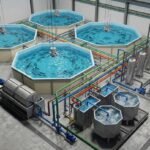
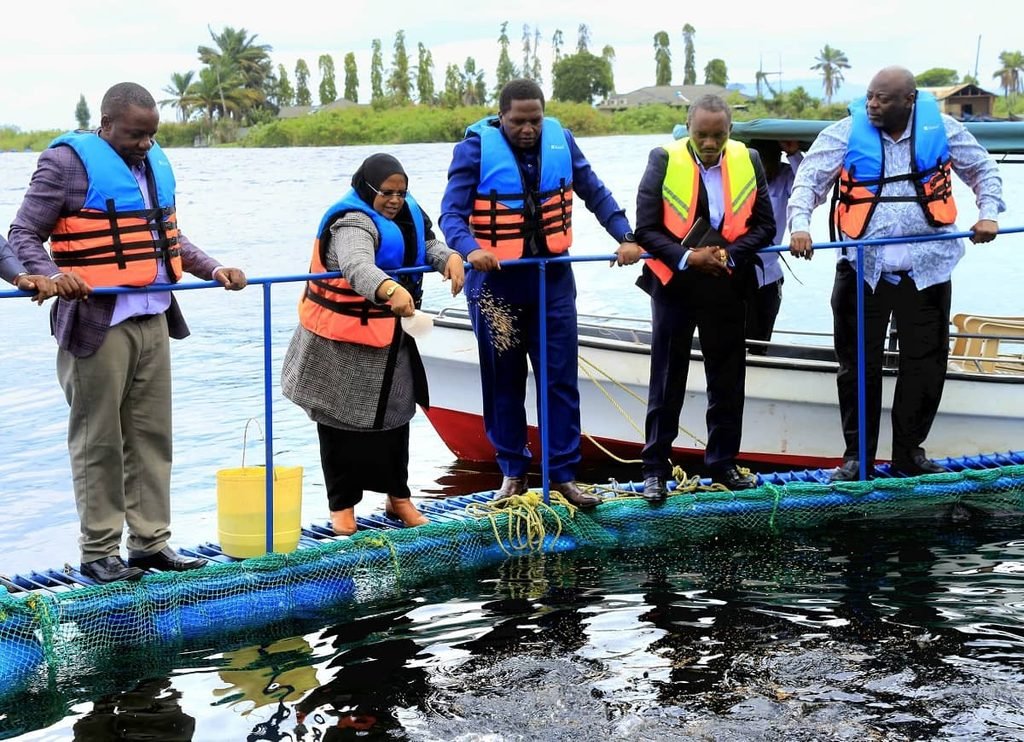
Today, the sector is supported by Aquaculture Development Centres and Aquafarmer Field Schools, while research and training are anchored by the Tanzania Fisheries Research Institute (TAFIRI), the Fisheries Education and Training Agency (FETA) and universities including the University of Dar es Salaam, Sokoine University of Agriculture, the University of Dodoma and Mwalimu Julius Nyerere University of Agriculture and Technology. The production landscape is also diversifying from predominance of small-scale pond farming into commercial large-scale cage fish farming in the Great Lakes, while intensive ponds, tanks, recirculating aquaculture systems (RAS) and in-pond raceways (IPRS) are emerging in urban and peri-urban areas. Although high capital costs, technical requirements, energy reliability, water-quality management and disease control remain barriers to wider RAS adoption, these systems illustrate the sector’s movement towards more intensive and controlled production.
The numbers—an industry gaining scale
The latest Ministry data show a sector growing rapidly. Total aquaculture production increased from 44,735 tonnes in 2020/21 to 234,525 tonnes in 2025/26. The latter comprised 59,345 tonnes of aquatic animals—including finfish, prawns, crabs and sea cucumber—and 175,180 tonnes of seaweed. The reported combined value was TZS 446.8 billion (approximately US$170 million). The supporting indicators are equally revealing. Over the same period, the number of fish cages increased from 473 to 3,343; hatcheries from 24 to 67; fingerling production from 24.2 million to 212.8 million; and commercial fish-feed utilisation from about 1,182 tonnes to more than 23,600 tonnes. These trends suggest that aquaculture is moving beyond isolated farm enterprises towards a more connected production and input-supply system.
Two engines of growth—tilapia and seaweed
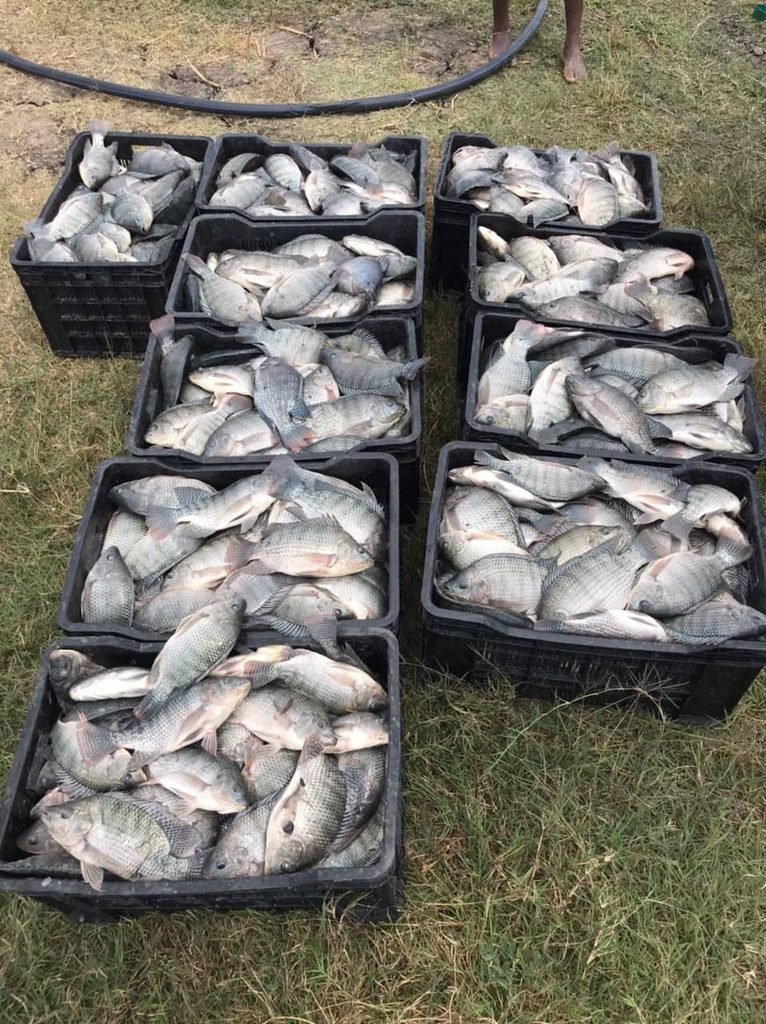
Nile tilapia (Oreochromis niloticus) is the dominant freshwater farmed species, supported by established production knowledge, consumer acceptance and adaptability. Tanganyika tilapia (Tanganyika tilapia) and other locally appropriate species also contribute to freshwater aquaculture. Pond farming remains the foundation for many farmers, while cage culture offers a route to more intensive production in suitable lakes and reservoirs. Number of cages increased from 50 in 2014/2015 to 3,343 in 2025/2026, with both small-scale farmers and larger commercial enterprises participating. The marine side of the story is led by seaweed. Tanzania is a major African seaweed producer, contributing over 90 percent of Africa’s seaweed production (Lukwambe and Bwathondi, 2024) Spinosum (Eucheuma denticulatum) and Cottonii (Kappaphycus alvarezii) are the principal cultured species, while shrimp, mud crab, sea cucumber, milkfish and pearl oysters provide additional diversification opportunities where technically and environmentally appropriate.
Mantente siempre informado
Stay Informed
Únete a nuestras comunidades para recibir al instante las noticias, informes y análisis más importantes del sector acuícola.
Join our communities to get instant access to the most important news, reports, and analysis from the aquaculture industry.
From farms to value chains—building an ecosystem
The next stage of Tanzania’s aquaculture development will depend less on the number of farms alone and more on whether the country can build the ecosystem required to produce fish efficiently, consistently and profitably. Principal constraints include limited availability of quality inputs, uneven adoption of improved management practices, low commercial investment, inadequate cold-chain and value-addition infrastructure, and skills and knowledge gaps (Shoko et al., 2022).
These constraints are also investment opportunities. Tanzania needs more commercial hatcheries and high-quality genetics; aquafeed manufacturing; cage fabrication and maintenance; farm equipment; fish-health and water-quality services; cold storage; refrigerated transport; processing, packaging and logistics; and digital farm-management and traceability systems. A successful commercial farm can therefore become an anchor for a much wider ecosystem—creating demand for seed, feed, equipment, finance, transport, processing, technology and professional services. This is the multiplier effect that can turn aquaculture from a production activity into a broader industrial and employment platform.
Government as catalyst, private sector as engine
Tanzania’s policy direction is increasingly focused on creating an enabling environment in which private enterprise can lead commercial expansion. Aquaculture is recognized within the country’s wider fisheries and Blue Economy policy framework, while the Fisheries Act and the Fisheries (Aquaculture) Regulations, 2024 provide the principal regulatory foundation alongside legislation governing water, land, environment, feeds and animal health. Government is also investing in the foundations of growth. Aquaculture Development Centres are being rehabilitated and new centres constructed in strategic locations; Aquafarmer Field Schools are strengthening farmer-to-farmer extension; and spatial planning and strategic environmental assessment are being used to facilitate orderly and sustainable cage development. Through partnership with the Tanzania Agricultural Development Bank (TADB), government is providing soft financing to catalyze commercial cage farming and other aquaculture enterprises. A total of 536 cages valued at TZS 12.574 billion, together with fingerlings and feed, provided to 2,095 beneficiaries (MLF, 2026). A total of 593 tons of fish valued at TZS 4.617 billion have been produced so far.
The next frontier—Technology and Digitalization
Tanzania’s transformation will also be technological towards digitalization of aquaculture with increased application of continuous water-quality sensors, automated feeding, digital farm records, artificial intelligence for biomass estimation and risk prediction, remote sensing, precision aeration, digital traceability and integrated farm-management platforms. Technology should not be adopted for its own sake. Its value lies in improving productivity, reducing production risk, strengthening traceability and making aquaculture more predictable and bankable.
Sustainability—growth without compromising the resource base
Tanzania’s lakes, rivers, wetlands, coastline and marine ecosystems are both production assets and public resources. Their ecological health is fundamental to aquaculture, capture fisheries and other ecosystem services. As cage farming expands, spatial planning, environmental assessment, carrying-capacity analysis and effective monitoring become increasingly important (Banini et al., 2024). The government’s zoning programme is an important foundation. The identification of 99 suitable cage-farming sites covering about 220 km2 in Lake Victoria is intended to reduce conflicts among resource users, facilitate orderly investment and protect aquatic ecosystems (FAO, 2025). The next phase will need to strengthen this foundation through site-specific carrying-capacity assessment, environmental monitoring, responsible stocking and feeding practices, fish-health and biosecurity measures, escape prevention, transparent allocation of space and effective compliance systems. Sustainability should not be viewed as a constraint on investment. It is an investment enabler. Producers need confidence that the resource base will remain productive; communities need assurance that commercial development will be inclusive; and financiers need evidence that enterprises can operate within predictable environmental and regulatory conditions. This is the practical meaning of Blue Transformation: producing more aquatic food while improving environmental performance, resilience and social benefits (FAO, 2022).
The financing question—can Tanzania unlock private investment?
Capital will be decisive. Aquaculture has demonstrated demand and production potential, but finance remains a challenge, particularly for smaller producers without collateral, reliable production records or established credit histories. Government’s soft-loan initiatives demonstrate how targeted public finance can help establish production track records and reduce barriers to entry. The next step is to mobilize commercial capital on a greater scale. Opportunities extend from grow-out farms to hatcheries, feed mills, cages, cold chains, processing, logistics, insurance, digital technologies and other supporting infrastructure. Blended finance, credit guarantees, insurance, equipment leasing, supplier finance, equity investment and farmer–investor partnerships can all contribute to a more investable sector.
Tanzania’s regional opportunity
Tanzania’s aquaculture opportunity extends beyond the domestic market. Its geographic position, ports, road and rail connections and access to EAC, SADC and the African Continental Free Trade Area (AfCFTA) markets provide a foundation for regional trade. A competitive industry could supply fish to neighboring markets while also developing regional trade in seed, feed, equipment, technology and professional expertise. This regional role matters because Africa’s aquaculture growth remains concentrated in a limited number of countries, even as the continent’s population and demand for nutritious food continue to expand. Tanzania has an opportunity to become more than a producer: it can become a regional aquaculture hub linking East and Southern Africa with global technology, capital, knowledge and markets. This is why aquaculture in broader context of Blue Economy is recognized as one of the transformative sectors towards attaining the USD 1 trillion economy aspirations of Tanzania Development Vision 2050 (URT, 2025).
What must happen next?
Tanzania’s next phase requires a deliberate shift from growth in production to growth in productivity, competitiveness and value. Five priorities stand out: improve the availability and quality of seed and feed; attract domestic and international investment that strengthens local enterprises; invest in cold chains, processing, logistics and market systems; connect research, training and extension more closely to commercial realities; and maintain sustainability through science-based spatial planning, environmental monitoring, biosecurity and effective governance. If these elements come together, Tanzania can move from being a country known for aquaculture potential to one recognised for aquaculture performance. The opportunity is not simply to produce more fish, but to build a modern aquatic-food industry that creates jobs, strengthens food and nutrition security, attracts investment and contributes to Africa’s Blue Transformation.
Tanzania’s invitation to the world
This is precisely why World Aquaculture Tanzania 2026 (WA26T), held together with Aquaculture Africa 2026 (AFRAQ26), matters. From 1–4 December 2026, Dar es Salaam will bring the global aquaculture community together at the Julius Nyerere International Convention Centre. The programme will feature scientific and technical sessions, an international trade exhibition, industry forums, student activities, workshops and training, networking and aquaculture-related excursions. The theme, “Aquaculture Driving Blue Transformation,” is especially fitting. It speaks to Tanzania’s ambition to transform aquatic resources into nutritious food, livelihoods, investment, innovation and sustainable economic growth—and to Africa’s broader need to develop aquatic food systems that are productive, inclusive, resilient and environmentally responsible.
Tanzania is not inviting the world simply to admire its potential. It is inviting researchers, producers, investors, policymakers, technology companies, financiers, development partners and young professionals to exchange knowledge, build partnerships and help shape the next generation of African aquaculture. WA26T and AFRAQ26 provide a platform to connect Tanzania’s lakes and coastline with global technology; its farmers with new markets; its entrepreneurs with capital; its researchers with international networks; and its emerging industry with the expanding global aquatic-food economy.
Tanzania is ready to tell its aquaculture story—and to invite the world to help shape its next chapter!
About the World Aquaculture Tanzania 2026
World Aquaculture Tanzania 2026 (WA26T), which is the 5th Annual International Conference and Exposition of World Aquaculture Society and African Chapter of the World Aquaculture Society (AFRAQ2026) is being hosted by the Government of the Republic of Tanzania. The event will take place in Dar es Salaam, TANZANIA, from December 1-4, 2026, at the Julius Nyerere International Convention Centre (JNICC) – a world class conference and exhibition facility in Tanzania. Since 2022, the WAS has successfully hosted the Annual Aquaculture Africa Conferences (AFRAQs) in Egypt (2022), Zambia (2023), Tunisia (2024) and recently Aquaculture Safari, Uganda (2025). AFRAQs typically attract a diverse group of participants from nearly 100 countries – ranging from aquaculture professionals, producers, researchers, policymakers, industry representatives, development partners, students and various other stakeholders. Nearly 2000 participants are expected at WA26T. The event will feature prominent plenary speakers, cutting-edge research presentations, an exhibition showcasing innovations in the aquaculture sector and much more. Attendees will have the opportunity to network, share knowledge, and collaborate on addressing key challenges and opportunities facing both African landscape and the global aquaculture industry. More information available on https://was.org/meeting/code/AFRAQ26.
References
Bailey, R.G. (1966) The dam fisheries of Tanzania. East African Agricultural and Forestry Journal 32 (1):1–15
Balarin, J.D. (1985) National reviews for aquaculture development in Africa: Tanzania. FAO Fisheries Circulars (770.11). Rome, Italy: FAO.
Banini, P.K.; Anyan, K.F.; Zornu, J.; Ackah, M.; Batsa, D.N.; Issifu, K.; Amankwah, A.; Ali, S.E.; Addo, S.; Cudjoe, K.S. (2024) Rethinking Freshwater Cage Aquaculture: A Case in Ghana. Water. 16 (21) 3054. https://doi.org/10.3390/w16213054
FAO, Promoting cage fish farming for health and wealth in the United Republic of Tanzania. Case Studies in the Guidelines for Sustainable Aquaculture, accessed August 19, 2026 https://www.fao.org/guidelines-sustainable-aquaculture/case-studies/united-republic-of-tanzania/en
FAO. 2022. Blue Transformation – Roadmap 2022–2030: A vision for FAO’s work on aquatic food systems. Rome. https://doi.org/10.4060/cc0459en
FAO (2025) Promoting cage fish farming for health and wealth in the United Republic of Tanzania, GSA. Available at: https://www.fao.org/guidelines-sustainable-aquaculture/case-studies/united-republic-of-tanzania/en (Accessed: 20 August 2026).
FAO (2026) The State of World Fisheries and Aquaculture 2026 – Blue Transformation: turning vision into impact. Rome. https://doi.org/10.4060/cd8357en
Lukwambe, B. & Bwathondi, P. (2024) The past, present and future developments in mariculture in the coastal waters of mainland Tanzania. Aquaculture, Fish and Fisheries, 4, e201. https://doi.org/10.1002/aff2.201
MLF (2015) National Fisheries Policy of 2015
MLF (2026) Ministry of Livestock and Fisheries, Budget Speech for Financial Year 2025/2026
Shoko, A.P., Limbu, S.M., Ulotu, E.E., Shayo, S.D., Silas, M.O., Chimatiro, S.K., Madalla, N. A., and Tamatamah, R. A. (2022) Fish seed and feed value chains analysis and their critical factors for aquaculture development in Tanzania. Aquaculture, Fish and Fisheries, 3(1) 35 – 50. https://doi.org/10.1002/aff2.84
URT (2022) The Fisheries Sector Master Plan (2021/22–2036/37)
URT (2025). Tanzania Development Vision 2050. Dodoma; National Planning Commission.

Editor at the digital magazine AquaHoy. He holds a degree in Aquaculture Biology from the National University of Santa (UNS) and a Master’s degree in Science and Innovation Management from the Polytechnic University of Valencia, with postgraduate diplomas in Business Innovation and Innovation Management. He possesses extensive experience in the aquaculture and fisheries sector, having led the Fisheries Innovation Unit of the National Program for Innovation in Fisheries and Aquaculture (PNIPA). He has served as a senior consultant in technology watch, an innovation project formulator and advisor, and a lecturer at UNS. He is a member of the Peruvian College of Biologists and was recognized by the World Aquaculture Society (WAS) in 2016 for his contribution to aquaculture.