The rabbitfish (Siganus spp.) is one of the most well-rounded inhabitants of the marine aquarium, notable for its striking coloration, peaceful temperament, and an insatiable appetite for the algae that clog tanks. However, behind the distinctive morphology that gives it its common name lies a formidable defense system: its dorsal and anal spines are venomous—capable of inflicting excruciating stings—and its biology ranges from intercontinental migration to documented hallucinogenic effects in certain species.
Historically, information on the family Siganidae has remained fragmented. While retail shops detail their acquisition and forums debate their reef-safe compatibility, encyclopedias limit themselves to taxonomy. This guide rigorously unifies safety protocols for their toxins, husbandry guidelines in captivity, lifespan expectations, and their ecological role. Furthermore, given the rising interest in this resource for sustainable aquaculture, we analyze the potential of its commercial cultivation for both hobbyists and producers.
- 1 Key Takeaways: Everything You Must Remember About the Rabbitfish
- 2 What is the Rabbitfish? Taxonomy and Biology of the Genus Siganus
- 3 Morphology: Anatomy and Why It Is Called the “Foxface Rabbitfish”
- 4 Life Expectancy: How Long Do Rabbitfish Live?
- 5 The Most Popular Rabbitfish Species for the Aquarium
- 6 Aquarium Care and Maintenance Guide
- 7 Rabbitfish Feeding and Diet
- 8 Compatibility: Is the Rabbitfish “Reef Safe”?
- 9 Rabbitfish Reproduction: Is It Viable in Captivity?
- 10 Safety Protocol: Venomous Spines and First Aid
- 11 Common Rabbitfish Diseases: Prevention and Pathologies
- 12 The Rabbitfish in the Wild: Ecology and Human Consumption
- 13 Rabbitfish in Aquaculture: An Herbivore with Sustainable Prospects
- 14 Purchasing Guide: Availability, Economic Feasibility, and Selection Criteria
- 15 Conclusion: The Value and Responsibility of Keeping a Siganid
-
16
Frequently Asked Questions (FAQ) About Rabbitfish
- 16.1 Is the rabbitfish reef-safe, or does it eat corals?
- 16.2 How dangerous is rabbitfish venom?
- 16.3 What first aid should be administered for a rabbitfish sting?
- 16.4 What does the rabbitfish eat in the aquarium?
- 16.5 How long can a rabbitfish live in captivity?
- 16.6 What is the minimum tank size required for this species?
- 16.7 Is it possible to keep more than one rabbitfish in the same tank?
- 16.8 Why has my rabbitfish suddenly turned brown or marbled?
- 16.9 Can the rabbitfish be bred in a home aquarium?
- 17 Referencias
- 18 Entradas relacionadas:
Key Takeaways: Everything You Must Remember About the Rabbitfish
- Biological Control Ally: It stands out as an indefatigable herbivore in the aquarium, successfully consuming opportunistic and problematic macroalgae, such as the dreaded bubble algae (Valonia).
- Strict Territoriality Management: In captivity, they exhibit marked intraspecific territoriality; the golden rule in the hobby is to house only one specimen per tank, except in systems of colossal volume.
- Space and Stability Requirements: They demand spacious tanks (a minimum of 75 to 100 gallons for medium species and 180 gallons for larger ones) along with highly stable water quality based on reef parameters.
- The Starvation Pinch: If the fish goes hungry, it is highly likely to begin nipping at corals (reef safe with caution); a clinical sign of severe malnutrition is the appearance of a supracranial pinch behind its eyes.
- Protocol for Thermolabile Toxins: Its 24 dorsal, anal, and pelvic spines possess venom glands that inflict agonizing stings. In the event of an accident, immediately submerge the affected area in hot water (maximum 45°C / 113°F) for 30 to 90 minutes to denature the venom proteins.
- Acquisition and Ethical Commitment: Since the majority are wild-caught from reefs, it is vital to source them through distributors participating in sustainable supply programs and to guarantee them an optimal home for their entire lifespan.
- Aquaculture Outlook: Their digestive physiology positions them as one of the most profitable and eco-friendly alternatives for polyculture, significantly reducing the reliance on fishmeal in commercial diets.
What is the Rabbitfish? Taxonomy and Biology of the Genus Siganus
The rabbitfish, also known as the foxface, belongs to the family Siganidae. This group of marine fish is unique in that all of its members are classified under a single active genus: Siganus. Currently, approximately 29 species are recognized within this family (Metar et al., 2023), all closely linked by an unmistakable morphological and phylogenetic pattern.
Their common name is no coincidence; their small mouth, prominent eyes, and cephalic profile evoke the physical appearance of a lagomorph (rabbit) or a fox. Additionally, they are commonly referred to in English as “spinefoots,” a direct reference to their fin structure and the venomous spines that characterize their defensive anatomy.
Biogeographical Origin and Natural Habitat of the Rabbitfish
The native distribution of rabbitfishes (family Siganidae) spans the tropical, subtropical, and temperate regions of the Indo-Pacific and the Indian Ocean (FAO, 2022; Metar et al., 2023). Their vast geographical range extends from the Red Sea, the Persian Gulf, and the eastern coast of Africa, through the Malay Peninsula and Southeast Asia, to French Polynesia, Vanuatu, the Philippines, northern Australia, and Japan (Metar et al., 2023). Notably, species such as Siganus luridus and Siganus rivulatus are renowned for their role as Lessepsian migrants.

In their natural environment, siganids colonize shallow coastal waters and exhibit a euryhaline nature, successfully adapting to wide fluctuations in salinity (FAO, 2022). They are predominantly associated with three interconnected marine ecosystems:
- Coral Reefs: They inhabit shallow reef zones and rocky substrates, showing a marked preference for slopes and drop-offs down to depths of 6 meters (Arai et al., 2025).
- Seagrass Meadows: These serve as critical ecosystems that function as both refuge zones and priority foraging areas (Caballero et al., 2022).
- Mangroves and Estuaries: They frequently inhabit brackish environments, estuarine systems, shallow bays, coastal lagoons, and river mouths (Arai et al., 2025).
Ecological Dynamics: Habitat Shifts Across Life Stages
The behavior and environmental selection of rabbitfish vary significantly throughout their ontogenic development. In species like Siganus guttatus, juveniles preferentially settle in shaded areas beneath mangrove roots, shallow bays, estuaries, and coastal sandy flats—environments that serve as critical nursery areas (Diamant et al., 2000; Caballero et al., 2022). Upon reaching ecological maturity and transitioning to adulthood, they migrate toward coral reefs and adopt a nycthemeral pattern guided by tidal fluctuations, cyclically moving into river systems.
Morphology: Anatomy and Why It Is Called the “Foxface Rabbitfish”
The morphology of rabbitfishes (family Siganidae) integrates highly defined, distinctive features. These range from osteological and digestive adaptations for macroalgae consumption to a specialized, toxin-inoculating defense system.
Ectomorphology and Dimensions
Siganids are divided into two main ecomorphological groups: fusiform and deep-bodied species (Taylor et al., 2017). They present an oval, laterally compressed silhouette characterized by an extremely narrow caudal peduncle (Jaikumar, 2012; Seale & Ellies, 2019). While the standard length of most species ranges between 25 and 35 cm (Seale & Ellies, 2019), large-bodied specimens such as Siganus guttatus and Siganus vermiculatus can reach lengths of up to 50 cm and weights of 1 and 2 kg, respectively (FAO, 2022).
Mantente siempre informado
Stay Informed
Únete a nuestras comunidades para recibir al instante las noticias, informes y análisis más importantes del sector acuícola.
Join our communities to get instant access to the most important news, reports, and analysis from the aquaculture industry.
Cranial, Buccal Structure, and Digestive Adaptations
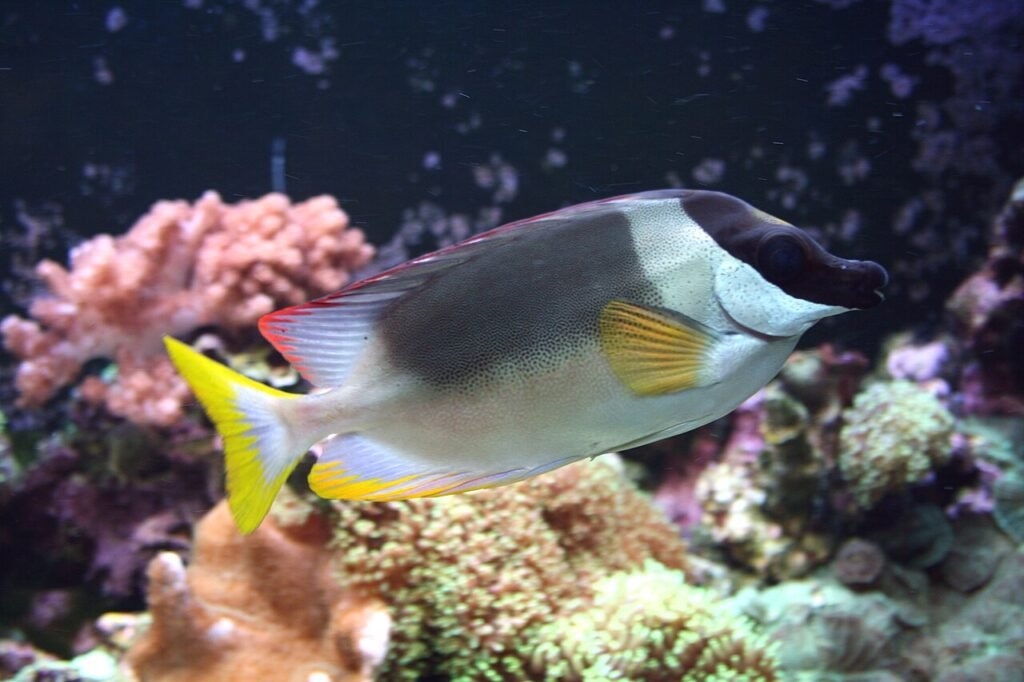
The common names “rabbitfish” or “foxface” derive from the physiognomy of their cephalic region: prominent dark eyes, a blunt snout, and a small terminal mouth where the upper lip slightly overlaps the lower one (Seale & Ellies, 2019). Notably, the five species belonging to the subgenus Lo exhibit a much more pronounced, tube-like rostral extension. Their oral apparatus features a single row of tightly compressed, serrated, spade-like incisiform teeth on both jaws (Jaikumar, 2012). As a direct evolutionary adaptation to their herbivorous diet, they possess a remarkably long intestinal tract and thickened, muscular stomach walls (Seale & Ellies, 2019).
Fin System and Venom Apparatus
The primary passive defense mechanism of these fish lies in their spines, which are connected to well-developed anterolateral venom glands. Although their stings produce acute, stabbing pain, they do not typically pose a lethal threat to healthy adult humans (Seale & Ellies, 2019). The spine configuration is remarkably uniform across the family, consisting of 24 sharp elements: 13 dorsal spines, 7 anal spines, and 2 spines on each pelvic fin (sandwiching three inner soft rays), in addition to a forward-pointing procumbent spine located directly in front of the first dorsal spine (Jaikumar, 2012). Depending on the species and its ontogeny, the caudal fin geometry ranges from truncated to deeply forked.
Dermatology and Color Mimicry
The dermis of the rabbitfish has a leathery texture and is smooth to the touch, owing to the presence of tiny cycloid scales deeply embedded in the tissue. Their color patterns are highly diverse and contrasting (Jaikumar, 2012):
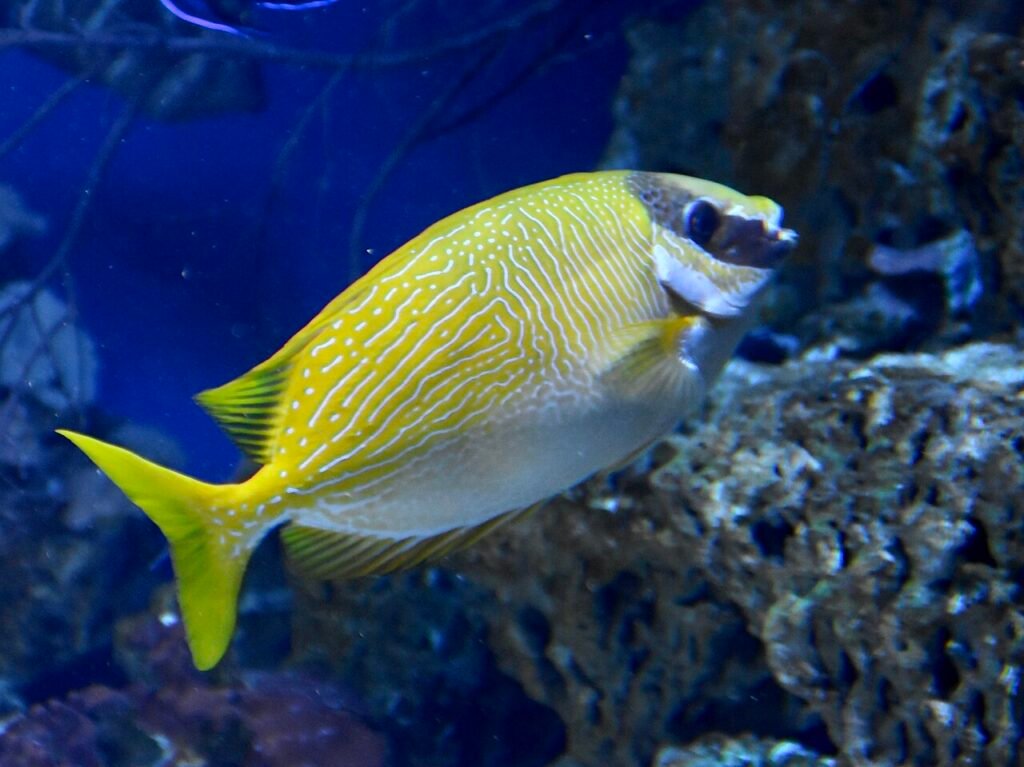
- S. vermiculatus: Exhibits a complex, labyrinthine pattern of irregular brown lines intertwining across the body (Metar et al., 2023).
- S. canaliculatus: Presents a greenish-gray back transitioning to silvery flanks, peppered with numerous pearly-blue maculae (Jaikumar, 2012).
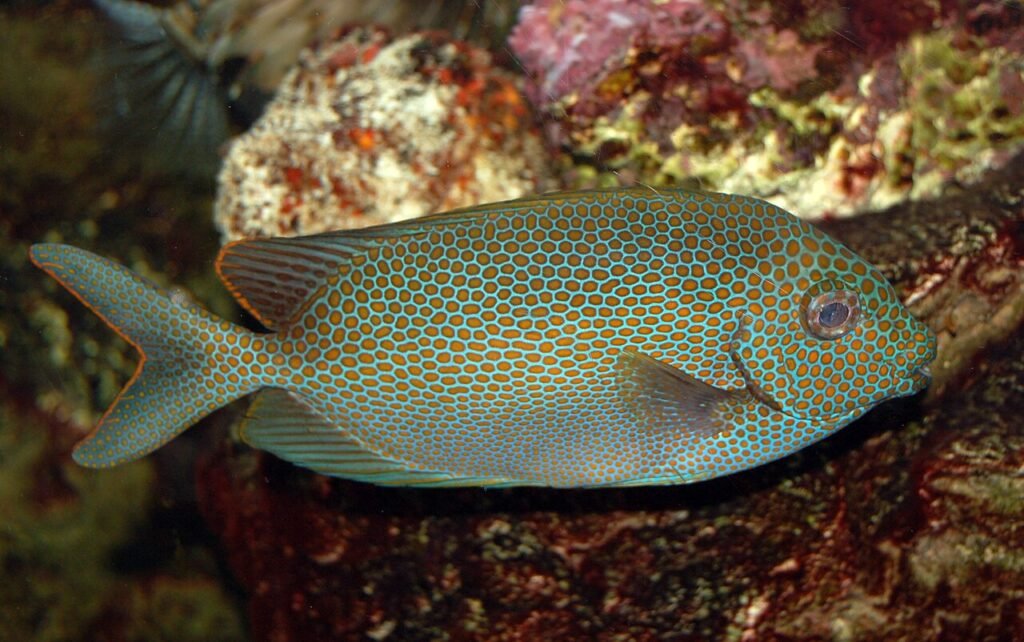
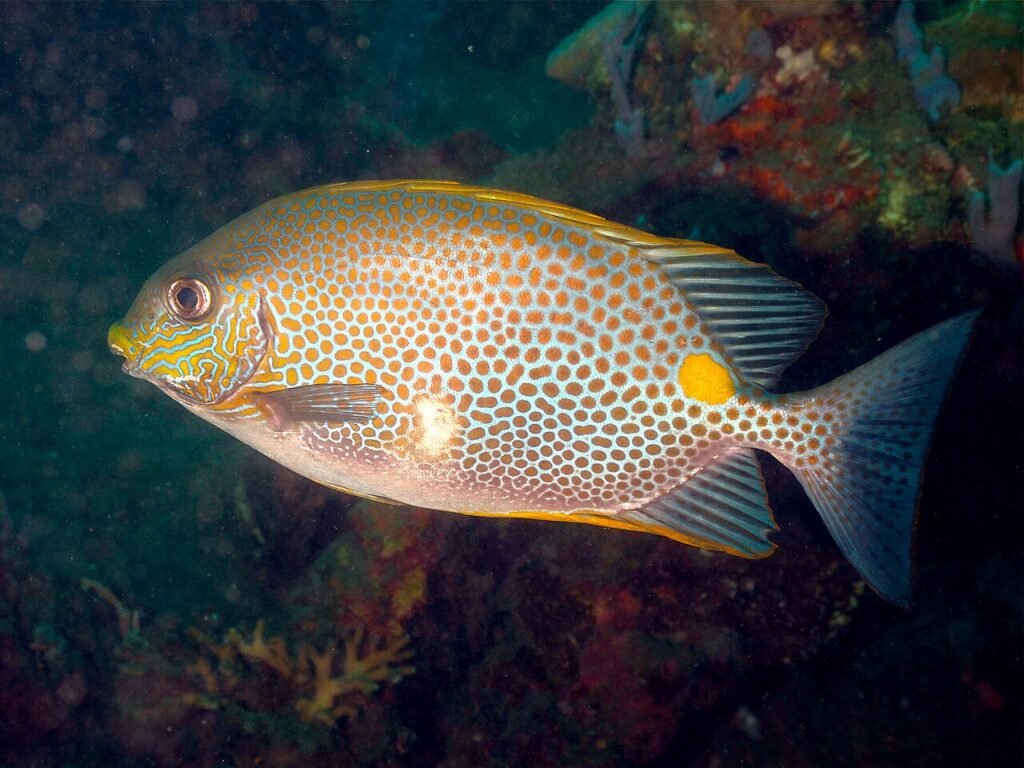
- S. guttatus: Characterized by a background coloration speckled with golden or orange-ochre spots (Caballero et al., 2022).
An outstanding biological trait is their physiological camouflage (night coloration): at nightfall or under stress, they dim their brilliant colors to adopt a mottled, dull pattern that blends seamlessly with their surroundings.
Life Expectancy: How Long Do Rabbitfish Live?
The lifespan of rabbitfish varies significantly depending on the species and the quality of care provided. In their natural habitat, species such as the streamer rabbitfish (Siganus argenteus) live for just over seven years (Taylor et al., 2017). While aquarium retailers often cite a lifespan of five to seven years under standard care, optimal conditions can extend this to ten or even twelve years.
This disparity exists primarily because most specimens in the trade are wild-caught rather than captive-bred, arriving with unknown ages and varying stress levels. A well-acclimated, properly fed fish in a stable environment can easily surpass the five-year mark, whereas poorly managed specimens may not survive long.
Practical and Honest Conclusion: Plan for a five-to-ten-year commitment. These are not disposable animals, and their significant longevity should be a primary factor in your decision to purchase.
The Most Popular Rabbitfish Species for the Aquarium
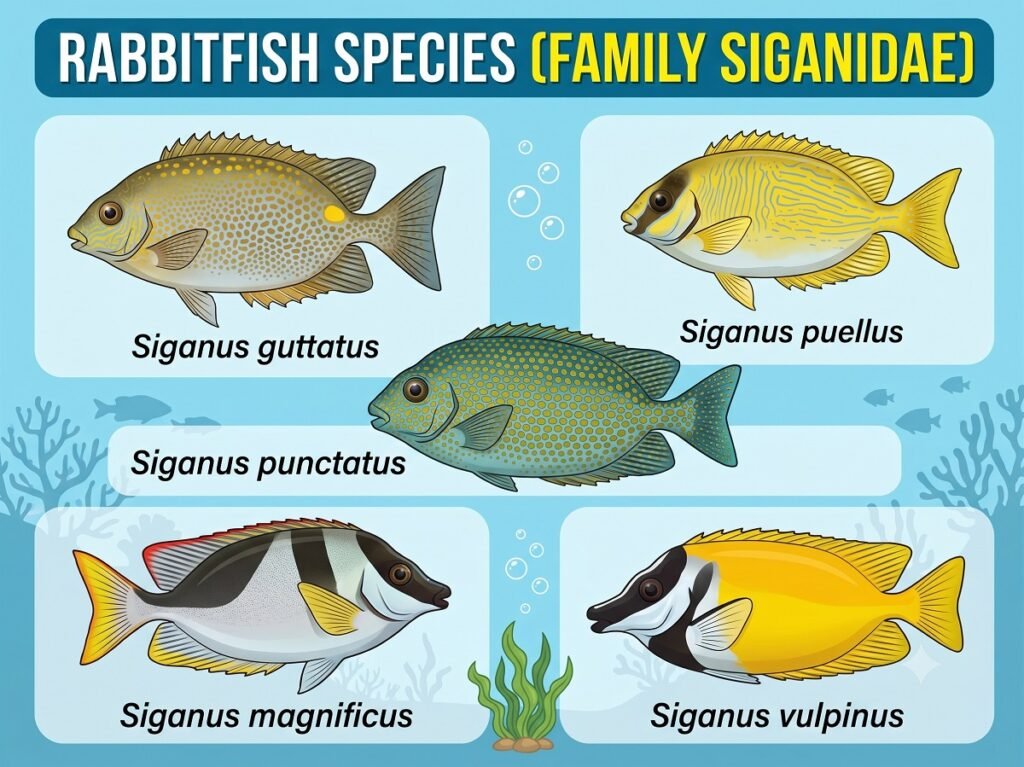
Of the 29 species in this family, only a handful dominate the global aquarium trade. This comparative table summarizes the most sought-after species and their key traits to help you make an informed decision:
| Species (Scientific Name) | Common Name | Approx. Adult Size | Recommended Minimum Tank | Distinctive Feature |
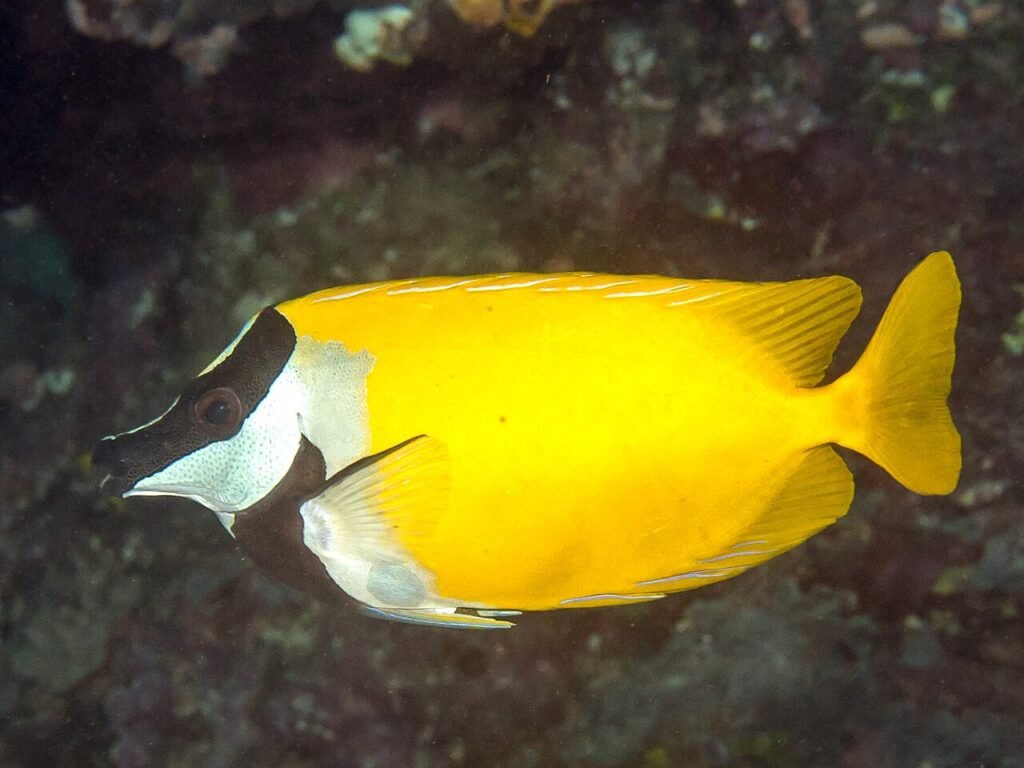
| Siganus vulpinus | Foxface Lo / Common Foxface | 20–25 cm (8–10″) | 75–100 gal | Yellow body with a black-and-white facial mask |
| Siganus unimaculatus | One Spot Foxface | ~20–23 cm (8–9″) | 75–100 gal | Identical to S. vulpinus, but with a black spot on its flank |
| Siganus magnificus | Magnificent Foxface | ~23 cm (9″) | 100 gal | White face with a diagonal black band; white and brown body |
| Siganus punctatus | Goldspotted Spinefoot | ~40 cm (~15.7″) | 180 gal* | Intricate gold-speckled body pattern |
| Siganus doliatus | Barred Rabbitfish | ~25 cm (10″) | 100 gal | Pattern of blue lines and diagonal bands |
| Siganus puellus | Decorated Rabbitfish / Masked Spinefoot | ~35–38 cm (14–15″) | ~180 gal | Large-bodied; yellow lines with a dark eye mask |
| Siganus guttatus | Golden Rabbitfish | ~30 cm (12″) | 125 gal | Yellowish-orange spot near the tail with orange-gold spots |
The first two species (S. vulpinus and S. unimaculatus) are so similar that some experts debate whether they are merely variants of the same species, and their husbandry requirements are identical. Indeed, Yan et al. (2016) documented a high similarity in their mitochondrial genomes, pointing to possible natural hybridization during spawning seasons. Consequently, these two are by far the most highly recommended for those starting with this group.
Aquarium Care and Maintenance Guide
The rabbitfish is highly valued for its hardiness and relative ease of maintenance; however, successful husbandry requires meeting specific demands for space and water quality. Below are the fundamental pillars for their care in captivity.
Tank Dimensions and Volume Requirements
Because they are highly active swimmers that occupy the open water column, available space is a critical factor. There is some disparity in the technical literature: while some retailers suggest a minimum volume of 75 gallons (~280 liters), more conservative aquarium guides recommend 100 to 125 gallons for adult specimens.
For common medium-sized species (such as the foxface), a volume of 75 to 100 gallons serves as the ideal starting point. However, larger species like the decorated rabbitfish (Siganus puellus) require systems of at least 180 gallons to ensure their well-being and free swimming space.
Physicochemical Water Parameters
Maintaining these siganids requires stable conditions analogous to those of a standard reef aquarium:
| Parameter | Recommended Range |
| Temperature | 22–26°C (72–79°F) |
| pH | 8.0–8.5 |
| Dissolved Oxygen | 4.0–6.8 ppm |
| Un-ionized Ammonia () | < 1.0 ppm |
| Nitrites () | 0–0.05 ppm |
| Specific Gravity (Salinity) | 1.020–1.025 |
| Water Movement | Moderate |
| Lighting | Moderate (avoid excessive intensity to prevent stress) |
Adapt these ranges to the specific needs of your species and the rest of your tank mates. Stability matters more than achieving an exact number; avoid sudden fluctuations in temperature and salinity. The key with these fish is not a single perfect parameter, but long-term stability. Regular water changes, robust filtration, and a mature, fully cycled tank featuring live rock for grazing are the best recipe for success.
Rabbitfish Feeding and Diet
The rabbitfish is an eminently herbivorous organism, a quality that makes it a highly valuable ally for the biological control of opportunistic macroalgae in the aquarium, including complex genera such as the dreaded bubble algae (Valonia) and filamentous hair algae. In natural environments, such as the central-western coast of India, species like Siganus vermiculatus base their diet almost exclusively on benthic algae—showing a marked preference for Enteromorpha sp.—during most of the year (Metar et al., 2023). Nevertheless, siganids exhibit remarkable trophic plasticity, behaving as opportunistic omnivores when resources become available, particularly under captive conditions (Caballero et al., 2022).
Larval Stage Feeding Protocol
During their early developmental stages, rabbitfish larvae maintain a strictly carnivorous and planktonic dietary regimen. In aquaculture systems and specialized hatcheries, newly hatched larvae undergo a sequential feeding protocol (Hara et al., 1986):
- Initial Phase: Provision of live zooplankton, predominantly rotifers (Brachionus plicatilis), sized to fit their oral gape.
- Transition Phase: Gradual introduction of brine shrimp nauplii (Artemia salina).
To optimize the nutritional value of these live prey, the “green water” technique is typically implemented by inoculating microalgae (Chlorella, Tetraselmis, or Isochrysis) into the culture tanks. This method not only conditions the aquatic environment but also serves as direct feed to maintain rotifer density and quality (Jaikumar, 2012). After the first few weeks of development, the larvae successfully transition to microencapsulated diets or balanced powder and flake feeds.
Nutrition and Supplementation in Display Aquariums
Since the natural growth rate of algae in a home aquarium is insufficient to meet their high metabolic demands, daily supplementation based on the following components is required:
- Dehydrated Algae and Fresh Macroalgae: Offering sheets of nori seaweed secured to the glass with clips is indispensable. In this regard, studies show that supplementing the diet of Siganus fuscescens with specific red algae (Asparagopsis taxiformis) and brown algae (Dictyota intermedia) significantly stimulates hemolytic activity and their immune system (Thépot et al., 2021). Likewise, co-feeding fresh seaweed (Ulva lactuca) combined with commercial pellets in balanced proportions (specifically in 50:50 or 25:75 ratios) yields optimal growth rates in Siganus guttatus, comparable to exclusive dry-pellet diets (Sulaeman et al., 2022).
- Formulated Commercial Diets: High-quality pellets and flakes rich in spirulina, specifically designed for herbivorous organisms.
- Fresh Vegetable Intake: Blanched vegetables (such as spinach or zucchini) and even fiber-rich fruits like kiwi.
- Complementary Animal Protein: Occasional offerings of frozen foods (Mysis, Artemia), which they accept opportunistically.
From a quantitative nutritional perspective, it has been determined that juvenile Siganus rivulatus require an optimal dietary lipid level of 98 g/kg to maximize growth rate (Ghanawi et al., 2011). Additionally, dietary supplementation with the enzyme at a dose of 0.5 g/kg of feed optimizes the feed conversion ratio, stimulates non-specific immunity, improves intestinal microvilli morphology, and elevates the overall quality of juveniles of this same species (Sallam et al., 2020).
💡 Aquarist Technical Tip: A calorie-deficient siganid will alter its behavior and begin nipping at corals (both LPS and SPS). Keeping your rabbitfish well-fed is the most effective strategy to ensure reef safety. Additionally, regularly assess the supracranial region: the appearance of a pronounced depression or indentation (known as the “starvation pinch”) directly behind the eyes is an unequivocal clinical indicator of starvation or nutritional deficiency.
This article contains affiliate links. If you buy through them, AquaHoy may earn a commission at no extra cost to you.
What You Need for Your Rabbitfish
 Magnetic Seaweed Clip
Holds nori sheets against the glass so this naturally herbivorous grazer can feed without fouling the water. Omega One, 4.6★ (221 reviews).
Check price → Dried Seaweed + Clip
Staple food — rabbitfish need vegetable matter daily. San Francisco Bay Brand, 40 sheets, safe for fresh and saltwater.
Check price → Protective Gloves
Rabbitfish dorsal spines are venomous and cause intense pain. Wear puncture-resistant gloves during tank maintenance. Dowellife, Level 5, 4.5★ (15.2K reviews).
Check price → Water Test Kit
Tests pH, nitrite, nitrate, KH, and GH. Works for both marine and freshwater tanks. API, 100 strips, 4.6★ (15.5K reviews).
Check price →Compatibility: Is the Rabbitfish “Reef Safe”?
The million-dollar question for any reef aquarist. The short answer is “reef safe with caution,” but the long answer requires some nuance.
Coral Behavior
A well-fed rabbitfish typically ignores corals and focuses on its algae-cleaning duties. The problem arises when they go hungry, leading them to nip at soft corals, zoanthids, and even large-polyp stony (LPS) corals. While hobbyist experiences are split—with some swearing their fish never touches a coral and others reporting occasional nipping—the risk drops drastically if you keep them sated with seaweed. Nonetheless, closely monitor them during their first few weeks in a delicate reef system.
Ideal Tank Mates
In a community setting, the rabbitfish is a model citizen. It is peaceful and compatible with most marine species, such as clownfish, gobies, blennies, tangs, hardy damselfish, and invertebrates like shrimp or hermit crabs. Furthermore, their venomous spines act as natural armor; even more aggressive tank mates quickly learn to leave them alone. The only exception is avoiding disproportionately large, aggressive bullies that might harass them into hiding.
In natural environments, the social structure of these siganids is remarkably complex. Brandl and Bellwood (2013) studied pair formation in the barred rabbitfish (Siganus doliatus) on the Great Barrier Reef, finding that social monogamy is their most common organizational system, encompassing 67.4% of the surveyed population. These highly stable partnerships shared 82.9% of their time within 5 meters of each other, with 25% of these pairings occurring between same-sex individuals. This suggests that pairing is driven by non-reproductive ecological pressures, such as cooperative predator vigilance and efficient foraging strategies.
However, translating this behavior to the home aquarium presents challenges. In captivity, rabbitfish exhibit strong intraspecific territoriality. To prevent severe conflict, it is recommended to house only a single specimen per tank, except under two specific scenarios:
- Early or Established Pairing: Simultaneously introducing juveniles or previously bonded, compatible pairs.
- Large-Scale Systems: Aquariums of several hundred gallons that mitigate space and resource competition.
Rabbitfish Reproduction: Is It Viable in Captivity?
Reproductive Behavior
In the wild, rabbitfish reproduction is characterized by mass spawning events in schools closely synchronized with lunar cycles, releasing gametes simultaneously into the water column. While most exhibit gregarious spawning dynamics, certain species form stable, monogamous pairs. Recent research reveals significant differences in their reproductive strategies depending on the species and geographical environment:
- Embryonic Development Optimization: In laboratory settings, the maximum hatching rate (73%) and larval viability (32%) for Siganus guttatus are reported under controlled salinity conditions of 20 ppt (Tampangallo et al., 2026).
- Maturation and Spawning Potential: In the inner Ambon Bay (Indonesia), female Siganus canaliculatus reach sexual maturity at smaller sizes (between 24 and 26 cm) than males, a variable subjected to anthropogenic and fishing pressures in their habitat (Latuconsina et al., 2022). This species possesses high fecundity, with an estimated production of 198,000 to 783,750 oocytes per female, displaying a direct positive correlation between body length and egg production (Latuconsina et al., 2022).
- Accelerated Development in the Pacific: In the Mariana Islands, female Siganus argenteus exhibit precocious maturation, reaching 50% reproductive maturity at 1.3 years of age, equivalent to a fork length of 21.8 cm (Taylor et al., 2017).
- Maturation Asymmetry in the Indian Ocean: Along the west-central coast of India, male Siganus vermiculatus mature at smaller sizes (28.13 cm) compared to females (32.73 cm), recording a fecundity that ranges between 780,136 and 1,256,674 eggs per individual (Metar et al., 2023).
- South China Sea Dynamics: For Siganus javus, fecundity ranges from to oocytes, reaching 50% maturity at 30.9 cm for females and 29.2 cm for males (Arai et al., 2025).
The Captivity Challenge: Aquariums vs. Aquaculture
Despite these advances in biological understanding, breeding rabbitfish in the home aquarium remains an undocumented milestone. The complexity of their synchronized mass spawning, combined with the extreme sensitivity of their planktonic larval phase, makes domestic propagation currently unfeasible. Consequently, virtually all specimens destined for the aquarium trade originate from regulated wild fisheries.
However, a clear line must be drawn between private husbandry and commercial-scale aquaculture. In professional facilities and research centers, the use of hormonal inducements, photoperiod manipulation, and strictly standardized live-feed protocols has successfully enabled the artificial propagation of several siganid species, establishing them as a strategic resource for sustainable aquaculture.
Safety Protocol: Venomous Spines and First Aid
This section addresses a critical safety aspect for aquarists that is often overlooked in conventional commercial channels: the management of puncture wounds from siganid spines.
Toxicology of Rabbitfish Venom
The spines of the dorsal, pelvic, and anal fins of the Siganidae family house anterolateral venom glands for defense. In the event of improper handling or a perceived threat, these structures can penetrate the skin and inoculate a protein-based venom that is biochemically related to the potent toxins of stonefish (genus Synanceia).
Clinical research details the properties of these toxins:
- Biological Effects: Venom analysis of Siganus fuscescens has demonstrated lethal activity in murine models, hemolytic action in erythrocytes, and edematogenic and nociceptive (pain-inducing) effects analogous to those caused by the stonefish (Synanceia horrida) toxin (Kiriake et al., 2017).
- Structural Analogy: Toxins from Siganus puellus, Siganus unimaculatus, and Siganus virgatus have been identified as homologous to those of Synanceia horrida, a finding confirmed through complementary DNA (cDNA) cloning to elucidate their primary structures (Yoshinaga-Kiriake et al., 2020).
For a healthy adult, the venom lacks systemic lethality (Seale & Ellies, 2019). Nonetheless, it induces intense, sharp pain that is disproportionate to the size of the wound, accompanied by localized swelling; therefore, caution during physical handling is mandatory (Caballero et al., 2022). It is highly recommended to use rigid containers rather than mesh nets for transport—as the spines easily entangle in netting—and to avoid all contact with their dorsal spinous rays.
First-Aid Guide for Spine Punctures
Clinically, siganid stings present with acute, localized pain (Church & Hodgson, 2002). In these cases, the primary medical concerns are foreign body retention and the subsequent risk of bacterial infection (Church & Hodgson, 2002).
Because the inoculated toxins have a thermolabile protein structure, heat denatures them, effectively mitigating the pain. The standardized first-aid protocol consists of:
- Wound Inspection: Carefully remove any visible spine fragments from the affected area.
- Thermal Treatment: Submerge the affected limb in hot water at the maximum temperature tolerated by the patient without risking skin burns (strict limit of 45°C / 113°F).
- Prolonged Exposure: Maintain immersion for 30 to 90 minutes, or until the pain subsides significantly. Verify the water temperature with an unaffected part of the body to prevent burns due to altered sensation.
- Medical Attention: It is essential to seek professional medical evaluation to rule out secondary infections from marine pathogens (such as Vibrio bacteria) and administer tetanus prophylaxis if necessary.
⚠️ Disclaimer: This information is for guidance purposes only and does not replace professional medical diagnosis or treatment. In case of suspected allergic reaction, shock, or injury to vulnerable populations (children, the elderly, or immunocompromised individuals), seek immediate emergency medical services.
Common Rabbitfish Diseases: Prevention and Pathologies
A peaceful and properly fed siganid is a healthy specimen, as most pathological disorders affecting them in captivity stem from chronic physiological stress.
Marine White Spot Disease (Cryptocaryon irritans)
Although rabbitfish are remarkably hardy, their skittish temperament is a critical vulnerability. Sudden physicochemical fluctuations, startle responses, or aggressive tank mates easily stress them, suppressing their immune system and paving the way for marine white spot disease (Cryptocaryon irritans)—the most common parasitic infection in reef systems.
Clinically, it presents as tiny white spots on the body and fins, dyspnea (rapid breathing), and scratching against rocks. To prevent outbreaks, implement a strict quarantine protocol and mitigate stress through drip acclimation and ample rock work.
Interestingly, Jiang et al. (2018) determined that Siganus oramin possesses immune mechanisms that actively restrict C. irritans development, forcing active parasites (trophonts) to abandon the host prematurely and reducing the viability of remaining reproductive stages (tomonts).
Mycobacteriosis
Diamant et al. (2000) investigated Mycobacterium marinum in wild and farmed Siganus rivulatus populations in the Gulf of Eilat. They reported infection rates of 50% in mariculture cage-net systems and 39% in adjacent wild areas. Despite these high rates, the fish appeared clinically healthy externally. Internal dissections, however, revealed moderate splenomegaly (enlarged spleen) associated with yellowish-white nodular granulomas harboring the bacteria.
Gill and Systemic Parasites
- Parasitic Load in Aquaculture: Sri et al. (2022) identified three main parasitic taxa colonizing the gill filaments of cultured Siganus guttatus: Pseudohaliotrema sp. (a monogenean flatworm), Zoothamnium sp. (a colonial ciliated protozoan), and unidentified marine copepods.
- Epidemic Outbreaks: Vidya et al. (2025) documented the first acute infectious outbreak in captive Java rabbitfish (Siganus javus), finding massive concentrations of the parasitic dinoflagellate Amyloodinium ocellatum attached to the gill filaments of moribund fish.
The Rabbitfish in the Wild: Ecology and Human Consumption
Beyond their value in the ornamental aquarium trade, the Siganidae family plays a pivotal role in ecological dynamics and cultural histories of great biological interest that often go unnoticed in commercial manuals.
Lessepsian Migration: Their Role as Invasive Species in the Mediterranean
Two species native to the Red Sea, Siganus rivulatus and Siganus luridus, are central to one of the most thoroughly documented marine bioinvasion phenomena globally (Abdelghani et al., 2021). Following the opening of the Suez Canal in 1869, these siganids colonized the eastern Mediterranean through what is known as Lessepsian migration (named after Ferdinand de Lesseps, the canal’s promoter) (Daniel et al., 2009). Population genetics analyses suggest that the dispersal of Siganus luridus (commonly known as the dusky spinefoot) involved a high number of founding propagules from its earliest stages (Azzurro et al., 2006).
Subsequently, Daniel et al. (2009) recorded the pioneering capture of two S. luridus specimens along the French Mediterranean coast, specifically in Sausset-les-Pins (Marseille) in 2008. Similarly, Abdelghani et al. (2021) confirmed the incidental presence of Siganus fuscescens, Siganus javus, Siganus virgatus, and Siganus argenteus in the Mediterranean basin, albeit at considerably lower population densities. Today, these herbivores are considered fully established in the Levantine Mediterranean, where they actively compete for resources with indigenous species.
Fisheries Exploitation and Ichthyoallyeinotoxism: The “Fish that Inebriates”
In the Indo-Pacific region, rabbitfish represent a commercially vital fishery resource. In addition to being consumed fresh, they are used to produce traditional condiments and fermented fish pastes, such as Philippine bagoong, budu in Malaysia and Thailand, and kecap ikan in Indonesia (Mahrus et al., 2023).
However, consuming certain species is associated with an unusual foodborne neurotoxic poisoning known as ichthyoallyeinotoxism (hallucinogenic fish poisoning) (de Haro & Pommier, 2006). Clinical studies identify five siganid species capable of triggering this clinical condition upon consumption: Siganus argenteus, Siganus corallinus, Siganus luridus, Siganus rivulatus, and Siganus spinus (de Haro & Pommier, 2006; Orsolini et al., 2018).
According to de Haro and Pommier (2006), the toxins accumulated in the muscle tissue directly affect the central nervous system. Within hours of ingestion, patients exhibit ataxia (motor instability), zoophilic visual and auditory hallucinations, vivid nightmares, delirium, tachycardia, and mild gastrointestinal symptoms. The clinical course self-resolves benignly within 24 to 36 hours with no long-term sequelae. Interestingly, the folk wisdom of various coastal cultures warns of this phenomenon; for example, in Réunion Island, Siganus spinus is colloquially referred to as “the fish that inebriates” (Orsolini et al., 2018).
Rabbitfish in Aquaculture: An Herbivore with Sustainable Prospects
Beyond their value in the ornamental market, the Siganidae family commands growing interest in the global aquaculture industry due to their biological advantages. The FAO (2022) highlights that siganids possess substantial potential for sustainable small-scale aquaculture, driven by their rapid growth, high local demand, and herbivorous nature. In line with this, the SEAFDEC/AQD in the Philippines published a technical manual focusing on the farming of the golden rabbitfish (Siganus guttatus) in brackish water systems (Caballero et al., 2022). Furthermore, Seale and Ellies (2019) identified the streamer rabbitfish (Siganus argenteus) and Randall’s rabbitfish (Siganus randalli) as ideal candidates to drive capture-based aquaculture in the Pacific Islands.
Their herbivorous feeding behavior is at the core of their commercial appeal. Unlike most farmed marine fish—which are carnivorous and depend on fishmeal, one of the sector’s main bottlenecks—the rabbitfish thrives on low-protein diets (requiring only 29–34%), lowering operational costs and reducing fishing pressure on pelagic resources. Indeed, Caballero et al. (2022) point out that the rabbitfish is a highly promising alternative due to its excellent flesh quality, commanding market prices superior to traditionally farmed species like milkfish (Chanos chanos). Currently, siganid species under commercial and experimental cultivation include Siganus guttatus (Juario et al., 1985; Hara et al., 1986; Duray & Juario, 1988), Siganus rivulatus (Yeldan & Avşar, 2000; Saoud et al., 2008), and Siganus canaliculatus (Jaikumar, 2012).
Polyculture and Algae Bioremediation
Their peaceful temperament and herbivorous habits make them ideal candidates for polyculture and integrated systems, including recirculating aquaculture systems (RAS). Their co-culture has been documented with milkfish, blue shrimp (Litopenaeus stylirostris) (Luong et al., 2014), and mud crabs. Additionally, introducing small batches of rabbitfish into floating cages of tiger grouper (Epinephelus fuscoguttatus) has been implemented as a biological control, keeping the culture nets free of macroalgae and biofouling (Paruntu et al., 2018).
Advances in Controlled Breeding and Hatchery Technology
In contrast to the limitations of home aquariums, the artificial reproduction of siganids has achieved significant milestones in the industrial sector. In the Philippines, seed production for Siganus guttatus and the vermiculated rabbitfish (Siganus vermiculatus) has been standardized, even yielding interspecific hybrids designed to improve growth and survival rates while overcoming the asynchrony of their natural lunar spawning. Concurrently, in Japan, researchers at Kindai University are refining full-cycle farming technology for Siganus fuscescens, implementing circular economy strategies by feeding specimens agricultural surplus (cabbage, lettuce, and broccoli) to convert organic waste into high-quality protein.
While the bulk of globally traded volume still originates from capture fisheries—with Indonesia and the Philippines leading landings—international scientific research projects that siganid aquaculture will be a key alternative to guarantee global food sovereignty sustainably.
Transport Protocol for Juvenile Rabbitfish
In a study on transporting golden rabbitfish (Siganus guttatus) juveniles, Andam (2026) evaluated the impact of stocking density and transport duration in sealed plastic bags. Based on the findings, the author recommends the following technical guidelines to optimize survival:
- Trips up to 10 hours: An optimal density of 400 individuals per bag (equivalent to 18.06 g/L) is established.
- Extended trips of 15 hours: The stocking density must be reduced to 300 individuals per bag (equivalent to 13.53 g/L).
Purchasing Guide: Availability, Economic Feasibility, and Selection Criteria
If, after analyzing the biology and requirements of the Siganidae family, you have decided to incorporate a specimen into your system, planning its acquisition strategically is fundamental. Currently, the availability of rabbitfish in the marine aquarium industry is optimal, with specimens regularly stocked in both specialized physical stores and online distribution platforms.
Market prices vary significantly depending on the species, dimensions, and rarity of the specimen. Common species, such as the foxface (Siganus vulpinus), generally sit within an affordable to moderate cost range; however, collector or large-bodied siganids can substantially increase this initial investment.
Note: Because prices fluctuate constantly based on the supplier, geographic region, and seasonality, we recommend verifying current rates directly with your trusted distributor.
Key Aspects to Evaluate Before Purchasing:
- Body Condition: Select a robust specimen that does not present a supracranial depression or “starvation pinch” behind the eyes.
- Behavior and Coloration: Prioritize individuals showing active swimming and vivid coloration, bearing in mind that siganids temporarily dim their colors under stress.
- Health Status: Ensure the absence of white spots (Cryptocaryon irritans) or other pathogens, and verify a normal gill respiration rate.
- Distributor Guarantees: Opt for retailers that implement quarantine protocols and offer “arrive alive” guarantees for online purchases.
- WYSIWYG Option: Utilize “What You See Is What You Get” listings whenever available to evaluate the exact specimen you will receive.
Ethical Commitment and Sustainability
Since these organisms are predominantly wild-caught from reef fisheries, acquiring a rabbitfish carries an ethical and practical responsibility for the hobbyist. It is indispensable to provide them with an optimal captive environment and to support retailers that prioritize ethical supply chains. Industry initiatives, such as sustainable sourcing tools for ornamental fish, actively work to mitigate the ecological impact of this trade and ensure the viability of wild populations.
Conclusion: The Value and Responsibility of Keeping a Siganid
The rabbitfish is, with absolute justification, one of the most highly valued inhabitants of the marine aquarium, standing out for its aesthetic appeal, peaceful temperament, resilience, and indefatigable role in the biological control of opportunistic macroalgae. For the aquarist committed to meeting its specific requirements—such as an appropriate water volume, a plant-based diet, stable physicochemical parameters, and strict intraspecific territoriality—it represents an invaluable addition to any closed ecosystem.
However, its husbandry transcends mere aesthetics. The presence of toxins in its spinous rays demands rigorous handling and prior knowledge of first-aid protocols. Furthermore, because they are mostly wild-caught and have a lifespan spanning several years, keeping them requires a long-term ethical commitment. Their global ecological role—ranging from their invasive behavior in the Mediterranean to their importance in fisheries and curious neurotoxic properties—reminds us that beneath their unique appearance lies an organism of extraordinary biological complexity. Enjoying their beauty means, above all, respecting them.
Frequently Asked Questions (FAQ) About Rabbitfish
Is the rabbitfish reef-safe, or does it eat corals?
It is considered “reef safe with caution.” A well-fed rabbitfish provided with a steady plant-based diet will completely ignore soft and stony (LPS and SPS) corals to focus on algae; however, the risk of it nipping at zoanthids or soft coral tissue increases drastically when it experiences a caloric deficit or starvation.
How dangerous is rabbitfish venom?
Their 24 spines (dorsal, anal, and pelvic) feature glands capable of inoculating a protein-based venom that is biochemically homologous to that of the stonefish. Although the sting causes excruciating, disproportionate pain and localized swelling, it is not lethal to a healthy adult human; however, extreme caution is mandatory during physical handling.
What first aid should be administered for a rabbitfish sting?
Since its toxins are thermally unstable (thermolabile), heat denatures and neutralizes them. The protocol requires removing any visible spine fragments, immediately submerging the affected limb in hot water (at a maximum tolerable temperature of 45°C / 113°F) for 30 to 90 minutes, and seeking medical evaluation to rule out infections from marine bacteria such as Vibrio.
What does the rabbitfish eat in the aquarium?
They are eminently herbivorous fish. They require a steady supply of dehydrated algae (such as nori sheets), commercial spirulina-based formulations, and fresh, blanched vegetables like spinach or zucchini, while occasionally accepting animal protein sources like Mysis or Artemia as a dietary supplement.
How long can a rabbitfish live in captivity?
Under optimal conditions of stability and nutrition, their average life expectancy ranges between 5 and 7 years, though there are documented reports of specimens reaching 10 to 12 years in mature and well-managed systems.
What is the minimum tank size required for this species?
For the most common medium-sized species in the aquarium hobby, such as the foxface, a minimum volume of 75 to 100 gallons (280–380 liters) is required. Large-bodied species like the decorated rabbitfish (Siganus puellus) demand systems of no less than 180 gallons to allow for free swimming.
Is it possible to keep more than one rabbitfish in the same tank?
Generally, this is not recommended due to their strong intraspecific territoriality. Peaceful coexistence is only viable in massive systems of several hundred gallons, or if they are introduced simultaneously as a bonded juvenile pair.
Why has my rabbitfish suddenly turned brown or marbled?
This is a completely normal biological and physiological behavior known as camouflage or night livery. They adopt this dull, mottled pattern as protective camouflage during their resting hours or in response to sudden stressors. Once normal conditions are restored, they will recover their usual vibrant coloration within a few minutes.
Can the rabbitfish be bred in a home aquarium?
In practice, it is unfeasible. Their natural reproduction involves mass spawning events in schools closely synchronized with lunar cycles, alongside extremely delicate planktonic larval phases—requirements that are impossible to consistently recreate at home. Consequently, virtually all specimens in the trade originate from regulated wild capture.
Referencias
Abdelghani, A., Al Mabruk, S.A., Crocetta, F. et al. The Streamlined Rabbitfish Siganus argenteus (Quoy & Gaimard, 1825) in the Mediterranean Sea. Thalassas 37, 287–290 (2021). https://doi.org/10.1007/s41208-020-00259-z
Andam, M. B. (2026). Optimization of safe transport conditions for hatchery-reared golden rabbitfish (Siganus guttatus) juveniles: Effects of loading density and transport duration on survival and water quality. International Journal of Aquatic Biology, 3(14). https://doi.org/10.22034/ijab.v3i14.2832
Arai, T., Tan, I. V., Ching, F. F., & Ahmad, N. (2025). Reproductive Ecology of the Java Rabbitfish, Siganus javus, in the Southern South China Sea. Fishes, 10(9), 441. https://doi.org/10.3390/fishes10090441
Azzurro, E., Golani, D., Bucciarelli, G., & Bernardi, G. (2006). Genetics of the early stages of invasion of the Lessepsian rabbitfish Siganus luridus. Journal of Experimental Marine Biology and Ecology, 333(2), 190-201. https://doi.org/10.1016/j.jembe.2005.12.002
Brandl, S. J., & Bellwood, D. R. (2013). Pair formation in the herbivorous rabbitfish Siganus doliatus. Journal of Fish Biology, 82(6), 2031-2044. https://doi.org/10.1111/jfb.12131
Caballero, P. A., Coniza, E. B., & Dayrit, R. (2022). Nursery and grow-out culture of rabbitfish Siganus guttatus in brackishwater ponds. Tigbauan, Iloilo, Philippines: Aquaculture Department, Southeast Asian Fisheries Development Center.
Church, J. E., & Hodgson, W. C. (2002). The pharmacological activity of fish venoms. Toxicon, 40(8), 1083-1093. https://doi.org/10.1016/S0041-0101(02)00126-5
Daniel, B., Piro, S., Charbonnel, E., Francour, P., & Letourneur, Y. (2009). Lessepsian rabbitfish Siganus luridus reached the French Mediterranean coasts. Cybium, 33(2), 163-164
de Haro, L., & Pommier, P. (2006). Hallucinatory Fish Poisoning (Ichthyoallyeinotoxism): Two Case Reports From the Western Mediterranean and Literature Review. Clinical Toxicology, 44(2), 185–188. https://doi.org/10.1080/15563650500514590
Diamant A, Banet A, Ucko M, Colorni A, Knibb W, Kvitt H (2000) Mycobacteriosis in wild rabbitfish Siganus rivulatus associated with cage farming in the Gulf of Eilat, Red Sea. Dis Aquat Org 39:211-219 https://doi.org/10.3354/dao039211
Duray, M.N., & Juario, J.V. (1988). Broodstock management and seed production of the rabbitfish Siganus guttatus (Bloch) and the sea bass Lates calcarifer (Bloch). In: J.V. Juario & L.V. Benitez (Eds.) Perspectives in Aquaculture Development in Southeast Asia and Japan: Contributions of the SEAFDEC Aquaculture Department. Proceedings of the Seminar on Aquaculture Development in Southeast Asia, 8-12 September 1987, Iloilo City, Philippines. (pp. 195-210). Tigbauan, Iloilo, Philippines: SEAFDEC,
Aquaculture Department.
FAO. 2022. Rabbitfish farming in Asia. Bangkok. 7 p.
Ghanawi, J., Roy, L., Davis, D. A., & Saoud, I. P. (2011). Effects of dietary lipid levels on growth performance of marbled spinefoot rabbitfish Siganus rivulatus. Aquaculture, 310(3-4), 395-400. https://doi.org/10.1016/j.aquaculture.2010.11.012
Hara, S., Duray, M. N., Parazo, M., & Taki, Y. (1986). Year-round spawning and seed production of the rabbitfish, Siganus guttatus. Aquaculture, 59(3-4), 259-272. https://doi.org/10.1016/0044-8486(86)90008-6
Jaikumar, M. (2012). A review on biology and aquaculture potential of rabbit fish in Tamilnadu (Siganus canaliculatus). International Journal of Plant, Animal and Environmental Sciences, 2(2), 57-64
Jiang, B., Li, Y. & Li, A. The development of Cryptocaryon irritans in a less susceptible host rabbitfish, Siganus oramin. Parasitol Res 117, 3835–3842 (2018). https://doi.org/10.1007/s00436-018-6088-z
Juario, J., Duray, M., Duray, V., Nacario, J., & Almendras, J. (1985). Breeding and larval rearing of the rabbitfish, Siganus guttatus (Bloch). Aquaculture, 44(2), 91-101. https://doi.org/10.1016/0044-8486(85)90012-2
Kiriake, A., Ishizaki, S., Nagashima, Y., & Shiomi, K. (2017). Occurrence of a stonefish toxin-like toxin in the venom of the rabbitfish Siganus fuscescens. Toxicon, 140, 139-146. https://doi.org/10.1016/j.toxicon.2017.10.015
Latuconsina, H., Kamal, M. M., Affandi, R., & Butet, N. A. (2022). Growth and reproductive biology of white-spotted rabbitfish (Siganus canaliculatus) on different seagrass habitats in Inner Ambon Bay, Indonesia. Biodiversitas, 23(1), 273-285. https://doi.org/10.13057/biodiv/d230133
Luong, T. C., Hochard, S., Royer, F., Lemonnier, H., & Letourneur, Y. (2014). Feasibility of polyculture of blue shrimp Litopenaeus stylirostris and goldlined rabbitfish Siganus lineatus in a mesocosm system. Aquaculture, 433, 340-347. https://doi.org/10.1016/j.aquaculture.2014.06.014
Mahrus, M., Al Idrus, A., Syukur, A., & Zulkifli, L. (2023). The Effects of Pineapple Fruit Extracts (Ananas comosus) on the Quality of Chemical and Microbiological-Rabbitfish (Siganus spp.) Sauce Products. Jurnal Penelitian Pendidikan IPA, 9(12), 11000–11009. https://doi.org/10.29303/jppipa.v9i12.5918
Metar, S. Y., Nirmale, V. H., Gurjar, U., Shirdhankar, M. M., Sadawarte, V. R., Chogale, N. D., Sawant, A. N., Shinde, K. M., Satam, S. B., Pagarkar, A. U., & Shingare, P. E. (2023). Feeding habits and reproductive biology of the rabbitfish, Siganus vermiculatus, along the central west coast of India. Journal of the Marine Biological Association of India, 65(1), 91-96. https://doi.org/10.6024/jmbai.2023.65.1.2376-10
Orsolini L, Ciccarese M, Papanti D, De Berardis D, Guirguis A, Corkery JM and Schifano F (2018) Psychedelic Fauna for Psychonaut Hunters: A Mini-Review. Front. Psychiatry 9:153. doi: 10.3389/fpsyt.2018.00153
Paruntu, C. P., Darwisito, S., Rumengan, A. P., & Sinjal, H. J. (2018). The effects of monoculture or polyculture of tiger grouper (Epinephelus fuscoguttatus) and rabbitfish (Siganus canaliculatus) on the growth performance of tiger grouper in floating net cage. Aquaculture, Aquarium, Conservation & Legislation, 11(3), 635-644.
Saoud, I. P., Mohanna, C., & Ghanawi, J. (2008). Effects of temperature on survival and growth of juvenile spinefoot rabbitfish (Siganus rivulatus). Aquaculture Research, 39(5), 491-497. https://doi.org/10.1111/j.1365-2109.2007.01903.x
Sallam, A. E., Almisherfi, H. M., M. El-Feky, M. M., Abdel-Ghany, H. M., & Salem, M. E. S. (2020). Feeding marbled spinefoot rabbitfish (Siganus rivulatus) juveniles with β-mannanase enzyme: An effective tool to enhance growth and immunity and induce low salinity tolerance. Aquaculture Nutrition, 26(6), 1884-1894. https://doi.org/10.1111/anu.13145
Seale, A. P., & Ellies, S. (2019). Sustainable capture-based aquaculture of rabbitfish in Pacific Island lagoons. Aquaculture and Aquaponics, 1, 1-9.
Sri, P. M. S., Laining, A., Anshary, H., & Latama, G. (2022). Parasite infection and histopathological changes of cultured rabbitfish (Siganus guttatus). International Journal of Scientific and Research Publications, 12(4), 2250-3153.
Sulaeman, H. A., Zainuddin, & Laining, A. (2022). Evaluation of seaweed, Ulva lactuca as a fresh diet for nursery stage of golden rabbitfish, Siganus guttatus. IOP Conference Series: Earth and Environmental Science, 1119, 012057. https://doi.org/10.1088/1755-1315/1119/1/012057
Taylor BM, Gourley J, Trianni MS. (2017) Age, growth, reproductive biology and spawning periodicity of the forktail rabbitfish (Siganus argenteus) from the Mariana Islands. Marine & Freshwater Research 68, 1088–1097. https://doi.org/10.1071/MF16169
Tampangallo, B. R., Undu, M. C., Nisaa, K., Laining, A., Syah, R., Ramadhan, R., Nawang, A., Mulkia Nasir, S. T., & Nuryati, S. (2026). Determining optimal salinity for embryonic, larval, and juvenile stages of golden rabbitfish (Siganus guttatus) using hatching rate, survival, osmolality, hematological, and histopathological parameters. Journal of the World Aquaculture Society, 57(3), e70106. https://doi.org/10.1111/jwas.70106
Thépot, V., Campbell, A. H., Paul, N. A., & Rimmer, M. A. (2021). Seaweed dietary supplements enhance the innate immune response of the mottled rabbitfish, Siganus fuscescens. Fish & Shellfish Immunology, 113, 176-184. https://doi.org/10.1016/j.fsi.2021.03.018
Vidya, R., Raja, R.A., Avunje, S. et al. A report on outbreak of Amyloodinium ocellatum infestation in broodstock of Java rabbitfish, Siganus javus (Linnaeus, 1766). J Parasit Dis 49, 45–56 (2025). https://doi.org/10.1007/s12639-024-01710-1
YELDAN, H, & AVŞAR, D (2000). A Preliminary Study on the Reproduction of the Rabbitfish (Siganus rivulatus (Forsskal, 1775)) in the Northeastern Mediterranean. Turkish Journal of Zoology 24 (2): 173-182.
Yan, S., Wang, M., & Yang, T. (2016). Complete mitogenome of the foxface rabbitfish Siganus vulpinus (Perciformes, Siganidae): indication of potential interbreeding in rabbitfishes. Mitochondrial DNA Part A, 27(3), 1906–1907. https://doi.org/10.3109/19401736.2014.971280
Yoshinaga-Kiriake, A., Nagashima, Y., Ishizaki, S. et al. Primary structures and conformations of stonefish toxin-like toxins from three species of rabbitfish, Siganus puellus, Siganus unimaculatus, and Siganus virgatus. Fish Sci 86, 889–901 (2020). https://doi.org/10.1007/s12562-020-01455-9

Editor at the digital magazine AquaHoy. He holds a degree in Aquaculture Biology from the National University of Santa (UNS) and a Master’s degree in Science and Innovation Management from the Polytechnic University of Valencia, with postgraduate diplomas in Business Innovation and Innovation Management. He possesses extensive experience in the aquaculture and fisheries sector, having led the Fisheries Innovation Unit of the National Program for Innovation in Fisheries and Aquaculture (PNIPA). He has served as a senior consultant in technology watch, an innovation project formulator and advisor, and a lecturer at UNS. He is a member of the Peruvian College of Biologists and was recognized by the World Aquaculture Society (WAS) in 2016 for his contribution to aquaculture.