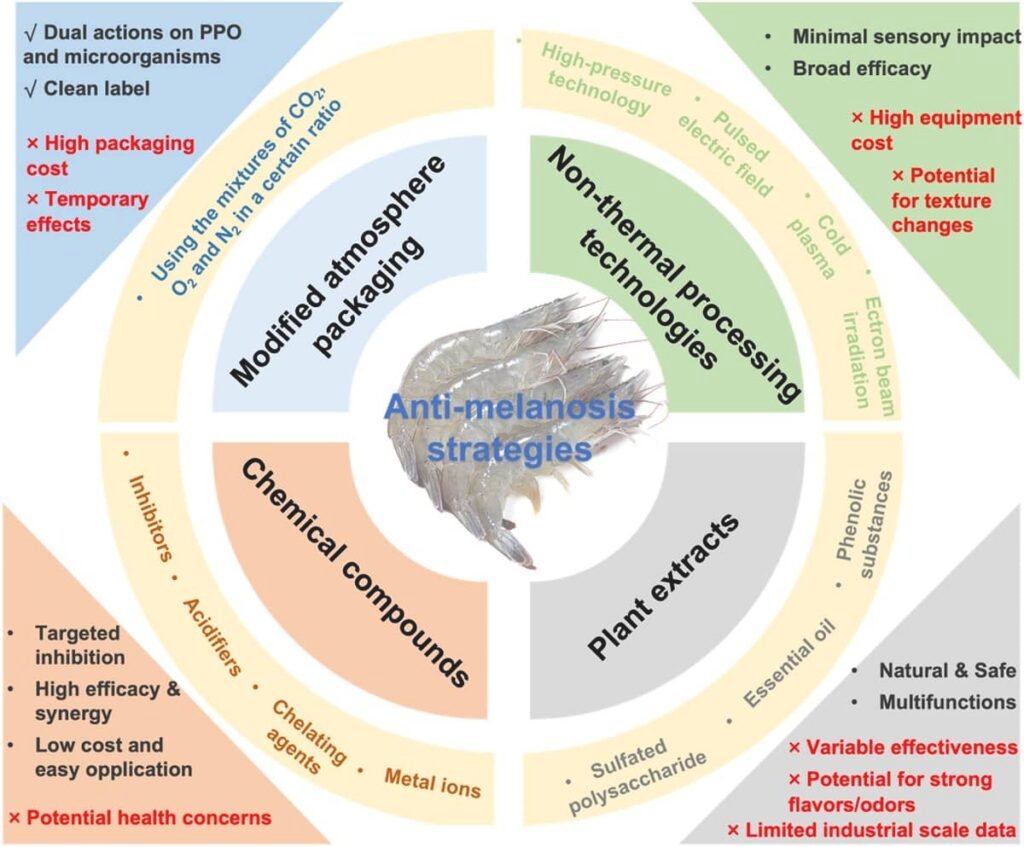
- 1 Key Study Highlights
- 2 What Is Shrimp Melanosis and Why Does It Occur?
- 3 Live Shrimp Physiology and Scheduled Harvesting
- 4 Sodium Metabisulfite: Effective, Accessible, and Facing Serious Regulatory Challenges
- 5 Regulatory Framework and Maximum Residue Limits for Sulfites
- 6 Risks Associated with the Use of Sodium Metabisulfite
-
7
State of the Art in Melanosis Control: The Scientific Ecosystem
- 7.1 Geopolitical Leadership in Research: Top 5 Leading Countries
- 7.2 Analysis of the International Scientific Collaboration Map
- 7.3 Institutional Leadership by Thematic Cluster
- 7.4 Social Structure and Scientific Collaboration Dynamics: Co-Authorship Network
- 7.5 Conceptual Structure and Thematic Domains: Keyword Co-Occurrence
- 7.6 Thematic Map Analysis and Interpretation
- 7.7 Temporal Dynamics and Emerging Research Fronts (Overlay Visualization)
- 7.8 Thematic Evolution Analysis
- 8 Patent Analysis: The Corporate and Industrial Ecosystem
- 9 The Gap Between Science and Patents: The “White Space”
- 10 The End of Subjective Inspection: Digital Image Analysis in Quality Control
- 11 How to Choose the Best Strategy for Your Operation
- 12 Conclusions
-
13
Frequently Asked Questions Regarding Shrimp Melanosis
- 13.1 What causes melanosis in shrimp, and why does it represent a commercial concern?
- 13.2 Why is the shrimp industry seeking to replace sodium metabisulfite?
- 13.3 What natural and innovative alternatives exist to conventional sulfites?
- 13.4 Is it dangerous to consume shrimp with black spots?
- 13.5 Why does frozen shrimp still develop black spots?
- 14 References
- 15 Entradas relacionadas:
Key Study Highlights
- Multibarrier paradigmatic transition: Melanosis control in Litopenaeus vannamei has shifted from passive biochemical descriptions toward active, sulfite-free strategies, integrating biopolymers (chitosan) and botanical extracts to replace sodium metabisulfite without toxicity risks or hydrogen sulfide () emissions.
- Non-thermal technological frontier: Cold plasma and pulsed electric fields stand out as green technologies to inactivate tyrosinase without chemical residues, while virtual screening has identified five novel mechanistic PO1 inhibitors.
- Intellectual property and white spaces: Although China accounts for 100% of the leading patents by leveraging its triple helix model, a technological void (white space) remains in functionalized bioactive packaging and physical methods, thereby granting freedom to operate to international processors.
- Objective inspection via computer vision: The YOLO-shrimp model replaces empirical visual judgment with continuous mathematical metrics of the melanized surface, standardizing quality audits and mitigating commercial disputes during refrigerated storage (4 °C).
- Operational discipline and validated protocols: Strict thermal stability ( at ), the additive-free 5BTS slaughter method, and the integration of conventional handling with non-thermal innovations consolidate comprehensive post-harvest preservation.
Melanosis in shrimp—the dark pigmentation that develops on the exoskeleton, cephalothorax, and appendages following harvest—represents the primary driver of commercial rejection in the industry and a critical cause of economic losses. Far from being a pathological process or a sign of spoilage, it is an inherent biochemical alteration triggered after the crustacean is slaughtered. In the absence of effective control protocols, between 10% and 60% of total production can be downgraded or discarded solely on the basis of visual criteria associated with this phenomenon (Fricke et al., 2026).
Although the manifestation of melanosis reflects a decline in product quality standards (Lin et al., 2026), this enzymatic browning—mediated by endogenous catalysts such as polyphenol oxidase or tyrosinase—compromises neither food safety nor consumer health. Nonetheless, it severely penalizes acceptance throughout distribution channels (Ahmad et al., 2025).
In light of this scenario, research focused on mitigating melanosis spans from optimizing sulfite dosages to developing botanical inhibitors, cutting-edge synthetic formulations, advanced packaging, and edible coatings—a progression directed toward safer and more efficient solutions. This article examines the leading scientific and technological trends in the field, analyzing research networks, emerging lines of inquiry, and key patents to connect producers with viable short- and medium-term alternatives to sodium metabisulfite.
What Is Shrimp Melanosis and Why Does It Occur?
Shrimp melanosis—colloquially termed “blackspot”—is a post-mortem enzymatic process that triggers the formation of dark pigments on the crustacean’s surface (Fricke et al., 2026; Toledo et al., 2027). This alteration is catalyzed by the enzyme polyphenol oxidase (PPO), also known as tyrosinase, which oxidizes phenolic compounds into quinones that subsequently polymerize into melanin. This biochemical cascade causes surface discoloration during post-harvest handling, drastically diminishing the product’s market value (Nirmal et al., 2015; Ahmad et al., 2023; Kamali et al., 2024).
Although this phenomenon impairs visual appeal, sensory properties, and commercial profitability, it poses no risk to human health, nor does it indicate the presence of toxins (Fricke et al., 2026). A fundamental principle must be underscored: melanosis is not equivalent to bacterial spoilage. A batch may maintain optimal freshness and food safety while concurrently exhibiting dark spots. In essence, the challenge is aesthetic and commercial, although advanced stages typically coincide with broader quality degradation.
Why Is Melanosis Triggered?
In the living organism, the enzyme remains in an inactive state as a precursor termed prophenoloxidase (proPPO), a key component of the crustacean’s innate immune system (Lin et al., 2026). Following the animal’s death, specific proteases cleave this inhibitory mechanism, converting proPPO into its functional form (PPO). Nevertheless, Reyes Castillo et al. (2026) clarify that alongside the proPO/PPO system, hemocyanin-derived phenoloxidase (HdPO) constitutes an exceptionally abundant enzymatic pool in penaeid shrimp and acts as the primary driver of post-mortem melanosis.
From this point onward, the biochemical cascade progresses rapidly:
- Substrate oxidation: PPO oxidizes phenolic compounds within the tissue—such as tyrosine—converting them into quinones.
- Pigment polymerization: These quinones undergo spontaneous polymerization to form melanins, the characteristic brown and black chromatic complexes.
- Primary site of manifestation: The cephalothorax and appendages are the first to exhibit browning, given that the highest enzymatic density is concentrated in these regions.
Why Ice Alone Is Not Enough
According to Lin et al. (2026), although refrigeration and freezing lower enzymatic kinetics, they afford merely temporary inhibition; upon thawing, polyphenol oxidase (PPO) rapidly reactivates in the presence of molecular oxygen and available substrate. Cold storage at −18 °C solely suspends catalytic activity on a provisional basis, meaning that once the product thaws, the enzymatic pathway resumes and dark pigmentation proliferates anew, rendering icing essential yet insufficient and compelling processors to deploy chemical or botanical inhibitors to directly block the enzyme.
Furthermore, because PPO strictly requires molecular oxygen to oxidize colorless phenolic substrates into o-quinones (Lin et al., 2026), conventional icing fails to eliminate atmospheric oxygen exposure or contact with oxygenated wash water (Fricke et al., 2026). In addition, slow freezing or thermal cycling promotes macrocrystal formation that disrupts tissue and gut microstructure (Qiu Lin et al., 2026), leading to cellular rupture upon thawing that accelerates direct contact between endogenous enzymes and their amino acid substrates.
Mantente siempre informado
Stay Informed
Únete a nuestras comunidades para recibir al instante las noticias, informes y análisis más importantes del sector acuícola.
Join our communities to get instant access to the most important news, reports, and analysis from the aquaculture industry.
Live Shrimp Physiology and Scheduled Harvesting
The physiological status of live shrimp and the scheduling of harvesting operations directly govern the severity and rate at which post-mortem melanosis develops.
Physiology and the Molting Cycle (Ecdysis)
According to Fricke et al. (2026), in live crustaceans, the enzyme polyphenol oxidase (PPO) and its zymogen precursor (proPO) fulfill the vital physiological role of sclerotizing and hardening the nascent cuticle following each ecdysis event. Consequently, the specific stage of the molt cycle modulates tissue concentration, enzymatic distribution, and biochemical availability, thereby dictating post-harvest susceptibility to browning (Lin et al., 2026).
Furthermore, Fricke et al. (2026) and Lin et al. (2026) report that cuticular PPO activity varies markedly depending on species, nutritional and antioxidant status, and even sexual dimorphism—with males exhibiting up to twice the enzymatic activity of females in species such as Parapenaeus longirostris.
Pre-Harvest Stress and Thermal Shock
Shrimp subjected to abrupt thermal fluctuations or pre-processing cold stress display a heightened susceptibility to post-mortem melanosis (Fricke et al., 2026). According to Fricke et al. (2026), acute thermal stress causes structural disruption in highly vulnerable tissues—including the gills, digestive tract, and hepatopancreatic tubules—while simultaneously impairing cellular calcium () transport.
Scheduled Harvesting and Pre-Mortem Handling
Furthermore, Sipatuhar and Sitorus (2024) demonstrated that the culture system directly dictates post-harvest shelf life, with biochemical indices (pH and TVB-N), melanosis progression, and sensory deterioration advancing far more rapidly in specimens from intensive ponds than in those from traditional systems. Similarly, harvesting operations involving prolonged pre-mortem handling—such as extended depuration intervals prior to slaughter—prematurely activate enzymatic browning cascades as a result of cumulative stress (Ferrando-Juan et al., 2026).
In this regard, the swiftness with which slaughter is executed during scheduled harvesting modulates the onset of blackspot; while instantaneous thermal-shock stunning in chilled brine retards melanosis, confounding factors such as UV-C radiation (which induces oxidative stress) or ambient exposure exceeding 4–6 hours precipitate accelerated browning (Toledo et al., 2026; Ferrando-Juan et al., 2026).
Sodium Metabisulfite: Effective, Accessible, and Facing Serious Regulatory Challenges
Sodium metabisulfite (alongside other sulfite derivatives) constitutes the most widely adopted conventional treatment against melanosis owing to its low cost and proven efficacy. According to Reyes Castillo et al. (2026), no bio-based or natural alternative has successfully combined low-dose potency, absence of residues, organoleptic stability, and competitive economic viability against entrenched chemical benchmarks such as 4-hexylresorcinol (4-HR) or sodium metabisulfite (SMBS). However, while SMBS dominates the global shrimp industry, residual sulfite concentrations frequently exceed maximum residue limits (MRLs) due to inconsistent operational dosing (Fricke et al., 2026).
Application of Sodium Metabisulfite (SMBS)
According to Fricke et al. (2026), optimized protocols recommend a 2% SMBS dipping solution in 20 ppt saltwater for 10 minutes, which maintains residual sulfite levels below the US regulatory threshold of 100 ppm while effectively suppressing melanosis. Furthermore, although SMBS completely inhibits hemolymph PPO activity, its zymogens retain partial functionality and can be reactivated post-mortem by endogenous proteases such as trypsin; consequently, sulfite treatment does not permanently abolish the browning pathway (Fricke et al., 2026).
For their part, El Mahi et al. (2025) evaluated the efficacy of three application methods (immersion, dusting, and spraying) to mitigate blackspot and quantify residual concentrations in deep-water rose shrimp (Parapenaeus longirostris), testing four commercial formulations (1% to 3% sulfite, with 1 to 10 minutes of exposure) using enzymatic biosensors to monitor residual , pH, inhibition levels, and sensory olfactory profiles.
Key findings indicate:
- Dusting: Despite yielding superior sensory acceptance, it resulted in harmful residual levels that exceeded safe regulatory thresholds.
- Dipping: This proved to be the safest alternative by maintaining residual within compliant statutory limits, where the optimal regimen consisted of applying formulations with of at 1.25% bisulfite in seawater for 1 minute.
- Spraying: It demonstrated promising efficacy against enzymatic browning, although further investigation is required to delineate its practical scope and operational parameters.
Regulatory Framework and Maximum Residue Limits for Sulfites
International guidelines strictly govern maximum residue limits for sulfites in edible shrimp tissue, quantified as sulfur dioxide ():
- United States (US FDA): Mandates a maximum permissible limit of 100 ppm () in the edible portion of the crustacean (Fricke et al., 2026); moreover, any residual concentration equal to or exceeding requires mandatory allergen labeling (Reyes Castillo et al., 2026).
- European Union (EU): Enforces tiered maximum limits ranging between 150 ppm and 300 ppm according to commercial size grades: (), (), and () (Fricke et al., 2026; Reyes Castillo et al., 2026), requiring precautionary labeling from or upward.
- Brazil (ANVISA): Sets a statutory ceiling of 100 ppm () (Fricke et al., 2026).
- Organic Certifications: The application of SMBS is severely restricted or outright prohibited under standards such as USDA Organic, Naturland, or Demeter (Reyes Castillo et al., 2026).
Risks Associated with the Use of Sodium Metabisulfite
The application of sodium metabisulfite entails public health hazards for consumers, undermines commercial competitiveness and product quality, and poses potential adverse environmental impacts.
Consumer Risks: Allergenicity and Mandatory Labeling Requirements
Sulfites can induce adverse clinical reactions in sensitive individuals, ranging from acute respiratory distress to severe allergic manifestations. Consequently, residual concentrations must be declared on product packaging, and regulatory bodies such as the US FDA mandate explicit cautionary warnings whenever permitted thresholds are exceeded, compelling export processors to establish rigorous analytical monitoring and non-negotiable compliance protocols.
These additives act as potent allergens capable of triggering severe asthmatic exacerbations and hypersensitivity episodes in susceptible populations (Reyes Castillo et al., 2026); furthermore, as reported by Toledo et al. (2027), they provoke irritation of the oral, nasal, and gastric mucosae—resulting in coughing, nausea, emesis, and epigastric discomfort—while precipitating pulmonary edema and life-threatening anaphylaxis in critical cases (Ahmad et al., 2023; César et al., 2026).
Commercial Impact and Quality Degradation
Inadequate dosing regarding immersion duration or concentration frequently results in regulatory exceedances, triggering customs rejections of shipping containers and substantial financial losses (Fricke et al., 2026). Furthermore, overexposure to intensive treatments can induce undesirable reddish discoloration across the shrimp’s exoskeleton (Reyes Castillo et al., 2026; Xu et al., 2026).
Environmental Contamination Risks
The uncontrolled discharge or disposal of SMBS-laden wastewater disrupts hydrochemical parameters and causes acute toxicity within receiving aquatic ecosystems adjacent to processing facilities or harvesting zones (César et al., 2026).
State of the Art in Melanosis Control: The Scientific Ecosystem
For the export management of a shrimp processing enterprise, scientific research delivers tangible value only when translated into regulatory compliance and commercial viability. Within this framework, the portfolio of alternatives to sodium metabisulfite spans highly effective synthetic agents, clean-label botanical extracts, and emerging non-thermal physical technologies.
Geopolitical Leadership in Research: Top 5 Leading Countries
The global scientific landscape concerning shrimp melanosis is indisputably dominated by Asia, a region that concentrates both the largest worldwide aquaculture volume and the analytical capacity to resolve critical post-harvest hurdles:
- China (133 articles): Exercises clear leadership in scientific output, actively spearheading the transition toward biopolymers and physical preservation methods.
- Thailand (39 articles): Despite lower aggregate volume, its publications achieve a high impact factor, specializing in enzymatic kinetics and botanical extracts.
- Iran (27 articles): Stands out as a pivotal benchmark in edible coatings and essential oil formulations.
- India (22 articles): Sustains a strong operational focus on cost-effective alternatives rooted in phytotherapy and indigenous botanicals.
- Vietnam (16 articles): Rounds out the Asian bloc with applied research tailored to the post-harvest preservation of Penaeus monodon and Penaeus vannamei.
Analysis of the International Scientific Collaboration Map
The world map illustrates the social structure of the research field, determined through international co-authorship network analysis (Country Collaboration Analysis) using the Biblioshiny application within the bibliometrix package. This mapping visualizes geographical interactions and knowledge flows among nations, clearly identifying the leading scientific hubs and dominant transnational collaborative networks.
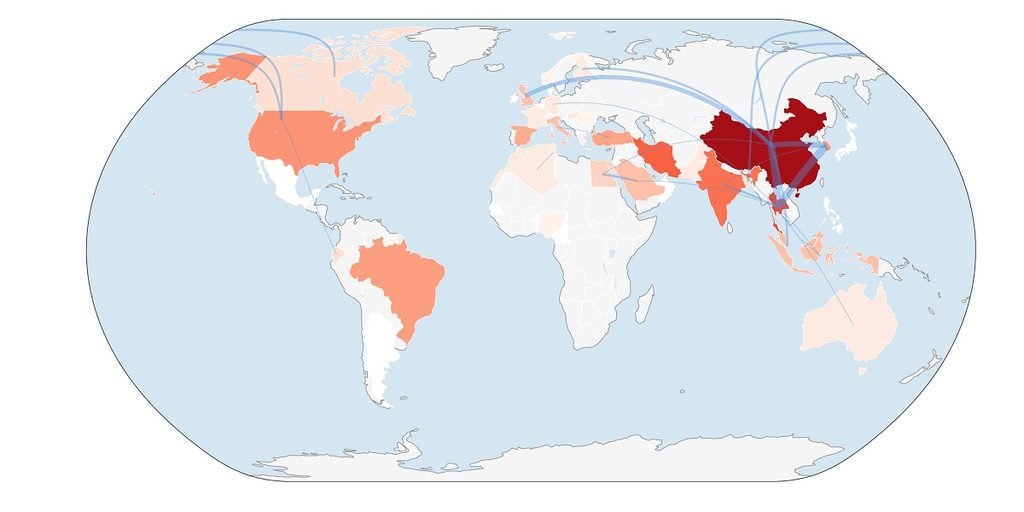
Below is a structured scientometric interpretation of the patterns and components identified in the figure:
- Hubs of scientific production (chromatic intensity):
- China (dominant node): The map renders China in deep dark red, illustrating its leading position with the highest scientific output across this bibliographic corpus.
- Intermediate-output nations: Countries such as the United States, Brazil, and several territories across Europe and Central Asia appear in orange and salmon tones, denoting a solid editorial foundation, albeit with lower publication volume relative to the primary Asian core.
- International collaboration corridors (connecting arcs):
- Intra-Asian and trans-Pacific connectivity: The blue arcs converging prominently on China uncover a robust co-authorship network, spanning both intra-regional linkages and strategic extra-regional partnerships in North America and Europe.
- Global multilateral cooperation: These trajectories trace Multiple Country Publications (MCP), demonstrating that overarching research trajectories in this discipline are driven by cross-continental global consortia.
Institutional Leadership by Thematic Cluster
When correlating academic institutions with the keywords defining distinct preservation paradigms, leadership shifts substantially according to the technological domain examined:
- Line 1: Polymers and bioactive coatings (chitosan and gelatin)
- Benchmark institutions: Shiraz University (Iran), Zhejiang Ocean University (China), and Jimei University (China).
- Strategic implication: The vanguard in biopolymer films and active packaging is concentrated in Iranian and Chinese research centers possessing robust expertise in materials science.
- Line 2: Botanical paradigm (plant extracts, essential oils, and polyphenols)
- Benchmark institutions: Prince of Songkla University (Thailand), followed by Zhejiang Ocean University (China) and Kyung Hee University (South Korea).
- Strategic implication: Thailand historically leads this field, serving as the academic base for pioneering researchers such as S. Benjakul.
- Line 3: Emerging physical technologies (cold plasma, electric fields, and nanotechnology)
- Benchmark institutions: Prince of Songkla University (Thailand), Zhejiang Ocean University (China), and Shahid Beheshti University of Medical Sciences (Iran).
- Strategic implication: Leading applied-biochemistry centers are pivoting toward advanced physical interventions, with Thailand distinguishing itself in adapting pulsed electric fields to commercial processing.
To evaluate critical mass, academic leadership, and the consolidation of collaborative research networks in shrimp melanosis, a co-authorship network was constructed using fractional counting to mitigate biases associated with hyper-collaborative publications. Integrating the analytical environments of VOSviewer (Network, Overlay, and Density Visualization) enabled a rigorous characterization of the overarching collaboration architecture:
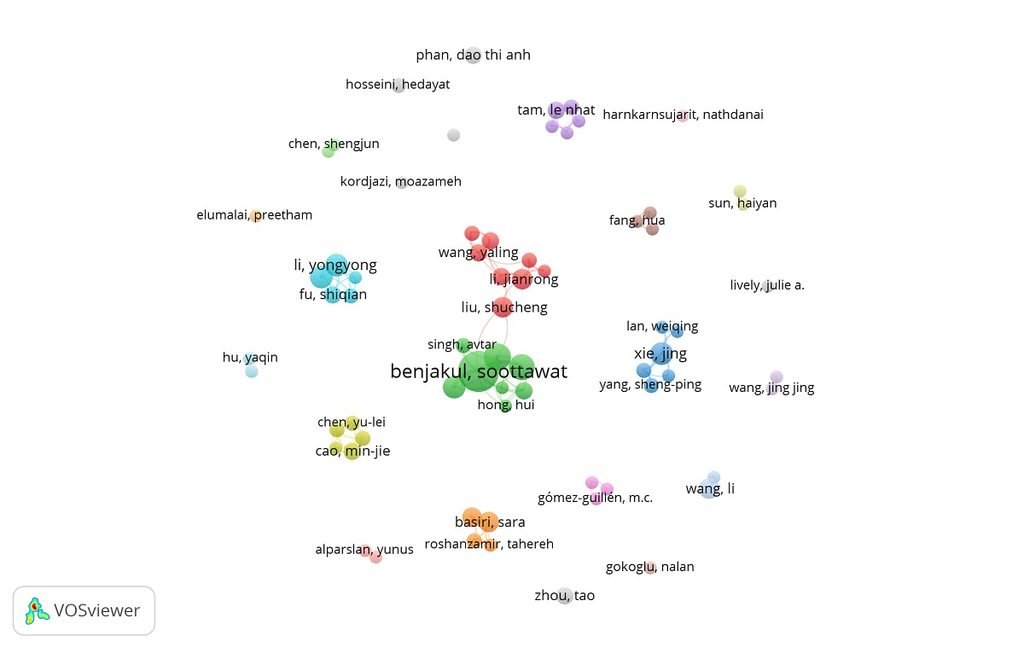
Collaboration Network Analysis (Network Visualization)
Network visualization reveals that the scientific community in this field operates in a highly fragmented manner across specialized, geographically and institutionally distinct clusters anchored around established reference laboratories in Asia and the Middle East:
- Central Core / Thai Consortium (Central Cluster – Green/Blue):
- Benchmark researchers: Soottawat Benjakul (dominant central node exhibiting the highest network centrality), Hui Hong, and Avtar Singh.
- Strategic lines: Enzymatic inhibition of polyphenol oxidase (PPO) using botanical extracts; application of phenolic compounds, bioactive peptides, and agro-industrial byproducts to mitigate melanosis in whiteleg shrimp (Penaeus vannamei); and physicochemical, sensory, and functional assessment of post-harvest muscle integrity.
- Chinese Food Technology and Shelf-Life Consortium (Northern Cluster – Red):
- Benchmark researchers: Yaling Wang, Jianrong Li, and Shucheng Liu.
- Strategic lines: Shelf-life extension under refrigerated and frozen storage regimes; formulation of active packaging, biodegradable coatings, and advanced oxygen barriers; and optimization of commercial post-harvest preservation protocols.
- Chinese Enzymatic Biochemistry Consortium (Southwestern Cluster – Yellow):
- Benchmark researchers: Min-jie Cao and Yu-lei Chen.
- Strategic lines: Molecular and kinetic characterization of tyrosinase and oxidative enzymes driving enzymatic browning; protein purification and analysis of interactions between pigments (such as astaxanthin) and exoskeleton protein complexes.
- Chinese Oxidation and Stability Consortium (Western Cluster – Cyan):
- Benchmark researchers: Yongyong Li and Shiqian Fu.
- Strategic lines: Concurrent dynamics of lipid and protein oxidation during storage; cytotoxicity assays and safety profiling of sulfite-alternative preservatives.
- Iranian Biopolymers and Coatings Consortium (Southern Cluster – Orange):
- Benchmark researchers: Sara Basiri and Tahereh Roshanzamir.
- Strategic lines: Application of chitosan and marine-derived biopolymers in edible coatings; incorporation of essential oils and botanical extracts exhibiting antioxidant and antimicrobial bioactivities to curb microbiological spoilage and melanosis.
- Cold Chain and Distribution Consortium (Eastern Cluster – Blue):
- Benchmark researchers: Jing Xie, Weiqing Lan, and Sheng-ping Yang.
- Strategic lines: Thermal monitoring and cold-chain integrity across crustacean logistics and retail; implementation of modified atmosphere packaging and emerging non-thermal physical technologies (pulsed electric fields and cold plasma).
Table 01: Summary of Scientific Leadership in Co-Authorship Networks.
| Group / Consortium | Benchmark Researchers | Host Country / Region | Priority Thematic Focus |
| Global Reference Core | Soottawat Benjakul, Hui Hong | Thailand / China | Enzymatic inhibition via polyphenols and post-harvest protein integrity. |
| Food Technology | Yaling Wang, Jianrong Li, Shucheng Liu | China | Shelf-life extension, active packaging, and industrial preservation protocols. |
| Enzymatic Biochemistry | Min-jie Cao, Yu-lei Chen | China | Molecular kinetics of tyrosinase and isolation of browning enzymes. |
| Oxidative Stability | Yongyong Li, Shiqian Fu | China | Interplay between lipid oxidation, protein stability, and antioxidant balance. |
| Advanced Biopolymers | Sara Basiri, Tahereh Roshanzamir | Iran | Edible coatings, chitosan formulations, and botanical extracts. |
| Cold Chain & Logistics | Jing Xie, Weiqing Lan | China | Refrigeration thermal management, modified atmospheres, and non-thermal technologies. |
Conceptual Structure and Thematic Domains: Keyword Co-Occurrence
Author keyword co-occurrence analysis mapped the intellectual architecture, conceptual framework, and primary research lines regarding melanosis in whiteleg shrimp (Penaeus vannamei). Notably, while studies on Penaeus monodon exist, their documentary volume is substantially lower. Matrix normalization using the association strength metric and the modularity algorithm delineated a highly interconnected network structured around two guiding cores and five dominant thematic clusters.
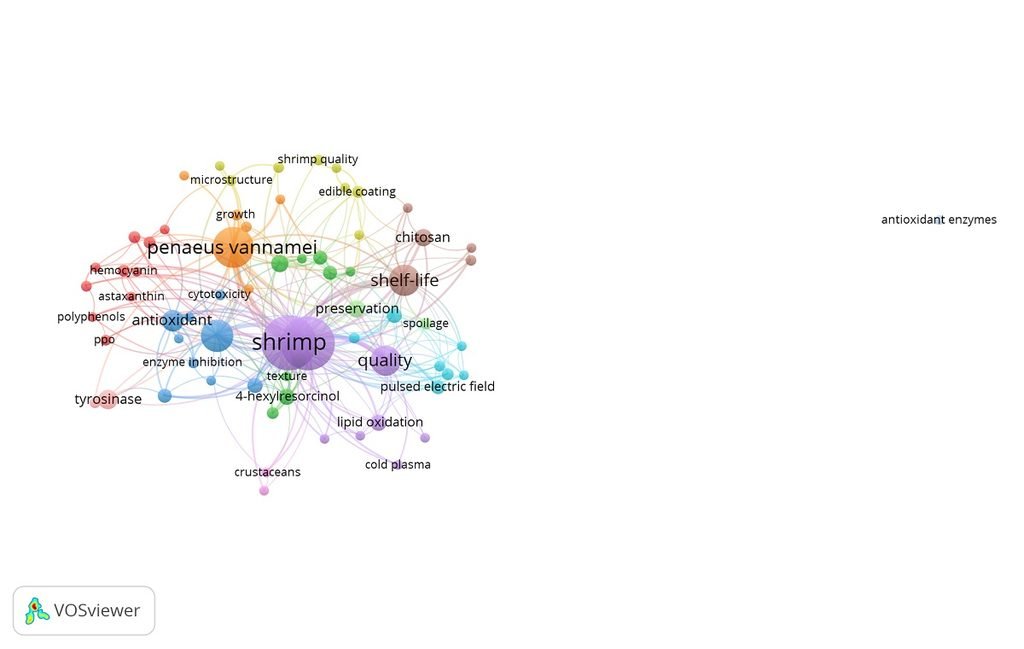
The network nodes exhibiting the highest centrality and relational weight correspond to the descriptors shrimp and Penaeus vannamei, confirming that the Pacific white shrimp serves as both the predominant biological model and the strategic commercial cornerstone around which specialized scientific literature revolves. Radiating from this structural core, the following research fronts are delineated:
Cluster 1: Biochemical mechanisms and enzymatic pathways of melanosis (Red/Pink)
This domain aggregates terms tied to elucidating the molecular and enzymatic foundations of post-harvest browning, highlighting key descriptors such as tyrosinase, ppo (polyphenol oxidase), hemocyanin, astaxanthin, and polyphenols. Research within this cluster scrutinizes the catalytic function of polyphenol oxidase and the phenoloxidase activity of hemocyanin in the oxidation of phenols to quinones, alongside the interplay between these protein complexes and carotenoid pigments—such as astaxanthin—during crustacean quality degradation.
Cluster 2: Model species, growth, and cellular response (Orange)
Anchored by the unified node Penaeus vannamei, this cluster brings together descriptors such as microstructure, growth, and cytotoxicity. This investigative line correlates the ultrastructural properties of the exoskeleton and muscular tissue with melanosis progression, while concurrently evaluating the cytotoxicity profiles and biological safety of emerging bioactive formulations throughout the farming and harvesting phases.
Cluster 3: Preservation, shelf life, and biopolymers (Brown/Ochre)
This technological domain is defined by descriptors such as shelf-life, preservation, chitosan, edible coating, and spoilage. It embodies the applied food-science branch dedicated to extending commercial shelf life using biodegradable chitosan-based coatings, which serve both as physical oxygen barriers and as carrier matrices for antioxidant and antimicrobial compounds.
In this regard, Tam et al. (2025) demonstrated that a combined formulation of 0.5% benzaldehyde and 2% chitosan extended shrimp shelf life up to 15 days, outperforming benzaldehyde alone (12 days), isolated chitosan (11 days), and untreated control samples (8 days). Similarly, César et al. (2026) showed that an active chitosan film enriched with 1% acerola extract provides an effective botanical substitute for sodium metabisulfite in whiteleg shrimp (Litopenaeus vannamei), as this bioactive coating extended shelf life at 4 °C from 6 to 9 days compared to untreated controls.
Cluster 4: Quality, oxidation, and emerging non-thermal technologies (Light Blue/Violet)
Encompassing nodes such as quality, pulsed electric field, cold plasma, lipid oxidation, and crustaceans, this cluster tackles holistic crustacean deterioration by evaluating how melanosis progression intersects with lipid oxidation and muscle firming loss. Furthermore, it highlights the deployment of non-thermal processing interventions (pulsed electric fields and cold plasma) designed to inactivate oxidative enzymes without compromising sensory attributes or nutritional profiles.
In this context, Toledo et al. (2027) documented the use of plasma-activated solutions (PAS)—specifically ascorbic acid activated by gaseous oxygen plasma (O₂-PAA)—as a safe, effective alternative to sodium metabisulfite (SMS) to inhibit melanosis and maintain the freshness of whiteleg shrimp (Penaeus vannamei) stored at 4 °C for 9 days.
Cluster 5: Inhibitory agents and antioxidant activity (Blue)
Comprising descriptors such as antioxidant, enzyme inhibition, and 4-hexylresorcinol, this domain investigates the enzyme inhibition kinetics of both established synthetic alternatives (4-hexylresorcinol) and botanical antioxidant formulations aimed at definitively phasing out conventional sulfites and sulfiting agents.
Thematic Map Analysis and Interpretation
The thematic map generated in Biblioshiny through co-word analysis and network clustering algorithms constitutes the central analytical phase of the SAAS methodological framework. This Callon strategic diagram plots scientometric themes across a two-dimensional space.
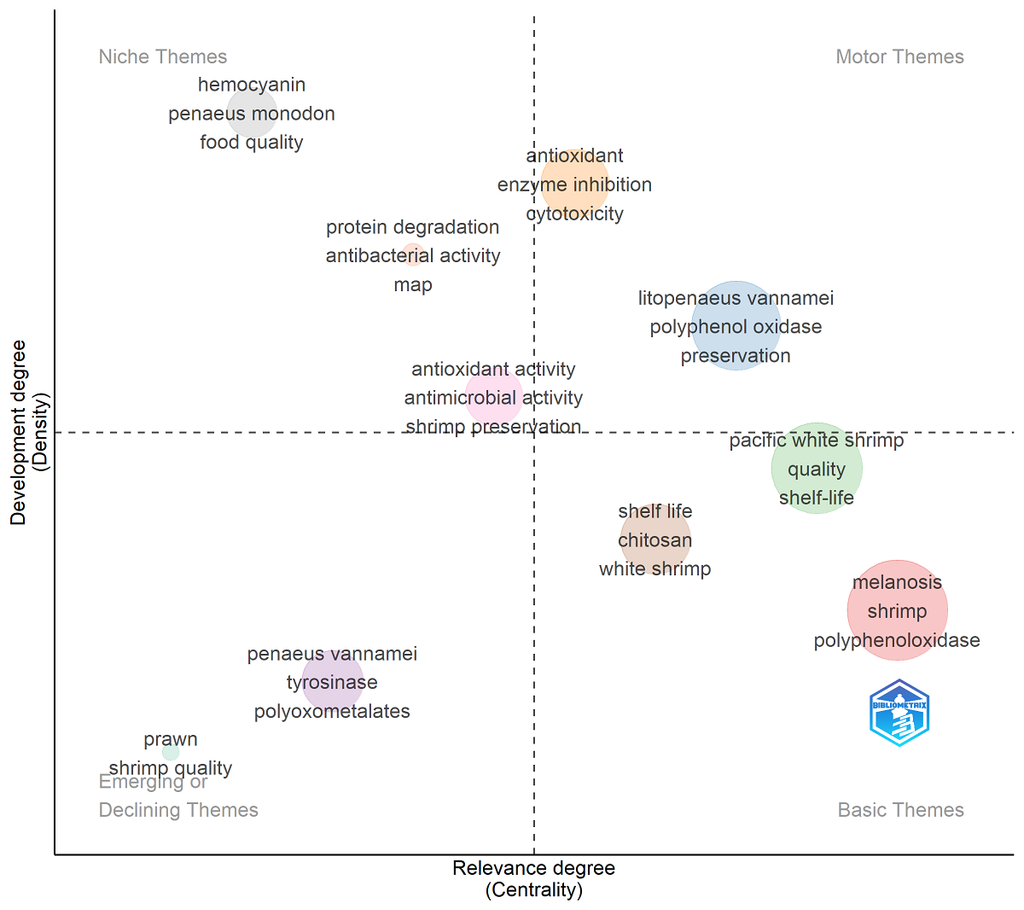
Below is a structured interpretation of the four quadrants applied to this research domain:
- Upper-right quadrant: Motor Themes: These represent well-developed, central, and firmly established areas that drive frontline research:
- Blue cluster (Litopenaeus vannamei, polyphenol oxidase, preservation): Operates as a primary engine of the network, reflecting consolidated research on Pacific white shrimp focused on the catalytic role of polyphenol oxidase in enzymatic browning and the engineering of advanced preservation methods.
- Orange cluster (antioxidant, enzyme inhibition, cytotoxicity): Denotes a mature research line encompassing bioactive formulations, enzyme inhibition kinetics, and cytotoxicity profiles, demonstrating the strategic synergy between food technology and applied toxicology in seafood processing.
- Lower-right quadrant: Basic and Transversal Themes: These embody foundational, cross-cutting lines defined by high centrality but moderate internal density (bounded autonomous development):
- Primary red/brown cluster (melanosis, shrimp, polyphenoloxidase): Displays maximal structural centrality as the conceptual bedrock of the corpus, bridging post-mortem deterioration (melanosis) and its catalytic driver with peripheral research fronts.
- Green cluster (Pacific white shrimp, quality, shelf-life) and brown cluster (shelf life, chitosan, white shrimp): Form the technological pillar of storage stability and shelf-life extension, positioning biopolymers such as chitosan as benchmark solutions for industrial preservation.
- Upper-left quadrant: Niche or Highly Specialized Themes: These exhibit substantial internal density due to high internal cohesion, yet remain peripheral due to low network centrality:
- Gray cluster (hemocyanin, Penaeus monodon, food quality): Encompasses specialized biochemical topics centered on crustacean physiology (hemocyanin) or targeted species (Penaeus monodon), which, despite technical sophistication, exert lower relational pull on mainstream commercial processing discussions.
- Pink cluster (protein degradation, antibacterial activity, MAP): Centers on discrete molecular mechanisms of protein turnover and targeted antibacterial profiling coupled with modified atmosphere packaging (MAP).
- Lower-left quadrant: Emerging or Declining Themes: These display both low centrality and weak internal density, marking nascent areas or receding pathways depending on temporal shifts:
- Purple cluster (Penaeus vannamei, tyrosinase, polyoxometalates) and light-toned cluster (prawn, shrimp quality): Represent specialized offshoots or narrow analytical avenues, including the targeted use of polyoxometalates for tyrosinase modulation.
Temporal Dynamics and Emerging Research Fronts (Overlay Visualization)
The overlay visualization examines the chronological progression of the field from 2019 to 2023, evidencing a paradigm shift in strategies directed at mitigating melanosis.
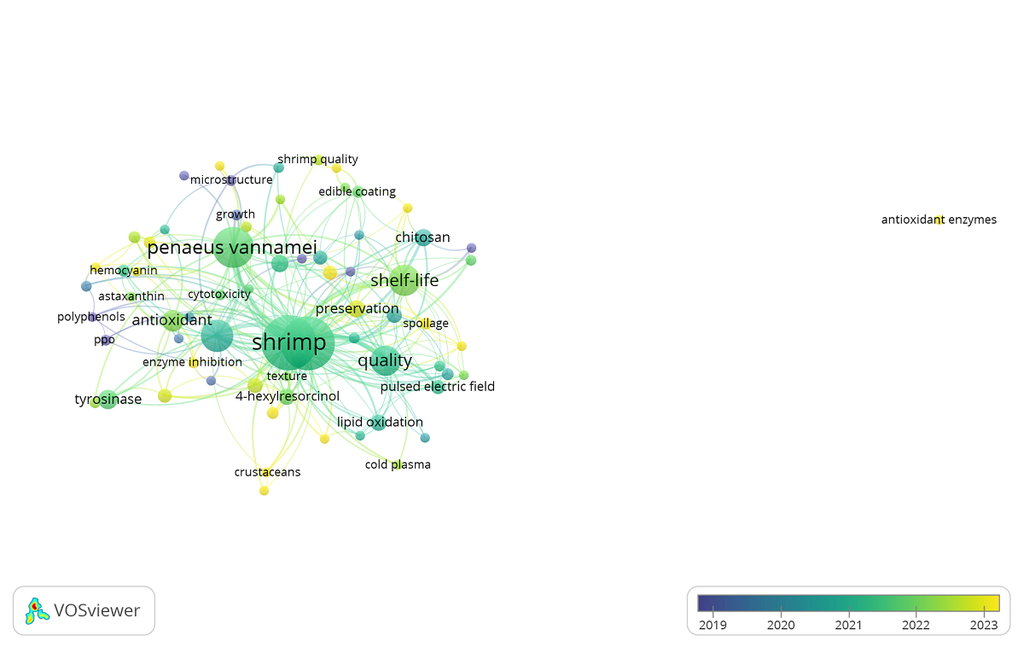
Foundational Core and Consolidated Themes (Dark Blue/Green Gradient, 2019–2020)
Initial research in this period focused on the descriptive characterization of spoilage, molecular isolation and identification of polyphenol oxidase (ppo), microstructural analysis (microstructure), and quantification of the impact of melanosis on tissue firmness.
Methodological Transition Phase (Light Green Gradient, 2021–2022)
This phase consolidated shelf-life modeling (shelf-life), the formulation of bioactive chitosan-based matrices (chitosan), and the evaluation of oxidative stress linked to lipid oxidation (lipid oxidation).
Research Front and Recent Trends (Bright Yellow Gradient, 2022–2023)
The scientific vanguard has shifted decisively toward sustainability and post-harvest green biotechnology, centering on three priority fronts:
- Advanced non-thermal processing: Adoption of cold plasma (cold plasma) and pulsed electric fields (pulsed electric field) as clean technologies to inhibit tyrosinase without leaving chemical residues. According to Lin et al. (2026), cold plasma ionizes gases to generate free radicals and electrons that inactivate PPO and microbial flora; concurrently, pulsed electric fields apply inter-electrode discharges to induce conformational enzyme denaturation. Additionally, Fan et al. (2025) demonstrated the efficacy of high-voltage alternating electric fields (HAEF) in preserving the freshness and quality of Pacific white shrimp (Litopenaeus vannamei) during partial-freezing storage.
- Active packaging and edible coatings: Refinement of functional films (edible coatings) fortified with bioactive peptides or botanical enzyme inhibitors.
- Enzymatic and cellular protection: Emergence of the antioxidant enzymes node and investigations into enzyme inhibition, aimed at modulating endogenous antioxidant defenses against the post-mortem oxidative cascade. Along these lines, Xu et al. (2026) utilized structural virtual screening and experimental validation to identify five novel PO1 inhibitors: glutamic acid, aspartic acid, 5-aminolevulinic acid hydrochloride (5-ALA), azelaic acid, and trans-10-hydroxy-2-decenoic acid (10-HDA).
Thematic Evolution Analysis
The Sankey diagram contrasts two pivotal analytical periods in research on melanosis and quality across the shrimp industry: the foundational consolidation phase (2015–2022) and the contemporary and projected scientific frontier (2023–2027).
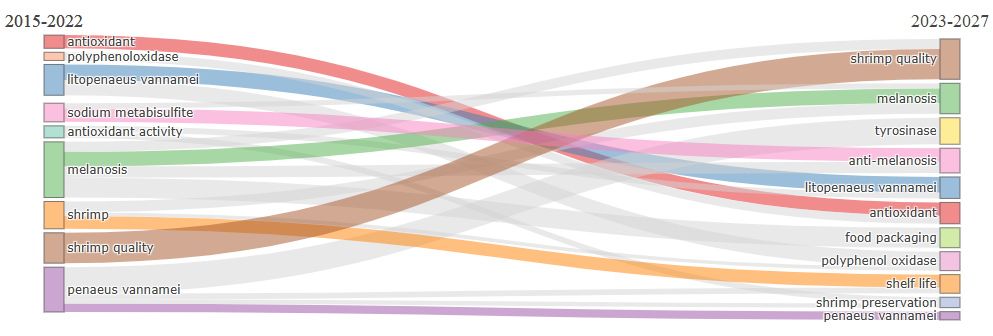
Below is a comprehensive scientometric analysis of lineage strength, conceptual stability, and thematic shifts reflected in the flow dynamics of the Sankey diagram:
- Etiological Core and Applied Bifurcation (Melanosis → Anti-melanosis and Shrimp Quality)
- Central Node (2015–2022): The descriptor melanosis (green block) serves as the gravitational axis with the highest documentary density in the initial period, confirming that characterizing post-mortem enzymatic browning represented the core analytical priority of the literature.
- Transition and Bifurcation Dynamics (2023–2027): A substantial fraction of the thematic flow converges into the homologous melanosis node (green block), underscoring the ongoing relevance and continuity of foundational biochemical and physiological research. Concurrently, a major stream branches toward anti-melanosis (pink block) and shrimp quality (upper brown block). This trajectory demonstrates a paradigm shift: the field has advanced beyond merely describing discoloration to prioritize active enzymatic inhibition technologies and their decisive impact on commercial quality standards.
- Technological Transition: From Chemical Additives to Enzymes and Advanced Packaging
- Evolution of Traditional Additives: During 2015–2022, descriptors such as sodium metabisulfite (light pink block) were directly linked to anti-melanosis and shelf life. Although metabisulfite historically served as the industrial benchmark against browning, stringent regulatory limits on residual sulfites accelerated the transition toward safer, non-toxic alternatives.
- Consolidation of Technological Frontiers: Decisive flows emerge toward food packaging (light green block) and shrimp preservation (gray block). This trajectory confirms that contemporary research (2023–2027) has pivoted away from conventional chemical dip treatments toward advanced active packaging systems and biodegradable coating matrices, incorporating biopolymers such as chitosan for the holistic preservation of the crustacean.
- Stability of the Model Species (Litopenaeus vannamei / Penaeus vannamei)
- Diachronic Connectivity: The baseline ribbons associated with the scientific nomenclature of the crustacean (purple and blue blocks for Litopenaeus vannamei and Penaeus vannamei) demonstrate nearly invariant longitudinal stability across both analytical windows.
- Scientometric Interpretation: This pattern confirms that Pacific white shrimp (Litopenaeus vannamei) is not an ephemeral research trend, but rather the cornerstone biological taxon upon which virtually all biochemical, enzymatic, and post-harvest preservation innovations converge, are tested, and gain validation.
- Enzymological Dynamics: Polyphenoloxidase vs. TyrosinaseDuring the foundational period, the catalytic driver of browning was predominantly indexed under the descriptor polyphenoloxidase. In the contemporary phase (2023–2027), the diagram reveals branching into specific terms such as tyrosinase (yellow block) alongside a discrete polyphenol oxidase node (light pink). This shift highlights heightened mechanistic rigor in recent scholarship, oriented toward targeted inhibition of the tyrosinase pathway.
Table 2. Synthesis of Thematic Domains and Trends in Shrimp Melanosis Research.
| Cluster / Domain | Priority Key Descriptors | Core Methodological Approach | Scientometric Maturity Stage |
| Enzymatic Mechanism | Tyrosinase, PPO, Hemocyanin, Astaxanthin, Polyphenols | Molecular biochemistry and characterization of oxidative pathways. | Consolidated |
| Biopolymers & Preservation | Shelf-life, Preservation, Chitosan, Edible coating | Formulation of biodegradable coatings and active packaging. | Expanding |
| Non-Thermal Technologies | Cold plasma, Pulsed electric field, Lipid oxidation | Food engineering and green non-thermal preservation. | Emerging (Active Front) |
| Enzyme Inhibition | Antioxidant, 4-hexylresorcinol, Enzyme inhibition | Inactivation kinetics and sulfite replacement. | Consolidated / Active |
| Antioxidant Enzymes | Antioxidant enzymes, Shrimp quality, Cytotoxicity | Endogenous redox modulation and cellular safety. | Emerging |
Patent Analysis: The Corporate and Industrial Ecosystem
This section examines patents related to shrimp melanosis control, characterizing key applicant entities and protected technological domains to identify strategic innovation niches and gaps.
Top Patent Applicant Institutions
Following standard normalization and deduplication protocols across patent families, industrial property ownership is distributed as follows:
- Dalian Polytechnic University (China): 7 unique patent families.
- Qingdao Xinmeng Information Technology (China): 5 unique patent families.
- Gou Xiuqin (independent inventor, China): 5 unique patent families.
- Zhejiang Ocean University (China): 3 unique patent families.
- Zhejiang Marine Development Research Institute (China): 3 unique patent families.
- Guangxi Nanning Tanglang Food (China): 3 unique patent families.
- Liu Yi (independent inventor, China): 3 unique patent families.
The analysis of these patent assignees outlines a clear geopolitical and corporate landscape:
- Absolute concentration in the Asian market: All leading patenting entities are based in China, revealing a notable absence of North American, European, or Latin American institutions at the forefront of registered inventions for melanosis control over the past decade.
- Operationalization of the Chinese Triple Helix: The patent portfolio is concurrently driven by academia (Dalian Polytechnic University), agri-food technology firms (Qingdao Xinmeng Information Technology), and direct seafood processors (Guangxi Nanning Tanglang Food), ensuring expedited legal protection for novel formulations and active packaging innovations.
- Prominence of independent inventors: The standing of figures such as Gou Xiuqin (5 patents) demonstrates that individual innovators secure utility models for targeted botanical formulations and bioactive extracts, establishing proprietary commercial rights alongside major corporate entities.
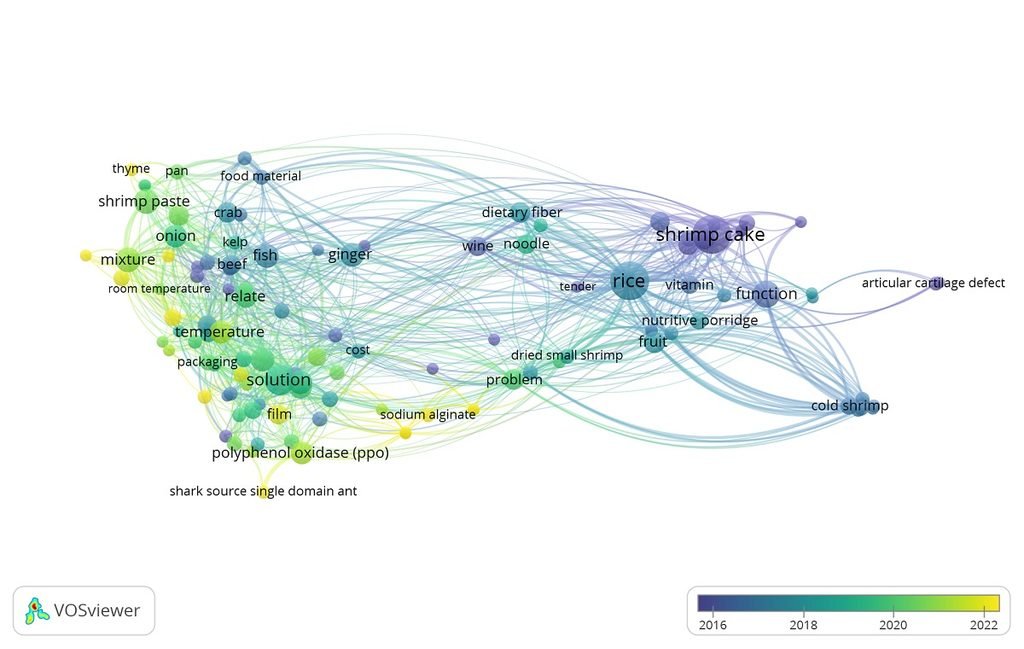
Analysis of Technological Clusters and Domains (Network Visualization)
In the cluster-structured term co-occurrence map, the technological network clearly resolves into three guiding innovation fronts:
- Central Technological Cluster / Biochemical Core (Red – Lower/Center): Represents the focal axis of intellectual property concerning catalytic control, dominated by descriptors such as solution, film, polyphenol oxidase (ppo), packaging, temperature, and sodium alginate, and encompassing patents directed toward enzymatic inhibition mechanisms, bioactive films, and smart packaging matrices.
- Botanical Additives and Bioactive Extracts Cluster (Green – Left): Assembles terms such as mixture, shrimp paste, onion, thyme, ginger, kelp, and food material, evidencing formulations based on plant extracts and essential oils aligned with the clean-label trend to permanently replace synthetic sulfites.
- Food Matrix Integration Cluster (Blue/Cyan – Right): Connects nodes such as rice, shrimp cake, cold shrimp, dietary fiber, function, and noodle, reflecting patented inventions where melanosis prevention is holistically validated within processed foods and ready-to-eat shrimp preparations.
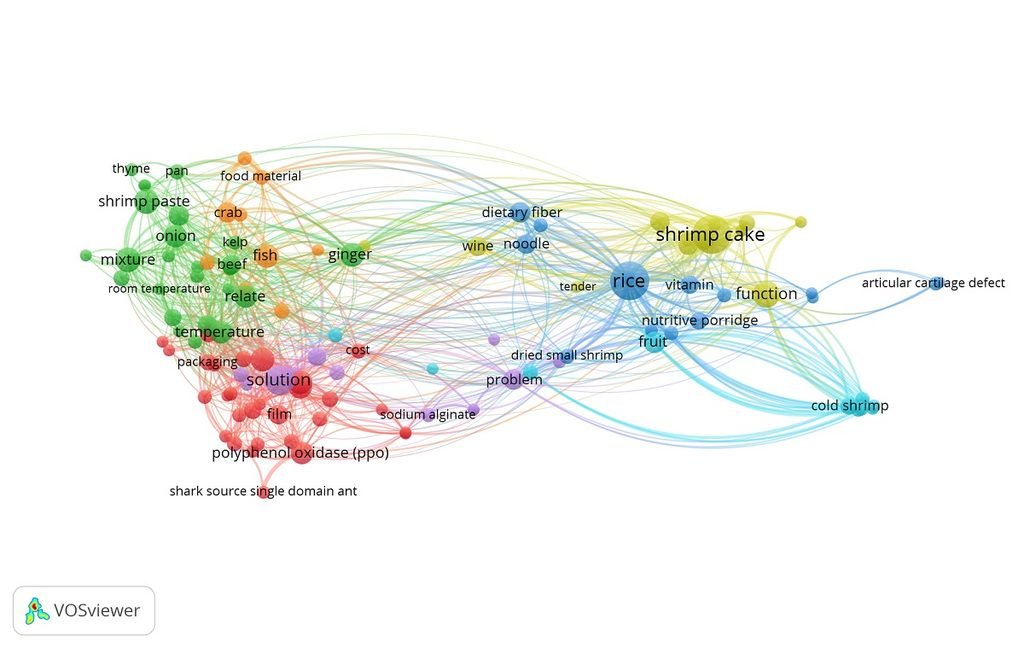
Detection of the Technological Frontier (Overlay Visualization)
Examining the chronological gradation of the temporal mapping (2016–2022) reveals a disruptive transition in inventive and technological protection strategies:
- Mature Technologies (Blue tones, 2016–2018): Early patents centered on integrating shrimp by-products into conventional food matrices (shrimp cake, rice, cold shrimp) and generic functional formulations.
- Contemporary Technological Frontier (Yellow and light green tones, 2020–2022): Patenting priorities shifted toward materials engineering and advanced preservation formulations, led by the most recent nodes:
- sodium alginate and film (biopolymer matrices for biodegradable films and coatings).
- packaging and temperature (active packaging systems and controlled refrigerated preservation).
- polyphenol oxidase (ppo) and solution (physicochemical optimization of catalytic inactivation solutions).
- thyme and shrimp paste (functionalization with botanical extracts and bioactive essential oils).
Identification of White Spaces and Strategic Opportunities in the Patent Market
- Combinatorial innovation bridges: The convergence between the polyphenol oxidase (ppo) and film nodes (lower region, yellow-green gradient) acts as a structural link bridging classical chemical formulations and biopolymer matrices.
- White space opportunity: A low interconnection density is identified between the botanical extracts domain (thyme, ginger) and the advanced packaging cluster (film, sodium alginate).
- Strategic R&D&I opportunity: Formulate biodegradable active films loaded with controlled-release botanical compounds for PPO inhibition in fresh refrigerated shrimp—a technological window characterized by high commercial traction and low patent saturation compared to conventional sulfiting additive films.
The Gap Between Science and Patents: The “White Space”
Scientometric comparison reveals that registered corporate technology plateaued around 2019–2020 within conventional botanical formulations, leaving open white spaces devoid of restrictive intellectual property monopolies over cold plasma, pulsed electric fields, or next-generation active packaging for crustaceans. Consequently, shrimp processing plants have clear freedom to operate (FTO), enabling them to deploy these emerging physical technologies without infringing upon international patents.
The End of Subjective Inspection: Digital Image Analysis in Quality Control
For decades, in-plant melanosis detection relied on human visual appraisal: inspectors empirically assessing whether a lot exhibited objectionable discoloration. This methodology entails critical drawbacks: it is inherently subjective, susceptible to operator fatigue, and prone to recurring commercial disputes between processors and buyers.
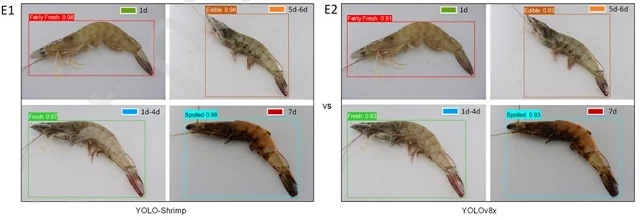
Digital image processing and computer vision fundamentally revolutionize this paradigm by replacing qualitative estimates with metric precision to determine the affected surface fraction. In this context, Hou et al. (2024) investigated the quality kinetics of Pacific white shrimp (Litopenaeus vannamei) stored at 4 °C for seven days, leveraging the YOLOv8 architecture to develop the YOLO-shrimp model for rapid discrimination of freshness and browning extent.
This breakthrough consolidates advanced technologies for continuous, comprehensive post-harvest monitoring, yielding a quantitative, reproducible, and traceable benchmark: the mathematical percentage of melanized surface area. For a processing line, this enables automated auditing, commercial claim mitigation, and robust standardization warranties, marking the technological leap from merely observing the crustacean to quantifying it with exacting accuracy.
How to Choose the Best Strategy for Your Operation
There is no one-size-fits-all solution; the optimal strategy depends on your operational tier and target market:
- Artisanal Fisher or Small-Scale Farmer: Prioritize operational rigor by harvesting at the optimal intermolt stage, applying immediate cold shock, sanitizing tails after deheading, and avoiding excessive sulfite dosing to prevent hazardous hydrogen sulfide (H₂S) emissions. Strict cold-chain maintenance substantially curtails browning progression.
- Export-Oriented Processing Facility: Align high-potency inhibitory agents with importing safety regulations. When supplying the US, Japan, or the European Union, audit residual sulfite thresholds or transition to sulfite-free alternatives—such as 4-hexylresorcinol or targeted enzyme inactivators—to streamline clean labeling compliance.
- Niche-Market Producer (Clean Label): Botanical formulations and circular biopolymers, such as chitin-derived chitosan, provide proven anti-melanosis efficacy alongside a compelling sustainability narrative that commands premium market positioning.
- Quality Assurance Manager: Deploy computer vision and digital image analysis to transition to automated quantitative grading, mitigate commercial disputes, and support certification audits with reproducible metrics.
In this context, Ahmad et al. (2025) conclude that holistic crustacean preservation requires orchestrating conventional interventions (botanical additives and targeted chemical inhibitors) with cutting-edge non-thermal hurdles, including high hydrostatic pressure, atmospheric cold plasma, pulsed electric fields, and modified atmosphere active packaging. Furthermore, Qiu Lin et al. (2026) established that strict thermal stability (±1.0 °C), critical freezing velocity, and precise relative humidity control (±1% RH) represent decisive factors in preventing physicochemical and microbial deterioration during frozen storage at −18 °C.
Concurrently, Ferrando-Juan et al. (2026) demonstrated that the 5BTS protocol (a 5-minute pre-dip in chilled seawater with 50 ppm sodium hypochlorite followed by cold shock) represents the most viable humane slaughter method for biofloc-reared shrimp (Penaeus vannamei), delaying melanosis onset by approximately three days relative to conventional harvesting while safeguarding sensory integrity and inhibiting critical bacterial spoilage without synthetic additives.
Conclusions
Scientometric research confirms a paradigm shift in Pacific white shrimp (Litopenaeus vannamei) post-harvest processing: melanosis management has advanced from simple biochemical browning characterization toward a proactive hurdle-technology framework. In this setting, the phase-out of sodium metabisulfite consolidates sulfite-free formulations anchored by biopolymers such as chitosan and bioactive botanical extracts, while emerging non-thermal hurdles—notably atmospheric cold plasma and pulsed electric fields—inactivate polyphenol oxidase and modulate post-mortem antioxidant defenses without compromising muscle firmness or leaving objectionable chemical residues.
The patent landscape reveals pronounced geographical concentration in China alongside the decisive alignment of its Triple Helix (academia, biotech developers, and seafood processors), effectively safeguarding traditional botanical formulations under intellectual property protection. Nevertheless, a critical white-space opportunity persists: the absence of restrictive patent monopolies governing advanced physical processing technologies and biodegradable films functionalized with controlled-release botanicals grants shrimp processors full freedom to operate (FTO) without legal infringement risks.
Concurrently, the integration of artificial intelligence and computer vision—demonstrated by deep-learning architectures such as YOLO-shrimp—eradicates subjective manual inspection across packing lines by deriving an objective, reproducible metric for melanized surface area under cold storage. Consequently, post-harvest quality preservation transitions from an empirical practice into a traceable, quantitative, and sustainable discipline poised to elevate global agri-food competitiveness.
Frequently Asked Questions Regarding Shrimp Melanosis
What causes melanosis in shrimp, and why does it represent a commercial concern?
Melanosis, or enzymatic browning, in shrimp (Litopenaeus vannamei) is triggered by an oxidative cascade catalyzed by enzymes such as polyphenol oxidase (PPO) and tyrosinase. Although it poses no direct toxicological risk, it causes superficial black spots that severely undermine the visual appeal and commercial value of the crustacean in target markets.
Why is the shrimp industry seeking to replace sodium metabisulfite?
Despite serving as the traditional industrial benchmark, sodium metabisulfite faces stringent regulatory restrictions due to residual sulfite thresholds, its allergenic risk to consumers, and occupational hazards stemming from in-plant hydrogen sulfide (H₂S) emissions, thereby driving a swift transition toward sulfite-free formulations.
What natural and innovative alternatives exist to conventional sulfites?
Prominent solutions include biodegradable chitosan-based coatings functionalized with botanical extracts (such as thyme or ginger). Furthermore, five novel PO1 inhibitors—including glutamic acid and 5-ALA—have been identified, alongside validated non-thermal hurdles such as cold plasma and pulsed electric fields that inactivate PPO without leaving chemical residues.
Is it dangerous to consume shrimp with black spots?
Generally, no; melanosis is merely an aesthetic enzymatic reaction rather than an indicator of bacterial contamination. A shrimp exhibiting black spots remains safe to eat provided the cold chain has been strictly maintained, though in advanced stages discoloration often coincides with sensory spoilage—making it advisable to assess odor and texture alongside color.
Why does frozen shrimp still develop black spots?
Freezing merely halts enzymatic kinetics rather than inactivating polyphenol oxidase (PPO); upon thawing, catalytic activity resumes and drives melanosis forward, underscoring why sub-zero storage must be coupled with targeted enzymatic inhibition.
References
Ahmad, A. S., Sae-leaw, T., Zhang, B., Singh, P., Kim, J. T., & Benjakul, S. (2023). Impact of Ethanolic Thai Indigenous Leaf Extracts on Melanosis Prevention and Shelf-Life Extension of Refrigerated Pacific White Shrimp. Foods, 12(19), 3649. https://doi.org/10.3390/foods12193649
Ahmad, A.S., Prashanthkumar, M.C., Sae-Leaw, T., Benjakul, S. (2025). Quality Deterioration of Shrimp During Postharvest Handling and Cold Storage: Causes and Prevention. In: Singh, P., Singh, A., Tyagi, A., Benjakul, S. (eds) Shrimp Culture Technology. Springer, Singapore. https://doi.org/10.1007/978-981-97-8549-0_22
Aria, M., & Cuccurullo, C. (2017). bibliometrix: An R-tool for comprehensive science mapping analysis. Journal of Informetrics , 11(4), 959-975. https://doi.org/10.1016/j.joi.2017.08.007
Aria, M., Cuccurullo, C., D’Aniello, L., & Spano, M. (2026). Biblioshiny and the SAAS Workflow: An integrated framework for transparent and reproducible science mapping. A demonstration through the replication of a study. Journal of Informetrics . https://doi.org/10.1016/j.joi.2026.101837
Aria, M., & Cuccurullo, C. (2026). Science Mapping Analysis – A primer with Biblioshiny. McGraw-Hill , ISBN: 978-88-386-2297-7. https://book.bibliometrix.org/
César, L. T., Pinto Farias, M. D., Alves Teixeira Sá, D. M., Valencia, G. A., & Monteiro, A. R. (2026). Edible Coating Chitosan-Acerola to Replace the Sulfites as Preservatives of Fresh Shrimps (Litopenaeus vannamei). International Journal of Food Science, 2026(1), 5819517. https://doi.org/10.1155/ijfo/5819517
El Mahi, K., Bouslim, M., Maiouet, I., El Hariri, O., Rachidi, A., & Rhallabi, N. (2025). Effectiveness of three treatment methods on melanosis inhibition and SO2 residual concentration in pink shrimps (Parapenaeus Longirostris) after various sulphite-based treatments in Morocco. International Journal of Environmental Studies, 82(1), 657–674. https://doi.org/10.1080/00207233.2024.2410630
Fan, Z., Ren, X., Li, C., Chen, B., & Dong, S. (2025). Effects of different modes of high-voltage alternating electric field action on the freshness and metabolites of Litopenaeus vannamei during partial freezing storage. Food Control, 111313. https://doi.org/10.1016/j.foodcont.2025.111313
Ferrando-Juan, S., Honrado, A., Tomás-Vidal, A., Martínez-Llorens, S., Rodilla, M., Jover-Cerdá, M., Gracia, J. A. B., Peñaranda, D. S., & Calanche, J. (2026). Effects of Slaughter Methods on the Quality and Refrigerated Shelf Life of Biofloc-Cultured White Shrimp (Penaeus vannamei). Foods, 15(10), 1695. https://doi.org/10.3390/foods15101695
Fricke, E., Weiss, M., Böckmann, K., Frischhut, S., Slater, M. J., & Bögner, M. (2026). Effects of sodium metabisulfite treatments on Penaeus vannamei post mortem melanosis formation, sulfite levels and polyphenoloxidase activities. Aquaculture, 622, 744035. https://doi.org/10.1016/j.aquaculture.2026.744035
Hou, Mingxin and Zhong, Xiaowen and Zheng, Ouyang and Sun, Qinxiu and Liu, Shucheng and Liu, Mingxin, Innovations in Seafood Freshness Quality: Non-Destructive Detection of Freshness in Litopenaeus Vannamei Using the Yolo-Shrimp Model. Available at SSRN: https://ssrn.com/abstract=4850523 or http://dx.doi.org/10.2139/ssrn.4850523
Kamali, M., Shabanpour, B., Pourashouri, P., & Kordjazi, M. (2024). Evaluating shelf life and anti-browning of shrimp by chitosan-coated nanoliposome loaded with licorice root extract. Food Chemistry: X, 23, 101532. https://doi.org/10.1016/j.fochx.2024.101532
Lin, D., Hong, Q., Cao, K., Hong, S., Chen, Y., Sun, L., & Cao, M. (2026). Mechanisms and control strategies of shrimp melanosis during storage: A review. Food Bioscience, 79, 108867. https://doi.org/10.1016/j.fbio.2026.108867
Nirmal, N. P., Benjakul, S., Ahmad, M., Arfat, Y. A., & Panichayupakaranant, P. (2015). Undesirable Enzymatic Browning in Crustaceans: Causative Effects and Its Inhibition by Phenolic Compounds. Critical Reviews in Food Science and Nutrition, 55(14), 1992–2003. https://doi.org/10.1080/10408398.2012.755148
Qiu Lin, Lianghua Xie, Junfei Xiang, Kaisong Chen, Khairiah M Alwutayd, Wei Chen, Role of temperature and humidity fluctuations in shrimp quality deterioration during frozen storage, Food Quality and Safety, Volume 10, 2026, fyag016, https://doi.org/10.1093/fqsafe/fyag016
Reyes Castillo, N., Holler, S., Birk, F., Bernard, E., Schäberle, T. F.; Spohn, M. (2026). Natural and biobased anti-melanosis strategies for penaeid shrimp: critically evaluating the link between enzymatic mechanisms and product-level preservation performance. ChemRxiv. https://doi.org/10.26434/chemrxiv.15002877/v1
Sipatuhar, Y. H., and Sitorus, P. P. R. (2024). Melanosis rate of vannamei shrimp (Litopenaeus vannamei) stored at room temperature harvested from intensive and traditional ponds in Serang, Banten Province. Postgraduate, Khairun University, 1(1), 72–80[1][2] https://e-journal.unkhair.ac.id/index.php/picu/article/view/208
Tam, L.N., Khue, D.N., Huong, N.T. et al. Evaluation of the Quality of Pacific White Shrimp Under Different Storage Conditions. Food Biophysics 20, 110 (2025). https://doi.org/10.1007/s11483-025-10004-9
Toledo, H., Díaz-Peralta, S. S., Ronquillo-Ayala, A. E., Ortega-Suasnavas, A. D., Sonnenholzner, S., & Yepez, X. (2027). Effective use of cold plasma-activated solutions for melanosis control of whiteleg shrimp (Penaeus vannamei). Journal of Food Engineering, 421, 113211. https://doi.org/10.1016/j.jfoodeng.2026.113211
Xu, Q., Song, J., Liu, C., Wang, S., Li, J., & Mao, X. (2026). Targeted inhibition of shrimp phenoloxidase: Discovery of potential anti-melanosis compounds through structural, enzyme kinetics, and practical application. Food Bioscience, 84, 109708. https://doi.org/10.1016/j.fbio.2026.109708

Editor at the digital magazine AquaHoy. He holds a degree in Aquaculture Biology from the National University of Santa (UNS) and a Master’s degree in Science and Innovation Management from the Polytechnic University of Valencia, with postgraduate diplomas in Business Innovation and Innovation Management. He possesses extensive experience in the aquaculture and fisheries sector, having led the Fisheries Innovation Unit of the National Program for Innovation in Fisheries and Aquaculture (PNIPA). He has served as a senior consultant in technology watch, an innovation project formulator and advisor, and a lecturer at UNS. He is a member of the Peruvian College of Biologists and was recognized by the World Aquaculture Society (WAS) in 2016 for his contribution to aquaculture.