- 1 Key Takeaways
- 2 Why Medicated Feed Fails More Often Than We Think
- 3 How Water Temperature Alters the Effective Dose
- 4 Antimicrobial Resistance Also Evolves in the Pond
- 5 Nanocapsules: Targeted Delivery to the Fish Gut
- 6 Metallic Nanoparticles: Antimicrobial Potential with Caution
- 7 Water Purification and Surveillance: Membranes and Nanosensors
- 8 Remaining Gaps Before Reaching Commercial Farms
- 9 Back to the Pond
- 10 Entradas relacionadas:
Key Takeaways
- Medicated feed fails to guarantee uniform dosing because a portion of the active ingredient leaches into the water prior to ingestion, and diseased fish reduce their feed intake precisely when they need the drug most.
- In warmer waters, fish excrete antibiotics more rapidly; in certain species, the effective dose doubles when water temperature rises from 25 to 30 °C.
- Resistant bacteria have been identified in farmed fish in Brazil against authorized antibiotics such as florfenicol and oxytetracycline.
- In laboratory trials, nano-formulations achieved controlled release that significantly reduced mortality and parasitic load.
- Filtration membranes, photocatalysts, and nanosensors show promise for removing and detecting trace residues, although most remain in the experimental phase.
It is six o’clock in the morning, and the pond water is already warm. For a week, the thermometer has not dropped below 30 °C, and the tilapia farmer notices it in his fish before any laboratory analysis confirms it: they swim sluggishly, congregate near the surface, and barely approach the feed. The diagnosis arrived two days ago: a bacterial outbreak. The prescription: medicated feed for several days.
The fish farmer broadcasts the pellets as usual. A fraction sinks untouched; another remains floating and begins to disintegrate. The most vigorous individuals feed, whereas the sickest ones—precisely those requiring treatment—barely take a bite. By the end of the therapy, mortality has decreased, yet less than expected. And at the bottom of the pond, an invisible problem persists: antibiotic traces dissolved in the water and accumulated in the sediment.
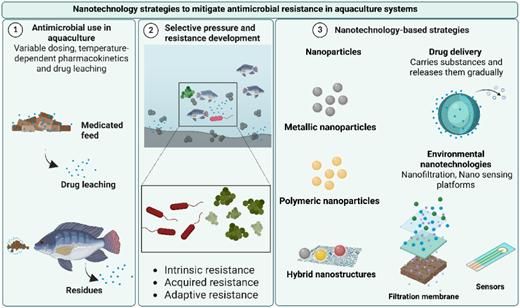
This scenario, commonplace in freshwater farms across Latin America, serves as the starting point for a scientific review published in October 2026 in the journal ACS ES&T Water by researchers from the University of São Paulo and São Paulo State University (UNESP). Their conclusion: much of the antimicrobial resistance in fish farming stems not solely from drug overuse, but from administration inefficiencies. Medicated feed delivers uneven doses; water temperature alters pharmacokinetics within the fish, and residues released into the pond end up training bacteria to resist. The authors analyze how nanotechnology could ensure that every gram of medication reaches its target while purifying excess residues from the water.
Why Medicated Feed Fails More Often Than We Think
For decades, medicated feed has been the therapeutic tool par excellence in aquaculture. Individually injecting thousands of fish is unfeasible, making medicated pellets the most practical avenue to cover an entire population. However, its efficacy faces three critical obstacles.
- The first issue arises during manufacturing. Typically, the antibiotic is incorporated as a powder and externally adhered to the pellet using a binder, forming a surface coating. This layer is not distributed homogeneously across granules; a portion is lost during mechanical handling, and another dissolves the moment the feed contacts the water. Consequently, two fish ingesting an identical amount of feed may receive vastly disparate doses.
- The second factor is well known to any producer: sick fish lose their appetite. Researchers emphasize that this infection-associated anorexia restricts medicated feed intake, leaving the most severely affected animals with plasma levels below the therapeutic threshold.
- A third, less obvious drawback is that recommended doses are typically extrapolated from a handful of “model” species. Nevertheless, the same antibiotic can be absorbed, distributed, and eliminated very differently in tilapia, carp, or trout, even under similar environmental conditions. It is akin to calculating the ration for a tilapia crop using the nutritional table of another species: sometimes it works, while other times it compromises the treatment.
How Water Temperature Alters the Effective Dose
As ectothermic organisms, the metabolic rate of fish fluctuates directly with water temperature. This variable dictates how much they eat, how fast they digest, and how rapidly they absorb and clear a medication.
The review compiles studies illustrating this phenomenon with compelling figures. In Asian seabass, the florfenicol dose required to reach the inhibitory concentration against pathogenic bacteria was 10.9 mg per kilogram of body weight per day at 25 °C, yet climbed to 22.0 mg/kg/day at 30 °C. A five-degree difference doubled the drug requirement. Similarly, in Nile tilapia, amoxicillin was eliminated at 30 °C in roughly half the time recorded at 25 °C. In rainbow trout, raising the temperature from 10 to 17 °C markedly reduced doxycycline persistence in the organism.
However, this behavior does not follow a universal rule. In studies on crucian carp, the withdrawal period for florfenicol—the mandatory waiting period before harvest so that residues in edible tissue fall below the maximum residue limit—remained around three days at both 10 and 25 °C. This lack of a single pattern complicates health management: a standardized dose applied year-round across different species may prove insufficient in summer or generate unexpected residues in winter.
The operational implications cut both ways. If the dose is subtherapeutic, bacteria survive exposure to low antibiotic concentrations, accelerating the selection of resistant strains. Conversely, if the farmer decides to increase the dose “as a precaution,” they elevate the risk of hepatic and renal toxicity in the fish, prolong withdrawal times, and risk exceeding maximum residue limits mandated by export and domestic markets.
Antimicrobial Resistance Also Evolves in the Pond
For years, antibiotic resistance was addressed exclusively from the host’s perspective: the sick fish and the infecting pathogen. Yet, the pond ecosystem as a whole plays a decisive role.
Mantente siempre informado
Stay Informed
Únete a nuestras comunidades para recibir al instante las noticias, informes y análisis más importantes del sector acuícola.
Join our communities to get instant access to the most important news, reports, and analysis from the aquaculture industry.
The authors note that between 30% and 90% of antibiotics administered to farmed animals are excreted unmetabolized, retaining their biological activity. Compounding this are drugs leached from uneaten feed and fractions adsorbed onto sediments. This environment—characterized by low yet persistent antimicrobial concentrations—fosters adaptation and resistance-gene exchange among waterborne bacterial communities, not merely the outbreak’s causative agent. The mechanism operates as a horizontal gene transfer network: many bacteria share mobile DNA fragments, known as plasmids, that encode defenses against the drug.
This threat is already backed by documented evidence in the region. The review cites research in Brazil detecting Edwardsiella tarda strains isolated from various fish species with resistance to antibiotics authorized in local aquaculture, notably florfenicol and oxytetracycline. Likewise, a multidrug-resistant strain of Citrobacter freundii was isolated in the Amazon from a farmed pirarucu (Arapaima gigas). Furthermore, surface water sources supplying farms—rivers and reservoirs—may already carry resistant bacteria and genes upstream.
Globally, antimicrobial resistance was associated with nearly 4.95 million human deaths in 2019, of which 1.27 million are directly attributable to resistant infections. Consequently, researchers frame the issue under the “One Health” paradigm, recognizing the interdependence among aquaculture health, environmental health, and public health.
Nanocapsules: Targeted Delivery to the Fish Gut
Against this backdrop emerges the potential of nanotechnology. The core principle involves encapsulating the drug within microscopic structures engineered to withstand dissolution in water and the acidic gastric environment, releasing their payload exclusively in the intestine, where absorption takes place.
The most extensively researched biopolymers are already familiar to the industry: chitosan (derived from crustacean exoskeletons), alginate (extracted from brown algae), gelatin, and various biodegradable polymers. They function analogously to vacuum packaging, safeguarding the active ingredient’s integrity until the precise moment of uptake.
Several laboratory trials exhibit promising outcomes:
- pH-responsive smart release: In studies with largemouth bass, researchers utilized hollow silica nanoparticles loaded with enrofloxacin and astaxanthin. The capsules retained the drug in the acidic stomach environment and released it massively upon detecting the acidity shift characteristic of an intestine inflamed by bacterial enteritis, prolonging residence time at the infection site.
- Mortality control without conventional antibiotics: In tilapia fed bee venom encapsulated in chitosan nanoparticles and subsequently challenged with Aeromonas hydrophila, mortality dropped from 70% in the control group to 35%, 25%, and 15%, depending on the administered dose (0.1, 0.2, and 0.3 mg/kg).
- Improved feed conversion: In gray mullet, supplementation with vitamin C delivered via nanoliposomes achieved a feed conversion ratio of 1.32, outperforming the 1.45 obtained with conventional liposomes and 1.59 with crystalline vitamin C, while also reducing intestinal populations of Vibrio and Aeromonas.
- High antiparasitic efficacy: A formulation of praziquantel encapsulated in chitosan and alginate retained 95% of the drug within the particles, minimizing gastric loss and releasing nearly 60% in the intestine after eight hours. In ornamental fish, this system reduced intestinal parasite loads by over 97% within two weeks, with no signs of toxicity.
The common denominator across these developments lies not in greater intrinsic bactericidal potency, but in delivery precision. Exact dosing makes it possible to reduce the total amount of drug required to achieve the same clinical effect, drastically curtailing residual discharge into the environment.
Metallic Nanoparticles: Antimicrobial Potential with Caution
A second technological avenue explores the use of metallic nanoparticles—silver, zinc oxide, copper, and selenium—capable of attacking bacteria through multiple mechanisms: disrupting cell membrane integrity, inducing internal oxidative stress, and fragmenting bacterial DNA. Because this constitutes a simultaneous multi-front assault, it is far more difficult for pathogens to develop resistance via a single mutation. In infected tilapia, for instance, zinc oxide nanoparticles succeeded in lowering bacterial loads and increasing survival rates.
Nevertheless, the authors warn of toxicological and ecological risks. In trials with common carp exposed to silver nanoparticles suspended in water (0.03 to 0.09 mg/L for up to 20 days), the two highest concentrations caused mortality, bioaccumulation in the liver and intestine, and marked dysbiosis of the gut microbiota. Additionally, research in other fields demonstrates that certain bacteria can develop silver tolerance following repeated exposures, confirming that nanotechnology is not exempt from resistance phenomena either.
Water Purification and Surveillance: Membranes and Nanosensors
The second half of the proposed strategy focuses on environmental pond management. Since dissolved residues drive the selection of resistant bacteria, their direct removal reduces selective pressure on the aquatic ecosystem.
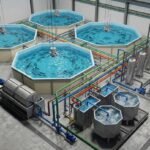
In recirculating aquaculture systems (RAS), a study cited in the review demonstrated that coupling a parallel nanofiltration unit removes between 70% and over 90% of dissolved antibiotics per cycle, preventing their accumulation within the closed loop. It functions essentially as a molecular sieve capable of retaining dissolved chemical compounds rather than suspended solids alone.
Meanwhile, in shrimp farming systems, a nanocomposite of zinc oxide combined with copper and graphene—activated by ultraviolet radiation or simulated sunlight—degraded between 85% and 90% of tetracycline and florfenicol within one to three hours, simultaneously inactivating resistant bacteria present in the water column.
To verify the efficacy of these interventions, early detection is indispensable. Nanomaterial-based sensors can already quantify antibiotics such as norfloxacin in culture water at concentrations as low as 0.15 nanograms per milliliter, laying the groundwork for near-real-time analytical monitoring.
Remaining Gaps Before Reaching Commercial Farms
The researchers themselves maintain a cautious stance regarding the current state of the technology. The vast majority of available data stems from laboratory-scale trials, in vitro assays, or evaluations in select species. It remains to be verified whether nanocapsules can withstand the high temperatures and mechanical pressures of industrial aquafeed extrusion processes, what their economic viability will be at commercial scale, how they respond to real-world fluctuations in temperature and water quality, and which regulatory frameworks will govern their approval. Furthermore, robust studies are required on their long-term safety for fish, receiving ecosystems, and the end consumer.
Compounding this challenge is an aggravating factor: climate change. Sustained increases in water temperature alter both the pharmacokinetic physiology of fish and the environmental persistence of residues, as well as the physicochemical stability of the nanoparticles themselves. Accordingly, the authors urge evaluating these technologies under dynamic thermal scenarios that replicate actual production conditions.
Ultimately, the study does not frame nanotechnology as a silver bullet or a standalone substitute, but rather as a complementary component within an integrated health management framework underpinned by sound husbandry practices, functional nutrition, probiotics, immunostimulants, and residue surveillance. The overarching goal is that whenever antibiotic use is strictly necessary, its application be surgical, efficient, and of minimal environmental impact.
Back to the Pond
Let us return to the tilapia farmer facing a week of intense heat. With the tools currently available on the market, his best line of defense remains grounded in timely microbiological diagnosis, a veterinary prescription tailored to the species and water temperature, strict adherence to the withdrawal period, and avoiding empirical dose increases.
Yet the horizon mapped out by this scientific review points toward a profound transformation: a pellet whose active ingredient is not lost to the water and is released exclusively in the inflamed gut of the fish; smaller drug quantities to achieve the same therapeutic success; sensors capable of flagging trace residues; and filtration systems that remove them prior to any environmental discharge. While not yet a commercial reality, bridging the gap from lab to farm would ensure that the very pellet that today floats and disintegrates before anorexic fish ceases to act, silently, as a catalyst for resistant bacteria.
Reference (open access)
Marques Chagas, P. A., Campanharo, S. C., Pinto, G. H. A., Santos, L. D. R., de Freitas, L. V. P., Pilarski, F., … & Oliveira, W. P. (2026). Nanotechnology Strategies to Mitigate Antimicrobial Resistance in Fish Aquaculture Systems. ACS ES&T Water, 6(11), 6948-6967.

Editor at the digital magazine AquaHoy. He holds a degree in Aquaculture Biology from the National University of Santa (UNS) and a Master’s degree in Science and Innovation Management from the Polytechnic University of Valencia, with postgraduate diplomas in Business Innovation and Innovation Management. He possesses extensive experience in the aquaculture and fisheries sector, having led the Fisheries Innovation Unit of the National Program for Innovation in Fisheries and Aquaculture (PNIPA). He has served as a senior consultant in technology watch, an innovation project formulator and advisor, and a lecturer at UNS. He is a member of the Peruvian College of Biologists and was recognized by the World Aquaculture Society (WAS) in 2016 for his contribution to aquaculture.