For the first time in history, aquaculture has overtaken capture fisheries in aquatic animal production, reaching a record volume of 94.4 million tonnes in 2022. This milestone solidifies the sector as the primary provider of marine proteins for a steadily expanding global population. Nevertheless, such dynamism necessitates an immediate transition toward operational models that harmonize economic profitability with ecosystem regeneration.
In this context, a multidisciplinary team from the University of Eastern Piedmont, the University of Salento, and Italy’s National Research Council (CNR-IRET) has published a comprehensive review in the journal Environments regarding the technological innovations that will define the oceanic food roadmap toward 2050.
Takeways
- Technological Transition: The industry is pivoting away from traditional methods toward Artificial Intelligence (AI) and precision-driven smart systems.
- Circular Economy: Waste valorization and the implementation of Integrated Multi-Trophic Aquaculture (IMTA) have become central pillars of sustainability.
- Antibiotic-Free Animal Health: The strategic focus has shifted toward alternatives such as vaccines, phages, and probiotics under the “One Health” framework.
- Aquaculture as a Service: There is a growing recognition of marine farms’ capacity for water purification and carbon sequestration (blue infrastructure).
- Functional Feeding: Replacing fishmeal with plant-based proteins and algae is critical for mitigating environmental impact.
The Science Behind Production: Methodologies and Trends
To understand the industry’s trajectory, researchers analyzed scientific literature between 2020 and 2026 using bibliometric tools. The results reveal a paradigm shift: the objective is no longer merely “producing more,” but rather producing in a manner that restores the “naturalness” of ecosystems.
The Blue Infrastructure Revolution: Aquaculture with a Positive Impact
The concept of blue infrastructure redefines the purpose of contemporary aquaculture farms. Under this vision, a well-managed operation transcends food production to become a strategic environmental asset. Far from being an ecological burden, integrated systems of bivalves and macroalgae act as biological filters that mitigate eutrophication by absorbing excess nitrogen and phosphorus. This disruptive approach positions aquaculture as a pillar in providing essential ecosystem services:
- Biofiltration and Purification: Filter-feeding organisms, such as oysters and mussels, remove organic matter from the aquatic environment, ensuring the health and transparency of coastal waters.
- Climate Regulation: Algae and mollusk cultures function as high-efficiency carbon sinks, directly contributing to global decarbonization goals.
- Biodiversity Restoration: By optimizing controlled production, pressure on wild stocks is drastically reduced, facilitating the recovery of overexploited marine habitats.
Sustainability Strategies: The Path Toward Technological “Naturalness”
Modern aquaculture pursues a fascinating paradox: implementing high technology to precisely replicate natural processes. According to researchers, this evolution is supported by three strategic pillars—or clusters—aimed at restoring balance to aquatic ecosystems:
The Return to Native Species
Historically, the industry has prioritized accelerated growth through the introduction of exotic organisms. The new paradigm proposes a shift toward cultivating indigenous species to mitigate the ecological impact of potential escapes, thereby protecting the genetic integrity of wild populations and local environmental stability.
Integrated Multi-Trophic Aquaculture (IMTA)
Moving beyond the isolated monoculture model, current trends favor polycultures where the waste from one species nourishes another. Under the Integrated Multi-Trophic Aquaculture (IMTA) framework, organic waste from fish serves as fertilizer for macroalgae, which act as biofilters absorbing excess nitrates and phosphates, efficiently closing the nutrient cycle.
The Potential of Aquaponics
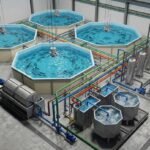
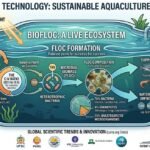
Aquaponics represents the ultimate expression of the biological circular economy by integrating fish farming with plant production in closed-loop systems. Through the intervention of nitrifying bacteria, ammonia derived from fish is transformed into essential plant nutrients; this process continuously purifies the water, allowing for its total recirculation back into the rearing tanks.
Health and Welfare: Beyond Antibiotics
One of the sector’s greatest challenges is antibiotic use. The study reveals that up to 67 different molecules are used across the top 15 producing countries. The problem is global: between 75% and 80% of administered antibiotics end up in the environment, promoting resistant bacteria that affect human health. The research highlights eco-friendly alternatives that are gaining traction:
Mantente siempre informado
Stay Informed
Únete a nuestras comunidades para recibir al instante las noticias, informes y análisis más importantes del sector acuícola.
Join our communities to get instant access to the most important news, reports, and analysis from the aquaculture industry.
- Phage Therapy: Using specific viruses to eliminate pathogenic bacteria without affecting beneficial microbiota.
- Nanotechnology: Utilizing ozone or oxygen nanobubbles that disinfect water and enhance fish metabolism without leaving chemical residues.
- Quorum Quenching: A technique that interferes with bacterial communication to prevent the activation of virulence genes.
Digitalization and Artificial Intelligence
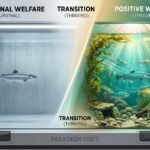
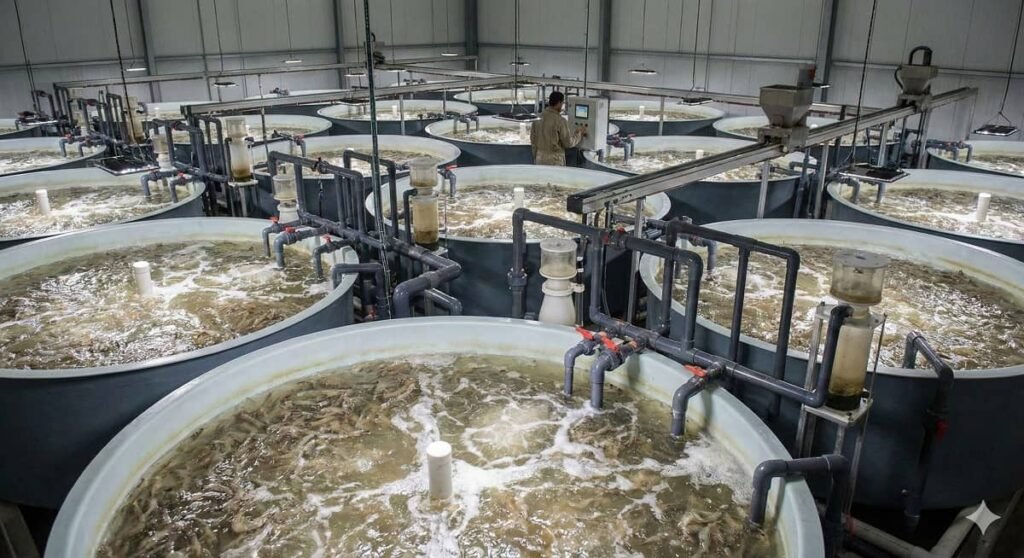
Aquaculture 4.0 has become a structural reality. The implementation of deep learning, computer vision, and digital twins enables real-time monitoring of water quality and feeding behavior. This not only optimizes the Feed Conversion Ratio (FCR) but also drastically reduces resource waste and enhances animal welfare through early stress detection.
Global Challenges and Perspectives
The success of these innovations depends on social acceptance and the harmonization of international policies. The integration of Life Cycle Assessment (LCA) and sustainability certifications—such as ASC or Global G.A.P.—are essential tools for ensuring transparency and recognition within international markets.
General Conclusion
Aquaculture is shifting from being perceived as an environmental problem to becoming part of the solution. By aligning with the UN Sustainable Development Goals (SDGs), the sector has the potential to ensure global food security (SDG 2) while protecting life below water (SDG 14) and combating climate change (SDG 13).
Reference (open access)
Calisi, A., Gualandris, D., Gamalero, E., Dondero, F., Semeraro, T., & Verri, T. (2026). Eco-Sustainability in Aquaculture: Questions and Perspectives. Environments, 13(4), 208. https://doi.org/10.3390/environments13040208

Editor at the digital magazine AquaHoy. He holds a degree in Aquaculture Biology from the National University of Santa (UNS) and a Master’s degree in Science and Innovation Management from the Polytechnic University of Valencia, with postgraduate diplomas in Business Innovation and Innovation Management. He possesses extensive experience in the aquaculture and fisheries sector, having led the Fisheries Innovation Unit of the National Program for Innovation in Fisheries and Aquaculture (PNIPA). He has served as a senior consultant in technology watch, an innovation project formulator and advisor, and a lecturer at UNS. He is a member of the Peruvian College of Biologists and was recognized by the World Aquaculture Society (WAS) in 2016 for his contribution to aquaculture.