- 1 Key Points
- 2 Why does knowing the history of aquaculture matter?
- 3 Timeline of Aquaculture History
-
4
Origins: The First Blue Revolution
- 4.1 Neolithic and Mesolithic Periods (8000 BCE – 5000 BCE): The Ecosystem Engineers
- 4.2 Antiquity and Early Systems (4875 BCE – 1st Century CE)
- 4.3 The Middle Ages: Polyculture, Monasteries, and Local Adaptation (5th – 15th Century CE)
- 4.4 The Scientific Awakening (approx. 1400 – 1900)
- 4.5 The Resurgence and Technological Foundation (1900 – 1960)
- 4.6 The Blue Revolution and the “Anthropogenic Climax” (1970 – Present)
- 5 Ancient vs. Modern Aquaculture: The Key Comparison
-
6
What This History Teaches Aquaculture Producers (Lessons Learned)
- 6.1 Transition from Monoculture to Polyculture and Integrated Systems
- 6.2 Acting as “Ecosystem Engineers” and Adopting Ecological Aquaculture
- 6.3 Reducing Ocean Dependency by Prioritizing Resilient, Low-Trophic Species
- 6.4 Turning Waste into Resources Through Closed-Loop Technologies
- 6.5 Enhancing Biosecurity to Prevent Devastating Epidemics
- 6.6 Securing “Social License” Through Community Integration
- 7 Conclusion
-
8
Frequently Asked Questions About the History of Aquaculture
- 8.1 What is the origin of aquaculture?
- 8.2 Who invented aquaculture?
- 8.3 Who is the father of aquaculture?
- 8.4 When did modern aquaculture begin?
- 8.5 Why did the Church promote aquaculture in the Middle Ages?
- 8.6 What is the difference between ancient and modern aquaculture?
- 8.7 Which technologies define the current stage in the history of aquaculture?
- 9 References
- 10 Entradas relacionadas:
Key Points
- Ancient origins of aquaculture: The “first blue revolution” emerged roughly 10,000 years ago (8000 BCE) during the Early Holocene as a strategy for survival and climate adaptation, rather than an industrial activity.
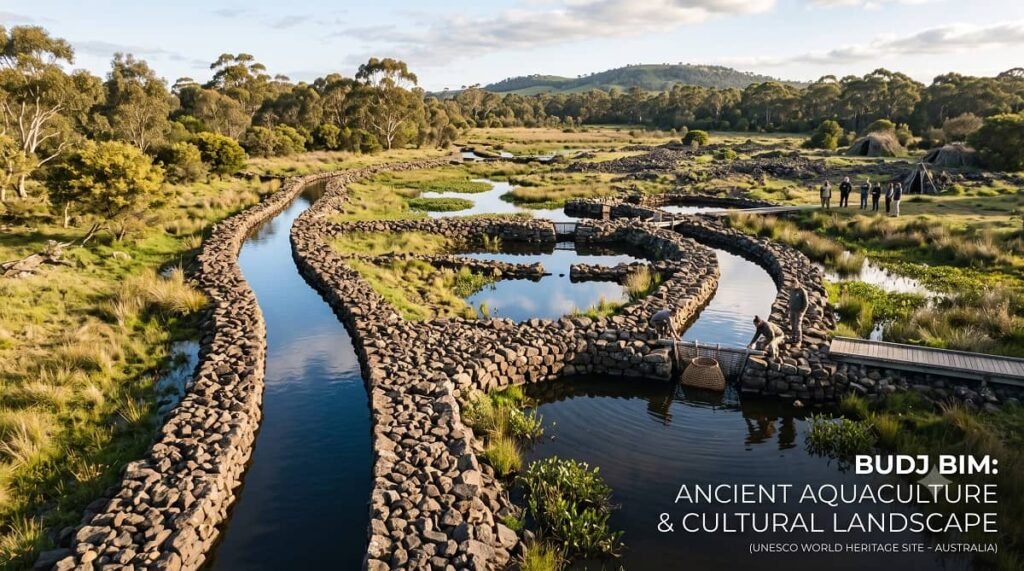
- Ecosystem engineering: From Indigenous “clam gardens” in North America to Aboriginal channels in Australia, ancient civilizations transformed entire landscapes to create resilient, low-footprint agroecosystems.
- Inspiration from polyculture: The ban on common carp during China’s Tang Dynasty spurred the development of polyculture—an ecological integration principle now rediscovered and formalized through Integrated Multi-Trophic Aquaculture (IMTA).
- The role of convents and monasteries: During the European Middle Ages, monastic orders served as hubs for aquaculture development, constructing pond networks to secure fish supplies during fasting periods.
- From science to industrial decline: Although the 18th and 19th centuries introduced artificial fertilization and incubation in Europe, the Industrial Revolution and the rise of distant-water fishing temporarily sidelined pond farming.
- 20th-century milestones: Hatching Artemia cysts in the 1930s resolved the live-feed bottleneck for larvae, while the development of net-pen cages in Norway laid the structural foundation for the modern marine industry.
- The Blue Revolution: Since 1970, the sector has expanded commercially to surpass capture fisheries; however, reliance on intensive monocultures and fishmeal-rich diets poses serious sustainability and biosecurity challenges.
- Lessons for the modern producer: History demonstrates that the industry’s future resilience will not depend on expanding land area or capital, but rather on solving biological bottlenecks, diversifying into lower trophic species, adopting closed-loop systems (biofloc, aquaponics), and strengthening “social license” through community engagement.
The history of aquaculture does not begin in a modern salmon farm in Norway nor in a shrimp pond in Ecuador. Its true origins date back to 8000 BCE in the wetlands of central China and the lava flows of southeastern Australia. Long before the invention of extruded feeds, biofilters, or oxygen sensors, early human communities understood a fundamental principle: raising fish is safer and more reliable than relying on the uncertainty of wild capture.
This premise—security over chance—is the thread connecting millennia of aquatic farming evolution. Today, this approach has reached an unprecedented milestone: for the first time in human history, global aquaculture production surpassed 100 million metric tons of animals in 2024, according to the FAO’s SOFIA 2026 report. Humanity now farms more fish, mollusks, and crustaceans than it extracts from the wild, a trend poised to further consolidate aquaculture as our primary source of animal protein.
From this backdrop, this article explores the comprehensive trajectory of the sector. We will analyze its journey from archaeological remains and medieval monastic practices to the rise of science-based aquaculture in the 18th century, the 20th-century hormonal revolution, and the recent industrial explosion of salmon and shrimp farming. Beyond a simple timeline, we will break down key historical milestones, contrast ancient methods with modern practices, and uncover vital lessons. Ultimately, the defining characteristic of this industry is that its ancestral systems have not disappeared; rather, they are being reborn, powered by new technologies.
Why does knowing the history of aquaculture matter?
Controlled farming of aquatic organisms is the decisive factor separating aquaculture from capture fisheries, where humans merely harvest what the ecosystem produced on its own.
However, the boundary between both activities is far more porous than it appears, and therein lies the first key to understanding its trajectory. Between “fishing” and “farming” lies a continuous spectrum of human intervention: trapping wild fish in a lagoon is intervention; stocking fry in a pond represents greater intervention; and controlling reproduction in a laboratory constitutes total intervention. Because many ancestral practices operated precisely in the middle zones of this spectrum, pinpointing the “exact origin” of aquaculture remains a subject of legitimate academic debate.

Understanding this historical evolution is vital today for fundamental reasons, spanning environmental sustainability, cultural heritage preservation, and the study of human evolution itself. Below, we explore the primary reasons why this historical journey is more relevant now than ever:
Lessons for Sustainability and Ecology
The history of aquaculture serves as a wake-up call in the face of contemporary environmental challenges (Smith, 2014). While modern production frequently relies on intensive monocultures that can lead to pollution, disease, and pressure on local ecosystems, ancestral systems managed to operate in balance for centuries or even millennia (Rogers, 2024).
In this regard, Rogers (2024) highlights that these ancient practices—grounded in ecosystem engineering and integrated polycultures where different species mutually benefit—offer key insights for redesigning today’s industry. Adopting these principles is essential to transitioning toward more resilient, ecological, and clean models. As Smith (2014) concludes, learning from this historical trajectory is indispensable to consolidating a genuinely sustainable “blue revolution,” thereby avoiding the negative impacts of industrial agriculture or overfishing.
Guide for Innovation and Future Policies
Tracking the evolution of aquaculture helps us understand how diverse production systems transformed over time. Furthermore, this historical approach is essential for anticipating future scenarios, such as the impact of climate change on aquatic species farming (Stickney & Treece, 2012).
Mantente siempre informado
Stay Informed
Únete a nuestras comunidades para recibir al instante las noticias, informes y análisis más importantes del sector acuícola.
Join our communities to get instant access to the most important news, reports, and analysis from the aquaculture industry.
By integrating ancestral knowledge with modern technologies, researchers and decision-makers can design alternative development strategies for the sector. This intersection of knowledge will help strengthen global food security sustainably, without compromising the planet’s ecological balance.
Preservation of Biocultural Heritage
According to Costa-Pierce (2022), history demonstrates that aquaculture is not a mere 20th-century technological innovation, but a practice deeply rooted in the identity of ancient and Indigenous civilizations worldwide. Notable among these are Australia’s Aboriginal communities, South American pre-Columbian cultures, traditional Hawaiian societies, and European monastic communities.
Along these same lines, Vivancos et al. (2025) emphasize that recovering and studying these systems not only safeguards intangible cultural heritage but also vindicates the rights, ancestral wisdom, and identity of these communities.
Understanding Aquaculture Development
Malindine (2019) highlights that aquaculture is often overlooked in academic debates surrounding the origins of agriculture; however, its trajectory is key to understanding how prehistoric human groups transitioned from hunter-gatherer nomadism to organized food production.
Furthermore, scientific evidence demonstrates that when the demand for aquatic resources surpassed local ecosystem fishing capacities, societies developed ingenious solutions to rear, store, and breed species—a technological advancement that became a fundamental catalyst for early human settlement and civilizational growth (Costa-Pierce, 2022).
Improving Public Perception
Criticism of modern aquaculture often broadly labels it as harmful to the environment. In light of this, understanding the historical evolution of the practice helps demystify it for the public and environmental groups.
Analyzing its trajectory highlights the immense diversity of existing systems—some thousands of years old—and demonstrates that proper farming techniques, such as bivalve mollusk culture, can actually purify and regenerate the environment rather than degrade it (Costa-Pierce, 2022).
In summary, understanding the history of aquaculture provides a strategic framework for transforming and refining modern food production systems. This journey guides us toward practices that respect ecological balance while valuing ancestral knowledge (Vivancos et al., 2025; Costa-Pierce, 2022). Ultimately, this will strengthen the social acceptance of aquaculture, positioning it not only as a primary global food source, but also as a key engine for employment and regional development.
Timeline of Aquaculture History
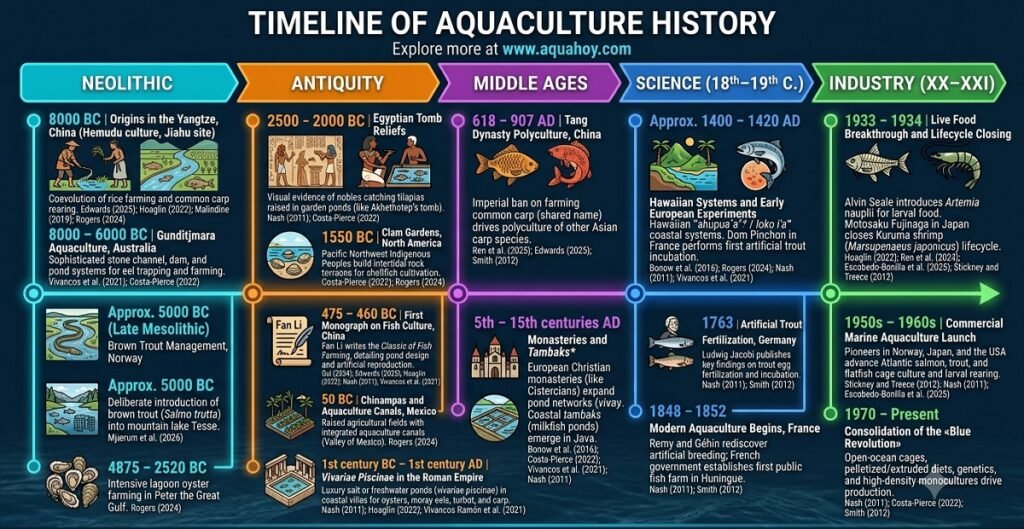
Before examining the distinct stages of global aquaculture development in detail, the following timeline synthesizes key milestones best documented in scientific literature. Note that archaeological dates represent estimated ranges based on available academic evidence.
Table 1. Timeline of aquaculture history.
| Period / Year | Milestone in Aquaculture History | Reference |
| 8000 BCE (Neolithic) | Origins of aquaculture through the co-evolution of rice farming and common carp culture by the Hemudu culture and at the Jiahu archaeological site (Yangtze River Basin, China). | Edwards (2025); Hoaglin (2022); Malindine (2019); Rogers (2024) |
| 8000 – 6000 BCE | The Gunditjmara Aboriginal people in Australia design sophisticated systems of stone channels, dams, and ponds to trap and farm eels at Lake Condah and Mt. Eccles. | Rose et al. (2016); Vivancos et al. (2021); Costa-Pierce (2022) |
| Approx. 5000 BCE (Late Mesolithic) | Hunter-gatherer societies intentionally introduce brown trout (Salmo trutta) into Lake Tesse (Norway). They construct stationary wooden traps, demonstrating early environmental management thousands of years before agriculture reached the region. | Mjærum et al. (2026) |
| 4875 – 2520 BCE | The Boisman Neolithic culture in Russia (Peter the Great Gulf) develops intensive oyster culture practices in coastal lagoons. | Rogers (2024) |
| 2500 – 2000 BCE | Bas-reliefs in Egyptian tombs (such as that of Akhethotep) depict the harvest of tilapia raised in artificial ponds built within noblemen’s gardens. | Nash (2011); Costa-Pierce (2022); Hoaglin (2022); Vivancos et al. (2021) |
| 1550 BCE | Indigenous peoples of the Pacific Coast in North America (Canada and the US) construct “clam gardens” using intertidal stone terraces to cultivate shellfish. | Costa-Pierce (2022); Rogers (2024) |
| 475 – 460 BCE | Fan Li writes the Classic of Fish Farming in China, the first known monograph describing in detail pond design and the artificial breeding of common carp. | Gui (2024); Edwards (2025); Hoaglin (2022); Nash (2011); Vivancos et al. (2021) |
| 50 BCE | Development of chinampas (“floating gardens”) in the Valley of Mexico, integrating raised agricultural fields with aquaculture channels. | Rogers (2024) |
| 1st Century BCE – 1st Century CE | In the Roman Empire, elites built vivariae piscinae (artificial marine or freshwater ponds) in their coastal villas to farm luxury species such as oysters, moray eels, turbot, and carp. | Nash (2011); Hoaglin (2022); Vivancos Ramón et al. (2021) |
| 618 – 907 CE | During the Tang Dynasty in China, common carp farming was banned because its name (Li) coincided with that of the Emperor. This restriction drives the invention of polyculture with other Asian carp species. | Ren et al. (2025); Edwards (2025); Smith (2012) |
| 5th – 15th Century CE | In Europe, Christian monasteries (such as the Cistercian order) expand pond networks (vivaria) to farm carp and secure protein during Lent. In Java (Southeast Asia), tambaks or coastal ponds emerge for milkfish culture. | Hufthammer y Moe (2014); Costa-Pierce (2022); Vivancos et al. (2021); Nash (2011) |
| Approx. 1400 – 1420 CE | Hawaiian communities develop complex coastal systems (ahupua‘a / loko i’a) integrating fish farming and taro cultivation. In France, the monk Dom Pinchon performs the first artificial incubation of trout eggs in sand boxes. | Rogers (2024); Nash (2011); Vivancos et al. (2021) |
| 1763 | German naturalist Ludwig Jacobi publishes his findings on the technique of artificial fertilization and incubation of trout eggs. | Nash (2011); Smith (2012) |
| 1848 – 1852 | Joseph Remy and Antoine Géhin rediscover the artificial reproduction of trout. In 1852, the French government finances the world’s first public fish hatchery in Huningue, marking the onset of modern aquaculture. | Nash (2011); Smith (2012) |
| 1933 – 1934 | Alvin Seale introduces the use of Artemia nauplii as live feed for larvae. Concurrently, Motosaku Fujinaga closes the captive life cycle of Kuruma shrimp (Marsupenaeus japonicus) for the first time in Japan. | Hoaglin (2022); Ren et al. (2024); Escobedo-Bonilla et al. (2025); Stickney & Treece (2012) |
| 1950s – 1960s | Takeoff of commercial marine net-pen aquaculture. Researchers in the US, Japan, and Norway achieve decisive advances in larval rearing and commercial farming of marine shrimp, Atlantic salmon, trout, and flatfish. | Stickney & Treece (2012); Nash (2011); Escobedo-Bonilla et al. (2025) |
| 1970 – Present | Consolidation of the “Blue Revolution,” driven by offshore net-pens, pelleted/extruded diets, genetic selection, and intensive monocultures. Global production expands rapidly to offset stagnant wild-capture fisheries. | Nash (2011); Costa-Pierce (2022); Smith (2012) |
Origins: The First Blue Revolution
Today, the term “Blue Revolution” commonly refers to the massive expansion of commercial aquaculture that began in the mid-20th century to offset overfishing. However, Rogers (2024) points out that the true “first blue revolution” is a concept coined by archaeology to describe the original emergence of aquaculture during the Early Holocene, around 8000 BCE. Below, we explore the fundamental characteristics of each stage in the historical evolution of this activity:
Neolithic and Mesolithic Periods (8000 BCE – 5000 BCE): The Ecosystem Engineers
In prehistory, aquaculture did not emerge as an industry, but rather as an adaptation and survival strategy in response to demographic pressure and climate change.
According to Edwards (2025), approximately 10,000 years ago in China, communities transitioning toward agriculture developed agricultural wetlands where rice cultivation and common carp farming co-evolved. Other studies support this antiquity, finding evidence of carp farming in the same region dating back to 6200 BCE (Nakajima et al., 2019). During the same period, the Gunditjmara Aboriginal people in Australia took advantage of geomorphological alterations caused by a lava flow at Mount Eccles to design a vast system of channels, dams, and ponds (Rose et al., 2016). This infrastructure, spanning over 75 km², allowed them to channel and trap short-finned eels (Anguilla australis), securing a year-round food supply for their permanent settlements.
Equally remarkable is the case of Scandinavian hunter-gatherer groups. A study by Mjærum et al. (2026) revealed that around 5000 BCE, following glacial retreat, high-mountain Norwegian lakes—such as Lake Tesse—lacked fish due to natural topographic barriers. To overcome this obstacle, these populations intentionally introduced brown trout (Salmo trutta) and installed sophisticated fixed wooden traps. The construction and maintenance of these structures demonstrate that planned production and environmental management were not achievements exclusive to later agricultural societies.
Antiquity and Early Systems (4875 BCE – 1st Century CE)
As human societies expanded, intervention in aquatic ecosystems became more intentional and complex. According to Rogers (2024), Indigenous communities along the Pacific coast of North America transformed the intertidal zone by creating “clam gardens.” By building terraces supported by stone walls, these populations not only facilitated food harvesting but directly expanded and optimized bivalve habitat, thereby mitigating demographic pressure.
Control over water resources also acquired a clear sense of social status. Nash (2011) notes that in Ancient Egypt, bas-reliefs document how nobility designed private garden ponds dedicated to tilapia culture. However, Costa-Pierce (2022) highlights that this systematization reached its peak sophistication in China around 475 BCE with Fan Li, author of the Classic of Fish Farming, the earliest known work that formalized pond design and controlled fish breeding. During the same period, prolific chinampas—raised agricultural fields integrated with aquaculture channels—flourished in the Valley of Mexico, while the Roman elite invested in sophisticated vivariae piscinae, exclusive coastal facilities designed for maintaining oysters and luxury marine species (Costa-Pierce, 2022).
The Middle Ages: Polyculture, Monasteries, and Local Adaptation (5th – 15th Century CE)
During the Middle Ages, aquaculture underwent profound adaptations driven by cultural, geographical, and religious factors. According to Edwards (2025), a unique event occurred in China during the Tang Dynasty (618–907 CE): the character for the common carp shared its pronunciation with “Li,” the imperial surname, leading to a strict ban on its farming and consumption. However, this unforeseen obstacle prompted fish farmers to innovate, resulting in the invention of polyculture—the integration of diverse carp species that utilized different ecological niches within the pond without competing with one another.
In Europe, the Christian faith became the primary catalyst for inland aquaculture. Nash (2011) and Hufthammer and Moe (2014) highlight that monastic orders, such as the Benedictines and Cistercians, expanded complex networks of vivaria and servatoria (breeding and holding ponds) to secure fish supplies during Lent and fasting days. Furthermore, Hufthammer and Moe (2014) note that in Scandinavia’s harsh climate, where common carp could not survive frigid winters, monks and nobles adapted their production toward the Crucian carp (Carassius carassius), a species remarkably suited for Northern Europe due to its extraordinary capacity to survive for months under ice in near-anoxic conditions. Meanwhile, Costa-Pierce (2022) reports that in Southeast Asia (Java) around 1200 CE, the first tambaks—coastal brackishwater ponds—emerged for farming milkfish.
The Scientific Awakening (approx. 1400 – 1900)
During this period, aquaculture began its transition toward scientific formalization. Nash (2011) reports that, in the 1420s, the French monk Dom Pinchon successfully achieved the artificial incubation of trout eggs using wooden boxes. However, it was the German naturalist Ludwig Jacobi in 1763 who consolidated and disseminated the technique of artificial fertilization and incubation for this salmonid. By the mid-19th century, Frenchmen Remy and Géhin rediscovered this method, securing state backing to construct the Huningue fish hatchery (France) in 1852—a pioneering complex that mass-produced fish culture across Europe.
Meanwhile, Sterckx (2025) concludes that fish farming in premodern China evolved beyond simple gathering and survival toward sophisticated systems of landscape domestication and ecosystem resource management, supported by a body of technical and ecological knowledge transmitted and refined over centuries.
Paradoxically, the Industrial Revolution triggered a sharp productive decline in European and American aquaculture (Smith, 2014). The rise of steamships, bottom trawling, industrial ice, and railway networks conferred overwhelming profitability upon distant-water marine capture fisheries, relegating ancient pond farming systems to economic abandonment (Nash, 2011; Smith, 2014).
The Resurgence and Technological Foundation (1900 – 1960)
The first half of the 20th century was characterized not by massive commercial growth, but by the intensive development of infrastructure and laboratory breakthroughs that laid the foundation for contemporary aquaculture (Nash, 2011). In the 1930s, one of the most consequential biological milestones occurred when researchers such as Alvin Seale and Gunnar Rollefson discovered that nauplii of the crustacean Artemia could hatch from storable dry cysts. This finding provided high-quality, on-demand live feed, resolving the critical nutritional bottleneck for delicate marine fish and shrimp larvae (Nash, 2011).
During the post-war period, Japan led decisive advances in seaweed cultivation and shrimp incubation, while a structural transformation took shape in Europe and North America. Leveraging the natural shelter of its fjords, Norway began successfully farming rainbow trout and Atlantic salmon in floating sea-cages, establishing the technical blueprint for the modern marine industry (Stickney & Treece, 2012).
The Blue Revolution and the “Anthropogenic Climax” (1970 – Present)
Driven by the stagnation and decline of marine capture fisheries, aquaculture experienced a massive commercial takeoff starting in the 1970s, consolidating itself as the world’s fastest-growing food production industry (Nash, 2011). To sustain this expansion, the private sector introduced major technological advances: dry, extruded lipid-rich diets, sensor-automated feeding, genetic selection programs, and giant offshore cages (Carrera, 2020).
This intensive farming model was rapidly exported globally. In South America, multinational companies and Fundación Chile promoted massive salmon farming (Coho and Atlantic) in southern Chile due to its privileged geographical conditions; backed by agro-export policies, Chile became—alongside Ecuador’s shrimp industry—the continent’s main aquaculture engine (Nash, 2011). Analyzing the evolution of aquaculture in South America between 1950 and 2017, Sicuro et al. (2024) conclude that the sector has experienced extraordinary, near-exponential growth, surging from barely 40 metric tons to over 2.5 million metric tons, far outpacing the global trend.
From a modern evolutionary and economic perspective, Sicuro (2024) notes that aquaculture in regions such as the Mediterranean or the Pacific coast has transitioned into a scenario termed the “anthropogenic climax.” The researcher highlights that this contemporary phase is ecologically dominated by the high profitability of intensive monoculture involving a handful of high-performing species (such as Nile tilapia, Atlantic salmon, and white leg shrimp), relegating to the background the traditional extensive and polyculture practices that prevailed for millennia.
Ancient vs. Modern Aquaculture: The Key Comparison
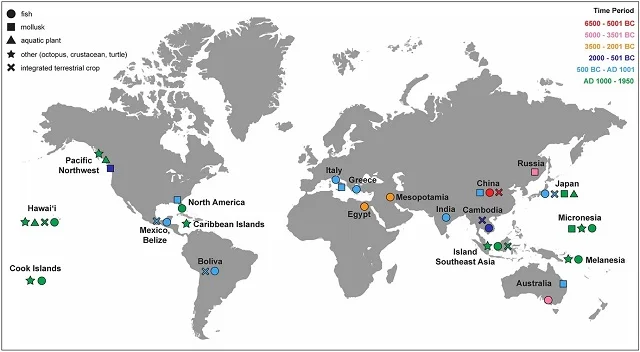
Despite the technological sophistication of contemporary aquaculture, ancestral models offer valuable lessons for sector sustainability. Below is a comparative matrix based on scientific literature synthesizing the fundamental differences between ancient aquaculture (from prehistoric origins to the pre-industrial era) and modern aquaculture (from the mid-20th century to the present):
Table 2. Comparison between ancient and modern aquaculture.
| Feature | Ancient Aquaculture | Modern Aquaculture |
| Purpose and Motivation | Emerged as an adaptation strategy to secure subsistence, store live food against periods of scarcity (strategic reserve), fulfill religious rituals, or project status and wealth (as in ancient Rome and Egypt). | Driven primarily by international trade, rapidly growing global population demand, and the need to offset the stagnation and overexploitation of capture fisheries. |
| Ecosystem Approach and Technology | Based on “ecosystem engineering” and landscape modification (e.g., chinampas in Mexico, loko i’a in Hawaii, stone channels in Australia). It relied on extensive or semi-intensive systems dependent on tides, gravity, and natural water flows. | Based on highly industrialized and intensive systems, such as Recirculating Aquaculture Systems (RAS), offshore cages, biofloc technology, mechanical aeration, and automated water quality monitoring. |
| Farmed Species | Prioritized resilient local species adapted to salinity fluctuations, low oxygen levels, and dynamic environments (e.g., common carp, tilapia, eels, mullets, catfish, and oysters). | Focused on a small number of high-value, high-demand global species (e.g., Atlantic salmon, whiteleg shrimp, gilthead seabream, European seabass) that require strictly controlled environmental parameters. |
| Feeding and Nutrition | Relied on natural ecosystem productivity (plankton, benthos) and agro-aquaculture integration. The food web was stimulated through agricultural byproduct fertilization and polyculture (e.g., rice-fish culture or carp multi-species systems). | Relies on formulated pelleted or extruded high-protein feeds. Historically, these inputs required significant volumes of fishmeal and fish oil derived from forage fish. |
| Sustainability and Environmental Impact | Highly resilient and sustainable. Operated for centuries or millennia without depleting local resources, generating a low ecological footprint by mimicking biological cycles and internally recycling nutrients. | In various contexts, it operates through intensive monocultures that generate nutrient-rich effluents, potentially causing eutrophication, pollution, and pathogen dissemination, with an ecological footprint demanding external inputs. |
| Degree of Domestication | Frequently relied on catching wild juveniles for grow-out in captivity without closing the full life cycle or developing genetically distinct strains (with early exceptions like the common carp). | Involves complete control of the biological cycle in hatcheries, advanced selective breeding programs to optimize growth and disease resistance, and the use of genetically modified organisms. |
In conclusion, while ancient aquaculture transformed entire landscapes to create resilient, integrated, and diverse agroecosystems that mimicked nature to ensure long-term local food security (Rogers, 2024), modern aquaculture—driven by global market dynamics—has prioritized technological intensification and monoculture (Smith, 2014).
Although the contemporary industry is extraordinarily productive and decisive for global aquatic protein supply, the historical perspective demonstrates that reincorporating ancestral ecological principles—such as polyculture, trophic integration, and the utilization of local species—is essential to mitigate environmental impacts and consolidate a genuinely sustainable “Blue Revolution.”
What This History Teaches Aquaculture Producers (Lessons Learned)
Beyond reconstructing the chronology of aquaculture, the primary purpose of this analysis is to extract strategic lessons that enable current producers to optimize their production models. Along this path, the famous adage rings particularly true: “Those who do not learn from history are doomed to repeat it.” Below, we synthesize the key learnings bequeathed by ancient fish farmers for the contemporary industry:
Transition from Monoculture to Polyculture and Integrated Systems
History demonstrates the remarkable efficacy and resilience of integrated systems, such as China’s co-culture of rice and fish. In this model, fish control pests and insects while fertilizing the crop with their effluents; in turn, the rice provides shade and optimizes water quality (Hoaglin, 2022; Rogers, 2024). This ancestral technique remains relevant today, allowing producers to diversify their harvests.
Similarly, Rogers (2024) reports that the ancient Chinese system combining mulberry trees, silkworms, and fish ponds achieved an ecological synergy capable of recycling nutrients and minimizing waste. Inspired by this principle, modern producers should transition from intensive monocultures toward Integrated Multi-Trophic Aquaculture (IMTA). This practice pairs fed species (such as fish) with organic and inorganic extractive species (bivalves, sea cucumbers, and seaweeds) that act as natural biofilters, cleansing the water, mitigating pollution, and generating supplementary income.
Acting as “Ecosystem Engineers” and Adopting Ecological Aquaculture
Ancient civilizations did not merely farm fish; they “domesticated entire landscapes” to model productive and resilient ecosystems (Rogers, 2024). A prime example is the Indigenous peoples of North America, who constructed “clam gardens” using intertidal stone terraces. These structures not only quadrupled bivalve biomass but also boosted local marine biodiversity and buffered coastal temperature fluctuations and acidification (Costa-Pierce, 2022).
Faced with this legacy, modern producers must decisively implement an Ecosystem Approach to Aquaculture (EAA). This entails designing production units that deliver positive ecosystem services to their surroundings rather than degrading them, mimicking natural cycles to maximize resource efficiency (Rogers, 2024).
Reducing Ocean Dependency by Prioritizing Resilient, Low-Trophic Species
In ancient times, aquaculture thrived through the farming of highly hardy, adaptable omnivorous and herbivorous species—such as carp, tilapia, mullets, catfish, and oysters—capable of enduring wide environmental fluctuations and low oxygen levels (Rogers, 2024). In contrast, contemporary aquaculture relies excessively on carnivorous fish (like salmon) that demand high-fishmeal and fish-oil diets, heightening pressure on wild pelagic fisheries. The lesson from the past is conclusive: to achieve true long-term sustainability, the industry must prioritize farming lower trophic-level species or develop diets based on alternative plant protein sources and byproducts.
Turning Waste into Resources Through Closed-Loop Technologies
To manage ecosystem waste-assimilation limits, modern aquaculture has developed innovations that emulate the natural recycling of ancestral systems. In this regard, producers can implement Biofloc Technology (BFT), which stimulates a dense community of heterotrophic bacteria in the water column to assimilate toxic nitrogenous effluents and transform them into protein-rich microbial biomass. This “biofloc” serves as a direct supplementary feed for species like shrimp and tilapia, optimizing feed costs and drastically reducing water exchange rates. Another efficient alternative is aquaponics, which utilizes fish effluents to fertilize high-value hydroponic crops.
Enhancing Biosecurity to Prevent Devastating Epidemics
Overcrowding and water quality fluctuations in intensive monocultures have triggered catastrophic epidemics—such as Taura Syndrome Virus in shrimp or Infectious Salmon Anemia (ISA)—causing multimillion-dollar losses across the industry (Smith, 2014; Hoaglin, 2022). In light of this scenario, proper microbiome management and animal stress mitigation play a crucial role. Systems like biofloc technology not only optimize water quality but also reinforce biosecurity through competitive exclusion, where beneficial microbial communities prevent pathogen proliferation. Likewise, respecting ecosystem carrying capacity and implementing polyculture reduce physiological stress in organisms, lowering their disease susceptibility (Stickney & Treece, 2012).
Historically, aquaculture was deeply embedded in the needs, beliefs, and social structures of local populations, securing a predictable food supply and employment for millennia (Stickney & Treece, 2012; Costa-Pierce, 2022; Rogers, 2023). Conversely, industrial aquaculture often faces strong public backlash—a lack of “social license”—due to visual impact, pollution, escapes, and conflicts over coastal space and water resource usage.
According to Stickney and Treece (2012), to overcome future regulatory and commercial challenges, producers must actively engage local communities and adopt certification and eco-labeling schemes. Transparently integrating production units into rural development and coastal management plans will not only help mitigate local poverty but also solidify the industry’s social and environmental commitment.
Conclusion
The history of aquaculture describes an economic activity that for eight millennia maintained low intensity, integrated into the agricultural landscape and oriented toward resilience. However, in just seven decades, it transformed into an industrial sector capable of producing 103 million metric tons annually, eventually surpassing capture fisheries as the primary source of aquatic protein. Over the last two decades, however, the sector has begun to trace its steps back: polyculture, trophic integration, circular economy, and the reduction of external inputs.
This return is driven not by nostalgia, but by innovation. Integrated Multi-Trophic Aquaculture (IMTA) is not a Neolithic pond, nor is a Recirculating Aquaculture System (RAS) a Hawaiian loko iʻa. Yet both solutions answer the same core question posed by Gunditjmara communities and Jiahu farmers: how to reliably obtain aquatic protein without depleting the supporting ecosystem. The difference is that today, the answer must satisfy 9 billion people under the strict scrutiny of markets, regulators, and consumers.
Understanding the historical trajectory of aquaculture transcends an academic exercise. Three practical reasons justify its relevance:
- Ancestral systems were polycultures: Integrated rice-fish farming in China and Hawaiian fishponds combined species across multiple trophic levels. IMTA, presented today as cutting-edge technology, is a scientific reformulation of that same logic.
- Health crises repeat themselves: Epidemiological emergencies in shrimp farming during the 1990s and in the salmon industry this century replicated a pattern well-known in agricultural history: high-density monocultures combined with global movement of broodstock equal epidemics.
- Regulation is often reactive: Every technological leap—marine cages, hormonal induction, or transgenesis—was adopted commercially years before regulatory frameworks existed. Anticipating this lag allows us to foresee the impact of today’s genomics and automation.
If this journey demonstrates anything, it is that the sector’s breakthroughs stemmed not from increased capital or land area, but from solving specific biological bottlenecks: artificial fertilization, induced spawning, and formulated nutrition. The next chapter in this history is being written today, led by genomics and novel alternative ingredients.
Frequently Asked Questions About the History of Aquaculture
What is the origin of aquaculture?
The origins of aquaculture date back to the Early Holocene, around 8000 BCE (approximately 10,000 years ago). It emerged as a prehistoric strategy for adaptation and survival in response to demographic pressure and climate change. The earliest evidence includes common carp farming in agricultural wetlands in China, the construction of eel channels by the Gunditjmara Aboriginal people in Australia, and the relocation of trout to high-mountain lakes in Scandinavia.
Who invented aquaculture?
Aquaculture was not invented by a single individual or culture, but rather emerged independently through several early pioneers documented by science:
– Holocene communities in China: Approximately 10,000 years ago, ancestral farmers developed the first wetlands dedicated to joint rice cultivation and common carp culture.
– The Gunditjmara Aboriginal people in Australia: They designed a complex system of stone water channels spanning over 75 km² to trap and hold short-finned eels (Anguilla australis) year-round.
– Scandinavian hunter-gatherers: Around 5000 BCE, they introduced brown trout (Salmo trutta) into high-mountain lakes and installed fixed traps to manage fish production.
If referring to the earliest written codification, historical credit belongs to the Chinese statesman Fan Li, who in 475 BCE authored the Classic of Fish Farming, the first known work dedicated to pond design and controlled fish reproduction.
Who is the father of aquaculture?
Historically, Fan Li is recognized as the “father of classical aquaculture.” In 475 BCE, this Chinese statesman wrote the Classic of Fish Farming (Yang Yu Jing), considered the first book in history dedicated to pond design and controlled breeding of common carp, systematic management, and captive fish selection. On the other hand, in the contemporary era, German jurist and naturalist Ludwig Jacobi is considered the “father of modern fish culture.” In 1763, Jacobi published and consolidated the technique for artificial fertilization and incubation of trout eggs in freshwater, laying the biological foundations for modern artificial reproduction worldwide.
When did modern aquaculture begin?
Modern aquaculture began to take shape in the mid-18th century with Ludwig Jacobi’s development of artificial trout fertilization and incubation in 1763, followed by the establishment of the Huningue fish hatchery in France in 1852. However, its definitive commercial and industrial takeoff occurred starting in the 1970s within the framework of the “Blue Revolution.” This period of massive intensification was driven by the stagnation of capture fisheries and the adoption of key technological advances: the invention of extruded feeds, the mastery of Artemia hatching for larval rearing, offshore net-pen culture, and the microbiological and genetic control of farmed species.
Why did the Church promote aquaculture in the Middle Ages?
During the Middle Ages, the Catholic Church became the primary driver of aquaculture in Europe due to strict religious mandates regarding fasting and abstinence from red meat, which totaled over 130 days a year (including Lent). To ensure a constant supply of fresh fish without relying on maritime trade—which was complex and limited in the continent’s interior—monasteries and monastic orders developed advanced pond engineering (vivaria). Consequently, convents operated as true centers of aquaculture innovation, perfecting the freshwater culture of species such as common carp, trout, and pike, while integrating fish production with the water and agricultural management of their estates.
What is the difference between ancient and modern aquaculture?
The fundamental difference between both eras lies in their ecological approach, production scale, and market objectives:
– Ancient aquaculture: Operated through extensive systems and polycultures integrated into the natural landscape (such as rice-fish co-culture or bivalve ponds), prioritizing local food security, subsistence, and internal nutrient recycling with a low ecological footprint.
– Modern aquaculture: Driven by industrial intensification and the monoculture of high-value commercial species (such as salmon or whiteleg shrimp) in strictly controlled environments, achieving immense productivity for the global market while facing significant challenges regarding effluents, external input reliance, and biosecurity.
Which technologies define the current stage in the history of aquaculture?
The contemporary stage of aquaculture is defined by a transition toward precision, automation, and ecological sustainability. Among the most representative technologies are:
– Recirculating Aquaculture Systems (RAS): Closed-loop infrastructures that recycle up to 99% of water using advanced filtration and automated parameter control, enabling biosecure production near target markets.
– Biofloc Technology (BFT): A heterotrophic system that transforms nitrogenous waste into protein-rich microbial biomass, reducing water exchange and optimizing feed costs.
– Integrated Multi-Trophic Aquaculture (IMTA): An approach combining fed species with extractive organisms (bivalves, seaweeds) to recycle nutrients and mimic natural ecosystems.
– Biotechnology and IoT Sensors: Genomic selection tools, artificial intelligence monitoring, and precision nutrition utilizing alternative ingredients.
References
Beveridge, M. C., & Little, D. C. (2002). The history of aquaculture in traditional societies. Ecological aquaculture. The evolution of the Blue Revolution, 3-29.
Carrera, N. I. (2020). Breve historia de la acuicultura y salmonicultura en el sur de Chile (1856-2000). Revista Territorios y Regionalismos, (3), 36–49. https://doi.org/10.29393/RTR3-3NCBH10003
Costa-Pierce, B. A. (2022). The Anthropology of Aquaculture. Frontiers in Sustainable Food Systems, 6, 843743. https://doi.org/10.3389/fsufs.2022.843743
Edwards, P. (2025). Co-evolution of fish and rice farming by Austroasiatic communities in the Neolithic Era and early documentation of aquaculture in China. Frontiers in Aquaculture, 3, 1437833. https://doi.org/10.3389/faquc.2024.1437833
Escobedo-Bonilla, C. M., Colula-Ocampo, J. I., Hernández-Herrera, R. I., Gracia-Valenzuela, M. H., & San Martín del Ángel, P. (2025). History of Shrimp Farming and the Main Viral and Bacterial Diseases in Mexico. Microorganisms, 13(11), 2631. https://doi.org/10.3390/microorganisms13112631
FAO. 2026. The State of World Fisheries and Aquaculture 2026 – Blue Transformation: turning vision into impact. Rome. https://doi.org/10.4060/cd8357en
Gui, J. (2024). Chinese wisdom and modern innovation of aquaculture. Water Biology and Security, 3(3), 100271. https://doi.org/10.1016/j.watbs.2024.100271
Hoaglin, V. (2022). Fish through the Scales of Time: Diving into the Origins of Aquaculture. Veterinary Heritage: Bulletin of the American Veterinary Medical History Society, 45(2).
Hufthammer, A. K., & Moe, D. (2014). Fishponds and Aquaculture in Historical Times in Norway. Historical Aquaculture in Northern Europe, 121.
Malindine, J. (2019). Prehistoric Aquaculture: Origins, Implications, and an Argument for Inclusion. Culture, Agriculture, Food & Environment, 41(1).
Mjærum, A., Friis, E. K., Hesthagen, T., & Kirchhefer, A. J. (2026). The introduction of fish to the Scandinavian mountains by hunter-fisher-gatherers 5000 BC. Antiquity, 1–17. doi:10.15184/aqy.2026.10392
Nakajima, T., Hudson, M. J., Uchiyama, J., Makibayashi, K., & Zhang, J. (2019). Common carp aquaculture in Neolithic China dates back 8,000 years. Nature Ecology & Evolution, 3(10), 1415-1418. https://doi.org/10.1038/s41559-019-0974-3
Nash, C. E. (2011). The History of Aquaculture. Wiley-Blackwell.
Ren, S., Yáñez, J. M., Perez-Enriquez, R., Rye, M., Houston, R. D., Hurwood, D. A., … Jerry, D. R. (2025). 100 Years of Penaeid Domestication and Meta-Analysis of Breeding Traits. Reviews in Fisheries Science & Aquaculture, 33(4), 609–628. https://doi.org/10.1080/23308249.2025.2497273
Rogers, A.J. Aquaculture in the Ancient World: Ecosystem Engineering, Domesticated Landscapes, and the First Blue Revolution. J Archaeol Res 32, 427–491 (2024). https://doi.org/10.1007/s10814-023-09191-1
Rose, D., Bell, D. & Crook, D.A. Restoring habitat and cultural practice in Australia’s oldest and largest traditional aquaculture system. Rev Fish Biol Fisheries 26, 589–600 (2016). https://doi.org/10.1007/s11160-016-9426-1
Sicuro B (2024) The evolution of aquaculture in the Mediterranean region: An anthropogenic climax stage? PLoS ONE 19(8): e0290870. https://doi.org/10.1371/journal.pone.0290870
Sicuro, Benedetto and Fabio, Dr. Bozzeda and Castelar, Beatriz and Akther, Kazi Rabeya and Pinna, Prof Maurizio, The Raise of Aquaculture in South America from 1950 to 2017. Available at SSRN: https://ssrn.com/abstract=4961459 or http://dx.doi.org/10.2139/ssrn.4961459
Smith, T. (2014). Greening the Blue Revolution: How History Can Inform a Sustainable Aquaculture Movement.
Sterckx, R. (2025). Fish farming in pre-modern China: A study and translation of two texts. T’oung Pao, 111, 353–396. https://doi.org/10.1163/15685322-11103003
Stickney, R.R. and Treece, G.D. (2012). History of Aquaculture. In Aquaculture Production Systems, J.H. Tidwell (Ed.). https://doi.org/10.1002/9781118250105.ch2
VIVANCOS RAMÓN, M. V., LEHMANN GRAVIER, PRISCILA., & NAVARRO MORENO, VALERIA. (2025). Aquaculture: Millenary Practice, Cultural Heritage, and Sustainable Future. Dwelling on Earth/Abitare la Terra, 46.

Editor at the digital magazine AquaHoy. He holds a degree in Aquaculture Biology from the National University of Santa (UNS) and a Master’s degree in Science and Innovation Management from the Polytechnic University of Valencia, with postgraduate diplomas in Business Innovation and Innovation Management. He possesses extensive experience in the aquaculture and fisheries sector, having led the Fisheries Innovation Unit of the National Program for Innovation in Fisheries and Aquaculture (PNIPA). He has served as a senior consultant in technology watch, an innovation project formulator and advisor, and a lecturer at UNS. He is a member of the Peruvian College of Biologists and was recognized by the World Aquaculture Society (WAS) in 2016 for his contribution to aquaculture.