Nigerian fisheries and aquaculture expert Dr. Foluke Omotayo Areola has officially assumed office as President of the World Aquaculture Society (WAS). She was formally inaugurated on 2 June 2026, on the sidelines of World Aquaculture 2026 in Singapore.
The following interview was conducted by the Secretariat of the World Aquaculture Society – African Chapter (WAS-AC) to learn more about Dr. Areola’s role and her journey with the Society.
- 1 Who is Dr. Foluke Areola?
- 2 Briefly describe your academic journey and background
- 3 Briefly describe your professional journey
- 4 What inspired you to venture into the fisheries and aquaculture profession?
- 5 You were the first Director of Fisheries Quarantine in Nigeria. Briefly describe your role, achievements and challenges
- 6 You were also the first female President of the Fisheries Society of Nigeria. Briefly describe your role, achievements and challenges
- 7 After retiring from government, you worked as a national and international fisheries and aquaculture consultant. Briefly describe some of your landmark projects
- 8 What inspired you to join the WAS African Chapter and to stand for its highest leadership position?
- 9 Briefly describe your journey as President of WAS-AC over the past two years
- 10 What are a few highlights of your impact in leading a vibrant WAS Chapter?
- 11 Where do you see African aquaculture positioned in terms of long-term sustainability, based on what you have learned?
- 12 What are the challenges for African aquaculture to grow? How can these be addressed?
- 13 You stood for the position of WAS Global President-Elect — and you won. Briefly describe this monumental step
- 14 You are now on record as the first WAS Global President from the African continent. What does this mean?
- 15 Any message to inspire women in aquaculture and the young generation of aquaculture professionals?
- 16 The UN has declared 2026 the International Year of the Woman Farmer. What message would you like to relay to the millions of women fish farmers and aquaculture professionals out there?
- 17 Any special message to aquaculture audiences?
- 18 Entradas relacionadas:
Who is Dr. Foluke Areola?
Foluke Omotayo Areola is a renowned Nigerian fisheries and aquaculture professional, mentor, administrator, and international development expert with more than four decades of distinguished service in the sector. She is widely recognized for her pioneering leadership in Africa and globally, particularly for advancing sustainable aquaculture, food security, youth empowerment, women’s participation and professional capacity building. She is the first African elected President of the World Aquaculture Society, making history for the African continent.
Briefly describe your academic journey and background
My academic journey was driven by a passion for food systems, aquatic resources and community development. I pursued formal training in fisheries and aquaculture sciences at the University of Ibadan, Nigeria, and at Humberside College of Higher Learning, Grimsby, England.
I also completed several short courses: the Science-Policy Lab (S-PoL) on Innovations for Sustainable Aquatic Food Systems at South Africa’s Department of Forestry, Fisheries and the Environment (DFFE); the USDA / Ahmadu Bello University, Zaria – Nigeria Agricultural Quarantine Service course on sanitary and phytosanitary measures for food security and international trade; and the MASHAV/CINADCO training program on intensive aquaculture production in Israel, among others.

These experiences laid the foundation for my lifelong career in fisheries administration, aquaculture development, policy, extension and institutional leadership. Over the years, I complemented my academic training with extensive professional development, international exposure, technical training and continuous learning alongside global experts, institutions and development programs. That journey culminated in my PhD in Fisheries from Lagos State University, Lagos, Nigeria.
Briefly describe your professional journey
My professional journey spans more than 40 years across public service, professional associations, academia-linked initiatives, consulting, policy advisory services and international development.
I served in various technical and leadership roles within the Federal Department of Fisheries in Nigeria, rising to become Acting Federal Director of Fisheries, Acting Director of Fisheries and Aquaculture, and Director of Fisheries Quarantine Services. I also became the first female National President of the Fisheries Society of Nigeria. After retiring from government service, I continued to contribute nationally, regionally and globally as a consultant, mentor, trainer, speaker and advocate for sustainable aquaculture and fisheries development.
What inspired you to venture into the fisheries and aquaculture profession?
I was inspired by the enormous potential of fisheries and aquaculture to improve livelihoods, nutrition, food security, employment and rural development. I also recognized early that aquatic resources are essential for sustainable development, especially in developing countries.
Mantente siempre informado
Stay Informed
Únete a nuestras comunidades para recibir al instante las noticias, informes y análisis más importantes del sector acuícola.
Join our communities to get instant access to the most important news, reports, and analysis from the aquaculture industry.
The profession allowed me to contribute meaningfully to humanity through food production, community empowerment and the sustainable management of aquatic ecosystems. Fish is an important part of the diet in my rural community, so my interest in aquaculture comes from a deeply rooted foundation.
You were the first Director of Fisheries Quarantine in Nigeria. Briefly describe your role, achievements and challenges
Serving in a pioneering leadership role within Nigeria’s fisheries administration was both a privilege and a responsibility. My role included strengthening fisheries governance, improving regulatory systems, promoting aquaculture development, supporting fish health and biosecurity, and facilitating stakeholder coordination across the sector.
Some key achievements included:
- strengthening fisheries quarantine and fish health systems;
- supporting aquaculture expansion initiatives;
- promoting professionalization within the sector;
- advancing women’s participation;
- and contributing to national and international fisheries engagements.
The challenges included limited funding, inadequate infrastructure, weak policy implementation systems, low levels of technological adoption, and the need to overcome gender-related barriers in traditionally male-dominated leadership spaces. However, I truly appreciate the mentors who shaped me into the professional I have become over the years — hence my strong inclination toward mentoring others.
You were also the first female President of the Fisheries Society of Nigeria. Briefly describe your role, achievements and challenges
As the first female National President of the Fisheries Society of Nigeria (FISON), my focus was on strengthening professionalism, mentorship, institutional visibility and stakeholder collaboration across the fisheries and aquaculture sector.
Some achievements included:
- strengthening the visibility and influence of FISON nationally and internationally;
- encouraging youth and women’s participation;
- supporting scientific exchange and conferences;
- promoting collaboration among academia, industry and government;
- and enhancing institutional cohesion within the Society.
As President, I also secured a grant from the World Bank’s MSME Nigeria Project, implemented nationwide best-practice aquaculture training programs, strengthened members’ professional development and increased youth participation in the sector.
The challenges were similar to those facing many professional bodies in developing countries: funding limitations, institutional sustainability and the balancing of diverse stakeholder expectations.
After retiring from government, you worked as a national and international fisheries and aquaculture consultant. Briefly describe some of your landmark projects
After retiring, I remained deeply involved in fisheries and aquaculture development through advisory work, mentorship and international collaborations, moving into national and international consulting. Notable engagements include work with FAO, AU-IBAR, WWF Norway, OHDI, FCWC and other partners.
Among the landmark projects I have led or supported are a review of national fisheries policies for AU-IBAR; a midterm review of the Sustainable Blue Economy Program (WWF Norway); and the development of the first Aquaculture Welfare Training Guides for Nigeria, now used across Africa.
My work has focused primarily on aquaculture development planning, value chain strengthening, fish farmer training, youth and women’s empowerment programs, policy advisory and institutional strengthening, conference facilitation, technical training, and international collaborations with universities, development organizations and professional associations. I have also contributed to initiatives promoting African-led solutions for food security, blue economy development, and climate-smart aquaculture systems.
What inspired you to join the WAS African Chapter and to stand for its highest leadership position?
I joined the World Aquaculture Society – African Chapter because I strongly believed Africa needed a stronger professional platform to amplify its voice in global aquaculture. I wanted to help build networks, mentorship opportunities, scientific exchange and institutional collaboration for African professionals.
My decision to run for leadership was inspired by a desire to serve, unite stakeholders, strengthen Africa’s global visibility, and help position African aquaculture as a major contributor to global food security and sustainable development. I received invaluable encouragement and support from peers, friends and family, for which I am truly grateful.
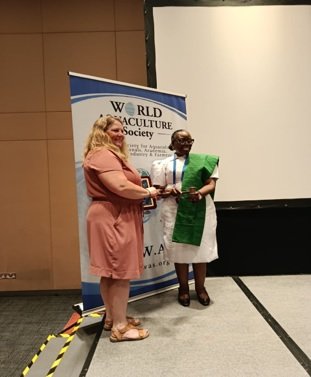
Briefly describe your journey as President of WAS-AC over the past two years
The journey has been demanding, inspiring, and rewarding. It has involved strengthening the Chapter’s institutional visibility, expanding partnerships, mobilizing members, supporting students and young professionals, and increasing Africa’s participation in the global aquaculture community. It also required resilience, diplomacy, teamwork, and strategic engagement with stakeholders across academia, industry, government, and development partners.
What are a few highlights of your impact in leading a vibrant WAS Chapter?
Key highlights of my leadership of the WAS African Chapter include rapid membership growth (454% within one year); advocacy for greater student access through complimentary memberships; stronger policy engagement at continental and global levels; the elevation of African voices on the global WAS Board; and presiding over the annual Aquaculture Africa Conferences (AFRAQs) and regional collaborations.
These initiatives produced further impacts: stronger stakeholder engagement; support for students and early-career professionals; enhanced collaboration with other aquaculture associations, universities and development organizations; wider participation in conferences, technical exchanges and scientific programs; greater cooperation across African countries; and expanded visibility of African aquaculture in global forums. They have also built sustained momentum and excitement toward World Aquaculture Tanzania 2026 (WA26T, with AFRAQ2026).
Where do you see African aquaculture positioned in terms of long-term sustainability, based on what you have learned?
Africa has enormous potential to become one of the world’s major sustainable aquaculture regions. The continent possesses vast water resources, a youthful population, growing markets and increasing scientific capacity.
However, sustainability will depend on:
- responsible resource management;
- strong governance;
- local feed development;
- investment in research and innovation;
- climate-smart production systems;
- professional capacity building;
- and the inclusion of youth, women and small-scale producers.
If properly supported, African aquaculture can contribute significantly to food security, employment, trade and economic transformation.
What are the challenges for African aquaculture to grow? How can these be addressed?
Three major challenges continue to hinder the sector’s growth and sustainability.
The first is limited access to quality inputs and financing. Many farmers struggle to obtain high-quality seed, feed, equipment and the affordable credit they need to improve productivity. Addressing this requires strengthening local production systems, improving investment frameworks and establishing farmer-friendly financing mechanisms that are both accessible and sustainable.
The second is weak technical capacity and inadequate extension systems. Many producers lack sufficient technical guidance, modern training opportunities and access to up-to-date knowledge. Closing this gap calls for investment in education, digital extension services and vocational training, along with stronger collaboration among universities, industry and government institutions.
The third is poor infrastructure and weak market systems. Inadequate cold chains, limited processing facilities, poor logistics and unorganized markets continue to reduce efficiency and profitability across the value chain. Promoting value chain development, encouraging public-private partnerships, increasing infrastructure investment and strengthening regional trade integration are essential steps toward better market access and sector performance.
You stood for the position of WAS Global President-Elect — and you won. Briefly describe this monumental step
It was both humbling and historic. My election reflected the growing global recognition of Africa’s contributions and potential in aquaculture. It also demonstrated confidence in inclusive leadership, in diversity and in the importance of bringing broader global perspectives into international professional governance. For me, it was not just an individual achievement but a victory for Africa, for women and for emerging aquaculture professionals across the Global South.
Finally, I am a strong believer in God. To me, this opportunity says that God needs me to rise to the occasion, take responsibility, fulfill the duties of the position, and thus glorify His Name. I am certain that He does not expect me to do this alone. My role is to be a leader humble enough to recognize the talent in others, so that together we fulfill our purpose of bettering the experience of His creation.
You are now on record as the first WAS Global President from the African continent. What does this mean?
It means Africa now has a stronger voice and stronger representation in global aquaculture leadership. It signifies recognition that solutions to global food security and sustainable aquaculture must meaningfully include Africa.
It also sends a strong message to young professionals, especially women and youth, that leadership is attainable regardless of background or geography. I hope it inspires future generations to take an active part in global scientific and professional leadership.
Any message to inspire women in aquaculture and the young generation of aquaculture professionals?
Believe in your capacity, remain committed to excellence, and never underestimate the value of persistence, integrity, and continuous learning. Do your best at all times. Our duty is to do our best and to leave the rest to God.
Aquaculture offers vast opportunities for innovation, entrepreneurship, science, sustainability and service to humanity. Young professionals and women should not be discouraged by barriers: every challenge can become an opportunity for growth and leadership. Mentorship, collaboration, discipline and passion are essential to long-term success.
The UN has declared 2026 the International Year of the Woman Farmer. What message would you like to relay to the millions of women fish farmers and aquaculture professionals out there?
Women are central to food systems, family welfare, nutrition, and community resilience. Across Africa and the world, women fish farmers and aquaculture professionals continue to make invaluable contributions despite numerous constraints.
My message is:
- continue believing in your potential;
- seek knowledge and foster innovation;
- support one another;
- and remain active participants in leadership and decision-making.
Governments and institutions must also invest more deliberately in empowering women by expanding their access to land, financing, technology, education, markets and leadership opportunities.
Any special message to aquaculture audiences?
I encourage everyone to become an active participant in strengthening the future of aquaculture through professionalism, collaboration, innovation and sustainability.
I especially encourage:
- membership in the World Aquaculture Society;
- mentorship and support for students and young professionals;
- participation in conferences and other scientific platforms;
- and stronger collaboration among academia, industry, governments and development partners.
The future of aquaculture in Africa is bright, but it requires collective effort, ethical leadership, investment in people and a commitment to sustainability. Africa must not only participate in global aquaculture — Africa must help shape its future.
To learn more about Dr. Foluke Areola, read her Acceptance Speech at the Presidential Inauguration Ceremony in Singapore (June 2026): https://was.org/_documents/Dr_Foluke_Areola_Acceptance_Speech.pdf
Dr. Areola will participate in and officiate at World Aquaculture Tanzania 2026 (WA26T), taking place 1–4 December 2026 in Dar es Salaam. Be part of the conference and connect with this champion of global aquaculture. For more details about WA26T, visit https://was.org/meeting/code/AFRAQ26
World Aquaculture Society Secretariat Africanchapter@was.org

Editor at the digital magazine AquaHoy. He holds a degree in Aquaculture Biology from the National University of Santa (UNS) and a Master’s degree in Science and Innovation Management from the Polytechnic University of Valencia, with postgraduate diplomas in Business Innovation and Innovation Management. He possesses extensive experience in the aquaculture and fisheries sector, having led the Fisheries Innovation Unit of the National Program for Innovation in Fisheries and Aquaculture (PNIPA). He has served as a senior consultant in technology watch, an innovation project formulator and advisor, and a lecturer at UNS. He is a member of the Peruvian College of Biologists and was recognized by the World Aquaculture Society (WAS) in 2016 for his contribution to aquaculture.