The Majestic Angelfish, also known as the Bluegirdled Angelfish (Pomacanthus navarchus), stands out in the aquarium hobby for its vibrant color pattern, commanding presence, and fascinating personality. This member of the Pomacanthidae family constitutes one of the most coveted—and debated—treasures of the artificial reef ecosystem.
However, successfully maintaining a healthy and long-lived specimen demands more than merely admiring its aesthetics; it requires a profound understanding of its biology, specialized diet, territorial temperament, and the critical differences between wild-caught individuals and those propagated through modern aquaculture (captive-bred). In this article, we present an exhaustive technical analysis designed to help advanced hobbyists and marine biology professionals master the care of Pomacanthus navarchus.
- 1 Key Takeaways: Majestic Angelfish Guide
- 2 What is the Bluegirdled Angelfish? Origin and Natural Habitat
- 3 Biology and Appearance: A “Two-Faced” Fish
- 4 Aquarium Requirements
- 5 Compatibility and Behavior: Tank Mates and Aggression Management
- 6 Is the Majestic Angelfish Reef Safe?
- 7 Feeding and Diet: From Nature to Captivity
- 8 Wild-Caught vs. Captive-Bred: Which to Choose?
- 9 Common Diseases
- 10 Buyer’s Guide: Pricing and Availability
- 11 Conclusion
-
12
Frequently Asked Questions (FAQs) — Majestic Angelfish
- 12.1 What is the minimum aquarium size required for the Majestic Angelfish (Pomacanthus navarchus)?
- 12.2 Is the Majestic Angelfish Reef Safe?
- 12.3 What does the Bluegirdled Angelfish eat in the aquarium?
- 12.4 How can you differentiate the male from the female in this species?
- 12.5 What advantages do captive-bred specimens offer compared to wild-caught ones?
- 12.6 What is HLLE syndrome, and how does it affect the Majestic Angelfish?
- 12.7 Does the Majestic Angelfish change color as it grows?
- 12.8 Why does my Majestic Angelfish refuse to eat dry food?
- 12.9 How does aquarium lighting affect the health of this fish?
- 13 References
- 14 Entradas relacionadas:
Key Takeaways: Majestic Angelfish Guide
- Identity & Origin: A solitary, teleost pomacanthid native to Indo-Pacific tropical reefs, highly prized in the international ornamental trade as the Majestic or Bluegirdled Angelfish.
- Ecological Vulnerability: While listed as “Least Concern” by the IUCN, scientific studies indicate wild populations face extreme exploitation exceeding the Maximum Sustainable Yield (MSY), positioning marine aquaculture as a crucial strategic solution.
- Chromatic Metamorphosis: The species undergoes a radical morphological transition over 2 to 3 years, shifting from a dark juvenile pattern with light blue stripes to an adult coloration defined by its iconic electric blue girdle and brilliant yellow body.
- Reproductive Biology: Exhibits sequential protogynous hermaphroditism, where dominant females invert their gonads to become functional males in the absence of an alpha male; external visual sexual dimorphism is non-existent.
- System Requirements: Demands a minimum volume of 180 gallons (680 liters) with oversized filtration (protein skimmer and activated carbon) to guarantee absolute physicochemical water stability, alongside balanced aquascaping that offers deep caves and open swimming areas.
- Limited Compatibility (Not Reef Safe): Displays a semi-aggressive and territorial temperament. It is incompatible with Large Polyp Stony (LPS) corals due to constant nipping, though it shows a significantly lower casualty rate alongside Small Polyp Stony (SPS) corals under optimal nutrition.
- Dietary Specialization: As a broad-spectrum omnivore, over 50% of its ration must include natural marine sponges and tunicates, supplemented with macroalgae (Spirulina and nori) and enriched frozen foods to prevent Head and Lateral Line Erosion (HLLE) syndrome.
- Aquaculture Advantages (Captive-Bred): Specimens propagated in captivity—such as those developed by leading biotechnology centers—offer near 100% survival rates, biosecurity against oceanic pathogens (e.g., Megalocytivirus), behavioral boldness, and immediate acceptance of commercial diets.
What is the Bluegirdled Angelfish? Origin and Natural Habitat
The Pomacanthus navarchus is known in international markets by the common names “Majestic Angelfish” or “Bluegirdled Angelfish”; likewise, in classical scientific literature, it is identified under the synonym or subgenus Euxiphipops navarchus (Thresher & Brothers, 1985).
This marine teleost is widely distributed throughout the Indo-Pacific (Sapolu, 2005), encompassing crucial areas of unparalleled marine biodiversity that include the tropical waters of Indonesia, the Philippines (Corrales et al., 2015), Papua New Guinea, and the northern slopes of Australia, where its presence in the Great Barrier Reef stands out.
Furthermore, its bathymetric range is remarkably broad, extending from shallow waters of barely 3 meters to depths reaching 30 meters (Green et al., 2006); however, its preference for shallow waters (less than 10 meters) renders it vulnerable to ornamental fish collectors (Morton & Jacobsen, 2024). Unlike other gregarious species, adults of this species exhibit markedly solitary and secretive habits.
Biology and Appearance: A “Two-Faced” Fish

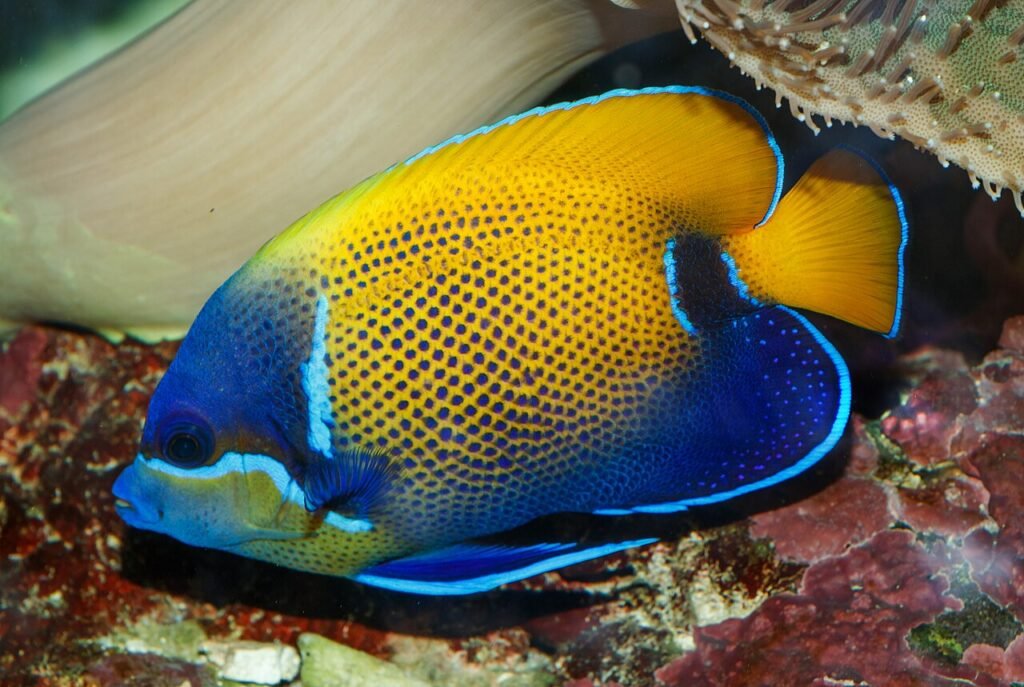
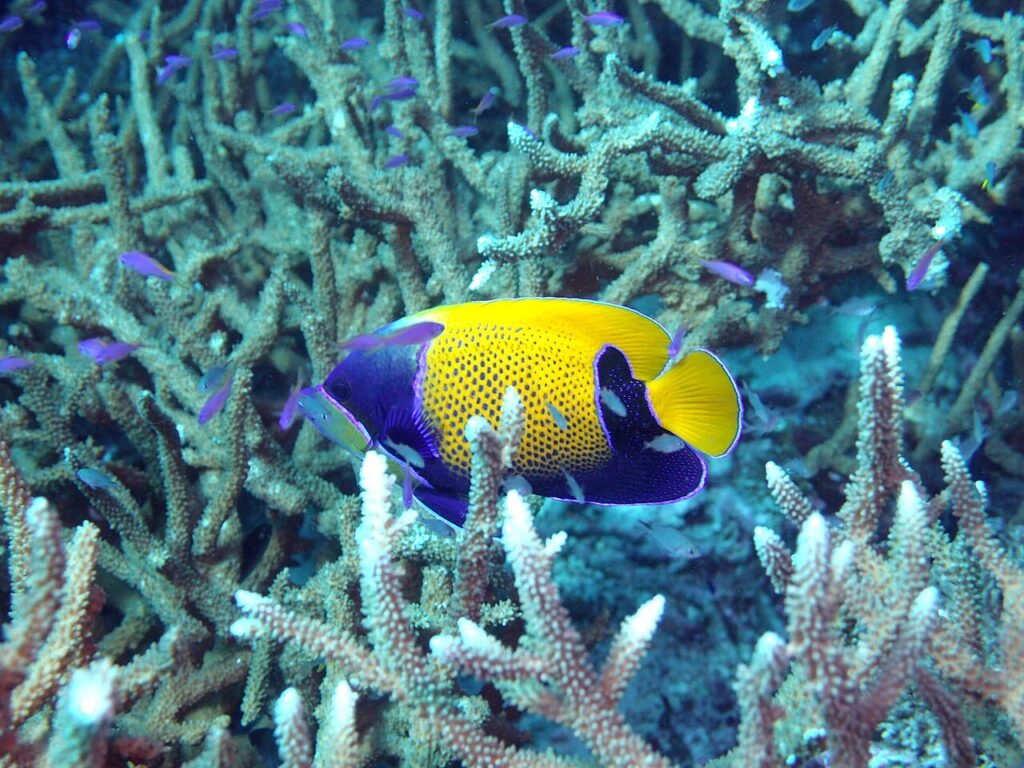
Pomacanthus navarchus undergoes a radical chromatic metamorphosis from its juvenile stage to maturity. While juveniles display a dark blue pattern with light blue vertical stripes, adults develop their iconic electric blue girdle, a luminous yellow body, and fins trimmed with neon blue edges. It is, quite literally, a species with two markedly distinct aesthetic identities throughout its life cycle.
The Fascinating Transition from Juvenile to Adult
In the marine aquarium hobby, juvenile majestic angelfish are highly popular due to this drastic change in morphology:
- Juvenile Phase: Young specimens present a completely different appearance, an evolutionary strategy that helps reduce intraspecific competition and evade predators. Their body is dark blue or nearly black, crossed by slightly curved white and light blue stripes. The transition to adult coloration takes between 2 and 3 years, typically beginning with a yellow glow at the center of the dorsal fin that expands downward.
- Adult Phase: Possesses a base color ranging from bright yellow to intense orange on the body, the lower section of the face, and the dorsal and caudal fins. A dark blue band or “girdle” covers the face, eyes, and chest, extending backward, while a second dark blue band arches from the lower posterior area. Both sections are bordered by vibrant, glowing neon blue margins.
- Meristics: Adult specimens of P. navarchus present 13–14 dorsal spines and 17–18 dorsal soft rays; 3 anal spines and 18 anal soft rays; in addition to 18–20 pectoral fin rays and between 45 and 50 longitudinal scales. Like other pomacanthids, they possess a prominent preopercular spine on the operculum used as a defense mechanism.
Regarding this, Langlois et al. (2022) highlight Pomacanthus navarchus as a key representative example of reef fish with the highest aesthetic value. The researchers suggest that the species’ appeal stems from the adaptation of its complex chromatic patterns to camouflage among rocks and corals, which constitute visually fractal environments; consequently, humans perceive them as beautiful due to a biological preference bias toward such fractal and colorful structures.
Furthermore, the maximum size a fully developed specimen can reach in the wild is 25 cm (Sapolu, 2005). In closed aquarium systems, due to volume and space limitations, their size usually stabilizes between 18 and 23 cm, depending strictly on husbandry conditions and nutritional quality. An average lifespan of 15 years in their natural habitat is reported for the majestic angelfish (FishBase), although some records indicate they can reach up to 21 years of age under optimized captivity.
Mantente siempre informado
Stay Informed
Únete a nuestras comunidades para recibir al instante las noticias, informes y análisis más importantes del sector acuícola.
Join our communities to get instant access to the most important news, reports, and analysis from the aquaculture industry.
Sexual Dimorphism and Protogynous Hermaphroditism
Pomacanthus navarchus is a protogynous (or sequential) hermaphrodite, meaning all individuals are born and initially develop as functionally female organisms.
Within a social structure or specific reef area, these fish organize under subtle hierarchies; if the dominant alpha male disappears, the largest and most dynamic female undergoes a radical internal hormonal transition, reverting her gonads into fully functional male organs within a few weeks to months.
Despite this fascinating reproductive strategy, visual sexual dimorphism is practically non-existent to the naked eye. There are no reliable variations in coloration, fin size, or blue girdle patterns to confidently differentiate sexes through external inspection, which poses a significant technical challenge for establishing viable pairs in captivity and requires compatibility to be based on prolonged behavioral observation and the controlled introduction of markedly disparate-sized specimens.
Aquarium Requirements
Due to its definitive adult size and active metabolism, housing this species in undersized aquariums constitutes a direct cause of chronic stress, induced stunting, and immune system failure.
Tank Size and Decoration
When reviewing volume metrics for this specimen’s care, data from biological databases and prestigious commercial sources converge on an unbreakable rule of thumb: the minimum aquarium size must be 180 gallons (approximately 680 liters) to adequately house an adult individual. The aquascaping design must be planned under a perfect balance between two essential environments:
- Refuge Zones: Being inherently timid and skittish during its introduction to a new environment, it requires the strategic placement of structured live rock forming deep caves, overhangs, and shaded pathways where it can fully retreat from the external line of sight if threatened.
- Open Swimming Areas: Despite its initial reserve, it is a constant swimmer that needs a clear central channel to exercise its musculature and display its fins without impacting sharp structures.
Exact Water Parameters
To ensure the fish’s biological defenses operate at peak performance and its colors maintain optimal brightness, the physicochemical water parameters must simulate the absolute stability of the Indo-Pacific:
| Chemical / Physical Parameter | Recommended Optimal Range |
| Temperature | 72–78°F / 22–26°C |
| Specific Gravity / Salinity | 1.020 – 1.025 |
| pH | 8.1 – 8.4 |
| Carbonate Hardness (dKH) | 8 – 12 dKH |
| Ammonia () and Nitrites () | 0.0 ppm (Absolute) |
| Nitrates () | Less than 10–15 ppm |
It is imperatively recommended to implement an oversized protein skimmer and a chemical filtration system based on high-quality activated carbon to continuously remove dissolved organic compounds and guarantee maximum water column clarity.
Compatibility and Behavior: Tank Mates and Aggression Management
The temperament of the Majestic Angelfish (Pomacanthus navarchus) is universally classified in the marine aquarium hobby as semi-aggressive. While it does not act as an alpha predator that devours smaller tank mates—such as gobies—it possesses a deeply ingrained sense of spatial territoriality that sharpens notably as it matures and establishes itself in the system. To successfully manage a community where the Bluegirdled Angelfish cohabits, strategic introduction principles must be applied:
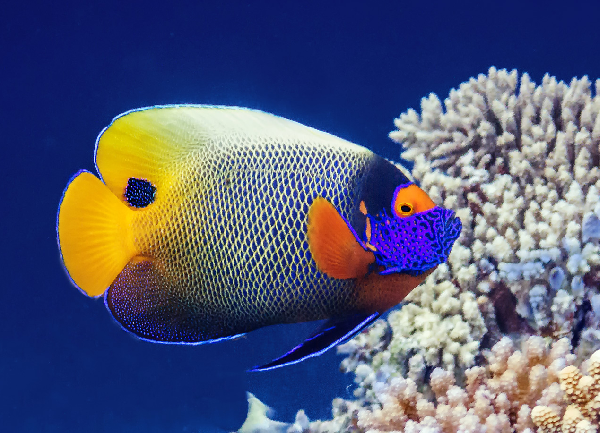
- Avoid Congeners and Similar Species: Under ordinary circumstances, never house more than one Pomacanthus navarchus specimen in the same tank unless the volume exceeds 500 gallons and they are a confirmed pair. Likewise, it will display fierce hostility toward other large angelfish sharing similar silhouettes or biological niches, especially those within the Euxiphipops subgenus, such as the Blueface Angelfish (Pomacanthus xanthometopon).
- Suitable Tank Mates: Ideal cohabitants include tangs or surgeonfish (Acanthuridae), peaceful triggerfish (such as Xanthichthys mento), clownfish (Amphiprioninae), medium-sized wrasses (Labridae), and damsels with controlled temperaments.
- Introduction Timeline: As a general rule to mitigate territoriality, the Majestic Angelfish should be one of the last specimens introduced to the aquarium. If added first, it will claim the entire volume as its personal territory, systematically attacking any new fish introduced later.
Is the Majestic Angelfish Reef Safe?
This is one of the most intense debates in the marine aquarium hobby, where commercial offerings often present major contradictions. While mass-market platforms claim this species “will generally not harm corals,” its biological reality is far more complex and demands extreme caution.
Technical Verdict: Pomacanthus navarchus is not reef safe. Its evolutionary instinct innately drives it to forage by nipping at live surfaces.
Below is a detailed analysis of its behavior toward distinct taxonomic varieties of sessile invertebrates:
- LPS Corals (Large Polyp Stony): Species from the genera Trachyphyllia, Catalaphyllia (Elegance coral), and Lobophyllia, alongside brain corals, represent an irresistible temptation. Their fleshy, fluid-rich tissues are often constantly nipped by this angelfish, causing polyps to permanently retract, halt photosynthesis, and eventually die from tissue necrosis.
- Soft Corals: Colonial polyps such as zoanthids and corals of the genus Palythoa frequently serve as secondary grazing targets. However, soft coral varieties with high concentrations of defensive chemical terpenes—such as certain leather corals of the genus Sarcophyton or corals of the genus Euphyllia—may be completely ignored.
- SPS Corals (Small Polyp Stony): This category presents the lowest casualty rate. Rigid structures such as Acropora, Montipora, or Seriatopora generally tolerate cohabitation with the Majestic Angelfish. While the specimen may occasionally nip at surface mucus, it rarely destroys the calcareous tissue of a healthy SPS, provided its nutritional requirements are fully met.
Feeding and Diet: From Nature to Captivity
Nutrition constitutes the master pillar upon which the survival of the Majestic Angelfish (Pomacanthus navarchus) rests. A large portion of documented failures with wild-caught specimens stems from starvation or the development of chronic deficiency diseases caused by a monotonous and inadequate dietary supply. In captivity, its diet must be varied and enriched with formulas containing Spirulina, nori, meaty frozen foods, and specific vitamin complexes to emulate its natural consumption of marine sponges and tunicates (Lieske & Myers, 1994).
What does it eat in its natural habitat?
Unlike purely herbivorous or carnivorous species, the Bluegirdled Angelfish is a specialized, broad-spectrum omnivore. In the ocean, more than 50% of its daily caloric intake comes from a food resource that is abundant on reefs but difficult to replicate naturally: benthic marine sponges and tunicates (sea squirts). The specimen supplements this consumption by continuously grazing on filamentous microalgae, small crustaceans, and the organic film (detritus and bacterial mats) adhered to live rock.
Recommended Diet in the Aquarium
To maintain a specimen with a robust immune system and vibrant colors, a multi-ingredient diet administered in small portions two to three times a day must be structured, mimicking its continuous grazing behavior:
- Angelfish-Specific Formulas: It is mandatory to provide commercially prepared foods (whether frozen, pellets, or flakes) that explicitly include natural marine sponge matter. Prestigious specialized brands formulate frozen diets intended exclusively for the Pomacanthidae family.
- Vegetal Input and Algae: A constant supply of high-quality macroalgae must be provided. The use of dehydrated nori sheets—suspended by clips on the aquarium glass—and foods enriched with concentrated Spirulina will simulate the algae grazing of the Indo-Pacific, a crucial factor for the correct functioning of its digestive tract.
- Meaty and Live Foods: Frozen Mysis shrimp enriched with vitamins, adult Artemia salina, chopped krill, and fresh marine preparations based on clam or mussel provide the necessary essential amino acids. For newly imported specimens showcasing shyness and rejecting dry foods, adding live food (such as Artemia nauplii or small copepods) acts as a visual trigger that stimulates hunting instincts.
Wild-Caught vs. Captive-Bred: Which to Choose?
The evolution of global marine aquaculture has radically transformed the acquisition criteria for the Bluegirdled Angelfish (Pomacanthus navarchus). Today, aquarists face a crucial commercial and ethical crossroads: opting for an ocean-collected specimen or investing in an individual raised in specialized scientific farms. Let us examine the main differences:
The Ecological Impact and Stress of Wild Harvesting
The International Union for Conservation of Nature (IUCN) lists Pomacanthus navarchus as “Least Concern” (Zámečníková-Wanma, 2020) due to its wide geographic distribution; however, the continuous extraction of wild specimens poses serious challenges. The report by Green et al. (2006) emphasizes the economic importance of this species, explicitly classifying it as a key target for the international ornamental fish trade.
Furthermore, the study by Kasmi and Karma (2016) on the majestic angelfish in South Sulawesi waters (Indonesia) reveals a critical biological and economic situation; the researchers determined that the exploitation status of the angelfish is well above the Total Allowable Catch (TAC) and the Maximum Sustainable Yield (MSY).
Despite advances in managing majestic angelfish and other angelfish fisheries, harvesting from the reef, collection at local stations, and prolonged international flights subject these fish to extreme neuroendocrine stress levels. Likewise, wild adult specimens, accustomed to open ocean spaces and diets strictly based on live sponges, frequently suffer severe acclimation shocks when confined in glass tanks; consequently, they reject food, collapsing their immune system and registering alarming initial mortality rates in the hands of inexperienced hobbyists. Regarding this, Kasmi et al. (2022) highlight that the commercial exploitation of this and other marine fish species can be carried out profitably, efficiently, and ecologically by integrating natural sedatives (clove oil), navigation technology (GPS), and advanced water filtration systems.
The Advancement of Aquaculture: Captive-Bred Specimens
The concern to eliminate dependency and reduce the impact on wild populations has led to the development of aquaculture techniques for rearing a variety of marine ornamental fish, including the majestic angelfish.
Reported experiences with P. navarchus aquaculture are scarce. However, to mitigate pressure in the wild, Kusrini (2012) reported studies conducted at the Balai Budidaya Laut (BBL) in Indonesia to achieve captive breeding; this culture was managed at a density of 50 individuals per tank, using specimens weighing between 100 and 200 grams.
Meanwhile, Adams (2015) reported that in 2015, the Bali Aquarich center (Indonesia) achieved a scientific and commercial milestone by successfully breeding this species in captivity from its larval stage. In this regard, Thresher and Brothers (1985) reported that in the natural environment, the pelagic larval phase of Euxiphipops navarchus (a synonym of Pomacanthus navarchus) lasts between 22 and 24 days.
On the other hand, Adams (2015) reports that when cohabiting with the Blueface Angelfish (Pomacanthus xanthometopon), the possibility of generating rare hybrid specimens was also recorded; however, there is no information in the academic world regarding this possibility.
Leading companies in biotechnology applied to aquaculture, such as The Biota Group, have consolidated these advances by breeding and raising Pomacanthus navarchus entirely in captivity. Farm-raised specimens offer incomparable technical advantages that fully justify their investment:
- Resilience and Biosecurity: Born and raised in controlled laboratory environments, they are completely free of external oceanic pathogens and possess a drastically superior metabolic resilience.
- Immediate Acceptance of Commercial Food: Unlike wild-caught individuals, an aquaculture fish has been fed prepared diets since its larval stages, accepting pellets, flakes, and frozen foods immediately, eliminating hunger strike periods.
- Behavioral Boldness: They are considerably less timid fish; they acclimate to the human environment with astonishing speed and do not exhibit the initial panic characteristic of individuals captured from the wild.
- True Sustainability: Their acquisition guarantees zero impact on wild populations in the Indo-Pacific and promotes scientific research in marine conservation technologies.
Nevertheless, the study by Hadie et al. (2023) evaluates the current status of marine ornamental fish captive breeding in Indonesia and highlights two main points regarding Pomacanthus navarchus:
- Advances in Breeding Technology: The study indicates that the necessary technology for the controlled reproduction of this species has already been developed.
- Current Rearing Phase: Despite technological developments, the majestic angelfish is still in the domestication stage.
This indicates that although there is evident technical progress for its reproduction, the species is still undergoing the initial process of adapting to artificial environments before it can be optimized and produced at a large scale. However, the aquaculture of these fish poses a great opportunity to obtain specimens adapted to confinement conditions.
Common Diseases
Regardless of the fish’s origin—and as a mandatory, inescapable requirement for wild-caught specimens—a rigorous prophylactic quarantine protocol must be executed before introducing Pomacanthus navarchus into the main aquarium.
Management Directive: During the isolation phase in a therapeutic tank, maintaining dim lighting is advised to mitigate cortisol (stress) levels; likewise, it is fundamental to systematically enrich food with liquid vitamin complexes and specific marine-system amino acids.
Ectoparasites
This species is highly sensitive to deadly ciliated protozoans and dinoflagellates such as Cryptocaryon irritans (causing marine white spot or ich) and Amyloodinium ocellatum (responsible for marine velvet). Both constitute common parasitic infections in stressed pomacanthids, manifesting with particular virulence in newly captured wild specimens.
Flukes (Trematodes)
The Majestic Angelfish exhibits the highest recorded susceptibility toward the monogenean fluke Neobenedenia melleni. If timely treatment is not applied, this infestation causes severe epidermal lesions, tissue sloughing, and irreversible blindness in the specimen.
Head and Lateral Line Erosion (HLLE) Syndrome
This is a non-infectious condition that severely compromises the aesthetics and health of the Majestic Angelfish through the following mechanisms and risk factors:
- Progressive Tissue Damage: The primary impact of this syndrome manifests as bilateral ulcerative lesions (pitting) and a continuous loss of epidermal tissue around the sensory pores of the head, gradually extending along the specimen’s lateral line.
- Multifactorial Triggers: Aquatic veterinary pathology literature indicates that susceptibility to this pathology increases due to a convergence of environmental and management variables:
- Chronic Nutritional Deficiencies: Strongly linked to a monotonous dietary regimen characterized by the absence of macroalgae, carotenoids, and essential compounds derived from marine sponges, as well as a lack of fundamental vitamins (A, C, and D).
- Environmental Deterioration: Quality deficiencies or abrupt fluctuations in physicochemical water parameters weaken the fish’s homeostasis, accelerating the clinical presentation.
- External Factors and Filtration: Prolonged exposure to residual dust from low-quality activated carbon used in chemical filtration systems has been widely documented as a triggering agent for this syndrome.
To mitigate these risks and prevent HLLE development in captivity, maintaining absolute water quality stability and strictly administering specialized diets enriched with high-quality sponges and algae is indispensable.
Megalocytivirus
This pathogen is a double-stranded DNA virus infecting over 100 fish species (Guo et al., 2025), causing severe economic losses in both the aquaculture industry and the ornamental trade. In this regard, Johan and Zainathan (2020) reported that Pomacanthus navarchus tested positive for a megalocytivirus infection in a case recorded specifically in Brazil in 2015. For the unambiguous identification and confirmation of the virus in the specimen, the researchers utilized the nested polymerase chain reaction (Nested PCR) technique.
Meanwhile, Guo et al. (2025) confirmed that Pomacanthus navarchus is a carrier of the ISKNV (infectious spleen and kidney necrosis virus) genotype, which belongs to the species Megalocytivirus pagrus. The documented contagion in said study was determined to be the result of a natural infection; that is, the specimen contracted the virus in its habitual environment and not through controlled laboratory experimental exposure.
Buyer’s Guide: Pricing and Availability
The global aquarium trade accurately reflects the aesthetic value and logistical complexity associated with Pomacanthus navarchus. Commercial price ranges vary substantially based on specimen size and, most markedly, its biological origin.
Regarding this, Kasmi and Karma (2016) determined that wild-caught specimens are immediately commercialized in the international market regardless of price increases; according to the researchers, the highest global demand originates from the European Union (50%), followed by the United States (40%), and Asian countries such as Japan, Hong Kong, and South Korea (10%). For its part, the study by Ilham et al. (2021) corroborates that this excess demand and elevated pricing generate extreme exploitation pressure on the species.
Based on e-commerce trends analyzed within the sector, indicative costs are typically structured under the following breakdown:
- Wild-Caught Juveniles (Small / Medium): Generally positioned in a range from $110 to $180 USD. These are sought after by experienced aquarists wishing to manage the entire chromatic metamorphosis (morphing) within their own systems, assuming the inherent risks of wild fish acclimation.
- Wild-Caught Adults (Large / XL): Can easily be priced between $250 and over $450 USD, depending on the symmetry of their blue girdle, the intensity of their yellow tones, and their overall health status post-importation.
- Captive-Bred Specimens (Captive Bred / Premium): Their starting price is usually significantly higher, frequently exceeding $300 to $500 USD even for small sizes. This cost increase is backed by their zero initial mortality rate, immediate adaptability, and the guarantee of acquiring a specimen developed under strict standards of scientific sustainability and biosecurity.
Technical Purchasing Advice: When acquiring a specimen at a local fish store, always demand to see the fish actively feeding before completing the purchase. Closely observe that the eyes are crystal clear—free of eye flukes—that respiration is slow and rhythmic, and that the body does not exhibit pinching in the dorsal area immediately above the eyes, an unmistakable sign of advanced chronic malnutrition.
Conclusion
The Majestic Angelfish (Pomacanthus navarchus) embodies the pinnacle of aesthetic beauty and technical complexity within the modern marine aquarium hobby. Maintaining this Indo-Pacific jewel in all its chromatic and behavioral splendor represents a true accolade for any advanced aquarist or biological display professional. To guarantee long-term success with this magnificent species, there are four inescapable master keys:
- Ensure a spacious tank with a minimum volume of 180 gallons.
- Provide a live rock architecture rich in deep caves and refuges.
- Maintain a strict nutritional discipline that mandatorily incorporates sponge matter and Spirulina.
- Prioritize the acquisition of specimens originating from sustainable aquaculture (captive-bred).
By rigorously respecting the biology and ecological requirements of Pomacanthus navarchus, the specimen will fully reward every effort, becoming the undisputed sovereign of its artificial reef for decades to come.
Frequently Asked Questions (FAQs) — Majestic Angelfish
The minimum indispensable size to adequately house an adult specimen is 180 gallons (approximately 680 liters). Keeping this species in lower volumes triggers chronic stress, induced stunting, and a severe collapse of its immune system due to its active metabolism and constant swimming.
Is the Majestic Angelfish Reef Safe?
No, Pomacanthus navarchus is not 100% reef safe, as its evolutionary instinct drives it to nip at sessile invertebrates. It exhibits a critical incompatibility with Large Polyp Stony (LPS) corals, such as Trachyphyllia and Lobophyllia. However, it typically tolerates cohabitation with rigid Small Polyp Stony (SPS) corals, like Acropora and Montipora, provided its dietary requirements are fully met.
What does the Bluegirdled Angelfish eat in the aquarium?
As a specialized, broad-spectrum omnivore, its captive diet must be multi-ingredient and administered 2 to 3 times a day. It must mandatorily include commercial formulas containing natural marine sponge matter, a constant vegetal input (nori algae and concentrated Spirulina), and vitamin-enriched frozen meaty foods (Mysis, Artemia salina, or krill).
How can you differentiate the male from the female in this species?
External visual sexual dimorphism in Pomacanthus navarchus is practically non-existent to the naked eye, as there are no reliable variations in size, fins, or color patterns to sex the fish. Its biological differentiation is based on sequential protogynous hermaphroditism: all individuals are born female, and the dominant female of the group will transform into a functional male only if the alpha male of the area disappears.
What advantages do captive-bred specimens offer compared to wild-caught ones?
Sustainable aquaculture specimens offer a near 100% survival rate due to their metabolic resilience and biosecurity against oceanic pathogens. Unlike wild-caught individuals, they do not experience “hunger strikes” because they immediately accept commercial pellets and flakes, acclimate quickly to the human environment, and their purchase guarantees zero environmental impact on Indo-Pacific reefs.
What is HLLE syndrome, and how does it affect the Majestic Angelfish?
HLLE (Head and Lateral Line Erosion) is a non-infectious condition that causes progressive tissue loss and the appearance of bilateral ulcerative lesions around its sensory pores. Its main triggers include chronic nutritional deficiencies (lack of vitamins A, C, and D), abrupt fluctuations in water parameters, and exposure to residual dust from low-quality activated carbon.
Does the Majestic Angelfish change color as it grows?
Yes, drastically. It transitions from a dark blue juvenile adorned with fine, curved white and neon light-blue stripes into a brilliant yellow adult distinguished by an iconic metallic dark blue girdle or mask covering its eyes, flanks, and anal fin.
Why does my Majestic Angelfish refuse to eat dry food?
This is extremely common in wild-caught specimens due to the stress of capture and the absence of their natural food sources (sponges). To resolve this, offer frozen Mysis shrimp enriched with amino acids, fresh clams opened in their own shell placed at the bottom of the tank, or rely on the visual stimulus of live prey such as brine shrimp (Artemia salina).
How does aquarium lighting affect the health of this fish?
Large angelfish rely on stable lighting spectra to synthesize essential nutrients and regulate their circadian rhythms. Excessively intense lighting without shaded zones induces chronic stress in Pomacanthus navarchus, weakening its skin mucus barrier. Gradual sunrise and sunset ramps must be programmed, ensuring rock structures with dark overhangs where the fish can shelter from high-power LED fixtures.
References
Adams Jake. 2015. Captive bred majestic angelfish revealed by Bali Aquarich. Reef Builders.
Corrales, C. M., Delan, G. G., Rica, R. L. V., Piquero, A. S., & Monte, I. A. (2015). A baseline study on coral reef fishes in the marine protected areas in Southern Cebu, Philippines. University Sidi Mohamed Ben Abdallah.
Green, A., Lokani, P., Atu, W., Ramohia, P., Thomas, P., & Almany, J. (Eds.). (2006). Solomon Islands Marine Assessment: Technical report of survey conducted May 13 to June 17, 2004 (TNC Pacific Island Countries Report No. 1/06). The Nature Conservancy. 530 p.
Guo, C., He, J., Xu, X., Weng, S. and He, J. (2025), Megalocytivirus: A Review of Epidemiology, Pathogenicity, Immune Evasion, and Prevention Strategies. Rev Aquac, 17: e70025. https://doi.org/10.1111/raq.70025
Hadie, L. E., Kontara, E. K. M., Kusdiarti, & Putri, A. W. M. (2023). The effectiveness of brood stock management in captive breeding of marine ornamental Fish. IOP Conference Series: Earth and Environmental Science, 1137, 012028. https://doi.org/10.1088/1755-1315/1137/1/012028
Johan CAC, Zainathan SC (2020). Megalocytiviruses in ornamental fish: A review. Veterinary World, 13(11), 2565-2577. https://doi.org/10.14202/vetworld.2020.2565-2577.
Ilham, Kasim, N. A., & Zam, W. (2021). Faktor-faktor yang mempengaruhi penawaran ikan hias injel pyama (Pomacanthus navarchus) di Sulawesi Selatan. Seminar Nasional Politeknik Pertanian Negeri Pangkajene Kepulauan.
Kasmi, M., & Karma, A. (2016). The Relationship between Blue-Girdled Angelfish (Pomacanthus Navarchus) Exploitation and Availability for a Sustainable Fishery in South Sulawesi. Journal of Agricultural Studies, 5(1), 15.
Kasmi, M., Amir, S. M., Andryanto, A., Haruna, B., & Usman, A. F. (2022). Penerapan iptek pengembangan kewilayahan (pipk); peningkatan kualitas produksi ikan hias angel fish dengan konsentrasi minyak cengkeh alternatif alat tangkap lestari. Prosiding Semnas Politani Pangkep, 3, 765-784.
Kusrini, E. (2012). Teknologi produksi benih ikan hias laut untuk melestarikan sumberdaya genetiknya. Media Akuakultur, 7(2).
Langlois J, Guilhaumon F, Baletaud F, Casajus N, De Almeida Braga C, Fleuré V, et al. (2022) The aesthetic value of reef fishes is globally mismatched to their conservation priorities. PLoS Biol 20(6): e3001640. https://doi.org/10.1371/journal.pbio.3001640
Lieske, E. and R. Myers, 1994. Collins Pocket Guide. Coral reef fishes. Indo-Pacific & Caribbean including the Red Sea. Haper Collins Publishers, 400 p.
Morton, J., & Jacobsen, I. (2024). Marine aquarium fish fishery vulnerability assessment: Species-specific vulnerability assessment. Fisheries Queensland, Department of Agriculture and Fisheries. State of Queensland, Brisbane, Queensland.
Sapolu, Tebaua (2005) Age-based demography and reproductive ontogeny of angelfishes belonging to the family Pomacanthidae. Masters (Research) thesis, James Cook University.
Thresher, R.E. and Brothers, E.B. (1985), REPRODUCTIVE ECOLOGY AND BIOGEOGRAPHY OF INDO-WEST PACIFIC ANGELFISHES (PISCES: POMACANTHIDAE). Evolution, 39: 878-887. https://doi.org/10.1111/j.1558-5646.1985.tb00429.x
Zámečníková-Wanma, B. P. D. (2020). Aquarium trade in Indonesia and risk assessment of selected species [Tesis de maestría, Czech University of Life Sciences Prague] 132 p.

Editor at the digital magazine AquaHoy. He holds a degree in Aquaculture Biology from the National University of Santa (UNS) and a Master’s degree in Science and Innovation Management from the Polytechnic University of Valencia, with postgraduate diplomas in Business Innovation and Innovation Management. He possesses extensive experience in the aquaculture and fisheries sector, having led the Fisheries Innovation Unit of the National Program for Innovation in Fisheries and Aquaculture (PNIPA). He has served as a senior consultant in technology watch, an innovation project formulator and advisor, and a lecturer at UNS. He is a member of the Peruvian College of Biologists and was recognized by the World Aquaculture Society (WAS) in 2016 for his contribution to aquaculture.