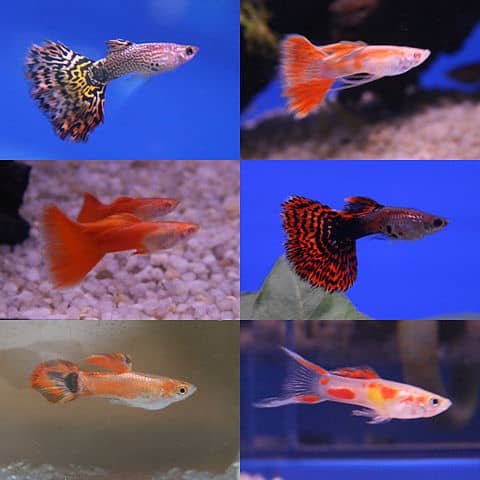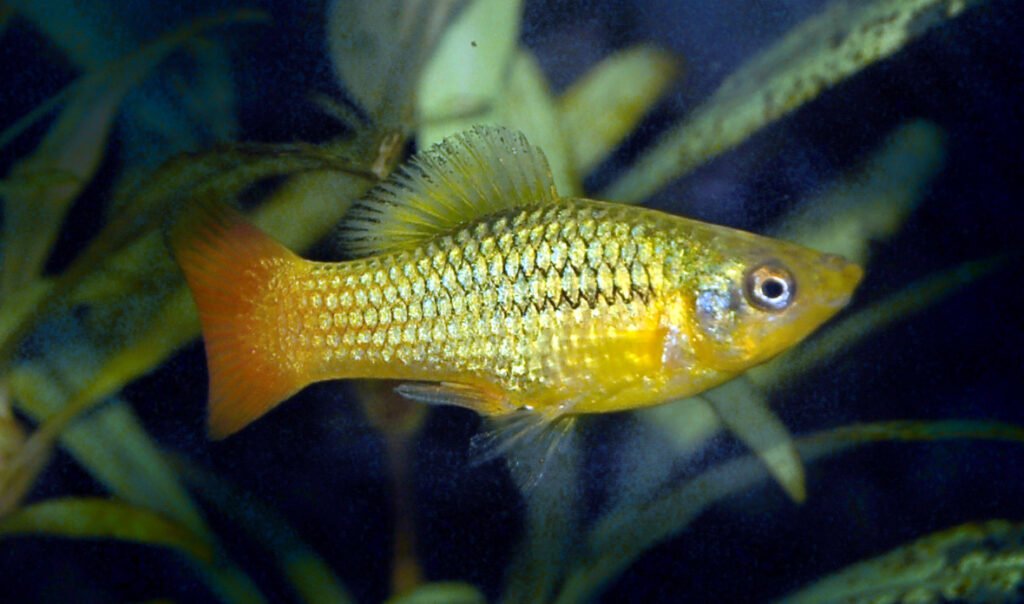
The variable platyfish (Xiphophorus variatus) has established itself as one of the most iconic and valued species in modern aquariology, captivating both hobbyists and researchers alike. Native to the river basins of Mexico, this poeciliid stands out not only for its sleek morphology but also for an astonishing genetic polymorphism manifested in a vast diversity of chromatic patterns, making it an ideal inhabitant for artificial ecosystems (aquariums).
This specialized guide offers a rigorous and profound analysis of the essential requirements for the care, nutrition, and successful breeding of Xiphophorus variatus in captivity. Through an approach that balances aquarist practice with contemporary scientific evidence, we will examine everything from the ideal physicochemical water parameters and complex intra-group social hierarchies to the immunological challenges derived from commercial inbreeding and biotechnological innovations in transport. The objective is to provide breeders and enthusiasts with the indispensable technical tools to safeguard the species’ welfare, optimize its development, and understand the biological mechanisms that make the variable platy a unique specimen in aquatic biodiversity.
- 1 Key Points
- 2 Taxonomy of the Variable Platyfish (Xiphophorus variatus)
- 3 Morphology of the Variable Platy (Xiphophorus variatus)
- 4 Habitat and Geographic Distribution of the Variable Platy
- 5 Variable Platy Care
- 6 Compatibility and Group Dynamics of the Variable Platy
- 7 Diet and Nutrition of the Variable Platy
- 8 Reproduction of the Variable Platy
- 9 Specific Health and Pathologies
- 10 Conclusions
-
11
Frequently Asked Questions (FAQ) about the Variable Platy
- 11.1 What differentiates the variable platy (Xiphophorus variatus) from the common platy?
- 11.2 What is the ideal ratio of males to females in the aquarium?
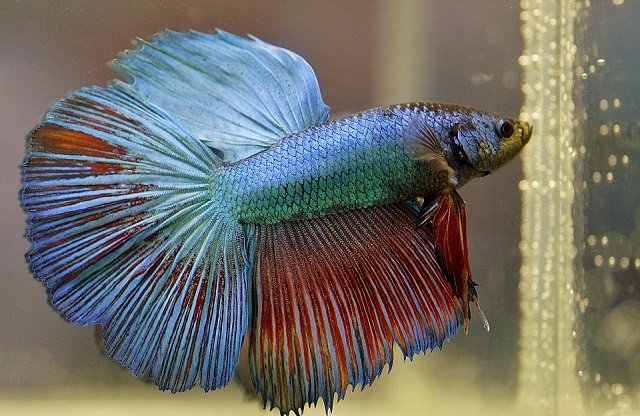
- 11.3 Can variable platies coexist with Betta fish?
- 11.4 Why does my female platy keep having babies if she is alone in the aquarium?
- 11.5 Why do current commercial platies get sicker than wild ones?
- 12 References
- 13 Entradas relacionadas:
Key Points
- Identification and Morphology: Xiphophorus variatus is distinguished from other platies by its notably slender, elongated, and sleek body, additionally exhibiting a marked genetic polymorphism in the pigmentation of its tailspot.
- Hardiness and Thermal Tolerance: Unlike the common platy, the variable platy possesses a significantly superior cold tolerance due to its origins in the Mexican highlands, making it an ideal candidate for unheated indoor aquariums or outdoor ponds in temperate climates.
- Aquarium Requirements: To ensure basal health, they require a minimum volume of 60 to 80 liters for a small group, moderate filtration without torrential currents, and strictly hard, alkaline physicochemical parameters (pH of 7.0 to 8.2 and GH of 15° to 30° dGH).
- Social Compatibility Management: Tank dynamics must adhere to a strict ratio of one male to every three females to prevent stress from harassment; furthermore, males establish dominance hierarchies strictly tied to larger body size and coloration.
- Commercial Immunological Weakness: Severe inbreeding practiced in mass production to fix commercial colors has depleted the species’ genetic hardiness, rendering pet-store specimens more susceptible to critical infections (such as mycobacteriosis or megalocytivirus).
- Innovations in Welfare: Recent research validates the use of advanced tools to optimize their management, highlighting sperm cryopreservation protocols and the addition of agents like Aloe vera or cannabidiol (CBD) at specific concentrations to drastically mitigate stress during commercial transport.
Taxonomy of the Variable Platyfish (Xiphophorus variatus)
A recent milestone in the study of this species occurred in 2021 when Eastis et al. published the successful sequencing of its complete mitochondrial genome. This scientific achievement not only deepens the evolutionary knowledge of the variable platy but also opens the door to various practical applications in aquariology and genetic conservation.
The official taxonomic classification of Xiphophorus variatus is detailed below:
| Taxonomic Category | Classification |
| Kingdom | Animalia |
| Phylum | Chordata |
| Class | Actinopterygii (Ray-finned fishes) |
| Order | Cyprinodontiformes |
| Family | Poeciliidae |
| Genus | Xiphophorus |
| Species | Xiphophorus variatus (Meek, 1904) |
Morphology of the Variable Platy (Xiphophorus variatus)
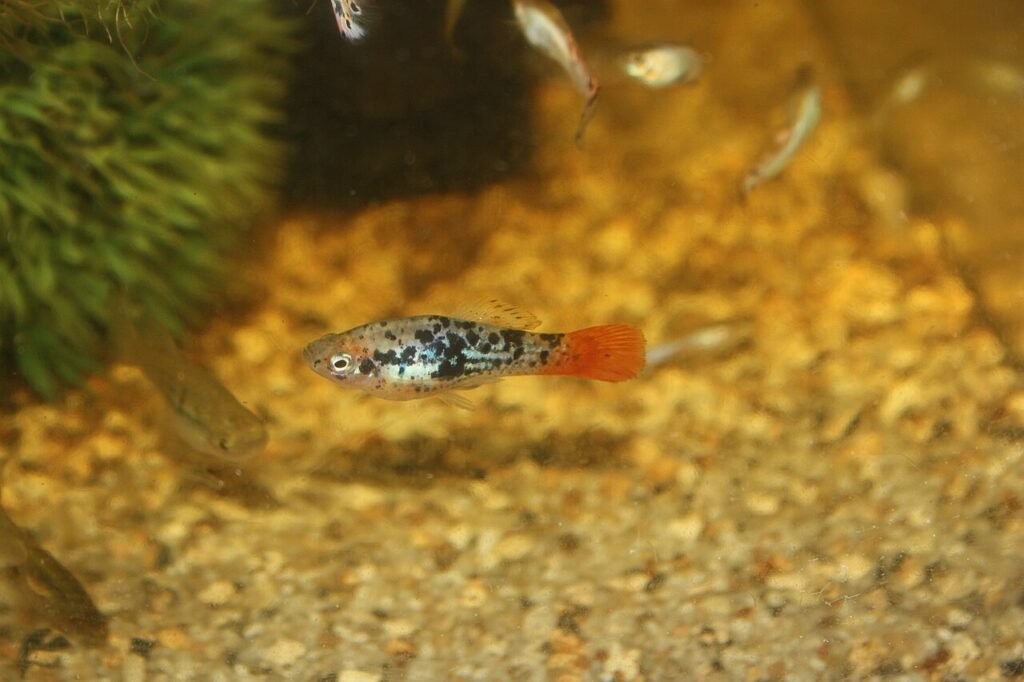
Compared to other platy species, Xiphophorus variatus possesses a notably more slender, sleek, and elongated morphology than its congeners, complemented by a slightly more extended and developed dorsal fin in adult males. In this regard, Borowsky (1990) reported that the most prominent wild trait of this species is its genetic polymorphism, which directly affects the pigmentation of the “tailspot.” Depending on their genetic background, specimens exhibit various phenotypes:
- Wild-type
- Crescent
- Cut-crescent
- Modified patterns: Presence of an additional genetic factor (Mod-1) that alters the fish’s appearance by concentrating extra pigment cells in the crescent zone.
Therefore, it is fundamental for the aquarist to understand that platies in the modern commercial circuit rarely correspond to pure strains.
Habitat and Geographic Distribution of the Variable Platy
Originally described by Meek in 1904, the variable platy (Xiphophorus variatus) is a species native to northeastern Mexico. The biogeographical range of this fish encompasses the river basins draining into the Gulf of Mexico, from southern Tamaulipas to northern Veracruz, spanning from the Río Guayalejo/Tamesí system to the Río Nautla, and including the Pánuco and Cazones river basins (Culumber & Monks, 2014). Its wild populations inhabit streams and rivers located in the foothills of the Sierra Madre Oriental (Borowsky, 1990), where they exhibit an astonishing natural phenotypic variability.
Due to its high demand in global aquariology, the species has been introduced into natural environments in tropical and subtropical regions across all continents except Antarctica (Eastis et al., 2021). A key factor in its dispersal success and adaptability is that X. variatus possesses a remarkable tolerance to environmental degradation; according to Banerjee et al. (2023), this species is significantly more resilient to poor water quality—characterized by high levels of organic matter, ammonia, copper, and turbidity—compared to swordtail species (Xiphophorus helleri).
Variable Platy Care
Aquarium Design and Parameter Configuration
To faithfully recreate the conditions of Mexican river ecosystems and ensure the physical well-being of the platies, tank design must prioritize the stabilization of water minerals and the control of intra-group social behavior.
Mantente siempre informado
Stay Informed
Únete a nuestras comunidades para recibir al instante las noticias, informes y análisis más importantes del sector acuícola.
Join our communities to get instant access to the most important news, reports, and analysis from the aquaculture industry.
Tank Configuration (Volume and Filtration)
- Minimum Volume: A minimum net volume of 60 to 80 liters is required for a base group of 5 or 6 specimens. Keeping platies in 20-liter aquariums (nano tanks) induces chronic stress and lethal spikes of nitrogenous compounds due to the high biological load these fish generate.
- Substrate and Filtration: Substrates that do not acidify the water are recommended; silica sands or gravels rich in calcium carbonate (such as aragonite or calcareous gravels) are excellent for naturally maintaining an elevated pH. Filtration must be efficient without generating torrential currents, as platies prefer calm to moderate water zones.
Recommended Aquarium Plants
Platies constantly graze on plant surfaces in search of microalgae and biofilm. Ideal plants to build a suitable environment for this fish include:
- Vallisneria americana and Vallisneria spiralis: Perfectly tolerate hard, alkaline waters, forming dense visual barriers.
- Egeria densa (Anacharis) and Ceratophyllum demersum (Hornwort): Massive nitrate consumers that provide crucial floating refuge for fry.
- Anubias barteri and Microsorum pteropus (Java fern): Hard-leaved epiphytic plants where biofilm accumulates, which platies love to graze on.
Water Quality
Platies require hard, alkaline waters; maintaining them in soft, acidic environments weakens their osmoregulatory system, collapsing their immune system in the medium term.
Comparative Table of Physicochemical Requirements
| Technical Parameter | Xiphophorus variatus (Variable Platy) |
| Ideal temperature | 16 °C – 24 °C |
| Critical lower limit | 13 °C – 15 °C |
| Water pH | 7.0 – 8.2 |
| Dissolved oxygen level | 5.7 mg/L to 6.0 mg/L (ppm) |
| Total hardness (GH) | 15° – 30° dGH (Very hard) |
| Carbonate hardness (KH) | 7° – 12° dKH |
| Ammonia (NH₃) | < 0.25 mg/L |
| Photoperiod | 12 hours of light / 12 hours of darkness |
| Tolerated salinity | Withstands light salinity (1 – 2 g/L) |
Hobbyists researching options for outdoor ponds discover a fascinating trait: Xiphophorus variatus possesses a significantly superior cold tolerance compared to X. maculatus. In its native habitats, located in the Mexican highlands, winter temperatures drop drastically.
This makes pure Xiphophorus variatus (or commercial lines with a high genetic background of this species) an ideal candidate for outdoor ponds in temperate climates during spring and summer months, as well as for unheated indoor home aquariums. Conversely, forcing X. variatus to live constantly at 28 °C pathologically accelerates its metabolism, drastically reducing its life expectancy.
Compatibility and Group Dynamics of the Variable Platy
A critical mistake in aquatic community management is the sex ratio. Males are relentless courters and territorial toward one another; if an inadequate ratio is maintained, females will suffer constant harassment that depresses their immune system, leading to death from physical stress.
- The Aquarist’s Golden Rule: Always maintain a strict ratio of one male to every three females.
Furthermore, research findings by Culumber and Monks (2014) highlight that body size is the primary factor establishing social status among males, forming a dominance hierarchy based on dimensions. Individuals at the apex of this structure are significantly larger than the rest and typically develop yellow-red (YR) coloration on their fins. Additionally, size directly influences confrontations: aggressions are more frequent between males of similar dimensions, and disputes increase as the difference in body size decreases.
Likewise, Jones et al. (2023) report that the type of tank into which X. variatus is introduced after transport (empty, with resident conspecifics, or with heterospecifics) exerts a significant effect on most of their behaviors, whereas visual cues from adjacent tanks have minimal impact on their recovery. The authors highlight that specimens introduced into aquariums already housing conspecifics exhibited notably higher levels of agonistic behaviors, such as nipping and chasing, compared to those placed in empty tanks or with heterospecifics—such as the common molly (Poecilia sphenops).
The researchers indicate that resident X. variatus were more aggressive toward newcomers than the established common mollies. The study suggests this is due to the “prior residence effect,” whereby members of the same species defend their territories and social hierarchies against new arrivals.
Compatible Tank Mates
- Other Poeciliids: Guppies (Poecilia reticulata), mollies (Poecilia sphenops), and swordtails (Xiphophorus hellerii). Safety note: If you introduce swordtails, be aware that they will crossbreed freely with your platies, producing viable offspring.
- Danios and Relatives: The zebrafish (Danio rerio) and the White Cloud Mountain minnow (Tanichthys albonubes) share a preference for cool waters and neutral-to-alkaline parameters.
- Invertebrates: Freshwater snails, such as apple and nerite snails, and medium-sized shrimp (Caridina or Neocaridina), provided the aquarium features sufficient plant cover.
Conflicting Compatibilities: Betta Fish
The technical assessment is categorical: it is not recommended. Betta splendens is a fish from soft, acidic waters with strictly warm tropical habits (24 °C to 28 °C). Forcing a betta to live under the alkaline parameters and lower temperatures required by Xiphophorus variatus is detrimental to the health of both species. Additionally, the hyperactive swimming behavior of platies can stress the betta, or the latter might attack the striking fins of the more colorful platy varieties.
Diet and Nutrition of the Variable Platy
Platies are omnivorous fish with a marked herbivorous and detritivorous preference. Their long digestive tract is evolutionarily adapted to continuously process plant matter, organic detritus, and small invertebrates. A diet lacking in plant fiber causes chronic intestinal blockages, secondary bacterial infections in the swim bladder, and an evident loss in the intensity of their natural colors. To ensure long-term fish health, nutrition in captivity must adhere to the following criteria:
- Commercial Dry Foods: These constitute the core of the captive diet and include tropical flakes and granulated pellets (Jones et al., 2023). For developmental stages (fry) or specific study protocols, a starter dry food with a high crude protein content, close to 40%, is provided (Faghani-Langroudi et al., 2014).
- Live Food: As a dynamic nutritional supplement, Artemia larvae or nauplii (brine shrimp) are used, which is a widely utilized biological source for both adult maintenance and optimal fry development (Kazianis et al., 1996; Yang et al., 2012).
- Laboratory Preparations: In genetic research centers and pure stock maintenance facilities, it is also standard practice to complement their nutrition with beef liver paste (Yang et al., 2012).
Feeding Frequency and Regimens
Dosage and supply regularity vary substantially depending on breeding objectives:
- Standard Maintenance: In home aquariums, conventional laboratories, and retail stores, the standard guideline is feeding twice a day.
- Growth Maximization or Treatments: In research aimed at accelerating development or for the administration of specific therapies (such as hormonal masculinization), specimens can receive food up to six times a day, consuming approximately 10% of their body weight (Faghani-Langroudi et al., 2014). In wholesale facilities, the standard frequency is typically three times a day.
- Experimental Regimens: In metabolic studies evaluating energy storage (lipids and glycogen), frequencies are drastically manipulated, ranging from a “high feeding” rate of four times a day to severe rationing of just twice a week.
Reproduction of the Variable Platy
Regarding the sexual differentiation of the variable platy, Borowsky (1990) reported the following biological criteria:
- Males: Physically, they are distinguished in their adult stage when they present a fully formed gonopodium (a modified anal fin that functions as a reproductive organ).
- Females: They are considered adults upon reaching a standard length equal to or greater than 23 millimeters.
Platies are viviparous fish (specifically ovoviviparous); fertilization occurs internally, and the female incubates the eggs within her belly, giving birth to fully formed fry with immediate free-swimming capability.
The Copulatory Mechanism: The Gonopodium
Males modify rays 3, 4, and 5 of their anal fin to transform it into a rigid, articulated copulatory organ called a gonopodium. This appendage features tiny hooks at its distal end that allow it to momentarily anchor to the female’s genital opening (urogenital pore) to transfer sperm packages, known as spermatophores.
Sperm Storage
A crucial aspect that often baffles novice aquarists is the female’s ability to store viable sperm within the internal folds of her oviduct for months. A single successful copulation can fertilize between four and six consecutive broods without the need for a male to be present in the tank again. This explains why a female acquired alone from a pet store can continue giving birth to offspring in the aquarium for half a year uninterruptedly.
On the other hand, in the field of reproductive biotechnology, it is important to highlight that Yang et al. (2012) developed an efficient protocol for sperm cryopreservation in Xiphophorus variatus.
Mate Choice and Sexual Selection
MacLaren et al. (2011) reported that Xiphophorus variatus females prefer not only males with “sword” tails but also those exhibiting larger, sail-like dorsal fins when body size remains constant. In the same vein, through choice experiments with Xiphophorus variatus, MacLaren and Fontaine (2013) concluded that evolutionary selection has favored the ability of males to discriminate between female body size and fin size for the following reasons:
- Preference for Body Size: Males preferentially choose females with larger bodies, as this acts as a direct indicator of their fertility and fecundity.
- Lack of Interest in Large Fins: Unlike females, males showed no preference for specimens with larger fins when body dimensions were identical, because female fin size offers no known fitness benefits.
Sex Reversal in Ornamental Production
Sex reversal in ornamental fish is a key technique because many species exhibit marked sexual dimorphism, where males develop more intense coloration and more developed fins than females, becoming the preferred choice for hobbyists. In this regard, Faghani-Langroudi et al. (2014) concluded that the optimum dose to achieve platy masculinization—yielding the maximum male population with the lowest mortality rate—is 50 to 80 mg of methyltestosterone (MT) per kilogram of feed.
Platy Transport Optimization
Commercial transport generates severe stress that can compromise the health of specimens. In this regard, Vanderzwalmen et al. (2020) reported that adding Stress Coat® water conditioner (based on Aloe vera) during the transport of the variable platy (Xiphophorus variatus) significantly improves behavioral indicators of their welfare, with the greatest positive effects observed when the product is added at the international stage of a commercial transport chain.
Meanwhile, Jones et al. (2026) highlighted the potential of using cannabidiol (CBD)—specifically at a concentration of 7.8 mg/L—as an additive in the transport water of the variable platy (Xiphophorus variatus), successfully mitigating the physical and behavioral stress associated with the relocation of these animals.
Specific Health and Pathologies
Mass production of platies in international intensive aquaculture farms has led to a severe systemic problem: severe inbreeding and the consequent loss of hardiness. To rapidly fix chromatic varieties, hatcheries constantly cross inbred lines (siblings with siblings or parents with offspring), resulting in commercially available platies with substantially more fragile immune systems than their wild ancestors. Below are the specific pathologies that most frequently affect this species:
Common Pathogens and Bacterial Conditions
- Ich / White Spot Disease (Ichthyophthiriasis): Caused by the ciliated protozoan Ichthyophthirius multifiliis, it manifests as white pustules resembling salt grains on the dermis and fins; platies kept at improperly low temperatures or subjected to sudden thermal changes are immediate victims.
- Fin Rot: A bacterial infection (caused by genera such as Aeromonas or Pseudomonas) that progressively destroys fin tissue, leaving rays exposed and necrotic, directly associated with elevated ammonia and nitrite levels.
- Saprolegnia Mycosis: Opportunistic fungi that colonize physical wounds or areas previously damaged by parasites, presenting as white or grayish cotton-like tufts.
- Mycobacteriosis: Iaria et al. (2019) reported the occurrence of mycobacteriosis in Xiphophorus variatus specimens, where diseased fish developed a chronic infection characterized by ulcerated skin lesions and tumor-like granulomatous nodules.
- Megalocytivirus: Yanong and Waltzek (2024) confirm that X. variatus is susceptible to megalocytivirus infections; histopathological studies revealed that the posterior kidney of infected specimens presents abnormally enlarged, basophilic cells completely saturated with viral particles.
Parasitosis and Physiological Impact
- Anchor Worm Infections (Lernaea): A crustacean parasite that burrows firmly into the fish’s musculature, leaving a filiform, bifid body exposed, causing severe inflammation at the insertion point and serving as a gateway for secondary bacterial infections.
- Huffmanela: Bullard et al. (2022) provide the first evidence that an infection by a species of the genus Huffmanela causes severe pathological damage compromising the organic function of the variable platy (Xiphophorus variatus), drastically reducing the physiological efficiency of the swim bladder due to inflammation and tissue necrosis.
Conclusions
In conclusion, the variable platy (Xiphophorus variatus) establishes itself as one of the most fascinating and resilient species within modern aquariology, distinguishing itself from other poeciliids due to its astonishing thermal tolerance and adaptability to environments with slight levels of environmental degradation. However, long-term success in its maintenance must not rely solely on its natural hardiness; it demands that the responsible aquarist configure tanks that strictly respect its requirements for hard, alkaline waters, implement a diet with a strong plant-based component to prevent digestive pathologies, and precisely manage the social sex ratio to mitigate agonistic behaviors and stress from intra-group harassment.
On the other hand, contemporary scientific evidence reveals that global intensive production has compromised the ancestral immunological robustness of this species due to severe inbreeding processes, rendering it susceptible to critical conditions such as mycobacteriosis or severe tissue parasitosis. Faced with this reality, the integration of advanced protocols—ranging from genetic cryopreservation in laboratories to the use of innovative additives like cannabidiol (CBD) and Aloe vera to mitigate stress during commercial transport—marks the path toward sustainable aquariology. Addressing these biological and technical findings is indispensable to safeguard the welfare of the variable platy and guarantee the stability of its artificial ecosystem in captivity.
Frequently Asked Questions (FAQ) about the Variable Platy
What differentiates the variable platy (Xiphophorus variatus) from the common platy?
Morphophysiologically, Xiphophorus variatus presents a notably more slender, sleek, and elongated body compared to the common platy (X. maculatus); additionally, adult male variable platies develop a more extended dorsal fin. Ecologically, it possesses a vastly superior thermal tolerance to cold, allowing it to inhabit unheated aquariums or outdoor ponds in temperate climates.
What is the ideal ratio of males to females in the aquarium?
The aquarist’s golden rule is to maintain a strict ratio of one male to every three females. Males of this species are relentless courters and territorial; an inadequate ratio generates constant harassment of the females, which depresses their immune system and can lead to death from physical stress.
Can variable platies coexist with Betta fish?
Technically, it is not recommended. Betta splendens requires soft, acidic waters and strictly warm tropical temperatures (24 °C to 28 °C), so forcing either species to live in the other’s parameters compromises their health. Additionally, the hyperactive swimming behavior of platies can stress the betta, or the latter might attack the striking fins of more colorful platy varieties.
Why does my female platy keep having babies if she is alone in the aquarium?
This is due to a biological mechanism known as sperm storage. Female variable platies can retain viable sperm within the internal folds of their oviduct for months following a single copulation, allowing them to fertilize between four and six consecutive broods without the presence of a male.
Why do current commercial platies get sicker than wild ones?
Mass and intensive production in international aquaculture farms has resorted to the constant crossing of inbred lines (inbreeding) to rapidly fix color mutations. This loss of genetic variability has depleted their ancestral hardiness, resulting in commercial fish with substantially more fragile immune systems against pathogens such as ich, mycobacteriosis, or megalocytivirus.
References
Banerjee, S. M., Powell, D. L., Moran, B. M., Ramírez-Duarte, W. F., Langdon, Q. K., Gunn, T. R., Vazquez, G., Rochman, C., & Schumer, M. (2023). Complex hybridization between deeply diverged fish species in a disturbed ecosystem. Evolution, 77(4), 995-1005. https://doi.org/10.1093/evolut/qpad019
Borowsky, R. (1990). HABITAT CHOICE BY ALLELIC VARIANTS IN XIPHOPHORUS VARIATUS (PISCES; POECILIIDAE) AND IMPLICATIONS FOR MAINTENANCE OF GENETIC POLYMORPHISM. Evolution, 44(5), 1338-1345. https://doi.org/10.1111/j.1558-5646.1990.tb05236.x x
Bullard, S.A., Moravec, F., Ksepka, S.P. et al. Huffmanela cf. huffmani (Nematoda: Trichosomoididae) infecting swim bladder, peritoneum, and gonad of variable platyfish, Xiphophorus variatus (Cyprinodontiformes: Poeciliidae) and eastern mosquitofish, Gambusia holbrooki (Poeciliidae) in Florida; taxonomy, phylogenetic analysis, and pathological changes. Parasitol Res 121, 2307–2323 (2022). https://doi.org/10.1007/s00436-022-07570-z
Culumber, Z. W., & Monks, S. (2014). Does fin coloration signal social status in a dominance hierarchy of the livebearing fish Xiphophorus variatus? Behavioural Processes, 107, 158-162. https://doi.org/10.1016/j.beproc.2014.08.010
Eastis, A. N., Fast, K. M., & Sandel, M. W. (2021). The complete mitochondrial genome of the Variable Platyfish Xiphophorus variatus. Mitochondrial DNA Part B, 6(9), 2640–2642. https://doi.org/10.1080/23802359.2021.1963339
Faghani-Langroudi, H., Esmailpour-Chokami, H., Rohani-Rad, M., & Mousavi-Sabet, H. (2014). Sex reversal, mortality rate and growth performance of platy Xiphophorus variatus (Poeciliidae) treated by methyltestosterone. Poeciliid Research, 4(1), 6-12
Iaria, C., Saoca, C., Guerrera, M. C., Ciulli, S., Brundo, M. V., Piccione, G., & Lanteri, G. (2019). Occurrence of diseases in fish used for experimental research. Laboratory Animals. https://doi.org/10.1177/0023677219830441
Jones, M., Alexander, M., Lightbody, S., Snellgrove, D., Smith, P., Bramhall, S., Henriquez, F., McLellan, I., & Sloman, K. (2023). Influence of social enrichment on transport stress in fish: A behavioural approach. Applied Animal Behaviour Science, 262, 105920. https://doi.org/10.1016/j.applanim.2023.105920
Jones, M., Alexander, M., Vanderzwalmen, M., Snellgrove, D., Talbot, M., Smith, P., Henriquez, F., McLellan, I., & Sloman, K. (2026). The effects of cannabidiol (CBD) in transport water on the behaviour of ornamental fishes. Applied Animal Behaviour Science, 296, 106897. https://doi.org/10.1016/j.applanim.2025.106897
Kazianis, S., Morizot, D. C., McEntire, B. B., Nairn, R. S., & Borowsky, R. L. (1996). Genetic Mapping in Xiphophorus Hybrid Fish: Assignment of 43 AP-PCR/RAPD and Isozyme Markers to Multipoint Linkage Groups. Genome Research, 6, 280-289
MacLaren, R. D., Gagnon, J., & He, R. (2011). Female bias for enlarged male body and dorsal fins in Xiphophorus variatus. Behavioural Processes, 87(2), 197-202. https://doi.org/10.1016/j.beproc.2011.03.006
MacLaren, R. D., & Fontaine, A. (2013). Incongruence between the sexes in preferences for body and dorsal fin size in Xiphophorus variatus. Behavioural Processes, 92, 99-106. https://doi.org/10.1016/j.beproc.2012.10.013
Vanderzwalmen, M., Edmonds, E., Carey, P., Snellgrove, D., & Sloman, K. A. (2020). Effect of a water conditioner on ornamental fish behaviour during commercial transport. Aquaculture, 514, 734486. https://doi.org/10.1016/j.aquaculture.2019.734486
Yang, H., Cuevas-Uribe, R., Savage, M. G., Walter, R. B., & Tiersch, T. R. (2012). Sperm Cryopreservation in Live-Bearing Xiphophorus Fishes: Offspring Production from Xiphophorus variatus and Strategies for Establishment of Sperm Repositories. Zebrafish. https://doi.org/10.1089_zeb.2012.0737
Yanong, R. P. E., & Waltzek, T. B. (2024). Megalocytivirus infections in fish, with emphasis on ornamental species (FA182). UF/IFAS Extension, University of Florida. https://edis.ifas.ufl.edu

Editor at the digital magazine AquaHoy. He holds a degree in Aquaculture Biology from the National University of Santa (UNS) and a Master’s degree in Science and Innovation Management from the Polytechnic University of Valencia, with postgraduate diplomas in Business Innovation and Innovation Management. He possesses extensive experience in the aquaculture and fisheries sector, having led the Fisheries Innovation Unit of the National Program for Innovation in Fisheries and Aquaculture (PNIPA). He has served as a senior consultant in technology watch, an innovation project formulator and advisor, and a lecturer at UNS. He is a member of the Peruvian College of Biologists and was recognized by the World Aquaculture Society (WAS) in 2016 for his contribution to aquaculture.