- 1 Key Insights into Turbot Pigmentation Genetics
- 2 Why the White Belly of Turbot Commands Such a High Market Premium
- 3 The Tank Enigma: When Light and Feed Are Not Enough
- 4 How to Read Millions of DNA Data Points at Low Cost
- 5 A Heritability of up to 0.75 and Two Chromosomes That Concentrate the Risk
- 6 The Color Genes: What Happens in Skin Cells
- 7 From Data to Hatchery: The Leap to Genomic Selection
- 8 Entradas relacionadas:
Key Insights into Turbot Pigmentation Genetics
- Color anomalies—particularly hypermelanosis or dark patches on the blind side—affect more than 70% of juveniles reared in captivity. This trait reduces the commercial value of the whole fish, even though it compromises neither its nutritional nor its sanitary quality.
- The study demonstrates that malpigmentation exhibits moderate to high heritability ( between 0.40 and 0.75). This confirms that the phenotypic predisposition is primarily governed by the genetic profile passed down by the broodstock, beyond factors such as lighting or diet.
- More than 90% of the trait’s genetic variability is concentrated in highly specific regions of chromosomes 5 and 15. Key regulatory genes essential for melanin synthesis and cell migration, such as slc24a5 and kita, are located there.
- With an optimized investment, the team increased marker density by 915-fold (moving from 4,085 to 1.68 million variants with 91% reliability). To achieve this, they sequenced only the parents and imputed the data into the juvenile progeny.
- The findings of the HOLOFISHCOLOUR project facilitate the development of applied genomic selection programs. Thanks to them, it will be feasible to cull high-risk broodstock without requiring alterations to infrastructure or culture management.
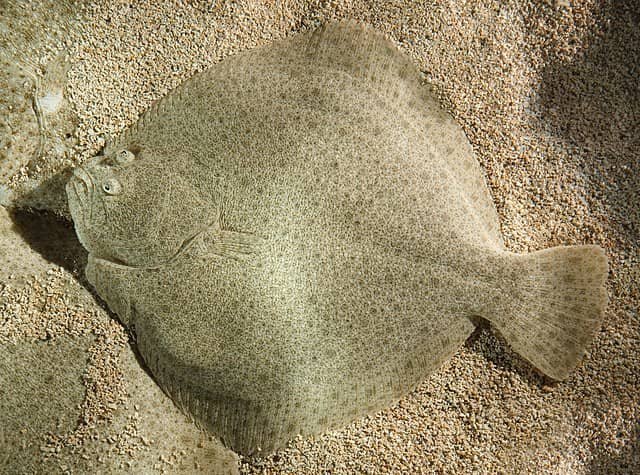
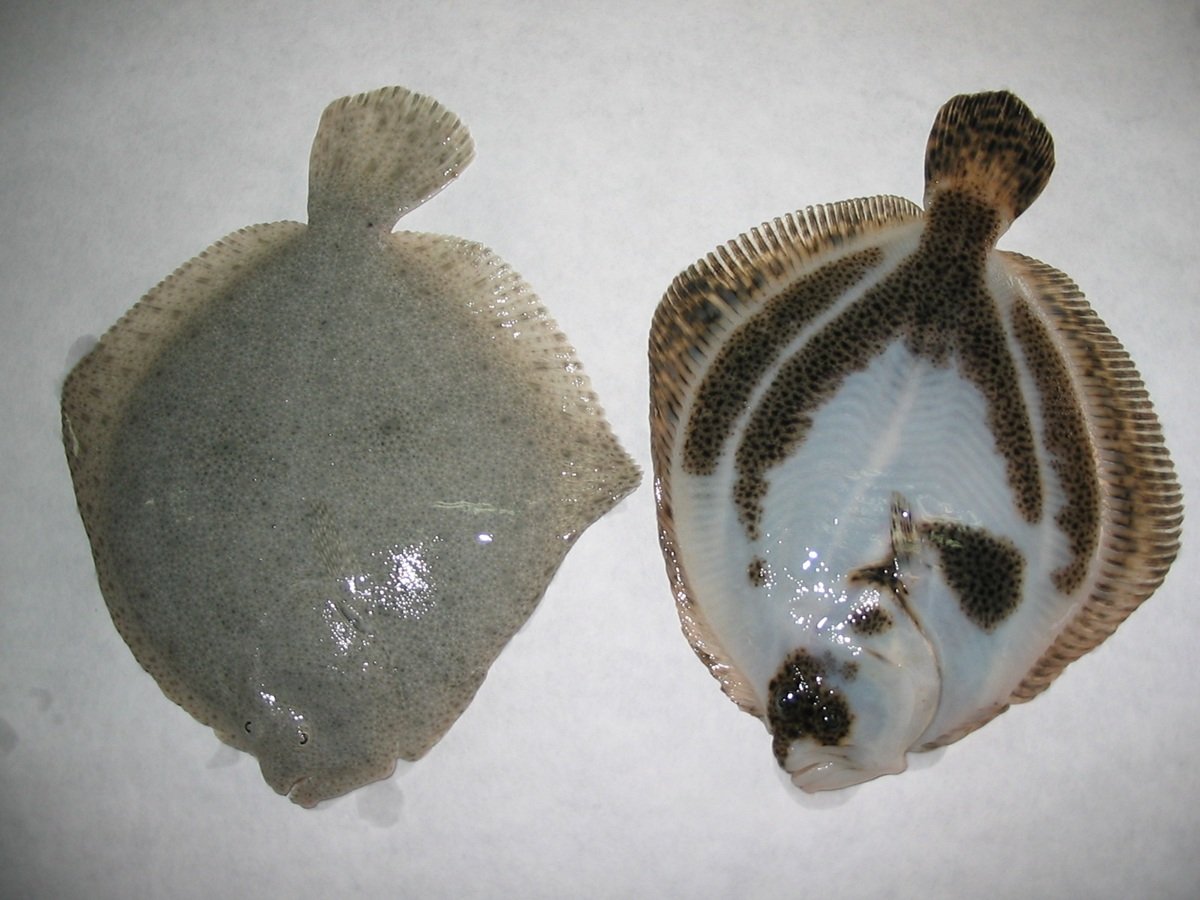
In the grading room of an aquaculture facility located in the Galician rías, the conveyor belt moves at a steady pace. An operator picks up a turbot juvenile (Scophthalmus maximus) weighing approximately 25 grams and meticulously inspects its morphology. On the upper, ocular side, the fish displays extraordinary camouflage: a mosaic of brown and ochre hues faithfully mimicking the sandy substrate. However, upon turning it over to inspect the blind side—the ventral surface that rests against the seabed, which market standards require to be an immaculate, snow-white tone—irregular, charcoal-colored patches covering nearly half of the skin become apparent.
This pigmented patch does not impair the specimen’s health, nor does it compromise the firmness, flavor, or texture of its flesh. Nevertheless, at the fish auction or on the supermarket shelf, commercial standards show no leniency: the fish instantly loses its premium grade, suffers a sharp depreciation in market price, or ends up downgraded to filleting and secondary products yielding significantly lower profit margins.
This scenario epitomizes a recurring frustration for flatfish farmers worldwide. Malpigmentation—manifested both as dark blemishes on the ventral side (hypermelanosis or ambicoloration) and as a lack of pigment on the dorsal surface (pseudoalbinism)—represents a production shortfall that frequently impacts between 60% and 70% of hatchery batches. In addressing this challenge, a research team from the Aquatic Biotechnology Laboratory at the Institute of Marine Research (IIM-CSIC), collaborating closely with the Neurolam group at the Universidade de Vigo and the Pescanova Biomarine Center, has deciphered, for the first time, the underlying genomic architecture within the framework of the HOLOFISHCOLOUR project, funded by the State Research Agency (AEI). This breakthrough demonstrates that the anomaly is genetically anchored and establishes the groundwork for mitigating it through marker-assisted selection in broodstock.
Turbot has cemented its position at the apex of the most sought-after flatfish species in global marine aquaculture, with worldwide harvests approaching 75,000 tonnes in 2023. Europe remains the second-largest producing hub after China, with Spain spearheading continental supply courtesy of over 9,600 tonnes annually—the vast majority sourced from Galician farming facilities. In this premium market segment, external appearance is far from trivial: it serves as the ultimate benchmark dictating the clearing price of each batch at first sale.
“Turbot is one of the most valuable and commercially important flatfish species in global aquaculture,” emphasizes Josep Rotllant, researcher at the Institute of Marine Research (IIM-CSIC) and head coordinator of the HOLOFISHCOLOUR project. “As with other flatfishes, it undergoes metamorphosis, transitioning from a bilaterally symmetrical larva into a dorsoventrally flattened juvenile adapted to benthic life. This morphogenetic process yields an asymmetric pigmentation pattern. Under intensive farming conditions, anomalies in this dorsoventral color pattern frequently arise, although they can also be observed in the wild.”
During this larval metamorphosis, chromatophores—the cells orchestrating skin color—react to intricate biochemical signals: the ocular flank must populate with dark melanophores to secure camouflage against predators, while the blind side must entirely suppress melanogenesis to preserve its signature pristine white finish. Nevertheless, under the stressors and conditions typical of intensive hatcheries, this delicate cellular switch often misfires, precipitating hypermelanosis: ventral surfaces mottled with melanin that disrupt the aesthetic uniformity of the harvest.

As Rotllant cautions, “the incidence of these disorders can exceed 70% in hatchery-reared juveniles.” In commercial channels where consumers purchase fresh whole fish, a blemished underside triggers consumer apprehension and sharply erodes the price per kilo. Consequently, establishing rigorous post-harvest quality control and sorting protocols becomes essential to safeguard profit margins and protect the financial viability of processing plants.
The Tank Enigma: When Light and Feed Are Not Enough
For more than three decades, technicians and researchers addressed this dilemma by focusing almost exclusively on hatchery environmental variables. They modified light intensity in turbot rearing facilities, adjusted photoperiods, experimented with the color of tank walls and bottoms, and meticulously calibrated the formulation of live prey.
Throughout this process, it was established that certain nutritional imbalances during the pre-metamorphic stage altered pigmentation. Therefore, optimizing larval nutrition and live prey enrichment through a rigorous balance of essential fatty acids—such as arachidonic acid (ARA) and eicosapentaenoic acid (EPA)—partially mitigated the most severe episodes.
Even so, the unknown persisted in the grow-out tanks. Producers and biologists observed with bewilderment how, within the very same pond and under identical water quality, temperature, and feeding regimes, a fraction of the fry developed immaculate white bellies while their cohort counterparts became covered in dark spots.
Mantente siempre informado
Stay Informed
Únete a nuestras comunidades para recibir al instante las noticias, informes y análisis más importantes del sector acuícola.
Join our communities to get instant access to the most important news, reports, and analysis from the aquaculture industry.
“Until now, it was only known that certain environmental factors such as diet, lighting, or specific hormonal alterations could influence the occurrence of these anomalies during turbot metamorphosis,” explains researcher María Saura (IIM-CSIC), co-lead author of the study. “However, it is now demonstrated that genetics plays a decisive role, providing, for the first time, a detailed map of the genes involved in this process.”
How to Read Millions of DNA Data Points at Low Cost
To unravel the genetic architecture of turbot without driving up operating costs, the team evaluated 785 five-month-old juveniles from 10 families (eight full-sib and two half-sib) reared at the state-of-the-art Pescanova Biomarine Center in O Grove. Using standardized digital photography and FIJI image-analysis software, the researchers accurately quantified the affected skin area: blind-side blemishes averaged 46.6% (ranging from 0% to 100%), whereas ocular pseudoalbinism remained residual, averaging 10.7%.
The primary hurdle to adopting genomics in aquaculture facilities has historically been financial: whole-genome sequencing of hundreds or thousands of specimens remains cost-prohibitive for commercial farms. To circumvent this constraint, the research team applied genotype imputation—a methodology akin to solving a crossword puzzle whose anchor words have already been deciphered.
In the initial phase, they performed deep whole-genome sequencing on the 19 parental breeders using Illumina NovaSeq technology, identifying 3.74 million high-confidence DNA variants. Subsequently, the 785 juveniles were profiled using only a cost-effective 4,085-SNP genotyping array. By leveraging bioinformatics algorithms alongside family pedigree records, the system imputed the untyped data across the offspring based on the parental genomic profiles.
This strategy demonstrated outstanding efficiency, increasing marker density in the juveniles 915-fold to 1,680,730 analyzed genetic variants at 91% accuracy. What previously constituted a fragmented blueprint was transformed into a high-definition genomic map at a fraction of standard industry costs.
A Heritability of up to 0.75 and Two Chromosomes That Concentrate the Risk
Based on this robust data grid, the researchers calculated the heritability ($h^2$) of the disorder. For the aquaculture producer, this parameter serves as a decisive indicator: it determines whether an anomaly should be addressed by adjusting the environmental conditions of the tank or through genetic selection programs. When the value approaches zero, the genetic influence is marginal; conversely, if the index is high, biological inheritance predominates, and broodstock selection proves to be both rapid and effective.
The analyses revealed a moderate to high heritability: it ranged from 0.39 to 0.49 on the observed continuous scale, reaching outstanding levels between 0.65 and 0.75 when projecting genetic liability under the most common commercial incidence rates (from 30% to 60%). “The predisposition to developing these anomalies has a significant genetic component, which opens the door to selecting broodstock that are less prone to transmitting this trait to their offspring,” emphasizes researcher María Saura.
The genome-wide association study (GWAS) delivered the most strategic revelation for the industry. While the basic low-density chip barely detected two weak and scattered signals, the high-resolution panel identified 295 markers closely linked to the severity of the blemishes. Far from being randomly distributed across the genome, these variants were concentrated in defined blocks within chromosomes 5 and 15.
In fact, genetic models demonstrated that these 295 markers account for more than 90% of the genetic variance captured by the 1.68 million evaluated variants. For hatchery management, this finding confirms that malpigmentation is not an unmanageable polygenic maze, but rather a trait governed by highly focused genomic regions.
The Color Genes: What Happens in Skin Cells
By exploring these genomic regions in depth, the scientists identified 361 candidate genes, confirming that blemishes stem from alterations in key biological pathways governing cellular development and pigmentation:
- The slc24a5 gene (chromosome 5): Acts as an indispensable ion exchanger for melanin synthesis within melanosomes. Widely recognized in humans and zebrafish for modulating light or dark skin tones, its dysregulation in turbot promotes pigment overproduction in atypical areas.
- The kita gene (chromosome 12): Encodes a membrane receptor functioning as a navigation guide for melanoblasts (color precursor cells); if this receptor exhibits abnormalities, cells lose their directional trajectory during metamorphosis and ultimately colonize the dermis on the blind side.
- The bloc1s6 and lyst genes: Prove decisive in the biogenesis and intracellular transport of pigment granules, homologously linked to pigmentary disorders and albinism in mammals.
- Wnt, MAPK, and Calcium signaling pathways: Intricate intercellular signaling cascades that coordinate tissue differentiation and bodily asymmetry throughout the larval stage.
“We have identified key regions on chromosomes 5 and 15 encompassing genes involved in melanocyte formation, melanin synthesis, and embryonic pigment development,” points out Saura regarding the robustness of these molecular findings.
From Data to Hatchery: The Leap to Genomic Selection
The findings of this study mark a turning point for marine fish farming breeding programs, moving past the historical bottleneck of visual family evaluations that were late, complex, and distorted by hatchery fluctuations. By pinpointing high-resolution markers on chromosomes 5 and 15, hatcheries can now seamlessly integrate genomic tools into broodstock management through non-invasive fin-clip biopsies in juveniles, enabling geneticists to accurately screen out high-risk alleles and select favorable breeding stock.
“This represents a paradigm shift in our understanding of turbot pigmentation by providing, for the first time, genomic tools that can be directly incorporated into industrial selective breeding programs,” unanimously conclude Josep Rotllant and María Saura (IIM-CSIC). “Although further studies will be required to confirm the specific function of certain identified genes, this research establishes a solid foundation to mitigate one of the major production bottlenecks in turbot aquaculture.”
The primary operational advantage lies in the fact that this genetic progress requires neither structural overhauls nor capital expenditure on new rearing infrastructure, intervening directly at the farm’s biological foundation. Back at the grading table across Galician rías, the operational horizon looks vastly brighter: as genotypically selected cohorts supply the grow-out tanks, operators will turn fish over to reveal pristine white undersides, exemplifying how applied biotechnology drives batch uniformity, premium market valuation, and robust producer profitability.
Contact
María Saura
Instituto de Investigaciones Marinas (IIM-CSIC), Eduardo Cabello 6, 36208 Vigo, Spain
Email: msaura@iim.csic.es
Josep Rotllant
Instituto de Investigaciones Marinas (IIM-CSIC), Eduardo Cabello 6, 36208 Vigo, Spain
Email: rotllant@iim.csic.es
Reference (open access)
Costas-Imbernón, D., Saura, M., Otero, S., Guerrero-Peña, L., Megías, M., Touriñán, P., García-Fernández, P., Tur, R., Chavarrías, D., & Rotllant, J. (2027). Genetic architecture and genomic regions associated with malpigmentation in farmed turbot (Scophthalmus maximus). Aquaculture, 626, 744393. https://doi.org/10.1016/j.aquaculture.2026.744393

Editor at the digital magazine AquaHoy. He holds a degree in Aquaculture Biology from the National University of Santa (UNS) and a Master’s degree in Science and Innovation Management from the Polytechnic University of Valencia, with postgraduate diplomas in Business Innovation and Innovation Management. He possesses extensive experience in the aquaculture and fisheries sector, having led the Fisheries Innovation Unit of the National Program for Innovation in Fisheries and Aquaculture (PNIPA). He has served as a senior consultant in technology watch, an innovation project formulator and advisor, and a lecturer at UNS. He is a member of the Peruvian College of Biologists and was recognized by the World Aquaculture Society (WAS) in 2016 for his contribution to aquaculture.