- 1 Key Takeaways of the Study
- 2 Ornamental Aquaculture: Economic and Risk Assessment in Commercial Betta Fish Production
- 3 From On-Field Zootechnical Diagnostics to Stochastic Risk Analysis
- 4 Bioeconomic Results: Financial Viability and Critical Drivers in Betta Fish Production
- 5 Biological Factors and Cost Structure: The Impact of Labor on Betta Fish Farming
- 6 Strategic Implications for Producers: The Value of Phenotypic Selection and Operational Efficiency
- 7 Entradas relacionadas:
Key Takeaways of the Study
- Proven Profitability: Intensive production of Betta splendens yields a Return on Invested Capital (ROIC) of 23.90% annually, with a 98.53% probability of generating positive net returns.
- Solid Unit Margins: The unit operating cost was US$ 0.14 against an average selling price of US$ 0.18, delivering a benefit-cost ratio of 1.33 and a return on sales of 25.09%.
- Labor as a Critical Risk: Rather than relying solely on gross harvest volume, operational labor costs represented the factor with the highest negative sensitivity on business margins.
- Impact of Phenotypic Selection: Precise grading of high visual- and genetic-quality males quadruples their value compared to standard specimens, turning phenotypic sorting into a direct revenue driver.
- Quality and Efficiency over Scale: Commercial success hinges not on maximizing volume, but on streamlining individual handling times, curbing labor expenses, and maximizing final market value.
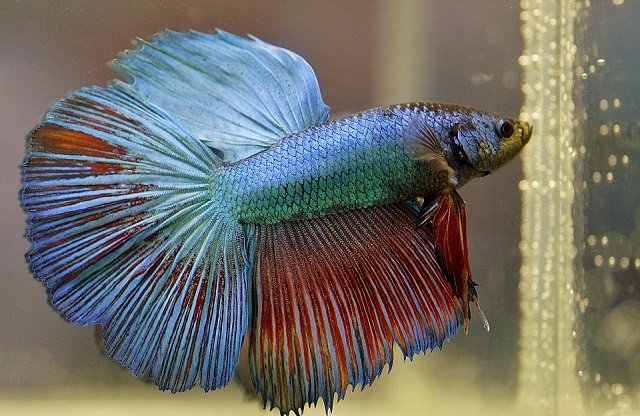
Inside a biosecure facility in the hinterlands of Minas Gerais, Brazil, daily operations unfold across thousands of individual jars, each housing a single male Siamese fighting fish (Betta splendens) whose flared fins display fierce territorial behavior toward neighboring specimens. This strict isolation is essential, as the species’ conspecific aggression necessitates individual housing to prevent lethal injuries, requiring customized feeding, water exchange, health monitoring, and manual grading for every single fish.
A recent scientific study revealed that this labor-intensive, highly repetitive routine—frequently underestimated in initial financial planning—represents the critical operational variable dictating the economic viability and overall profit margins of commercial ornamental betta aquaculture.
Ornamental Aquaculture: Economic and Risk Assessment in Commercial Betta Fish Production
The ornamental fish trade constitutes one of the highest value-added segments within global aquaculture—generating billions of dollars annually, requiring a minimal spatial footprint, and supporting continuous production cycles—which makes it a strategic diversification pathway for small-scale rural family enterprises. Within this sector, the Siamese fighting fish (Betta splendens) stands out due to its high fecundity, sustained market demand, and extensive spectrum of commercial morphotypes and color patterns.
Paradoxically, despite this economic dynamism, the industry has long lacked rigorous quantitative bioeconomic evaluations regarding its true cost structures, net operating margins, and capital risk exposure, as investment decisions have historically relied on empirical guesswork rather than accounting for biological and market uncertainties. To bridge this empirical gap, researchers from the Universidade Federal de Minas Gerais (UFMG) surveyed 20 family-run commercial operations in the Zona da Mata hub between May 2024 and August 2025, developing a comprehensive bioeconomic model combining deterministic analyses and stochastic risk simulations.
From On-Field Zootechnical Diagnostics to Stochastic Risk Analysis
Grounded in primary empirical data gathered through on-site audits and structured interviews across active commercial farms, the research team characterized essential operational parameters, establishing a representative baseline facility featuring three 180 m² greenhouses, 414 broodstock pairs, and an annual output of 162,288 marketable fish. To overcome the deterministic bias of static models, the authors implemented a Monte Carlo simulation running 10,000 iterations with fitted probability distributions across key variables—such as market prices, survival rates, fecundity, and labor demands—to rigorously quantify financial risk exposure and commercial viability.
Bioeconomic Results: Financial Viability and Critical Drivers in Betta Fish Production

Baseline findings confirmed robust profitability—with a unit production cost of US$ 0.14 against a weighted average selling price of US$ 0.18, yielding a 25.09% return on sales, a 1.33 benefit-cost ratio, and an annual Return on Invested Capital (ROIC) of 23.90% that maintained a 98.53% probability of positive net returns across 10,000 Monte Carlo iterations.
Notably, the sensitivity analysis revealed that operational labor demand exerted the single greatest negative drag on profitability ( correlation with ROIC) due to time-intensive individual jar handling, whereas the market premium for graded males (, reaching US$ 0.28 per specimen) and spawning fecundity () served as the primary upward drivers. Consequently, rigorous phenotypic sorting and labor efficiency emerge as far more decisive to financial success than feed costs or gross biomass volume.
Biological Factors and Cost Structure: The Impact of Labor on Betta Fish Farming
The substantial demand for operational labor within this production system does not stem from management inefficiencies, but rather from the ethological requirements of the species. Due to the pronounced territoriality and conspecific aggressiveness of Betta splendens males, communal housing following sexual differentiation is unfeasible without incurring physical injury or mortality, making individual confinement a biological imperative that imposes an intensive routine of specimen-by-specimen feeding, water exchange, prophylactic monitoring, and phenotypic grading—thereby constraining automation and limiting the economies of scale typical of food-fish aquaculture.
Consequently, the operational cost structure revealed that labor (17.82%), packaging materials (17.38%), and feed (16.04%) collectively accounted for over 51% of total production expenses, with individualized packing for commercial transport driving the high packaging share and underscoring that profitability hinges upon operational efficiency and quality control rather than gross harvest volume.
Mantente siempre informado
Stay Informed
Únete a nuestras comunidades para recibir al instante las noticias, informes y análisis más importantes del sector acuícola.
Join our communities to get instant access to the most important news, reports, and analysis from the aquaculture industry.
Furthermore, the authors highlight that the estimated 98.53% probability of positive returns is not an absolute commercial guarantee, as the stochastic model excluded severe external contingencies—such as sharp demand contractions, market saturation, or epizootic outbreaks—while heavy reliance on middlemen curtails farmers’ bargaining power against price volatility, anchoring these findings specifically to the technical and market conditions of the Zona da Mata region in Minas Gerais.
Strategic Implications for Producers: The Value of Phenotypic Selection and Operational Efficiency
Returning to the production scenario in Minas Gerais, the intensive routine of individual bottle management takes on a new analytical perspective. The findings demonstrate that meticulous, specimen-by-specimen monitoring and phenotypic grading do not merely represent an operating expense to cut, but rather the strategic core of enterprise profitability, as financial sustainability relies on labor-time allocated per individual and the precision of segregating high-value morphotypes rather than gross output volume.
Consequently, primary optimization pathways lie in technical staff training, refined reproductive management, mortality control, and maximizing premium-grade ratios—especially where high-grade males quadruple standard female prices, directly tying net margins to technical proficiency at every handling station.
Reference (open access)
Sá, H. C. M. d., Santos, I. T. V., Miranda, M. F., de Oliveira, P. E. C. M., Tavares, G. C., de Melo Hoyos, D. C., & de Lima, L. S. (2026). A Stochastic Framework for Economic Risk Assessment in Ornamental Aquaculture: Evidence from Betta splendens Production. Fishes, 11(9), 496. https://doi.org/10.3390/fishes11090496

Editor at the digital magazine AquaHoy. He holds a degree in Aquaculture Biology from the National University of Santa (UNS) and a Master’s degree in Science and Innovation Management from the Polytechnic University of Valencia, with postgraduate diplomas in Business Innovation and Innovation Management. He possesses extensive experience in the aquaculture and fisheries sector, having led the Fisheries Innovation Unit of the National Program for Innovation in Fisheries and Aquaculture (PNIPA). He has served as a senior consultant in technology watch, an innovation project formulator and advisor, and a lecturer at UNS. He is a member of the Peruvian College of Biologists and was recognized by the World Aquaculture Society (WAS) in 2016 for his contribution to aquaculture.