The expansion of global aquaculture faces complex sanitary, environmental, and economic challenges. Over the past two decades, the industry has replaced traditional marine ingredients with plant-based raw materials. However, this transition has increased the carbon footprint and compromised fish health due to antinutritional factors and amino acid imbalances.
To mitigate this impact, functional additives emerge as a key strategy. Under the ‘One Health‘ approach and the circular economy, the valuation of agro-industrial by-products and low-value marine biomass offers a dual opportunity: to reduce waste and strengthen the resilience of farmed species.
A recent study conducted by scientists from the Aquaculture Research Group (GIA) of the ECOAQUA Institute at the Universidad de Las Palmas de Gran Canaria, in collaboration with IRTA, CTICH, and the company PTAqua, evaluated the antioxidant, bactericidal, and immunomodulatory potential of nine natural extracts on gilthead seabream (Sparus aurata) leukocytes. These findings, published in the journal Frontiers in Marine Science, open a promising avenue for developing more sustainable functional feeds.
- 1 Key Points
- 2 Evaluation of cellular bioactivity through NAMs methodologies
- 3 Antioxidant capacity and chemical profile of the extracts
- 4 Antibacterial potency against aquaculture pathogens
- 5 Effects on immune cells: the dosage dilemma
- 6 Toward more balanced commercial diets: the value of synergy
- 7 Entradas relacionadas:
Key Points
- Terrestrial by-product extracts possess higher phenolic content and stronger antibacterial activity compared to those of marine origin.
- Pomegranate extracts (rich in punicalagin and ellagic acid) demonstrated the highest effectiveness against key aquaculture pathogens.
- Marine extracts displayed superior immunomodulatory potential, significantly activating the respiratory burst and peroxidase activity.
- An overlap exists between effective bactericidal doses and cellular cytotoxicity, highlighting the critical need to optimize dosages to ensure fish safety.
Evaluation of cellular bioactivity through NAMs methodologies
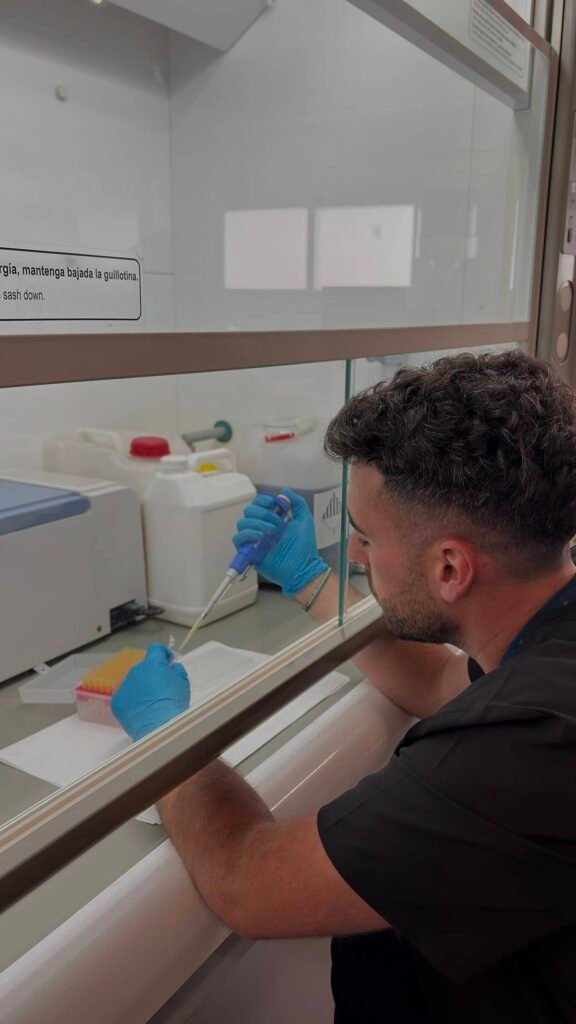
To comply with the 3Rs principle (Replacement, Reduction, and Refinement of animal use in science), the research employed New Approach Methodologies (NAMs), utilizing advanced in vitro and ex vivo techniques. The researchers selected and analyzed nine extracts obtained via pressurized liquid extraction technology, categorized into two blocks:
- Terrestrial Extracts (TE): Two variants of pomegranate (Punica granatum) peel—one rich in punicalagin (PG) and another in ellagic acid (EA); a flavonoid-rich citrus extract (CF); and a grape seed extract (GS).
- Marine Extracts (ME): Microalgae: Rhodomonas lens (RH) and Desmodesmus sp. (DE). Macroalgae: Osmundea pinnatifida (OS), Gracilaria sp. (GR), and Dictyota sp. (DI).
To determine their efficacy, these compounds were tested on head-kidney leukocytes isolated from gilthead seabream. During the assays, critical cellular health parameters such as cytotoxicity, respiratory burst, phagocytic activity, and peroxidase activity were evaluated.
Antioxidant capacity and chemical profile of the extracts

Chemical analysis determined that terrestrial extracts present significantly higher levels of phenolic and flavonoid compounds compared to those of marine origin. Likewise, antioxidant assays revealed distinct dynamics due to the methodological variations of each test: grape seed extract (GS) excelled in the ABTS assay (radical scavenging capacity), whereas pomegranate derivatives (PG and EA) led the results in the FRAP assay (ferric reducing antioxidant power).
Within the marine group, the microalgae Rhodomonas lens (RH) exhibited the highest antioxidant potency; notably, it achieved this performance despite not possessing the highest phenolic content, suggesting a highly beneficial action of its bioactive peptides and lipids.
Antibacterial potency against aquaculture pathogens
The antibacterial activity in this study was evaluated against three high-impact Gram-negative pathogens in aquaculture production: Vibrio anguillarum, Vibrio harveyi, and Photobacterium damselae subsp. piscicida.
Pomegranate extracts (PG and EA) proved to be the most effective, recording the lowest Minimum Inhibitory Concentrations (MICs); for instance, the punicalagin-rich extract inhibited Photobacterium damselae growth at just 0.047 mg/mL. Conversely, marine extracts required significantly higher doses to exhibit inhibitory effects (some exceeding 24 or 48 mg/mL), a common range for unpurified algal compounds.
Mantente siempre informado
Stay Informed
Únete a nuestras comunidades para recibir al instante las noticias, informes y análisis más importantes del sector acuícola.
Join our communities to get instant access to the most important news, reports, and analysis from the aquaculture industry.
The relevance of this finding is considerable, as the aquaculture industry has long sought sustainable alternatives to reduce reliance on antibiotics, whose indiscriminate use promotes the emergence of bacterial resistance. Although researchers caution that in vivo studies are still required before commercial application, the data suggest these natural extracts could be successfully integrated into future preventive strategies for fish farming.
Effects on immune cells: the dosage dilemma
The cellular analysis of leukocytes revealed complex interactions that are crucial for functional feed development:
- Cytotoxicity: Cellular tolerance varied significantly by compound. The ellagic acid-rich pomegranate extract (EA) showed cytotoxicity from onward, whereas the punicalagin-rich extract (PG) only evidenced adverse effects at the highest dose (). Among marine resources, Gracilaria sp. sharply reduced cell viability even at low doses, possibly due to the apoptosis-inducing effects of palmitic acid. In contrast, Rhodomonas lens and Osmundea pinnatifida induced no toxicity at any evaluated concentration.
- Phagocytic activity and immunomodulation: Phagocytosis constitutes a vital first line of defense. Pomegranate (PG) and citrus (CF) extracts biphasically stimulated macrophage activity at moderate doses. Regarding marine extracts, Rhodomonas lens stimulated phagocytosis in a dose-dependent manner. Likewise, the red macroalgae Osmundea pinnatifida and Gracilaria sp. triggered a stimulation of basal respiratory burst, which is associated with the presence of marine sulfated polysaccharides that cells recognize as pathogen-associated molecular patterns (PAMPs).
- Peroxidase activity: Two clear trends were identified in this parameter: all terrestrial extracts reduced peroxidase activity as the dose increased. Conversely, marine extracts (except RH) significantly stimulated this immune enzyme, reaffirming that marine-derived compounds act as potent activators of leukocyte immunological status.
Toward more balanced commercial diets: the value of synergy
This study demonstrates that while crude by-product mixtures possess immense functional richness, their direct application presents clear limitations. Because the doses required to achieve effective bactericidal action sometimes border on cellular toxicity thresholds, the success of future formulations will lie in precise balance.
The authors conclude that the distinct differences between terrestrial (potent antioxidant and bactericidal) and marine (excellent immunomodulatory) bioactive profiles open the door to combination strategies. One of the most promising hypotheses is that both resources act complementarily: terrestrial extracts providing antibacterial protection, while marine ones reinforce immune defenses.
The industry’s next major challenge will be to develop in vivo trials to verify if these laboratory effects are maintained under real farming conditions, determining which combinations and doses generate a synergistic effect that enhances gilthead seabream (Sparus aurata) health without compromising its physiological safety.
Study funding: Financial support for the execution and publication of this work was provided by the LARVOOST project (PID2021-122474OB-100), funded by MCIN/AEI/10.13039/501100011033 and ERDF/EU. Additionally, it received funding from MICIU/AEI/10.13039/501100011033 predoctoral and postdoctoral grants, ESF+, and the European Union NextGenerationEU/PRTR program.
Reference (open access)
Molina-Roque L, Acosta F, Izquierdo M, Saromines CJ, Grifoll V, Docando J, Montero D and Torrecillas S (2026) Antioxidant, antibacterial, and immunostimulatory potentials of terrestrial and marine extracts from by-products and low-value biomass: an ex vivo study in gilthead seabream (Sparus aurata) head kidney leukocytes. Front. Mar. Sci. 13:1816745. doi: 10.3389/fmars.2026.1816745

Editor at the digital magazine AquaHoy. He holds a degree in Aquaculture Biology from the National University of Santa (UNS) and a Master’s degree in Science and Innovation Management from the Polytechnic University of Valencia, with postgraduate diplomas in Business Innovation and Innovation Management. He possesses extensive experience in the aquaculture and fisheries sector, having led the Fisheries Innovation Unit of the National Program for Innovation in Fisheries and Aquaculture (PNIPA). He has served as a senior consultant in technology watch, an innovation project formulator and advisor, and a lecturer at UNS. He is a member of the Peruvian College of Biologists and was recognized by the World Aquaculture Society (WAS) in 2016 for his contribution to aquaculture.