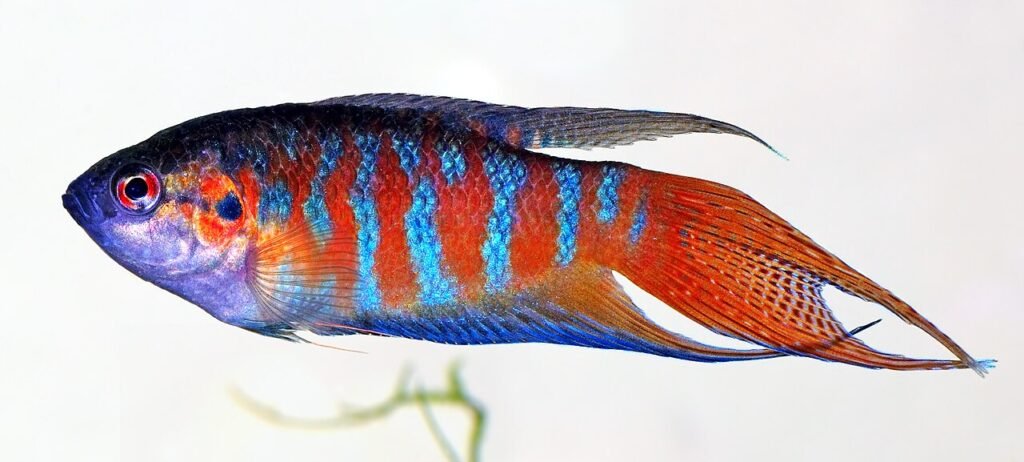
The Paradise Fish (Macropodus opercularis), also known as the ‘Paradise Gourami,’ stands out not only for its striking coloration but also for being the cornerstone of modern tropical fishkeeping. Introduced to Paris in 1869 by the renowned aquarist Pierre Carbonnier, this species became the first exotic fish to be successfully bred in captivity. In doing so, it broke the monopoly of the goldfish (Carassius auratus), which until then had been the only option for hobbyists.
As a prominent member of the suborder Anabantoidei, the Paradise Fish is highly valued for its extraordinary resilience and versatility. It is the ideal species for those seeking a specimen with character, historical significance, and superior adaptability, capable of thriving in environments where other tropical fish would falter. However, its temperament has also earned it the moniker ‘fighting fish,’ owing to its traditional use in fish-fighting matches across East and Southeast Asia. Locally, in regions such as Okinawa, it is known by the terms ‘To-io,’ ‘To-iyu,’ or ‘To-bira,’ which are directly associated with this practice (Kitagawa & Hosoya, 2016).
In this specialized guide, you will gain a comprehensive understanding of the husbandry, feeding, breeding, and disease management requirements for the Paradise Fish.
- 1 Key Points of the Paradise Fish Guide
- 2 Taxonomic Classification of the Paradise Fish
- 3 Anatomy, Etymology, and the Labyrinth Organ
- 4 Natural Habitat and Ecological Impact
- 5 Ideal Aquarium Conditions and Water Parameters
- 6 Behavior and Compatibility: The Temperament of the Paradise Fish
- 7 Diet and Nutrition of the Paradise Fish
- 8 Breeding Process: The Bubble Nest Dynamics
- 9 Health and Disease Prevention
- 10 Conclusion
-
11
Frequently Asked Questions (FAQ) about the Paradise Fish
- 11.1 Is the Paradise Fish suitable for a community aquarium?
- 11.2 What temperature does Macropodus opercularis actually require?
- 11.3 How does the ‘labyrinth organ’ influence its survival and management?
- 11.4 What is the ideal protein requirement in its diet?
- 11.5 What is Megalocytivirus, and how does it affect the Paradise Fish?
- 12 References
- 13 Entradas relacionadas:
Key Points of the Paradise Fish Guide
- Subtropical Nature and Longevity: Unlike strictly tropical species, it is a subtropical fish that tolerates temperatures near 0°C. Its general optimal range is 10°C to 22°C; a winter cooling period prevents premature aging, allowing it to live between 4 and 6 years (and up to 8 years under optimal conditions).
- Territoriality and Incompatibility (“Butcher of Fighters”): It possesses a hyper-developed territorial instinct (perimeters of 30–40 cm). Males display combative behaviors such as jaw-locking. Slow-moving tankmates, species with filamentous fins (Bettas, Discus, Guppies), or microinvertebrates must be avoided. Females are the ideal choice for peaceful community aquariums.
- Crucial Nutritional Requirements: As a carnivorous micro-predator, it requires high levels of crude protein in its diet: 40% to maximize growth and food conversion ratios (FCR), and 45% to optimize reproductive performance.
- Reproductive Success and Larval Management: Optimal spawning occurs at a 1:1 ratio, with males constructing bubble nests stabilized by surface proteins. For fry survival, sealing the aquarium with plastic wrap is indispensable to keep the surface air humid and warm (26°C), guaranteeing the correct development of their labyrinth organ.
- Cutting-Edge Health Challenges: In addition to Labyrinth Organ Disease and Lymphocystis disease virus (LCDV), the species is vulnerable to severe systemic pathologies caused by Megalocytivirus—which induces splenomegaly and lymphoid depletion—and opportunistic infections by the bacterium Citrobacter freundii, characterized by enteritis and hemorrhagic suffusions.
Taxonomic Classification of the Paradise Fish
From a scientific perspective, this species belongs to the family Osphronemidae. Recently, Fodor et al. (2024) successfully generated a de novo whole-genome assembly of the Paradise Fish (Macropodus opercularis), determining a molecular size of 483,077,705 base pairs (~483 Mb). The essential technical and biological data are presented below in the following factsheet:
| Technical Specification | Detail |
| Scientific Name | Macropodus opercularis (Linnaeus, 1758) |
| Family / Subfamily | Osphronemidae / Macropodusinae |
| Common Names | Paradise Fish, Paradise Gourami, Chinese Fighting Fish |
| Origin / Distribution | Southeast Asia (China, Taiwan, Vietnam, and Laos) |
| Maximum Size | Males: 7 to 10 cm (~4 inches). Females: 6 to 7 cm. |
| Life Expectancy | 4 to 6 years in captivity. Under optimal cold-water conditions (which slow down their metabolism), lifespans of up to 8 years have been recorded. |
| Difficulty Level | Beginner / Intermediate |
Anatomy, Etymology, and the Labyrinth Organ
The morphology of Macropodus opercularis is a testament to adaptive evolution. Its specific name, opercularis, derives from the distinctive dark spot on its operculum—the bony plate protecting the gills—which serves as a key taxonomic trait for identification.
The Labyrinth Organ: An Evolutionary Marvel

Like all anabantoids, this species possesses the so-called “labyrinth organ.” From a scientific perspective, this is a highly vascularized suprabranchial structure derived from an evolutionary modification of the first gill arch (specifically the epibranchial). This organ allows the fish to process atmospheric oxygen, enabling it to survive in rice paddies and stagnant pools with critical levels of hypoxia.
In this regard, Szabó et al. (2024) highlight that this evolutionary innovation allows it to extract oxygen from the endothermic environment and survive in severely hypoxic aquatic environments. Furthermore, the authors demonstrate that the early development of this organ profoundly alters and reshapes the specimen’s original circulatory structure.
On the other hand, according to the study by Wang and Lin (2018), the Paradise Fish does not reduce its vital processes to mitigate environmental stress but acts as an oxyregulator. According to the researchers, this fish manages to maintain its normal aerobic metabolic rate by behaviorally compensating for the lack of oxygen through aerial respiration—a fundamental physiological advantage that strictly water-breathing fish lack.
Sexual Dimorphism and Varieties
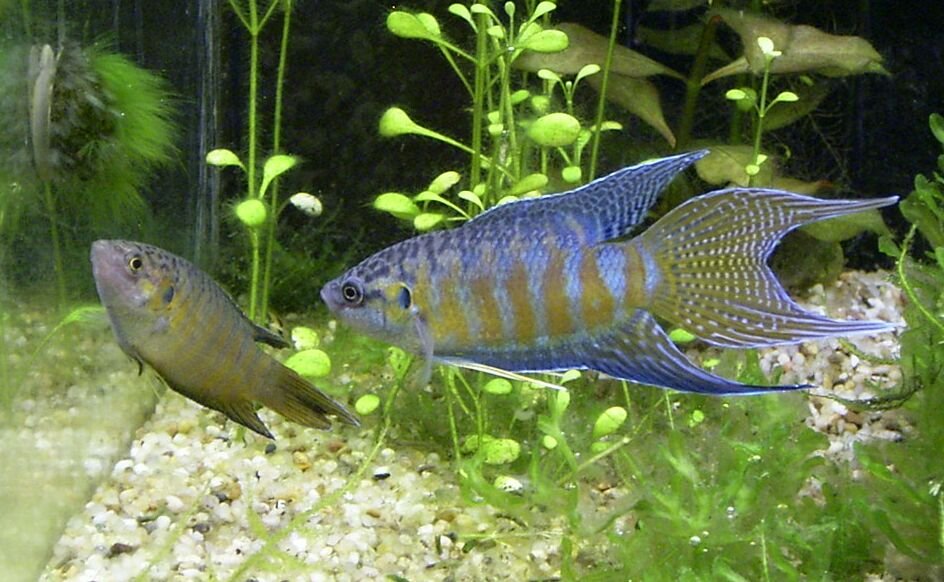
- Males: They present a more robust body and significantly more intense coloration. Their dorsal, anal, and caudal fins exhibit extended rays that form long filaments. Additionally, their combat behavior includes jaw-locking as a mechanism to gauge strength.
- Females: They are smaller and exhibit pale shades (silvery or yellowish). A crucial detail for the aquaculturist or breeder is that the nuptial female noticeably lightens her livery—becoming almost white—during the spawning process.
- Sensory Organs: The filamentous pelvic fins of this species function as modified tactile organs, allowing them to navigate precisely and detect objects in turbid water environments.
Color Variations and Genetics
Thanks to selective breeding in aquaculture farms across Asia and Europe, various color varieties are currently commercialized in the market:
Mantente siempre informado
Stay Informed
Únete a nuestras comunidades para recibir al instante las noticias, informes y análisis más importantes del sector acuícola.
Join our communities to get instant access to the most important news, reports, and analysis from the aquaculture industry.
- Wild Type: Characterized by alternating red and blue-green transverse bands with a metallic flash.
- Blue Paradise Gourami: A variety where blue pigment dominates virtually the entire body of the fish.
- Albino Paradise Gourami: Specimens with a white or pinkish body and red eyes. They typically manifest lower aggressiveness, although they show high sensitivity to intense lighting.
- Super Red: Lineages genetically selected to maximize the extension and intensity of their red bands.
Natural Habitat and Ecological Impact
According to Kitagawa and Hosoya (2016), the natural geographic distribution range of the Paradise Fish encompasses southern China (from southern Fujian to Hainan Island), Taiwan, Orchid Island, northeastern Laos, northern Vietnam, and the Ryukyu Archipelago in Japan. In these regions, the species inhabits a vast array of lotic and lentic biotopes, ranging from irrigation canals, ditches, and paddy fields to swamps, river backwaters, and flooded forests during the monsoon season. These water bodies are typically characterized by oxygen deficiency and drastic thermal fluctuations—a harsh environment that has forged the legendary adaptive resilience of this specimen.
Ecological Impact and Biological Control
- A Guardian Against Dengue: In Taiwan, this fish is considered a fundamental ally for public health.
- Population Equilibrium: It has been documented that the decline of wild populations of the genus Macropodus, caused by anthropogenic pollution, triggered an exponential increase in the Aedes aegypti mosquito.
- Vector Control: By operating as a highly efficient natural predator of mosquito larvae, the presence of the Paradise Fish is vital for the biological control of zoonotic diseases in the region.
Ideal Aquarium Conditions and Water Parameters
Unlike strictly tropical species, the Paradise Fish is a subtropical fish. Its thermal resilience is extraordinary: it is capable of withstanding temperatures close to 0°C, with active specimens recorded even under layers of ice in outdoor ponds.
Recommended Parameters
| Parameter | Optimal Range and Technical Guidelines |
| Temperature | 10°C – 22°C (Ideal Subtropical Environment) • Tolerates peaks up to 27°C, but requires a winter cooling period to respect its biological cycle and prevent premature aging. • Perennial maintenance at 26°C shortens its life expectancy and increases aggression. • Scientific note: In experimental management contexts, Rácz et al. (2021) suggest ranges between 24.0°C and 28.0°C. |
| pH | 6.0 – 8.0 (Wide tolerance range). |
| Hardness (KH) | 3 – 18 dKH (Equivalent to 90 – 357 ppm). |
| Conductivity | 350 – 450 µS/cm |
| Photoperiod | 13 hours of light and 11 hours of darkness. Lighting cycle recommended by Rácz et al. (2021) for biological rhythm stabilization. |
| Tank Dimensions | Minimum 80 cm in length (Approximately 80 liters). Configuration advised for housing a harem (one male and several females). A wide-base tank is preferred to mitigate territoriality and disperse aggression focal points. |
Professional Aquascaping and Environmental Complexity
To enhance the iridescence of their colors, a dark substrate is suggested. Vegetation should be dense, incorporating roots and driftwood to function as visual barriers. Floating plants (Ceratophyllum, Salvinia, or the use of Java Moss) are indispensable for providing shaded areas and structural support.
According to Rácz et al. (2021), to minimize stress and dominance combat, it is imperative to offer a complex environment through the following guidelines:
- Structural Shelters: Incorporate visual barriers such as plastic pipe sections, floating leaves, and fragments of green mosquito netting suspended vertically to emulate subaquatic vegetation.
- Nesting Supports: In breeding tanks, floating leaves and green polystyrene (Styrofoam) elements should be added, which are used by males to anchor their characteristic bubble nests.
- Floating Plants: Essential because the Paradise Gourami is vulnerable to direct light. Species like Limnobium laevigatum or Pistia stratiotes are ideal for shelter and nest construction.
- Filtration: The water flow must be gentle. As a species native to lentic waters, excessive current would cause fatigue in the specimens and destroy their bubble nests.
Behavior and Compatibility: The Temperament of the Paradise Fish
Extreme Territoriality and the Moniker “Butcher of Fighters”
The Paradise Gourami (Macropodus opercularis) does not manifest aggressiveness out of a malicious nature, but rather due to a hyper-developed territorial instinct. In its natural habitat, the fierce defense of a small pool or paddy field represents the thin line between survival and death. In an aquarium environment, a dominant male will establish a perimeter of approximately 30 to 40 cm. Any specimen invading this space—especially those with bright coloration or long fins—will be systematically attacked.
Its historical moniker in certain circles, “Butcher of Fighters,” warns of a belligerent temperament that can surpass that of the Betta fish (Betta splendens). Nevertheless, in contexts of controlled management and population stabilization, Rácz et al. (2021) recommend that to mitigate aggression and establish stable hierarchies during mass rearing phases, the density can be adjusted to one fish per 2 to 3 liters of water (equivalent to housing 10 to 12 individuals in a 31-liter tank). It is indispensable that these tanks remain tightly covered at all times.
The Challenge of Community Coexistence
The Paradise Fish has a well-earned reputation as one of the most belligerent anabantoids for its size; indeed, aquarium literature consistently catalogs it as a highly conflict-prone specimen. Unlike commercial catalogs that often downplay its aggressiveness, practical aquaculture experience demonstrates that an adult male reacts with immediate territoriality toward any intruder. In hobbyist communities, there are abundant records of specimens relentlessly attacking mystery snails (Pomacea bridgesii) and even charging at the aquarist’s tweezers or hands during routine maintenance tasks.
💡 Warning Sign: If you observe your Paradise Fish noticeably darkening its blue lateral bands, flaring its fins to the maximum, and intimidatingly spreading its opercula, the specimen is in full threat display before combat.
Ideal Tankmates
Despite its combative nature, it is feasible to keep Macropodus opercularis in a community aquarium if tankmates are selected with strict caution and a densely planted aquascape—prioritizing floating plants—is provided to break visual lines. The most recommended options are:
- Fast Schooling Fish: Dynamic species that swim in schools, such as Giant Danios (Devario aequipinnatus), Pearl Danios (Danio albolineatus), or White Cloud Mountain Minnows (Tanichthys albonubes). Their speed allows them to successfully evade any territorial display.
- Benthic (Bottom-Dwelling) Inhabitants: Generally, the Paradise Fish ignores species occupying the lower strata of the tank. Good-sized specimens like Corydoras, catfish from the genus Synodontis, or Kuhli loaches (Pangio kuhlii) usually coexist without issue.
- Peaceful-Tempered Cichlids: Medium-sized cichlids with moderate behavior, such as the Firemouth Cichlid (Thorichthys meeki) or certain species of the genus Geophagus, can share the space without being intimidated.
💡 Expert Secret: If you wish to enjoy the beauty of this species in a peaceful community environment, opt to house females exclusively. Females are significantly more passive and tolerant, allowing for coexistence in small harems without the conflict risks triggered by a solitary male.
Incompatible Species (Avoid at All Costs)
To safeguard the integrity of the aquarium’s biological community, a male Paradise Fish must never be cohoused with:
- Other Males of the Same Species: Except in high-volume setups or massive outdoor ponds, two males in the same space will engage in chronic combat, triggering severe stress, serious injuries, or death.
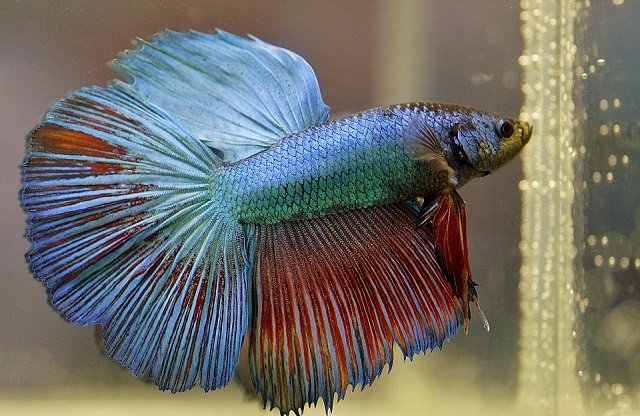
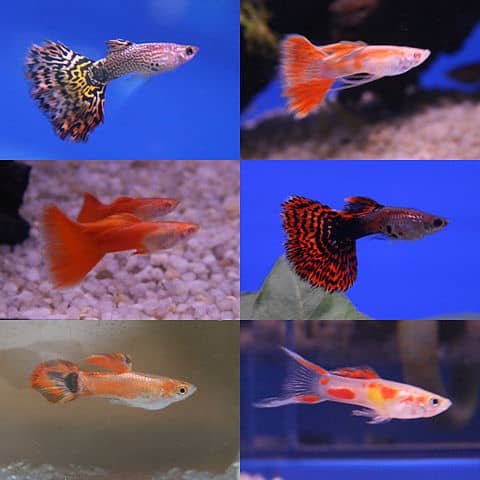
- Slow-Moving or Filamentous-Finned Fish: Labyrinth fish such as Bettas or other large gouramis will be perceived as direct phylogenetic rivals; likewise, Angelfish (Pterophyllum scalare) and Guppies (Poecilia reticulata) must be excluded.
- Micro-Fish and Dwarf Invertebrates: Due to their nature as micro-predators, they will annihilate any fish under 3 cm in size and completely decimate dwarf shrimp populations (such as the genus Neocaridina).
Diet and Nutrition of the Paradise Fish
The Paradise Fish (Macropodus opercularis) is a micro-predator with predominantly carnivorous habits. According to research by Ghaedi et al. (2017) and Dadgar et al. (2020), the optimal level of crude protein in its diet ranges between 40% and 45% depending on the biological objective: a regime with 40% crude protein yields the best significant results in mean weight gain, daily growth rate, specific growth rate (SGR), and food conversion ratio (FCR); meanwhile, the authors highlight that a 45% level is the ideal requirement to maximize the reproductive performance of the species. To safeguard its systemic health and enhance the iridescence of its coloration, it is recommended to provide a versatile and balanced diet:
- Live or Frozen Protein: Essential foods such as Artemia, Daphnia, mosquito larvae (red and white), and bloodworms.
- Commercial Dry Food: High-quality granules or pellets formulated specifically for labyrinth fish.
- Vegetable Intake: Occasional use of cucumber slices provides the necessary fiber to optimize digestive transit and prevent intestinal blockages.
Professional Feeding Schedule
According to the aquaculture management guidelines by Rácz et al. (2021), best feeding practices are segmented by the specimen’s developmental stage:
- Larvae and Juveniles (Under 5 months old): Require feeding three times a day. The provision of live food is crucial for their survival; a combined transition of commercial dry diet and newly hatched Artemia nauplii is suggested, starting six days post-fertilization.
- Adult Specimens (Over 5 months old): The frequency is reduced to two daily rations, administering a balanced mixture of tropical fish flakes or granules alongside 48-hour-old Artemia.
Breeding Process: The Bubble Nest Dynamics
The reproduction of members of the subfamily Macropodusinae constitutes a fascinating display of parental instinct. In this regard, the study by Wijaya (2025) on the breeding of the Paradise Fish (Macropodus opercularis) reveals that the optimal broodstock ratio for successful spawning is 1:1 (one male per female).
On the other hand, Onuoha et al. (2020) reported that artificial breeding assisted by the synthetic hormone Ovaprim yielded higher spawning success and a superior survival rate compared to the species’ natural process.
Nest Architecture and the Nuptial Embrace
- The Bubble Nest: The male generates a floating raft by blending air and salivary secretions beneath the vegetation. According to Phan (2026), these nests are composed of bubbles approximately 1 mm in diameter, stabilized by protein compounds possessing strong surface activity. Thus, the nest operates both as an incubation site and an indicator of the male’s biological fitness.
- The Nuptial Embrace: The male wraps himself around the female in a physical stimulus to fertilize the eggs, which ascend toward the nest due to the presence of a lipid globule. According to Rácz et al. (2021), when ready for mating, the male noticeably intensifies his coloration, pursues the female while performing lateral displays with extended fins, and guides her toward the nest. If the female is receptive, she will exhibit a “vertical waggle” and oblique movements as a sign of acceptance; otherwise, she will flee or display defensive postures.
Thermal Parameters and Incubation
There is a documented contrast regarding induction temperatures: while Rácz et al. (2021) recommend an optimal range of 26°C to 28°C to stimulate breeding and nest construction, Yu and Guo (2018) reported the successful incubation of Macropodus opercularis eggs at a lower thermal regime between 22.5°C and 25.7°C. For his part, Wijaya (2025) indicates that spawning takes place within 48 hours post-introduction of the pair into the breeding tank.
Parental Care and Larval Survival
- Exclusive Custody: The male protects the nest with extreme ferocity. It is mandatory to remove the female immediately after spawning, as the male will perceive her as an intruder and attack her.
- Labyrinth Organ Development: A critical factor for fry success is sealing the aquarium with plastic wrap. This guarantees that the surface air remains warm (approx. 26°C) and humid, a sine qua non condition for the offspring’s labyrinth organ to develop correctly; the absence of this humid atmosphere can cause 100% mortality.
- Stocking Density: Rácz et al. (2021) report that the best larval survival rates are obtained by housing newborns at low densities, recommending 20 to 40 individuals in 3-liter water containers, dispensing with sponge filters during the initial phase.
Health and Disease Prevention
Although the Paradise Fish (Macropodus opercularis) is an extremely resilient specimen, its primary vulnerability factor is immunological stress induced by tankmate incompatibility or perennial maintenance at excessively high temperatures.
Labyrinth Organ Disease
If the surface air temperature above the water is significantly lower than the water temperature itself, the resulting thermal shock can irreversibly damage the labyrinth organ during atmospheric respiration. To prevent this condition, it is imperative to keep the aquarium tightly covered.
Lymphocystis Disease Virus (LCDV)
This viral pathology manifests as small, whitish lumps on the fins and typically remits upon optimizing the diet and ensuring water quality.
In this regard, the study by Xu et al. (2014) provides the first molecular and ultrastructural evidence of an LCDV isolation in the Paradise Fish, confirming that this virus acts as a high-impact pathogen for the species. The researchers observed multiple nodules with a wart-like morphology distributed mainly on the fins and the opercular region. Histological analysis confirmed that these nodules are composed of encapsulated, hypertrophied cells, which are pathognomonic characteristics of lymphocystis cells.
Megalocytivirus Infections
As noted by Guo et al. (2025), Macropodus opercularis is part of the wide host range susceptible to systemic viral infections caused by Megalocytivirus. Based on their findings, the clinical presentation is characterized by:
- Behavioral and Systemic Alterations: Specimens manifest anorexia (loss of appetite), anoxia (oxygen deprivation), acute lethargy, and aberrant swimming patterns.
- Hemorrhagic Syndrome: Presence of muscular bleeding and hemorrhagic suffusions in target areas such as the head, opercula, jaw, eye orbits, and the base of the pectoral and ventral fins (petechial lesions observable in biological models).
- Cutaneous Pathologies and Desquamation: Alterations in pigmentation (pallor or darkening), ulcerative lesions, bristling of scales followed by shedding, and mucus hyperproduction.
- Branchial and Abdominal Compromise: Gill congestion or pallor associated with microcytic anemia, coelomic distension, and signs of ascites (fluid accumulation in the abdomen).
- Internal Organ Failure: Severe inflammation with vacuolization and extensive necrosis in the stomach, liver, spleen, and kidney.
Complementing this scenario, Kurapati et al. (2026) demonstrate that when infected by Megalocytivirus, the Paradise Fish manifests severe pathological alterations localized within the splenic system. Specifically, histopathological findings indicate that this ornamental species suffers from splenomegaly (abnormal enlargement of the spleen) and a drastic lymphoid depletion, which severely impairs its cellular immune response.
Bacteriosis by Citrobacter freundii
The bacterium Citrobacter freundii acts as an opportunistic infectious agent. Pastuszka et al. (2025) state that in aquatic organisms, the pathology typically manifests as hemorrhagic enteritis accompanied by extensive blood effusions in the musculature and internal organs (liver, kidneys, and gonads).
Externally, it triggers dermal erosion, scale loss, diffuse bleeding, and petechial hemorrhages in the gill filaments—an acute condition capable of inducing mass mortalities. In the specific case of Macropodus opercularis, the affliction is localized through focal hemorrhages at the base of the fins, the anal region, and the buccal cavity.
Anabantoid Iridovirus
A highly lethal pathology that frequently affects gouramis. Since no effective treatments exist, the mandatory prevention protocol consists of establishing a strict 30-day quarantine for any newly introduced specimen.
Conclusion
More than 150 years after its historic introduction to Europe, the Paradise Fish solidifies its enduring relevance as an authentic jewel of modern fishkeeping. Its unique amalgam of chromatic elegance, extraordinary resilience, and behavioral complexity makes it a fascinating species for the committed aquarist. By safeguarding its spatial requirements, micro-predatory diet, and inherent territorial nature, housing Macropodus opercularis will transform any subtropical aquarium into a vibrant ecosystem, steeped in history and color.
Frequently Asked Questions (FAQ) about the Paradise Fish
Is the Paradise Fish suitable for a community aquarium?
Yes, but with strict restrictions. Due to its territorial temperament and micro-predatory instinct, it should only cohabit with fast schooling fish (such as Danios or White Cloud Mountain Minnows) or benthic bottom-dwellers (such as Corydoras and loaches) that do not invade its stratum. For peaceful community aquariums, the expert recommendation is to house females exclusively, as they lack the extreme belligerence of males.
What temperature does Macropodus opercularis actually require?
Unlike commercial tropical fish, the Paradise Fish is a subtropical species, with its optimal range in captivity fluctuating between 10°C and 22°C. While it tolerates heat spikes, maintaining it perennially at 26°C or higher shortens its life expectancy and elevates aggression; however, for research environments or experimental breeding lineages, authors such as Rácz et al. (2021) suggest controlled regimes between 24.0°C and 28.0°C.
How does the ‘labyrinth organ’ influence its survival and management?
The labyrinth organ is a vascularized suprabranchial structure that enables the fish to perform atmospheric aerial respiration, acting as a metabolic oxyregulator (Wang & Lin, 2018). Consequently, it is imperative to keep the aquarium covered: if the surface air is too cold, the resulting thermal shock will damage this organ. Furthermore, during breeding, the tank must be sealed with plastic wrap to ensure a humid atmosphere, which is indispensable for the proper development of this structure in fry.
What is the ideal protein requirement in its diet?
As a carnivorous micro-predator, its protein demand is high. According to Ghaedi et al. (2017) and Dadgar et al. (2020), a balanced feed containing 40% crude protein should be provided to maximize the daily growth rate and food conversion ratio (FCR), or 45% crude protein if the goal is to optimize reproductive performance and spawning quality.
What is Megalocytivirus, and how does it affect the Paradise Fish?
Megalocytivirus is a high-impact systemic viral pathogen to which this species is highly susceptible (Guo et al., 2025). It causes a severe clinical presentation characterized by lethargy, aberrant swimming, bristling scales, abdominal distension (ascitis), and generalized hemorrhagic suffusions. At a histopathological level, Kurapati et al. (2026) demonstrate that it induces splenomegalia (enlargement of the spleen) and severe lymphoid depletion, which utterly suppresses the fish’s immune system.
References
Dadgar, S., Ghaedi, A. R., Hafezieh, M., & Zargham, D. (2020). Optimum dietary protein requirement of Paradise fish, Macropodus opercularis based on growth and reproduction performances. Journal of Survey in Fisheries Sciences, 7(1), 91-104.
Fodor, E., Okendo, J., Szabó, N., Szabó, K., Czimer, D., Tarján-Rácz, A., Szeverényi, I., Low, B. W., Liew, J. H., Koren, S., Rhie, A., Orbán, L., Miklósi, Á., Varga, M., & Burgess, S. M. (2024). The reference genome of Macropodus opercularis (the paradise fish). Scientific Data, 11(1), 540. https://doi.org/10.1038/s41597-024-03277-1
Ghaedi, Alireza, Gorjipor, E., Hafeziyeh, M., Abdolhay, H.A., Mahmoudi, R., Mottaghi, E., Matinfar, A. (2017). Effect of different deitary protein levels on reproductive performance of Paradise Fish Macropodus opercularis. http://hdl.handle.net/1834/13753
Guo, C., He, J., Xu, X., Weng, S. and He, J. (2025), Megalocytivirus: A Review of Epidemiology, Pathogenicity, Immune Evasion, and Prevention Strategies. Rev Aquac, 17: e70025. https://doi.org/10.1111/raq.70025
Kitagawa, T., & Hosoya, K. (2016). Origin of the Ryukyuan paradise fish Macropodus opercularis inferred from literature survey. Biogeography, 18, 11-16.
Kurapati R. B., G. Ramena, H. Wanjala, S. Gudapati, and Y. Ramena, “Viral Disease Histopathology in Aquaculture Finfish: Organ-Specific Pathological Changes and Diagnostic Insights, Referencing the World Organisation for Animal Health: A Review,” Reviews in Aquaculture 18, no. 2 (2026): e70129, https://doi.org/10.1111/raq.70129.
Onuoha, P., Elezuo, K. ., & Okeke, E. (2020). Comparative study on spawning success of paradise fish (Macropodus opercularis) using synthetic hormone and natural simulation. Journal of Aquatic Sciences, 35(1), 83–89. https://doi.org/10.4314/jas.v35i1.10
Pastuszka, A., Guz, L., Puk, K., & Pietras-Ożga, D. (2025). Occurrence of virulence factors and antimicrobial susceptibility of Citrobacter freundii isolated from diseased ornamental fish in Poland. Journal of Veterinary Research, 69(1), 17-26.
Phan, C. M. (2026). Where water meets air: The science of surface phenomena. CRC Press. https://doi.org/10.1201/9781003656173
Rácz, A., Adorján, G., Fodor, E., Sellyei, B., Tolba, M., Miklósi, Á., & Varga, M. (2021). Housing, Husbandry and Welfare of a “Classic” Fish Model, the Paradise Fish (Macropodus opercularis). Animals, 11(3), 786. https://doi.org/10.3390/ani11030786
Szabó, N., Fodor, E., Varga, Z., Tarján-Rácz, A., Szabó, K., Miklósi, Á., & Varga, M. (2024). The paradise fish, an advanced animal model for behavioral genetics and evolutionary developmental biology. Journal of Experimental Zoology Part B: Molecular and Developmental Evolution, 342, 189–199. https://doi.org/10.1002/jez.b.23223
Wang M-C and Lin H-C (2018) The Air-Breathing Paradise Fish (Macropodus opercularis) Differs From Aquatic Breathers in Strategies to Maintain Energy Homeostasis Under Hypoxic and Thermal Stresses. Front. Physiol. 9:1645. doi: 10.3389/fphys.2018.01645
Wijaya, M. R. S. (2025) DESKRIPSI PEMIJAHAN IKAN PARADISE (Macropodus opercularis) DENGAN RASIO INDUK BERBEDA. FAKULTAS PERTANIAN, UNIVERSITAS LAMPUNG.
Xu, L., Feng, J. & Huang, Y. Identification of lymphocystis disease virus from paradise fish Macropodus opercularis (LCDV-PF). Arch Virol 159, 2445–2449 (2014). https://doi.org/10.1007/s00705-014-2060-0
Yu, T., Guo, Y. Early Normal Development of the Paradise Fish Macropodus opercularis. Russ J Dev Biol 49, 240–244 (2018). https://doi.org/10.1134/S1062360418040057

Editor at the digital magazine AquaHoy. He holds a degree in Aquaculture Biology from the National University of Santa (UNS) and a Master’s degree in Science and Innovation Management from the Polytechnic University of Valencia, with postgraduate diplomas in Business Innovation and Innovation Management. He possesses extensive experience in the aquaculture and fisheries sector, having led the Fisheries Innovation Unit of the National Program for Innovation in Fisheries and Aquaculture (PNIPA). He has served as a senior consultant in technology watch, an innovation project formulator and advisor, and a lecturer at UNS. He is a member of the Peruvian College of Biologists and was recognized by the World Aquaculture Society (WAS) in 2016 for his contribution to aquaculture.