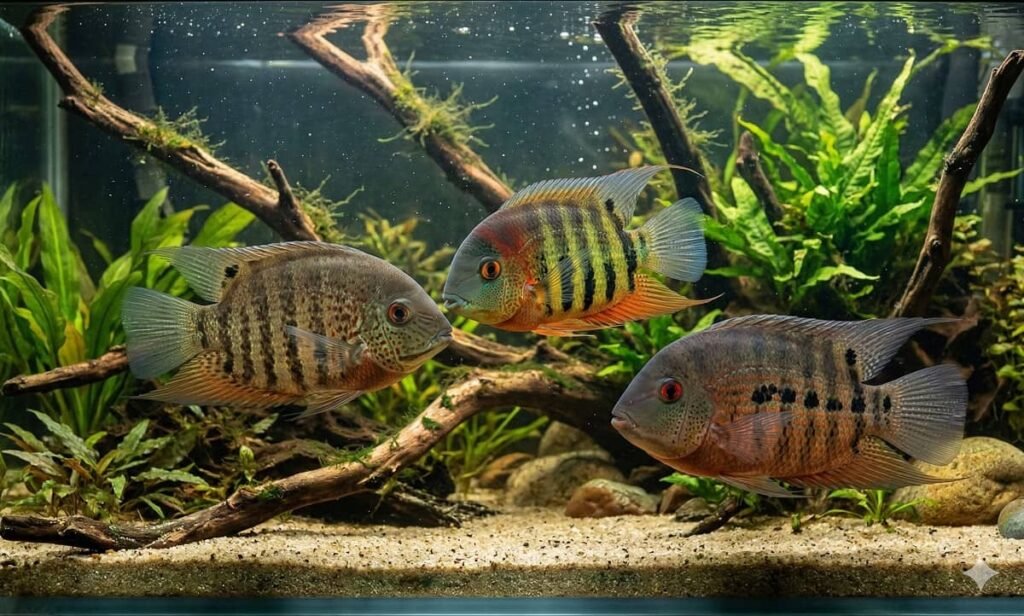
The world of fishkeeping has hosted countless species, yet few retain the charisma and sophistication of the Severum cichlid. Belonging to the genus Heros, this fish is more than a mere ornamental piece defined by its emerald green and deep gold hues; it represents one of the most captivating taxonomic enigmas for biologists and seasoned aquarists alike. Often dubbed the “Gentle Giant” or the “Poor Man’s Discus,” the Severum stands as a robust and charismatic alternative for those seeking the majesty of a large fish without the extreme demands of other Amazonian species.
More than just an aquarium inhabitant, the Heros genus is a true biological puzzle. Its compressed morphology and vibrant colors have earned it its famous moniker, combining remarkable intelligence with an adaptability superior to other cichlids of its scale. In this definitive guide, we will analyze why this resident of the Amazonian blackwaters is the preferred choice for large-format community aquariums.
Through this technical and exhaustive analysis, we will break down the pillars of Severum maintenance, explore the critical differences between species such as Heros efasciatus, Heros severus, and Heros liberifer, and clarify common questions regarding their natural frugivorous diet and complex reproductive behavior.
- 1 Key Takeaways: Essential Knowledge on the Severum Cichlid
- 2 Taxonomy and Species: The Dilemma Between Heros severus, H. efasciatus, and H. liberifer
- 3 Care and Tank Setup
- 4 Technical Feeding and Nutrition: Natural Frugivory in the Genus Heros
- 5 Behavior and Compatibility: The Art of Coexistence
- 6 The Great Breeding Debate: Mouthbrooders or Substrate Spawners?
- 7 Health and Disease Prevention: Management and Biosecurity Protocols
- 8 Ecological Impact and Responsible Ownership: An Ethical Commitment
- 9 Conclusion: The Severum as an Ambassador of the Amazon
-
10
Frequently Asked Questions (FAQ) about the Severum Cichlid
- 10.1 What is the maximum size a Severum reaches?
- 10.2 Is the Severum truly a peaceful fish?
- 10.3 What do Severums eat to maintain their bright colors?
- 10.4 Can I keep a Severum in a planted aquarium?
- 10.5 How can I tell Heros efasciatus and Heros severus apart?
- 10.6 Why does my Severum have small holes in its head?
- 10.7 Are they mouthbrooders?
- 11 References
- 12 Entradas relacionadas:
Key Takeaways: Essential Knowledge on the Severum Cichlid
- Taxonomic Identification: Most commercial specimens are Heros efasciatus. The true Heros severus is rare in the hobby and is distinguished by the absence of a spot on the caudal peduncle.
- Living Space: Since they reach up to 25 cm (approx. 10 inches), they require a minimum volume of 200 liters per individual and 300 to 400 liters for pairs or community tanks.
- Water Parameters: They prefer Amazonian conditions (pH 6.0 – 7.5 and temperatures of 24°C – 29°C). The addition of tannins (almond leaves or driftwood) reduces stress by 40%.
- Frugivorous Diet: Unlike other cichlids, their digestive system requires a high intake of vegetable matter (spirulina, peas, zucchini) to prevent diseases such as Hexamita.
- Professional Coloration: Including marigold (1.0%) or spirulina in the diet intensifies yellow and green tones without compromising the fish’s health.
- Reproductive Strategy: Not all are alike. While H. efasciatus and H. severus are substrate spawners, Heros liberifer is a larvophilous mouthbrooder.
Taxonomy and Species: The Dilemma Between Heros severus, H. efasciatus, and H. liberifer
For any committed aquarist, the fundamental first step is the precise identification of their specimens. Historically, Severum nomenclature has been a complex “battlefield” of taxonomic reclassifications that continue to confuse the specialized trade today.
The Cichlasoma severum Myth
For decades, most Severums in pet stores were erroneously labeled as Cichlasoma severum or simply Heros severus. However, modern science has demonstrated that the authentic H. severus is a considerably rare species within the hobby. According to Schindler (2015), the original type specimen (NMW 17638) described by Heckel in 1840 might not correspond to the fish popularly known among enthusiasts as the “Mouthbrooding Severum” (Maulbrüter). Most commercial specimens, especially the intensely colored varieties, actually belong to the species Heros efasciatus or are hybrids developed in Southeast Asian farms.
Identification: Which Species Inhabits Your Aquarium?
If you own a standard “Green Severum” or “Golden Severum,” it is almost certain to be Heros efasciatus. This species predominates in the market due to its remarkable hardiness and ease of breeding. In contrast, the true Heros severus (the Banded Severum) is found primarily in the Upper Orinoco and Upper Amazon basins, distinguished by marked genetic differences and a reproductive mode that remains a subject of debate in specialized forums.
Comparative Analysis of Primary Heros Species
| Feature | Heros efasciatus (Common) | Heros severus (True) | Heros liberifer |
| Origin | Amazon, Solimões, Ucayali | Orinoco, Upper Amazon | Orinoco Basin |
| Breeding Type | Substrate spawner | Substrate spawner | Mouthbrooder |
| Availability | Very High (Gold, Green) | Very Low (Rare) | Moderate (Collectors) |
| Banding Pattern | Marked dark bands | Less defined | Absent in adults |
| Common Names | Bujurqui hacha vieja (Peru); Acará-peneira (Brazil); Mojarra (Colombia). | Severum, Banded Cichlid (Mexico); Falso disco, Vieja (Colombia). | Convicto (Venezuela) |
Morphological Profile by Species
Heros efasciatus
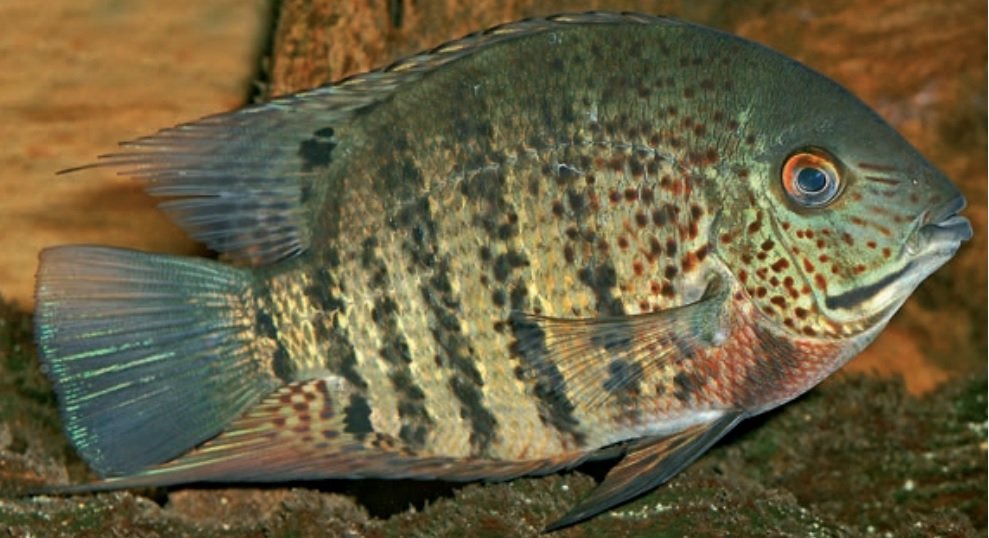
According to García-Dávila et al. (2018), its defining trait is a dark gray to greenish body, traversed by up to eight dark vertical bands from the back to the belly. A characteristic dark blotch joins the posterior part of the dorsal and anal fins, extending vertically over the base of the caudal peduncle. Its distribution spans from the Ucayali River in Peru to the Solimões in Brazil (Favero et al., 2010).
Heros liberifer
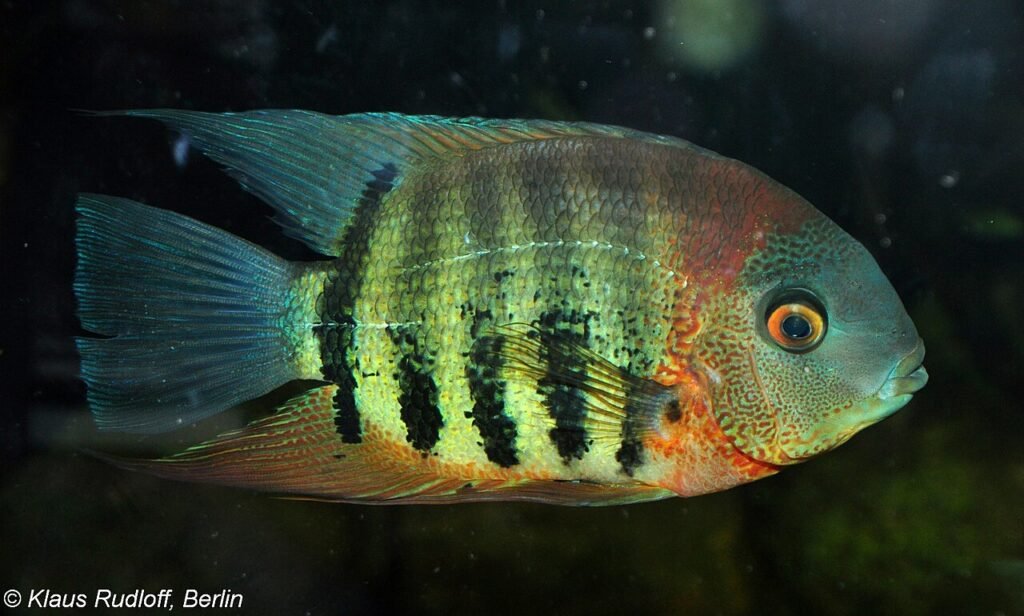
Staeck and Schindler (2015) report that this species is distinguished by a unique pattern of horizontal series of small, bright red dots on the lower half of the flanks and a deep red iris. Adults exhibit a defined caudal spot (bar 1 separated from bar 2). Staeck (2015) also documented natural variations, such as specimens with additional vertical stripes resulting from the splitting of the central bars.
Heros severus
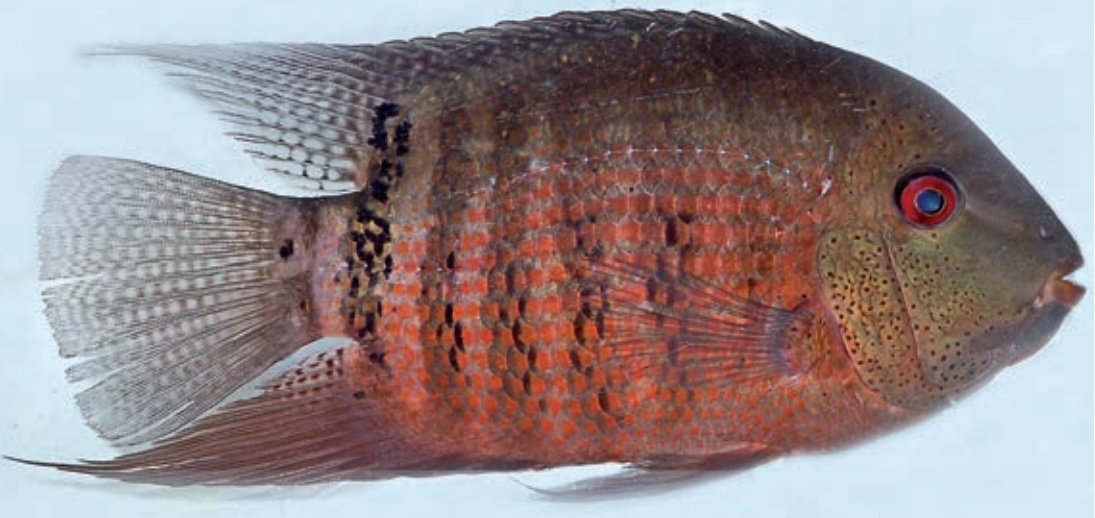
Adult specimens exhibit a uniform pale yellow body with a greenish head and a dark red chest. They present fine maroon spotting on the gill cover and the lower region of the head (Staeck & Schindler, 2015). For their part, Mendoza et al. (2023) highlight that they lack a spot on the caudal peduncle (bars 1 and 2 are fused) and possess comparatively thick lips. In the juvenile stage, all bars are typically clearly visible.
Stay Always Informed
Join our communities to instantly receive the most important news, reports, and analysis from the aquaculture industry.
Common Varieties and Modern Colorations: From Wild Phenotype to Chromatic Explosion
Artificial selection and selective breeding have transformed the Severum, evolving it from a fish of subtle tones into a true display of color in the contemporary aquarium. Below, we break down the most iconic variants available on the market.
Catalog of Popular Varieties
| Commercial Variety | Lineage of Origin | Distinctive Attributes |
| Green Severum | Heros efasciatus | Ancestral coloration with intense black vertical bands. |
| Gold Severum | H. efasciatus mutation | Bright yellow tone; lacks bands, ideal for contrast. |
| Red Spotted | Artificial selection | Golden base with a red dot pattern across the entire body. |
| Rotkeil (Red Neck) | Heros sp. “Rotkeil” | Fire-red neck and opercular area; high aesthetic demand. |
Analysis of Primary Varieties
Gold Severum
This is undoubtedly the most widespread variety globally. The Gold Severum arises from a xanthic mutation (absence of dark pigmentation) of Heros efasciatus. Its body exhibits a vibrant yellow or pale orange, frequently complemented by reddish spots on the face and fins. Due to its peaceful temperament, it is the ideal specimen to provide a “point of light” in large-volume planted aquariums.
Green Severum
This variant most faithfully preserves the silhouette and character of the wild phenotype. It presents an olive green or grayish color base, with dark vertical bands that intensify or fade depending on the specimen’s mood. Adult males typically develop an intricate and elegant pattern of red or brown dots in the opercular (cheek) area.
Red Spotted and Red Shoulder (Rotkeil) Severums
The Red Spotted Severum is an evolution of the Gold variety, meticulously selected to enhance red pigmentation, creating a stippled effect across its entire surface. On the other hand, the Red Shoulder (or Heros sp. “Rotkeil”) is considered one of the jewels of the hobby. It is distinguished by an intense red patch located behind the gills and over the humeral zone, which masterfully contrasts with a bluish-green body.
Special Varieties: Blue and Turquoise Severums
Although less frequent, Electric Blue or Turquoise Severum lines exist. These varieties, the result of specific crosses, possess an exceptional metallic sheen that requires highly stable water conditions to maintain its saturation and splendor.
Care and Tank Setup
Maintaining a Severum does not present an extreme challenge, but their size and longevity (they can live over 10 years) demand meticulous environmental planning. A well-designed aquarium is not merely an aesthetic choice, but the foundation of their immunological health.
The Critical Factor: Volume and Dimensions
Despite their “gentle giant” moniker, Heros specimens easily reach 20–25 cm (8–10 inches) in length. Insufficient space leads to chronic stress, stunted growth, and dangerous nitrate spikes.
- Minimum Tank (Single Specimen): 200 liters (approx. 55 gallons).
- Recommended Tank (Pair or Community): 300 to 400 liters (75 to 100 gallons).
Water Parameters: Recreating the Amazonian Ecosystem
Although captive-bred specimens show astonishing adaptability, we must emulate the soft, acidic conditions of the Amazon for their full development. Favero et al. (2010) documented that H. efasciatus thrives in thermal ranges from 24°C to 32°C.
Table: Physicochemical Water Parameters for the Severum Cichlid
| Parameter | Optimal Range / Reference Value | Technical Observations |
| Tank Volume | Min. 200 liters per specimen | |
| Temperature | 24°C – 29°C | Up to 28.5°C for fry (Bardales & Panduro, 2014). |
| pH | 6.0 – 7.5 | A slightly acidic environment is recommended. |
| Hardness (GH) | 4 – 10 dH | Reflects soft Amazonian water conditions. |
| Nitrates () | < 20 mg/L | Requires weekly water changes of 30% to 50%. |
Aquascaping and the Flora Challenge
The Severum is a natural “architect” that often reshapes its environment by digging in the substrate, especially during the breeding season. Additionally, it has a marked herbivorous inclination.
- Substrate: Fine sand or rounded gravel is recommended to protect their delicate mouth filaments while digging.
- Botany and Tannins: According to Dittrich (2010), adding driftwood (oak, beech, or bogwood) and dried leaves recreates a natural landscape and releases beneficial tannins.
- The Terminalia catappa Effect: The use of Indian Almond leaf extract is highly recommended. Urueña et al. (2014) demonstrated that its use reduces territorial aggression by 40%, acting as a relaxing agent that facilitates adaptation and reproductive success.
- Plants: Due to their diet, only leathery species such as Anubias or Microsorum (Java Fern) attached to hardscape will thrive. Soft-leaved plants will inevitably become part of the menu.
Lighting and Photoperiod
Regarding early development, Veras et al. (2016) concluded that manipulating the photoperiod does not significantly alter the growth or survival of the larvae. The technical recommendation is to maintain light cycles that faithfully mimic their natural environment to regulate their biological rhythms.
Technical Feeding and Nutrition: Natural Frugivory in the Genus Heros
One of the most frequently overlooked facts in commercial literature is the Severum’s biological diet. While many cichlids are strict predators, Heros species are seasonal frugivores. In their natural habitat, during the flooding of the forest (Igapó), they consume seeds, fruits, and flowers. Favero et al. (2010) point out that Heros efasciatus is a predominantly frugivorous omnivore, although Lins (2011) highlights a carnivorous/insectivorous preference toward groups such as Hemiptera and Coleoptera.
Nutrition of Heros efasciatus
For successful fry rearing of Heros efasciatus, live food is a determining factor. Bardales and Panduro (2014) demonstrated that the use of Chironomus sp. offers superior growth compared to balanced diets or Moina sp., underlining the importance of live protein in the early stages.
Nutritional Requirements in Heros severus
The demand for Crude Protein (CP) in Heros severus evolves with its growth (de Sousa et al., 2021):
- Fry: 37.7% – 43.55% CP.
- Juveniles: 34.74% – 38.78% CP.
- Lipids: 10% fish oil is recommended to maximize development (Vesal et al., 2016).
Larval Management and the “Point of No Return” (PNR)
Initial survival depends on immediate feeding with live food. Santos et al. (2025) establish that the effects of starvation in Heros severus are lethal and irreversible by day 6 (50% mortality) and total by day 8. For rational cultivation, the following strategies are suggested:
- Frequency: 3 to 4 feedings daily for post-larvae and 2 for juveniles (Paixão et al., 2019; Eiras et al., 2019).
- Ration: 250-400 Artemia nauplii or Moina sp. per larva per day (Abe et al., 2016; Eiras et al., 2022).
- Weaning: The optimal time to transition from live food (Moina minuta) to an inert diet is at 15 days (Eiras et al., 2024).
Innovation and Coloration
- Supplementation: The microalga Dunaliella salina (100-200 mg/kg) strengthens the immune system and enhances pigmentation (Alishahi et al., 2014).
- Biofloc Systems: Additives such as beets and carrots can be used to enrich color naturally (Castro-Castellón et al., 2023).
- Cost Optimization: Partially replacing Artemia franciscana with Moina minuta (75/25 ratio) maintains performance while reducing production costs (Eiras et al., 2023).
| Stage | Recommended Strategy | Author |
| Fry | 6% of body biomass / 2 meals per day | Abe et al. (2022) |
| Post-larvae | 10 days of Artemia + 3-day transition | Campelo et al. (2019) |
| Broodstock | Enriched Artemia to improve offspring quality | Mousavi-Sabet (2024) |
Optimal Nutrition in Captivity: Strategies for Health and Color
For a specimen of the genus Heros to exhibit vibrant colors and robust development, its aquarium diet must be diverse and balanced. Deficient nutrition not only dulls their coloration but also weakens their immune system against common pathogens.
Pillars of a Balanced Diet
To replicate their omnivorous and frugivorous nature, the following feeding structure is recommended:
- Nutritional Base: High-quality pellets or granules specifically formulated for omnivorous American cichlids.
- Vegetable Intake (Crucial): Boiled peas (shelled), blanched spinach, zucchini, and spirulina. For varieties such as Heros sp. “Rotkeil,” occasional pieces of fruit like banana or papaya can be offered, emulating their diet in the flooded forest.
- Quality Protein: Supplements of frozen or live food such as Artemia, krill, or mosquito larvae. Health Note: It is vital to avoid excess saturated fats (such as beef heart) to prevent metabolic diseases and Hole-in-the-Head syndrome (Hexamita).
Innovation in Coloration: The Use of Carotenoids
To maximize the ornamental value of varieties like the Gold Severum (Heros efasciatus), science has identified highly effective natural additives. According to the study by Park et al. (2024), professional results can be achieved through:
| Suggested Additive | Optimal Concentration | Effect on the Fish |
| Marigold Extract (MG) | 1.0% in diet | Enhances yellow-blue tones and antioxidant capacity. |
| Carophyll Red (CR) | 0.5% in diet | Drastically intensifies red and green tones. |
Pro-Tip: Including spirulina in the daily diet not only strengthens the immune system but also acts as a natural enhancer for green and yellow pigments, providing a healthy metallic sheen to the scales.
Behavior and Compatibility: The Art of Coexistence
The Severum is, par excellence, the ideal companion for large-scale American cichlid community tanks. Its temperament has earned it a privileged spot in exhibition fishkeeping.
Are They Truly “Gentle Giants”?
Compared to highly aggressive species like the Oscar (Astronotus ocellatus) or the Green Terror (Andinoacara rivulatus), the Severum is notably more peaceful. However, they retain the territorial instincts typical of cichlids, especially during pair formation. Their interaction is usually limited to visual displays of power and minor chasing, which rarely result in physical harm if the aquarium volume is adequate.
Tank Mate Guide
The golden rule is to pair them with species of similar size, robust build, and a temperament ranging from peaceful to semi-aggressive.
Compatible Cichlids
- Conspecifics: They are highly social with each other; keeping them in pairs or large colonies is recommended.
- South Americans: Geophagus, Uaru, Angelfish (Pterophyllum scalare), Mesonauta festivus, and various Acara varieties.
- Central Americans: Thorichthys meeki (Firemouth Cichlid) and the Rainbow Cichlid.
- Note on Giants: They can coexist with Oscars, provided there is enough space to define territories.
Schooling and Bottom-Dwelling Fish
- Robust Schooling Fish: Silver Dollars (Metynnis argenteus) are their most recommended companions. Large Tetras and Black Skirt Tetras also work well.
- Cleaners and Catfish: Large Plecos (Pterygoplichthys gibbiceps), Ancistrus, Corydoras (in non-aggressive setups), and catfish such as Synodontis ocellifer.
Safety and Management Protocols
To ensure harmony in a complex system, consider the following technical warnings:
- The Risk of Predation: Avoid small fish (such as Neon Tetras) or ornamental invertebrates. For an adult Severum, any organism that fits in its mouth is potential food.
- Introduction Hierarchy: If planning a mixed tank, the order of entry is vital. It is suggested to introduce Angelfish first, followed by Severums, and finally Oscars. This allows less aggressive species to establish territories first.
- Early Socialization: Specimens raised together from juvenile stages show significantly higher tolerance toward tank mates than late-introduced adults.
- Aggression Spikes: During spawning, territoriality intensifies. If breeding is the primary goal, the use of dedicated breeding tanks is recommended.
Technical Warning: Adult Severums may act as nocturnal predators toward smaller non-cichlid species. Maintain close monitoring during dark phases if the accompanying school consists of young fish.
The Great Breeding Debate: Mouthbrooders or Substrate Spawners?
This is where classical literature and modern science collide, often causing confusion among hobbyists. The key to understanding Severum reproduction lies in precise species identification: while Heros efasciatus and the true Heros severus are substrate spawners, Heros liberifer stands out as a larvophilous mouthbrooder.
Reproduction of Heros efasciatus (The Commercial Standard)
According to Favero et al. (2010), females reach sexual maturity at 97 mm. This species exhibits exemplary biparental care, protecting clutches that often exceed 1,000 eggs.
- Pair Formation: It is recommended to acquire a group of 5 to 6 juveniles to allow for natural pairing.
- Spawning Stimulation: Increasing the temperature to 28°C and performing water changes with lower hardness simulates the rainy season, triggering reproductive instincts.
- The Spawn: After meticulously cleaning a flat surface (rock or driftwood), the female deposits the eggs, which are fiercely defended by both parents.
Reproductive Biology of Heros severus
Although historically attributed with mouthbrooding, studies such as Urueña et al. (2014) clarify that Heros severus spawns on both vertical and horizontal substrates. Their use of the mouth is a strategy for protection and transport, not embryonic incubation.
- Social Dynamics: A curious tendency has been documented where dominant pairs “kidnap” the fry of other conspecifics, forming massive schools of up to 2,000 fry (Urueña et al., 2014).
- Parental Care: It is a dioecious, oviparous species with external fertilization. Brood protection can extend up to 6 weeks (Mendoza et al., 2023).
Fry and Post-larval Development
Technical management of the offspring is vital to ensure survival:
- Stocking Density: A density of 5 larvae per liter is recommended during the first 15 days (Abe et al., 2016).
- Salinity: Although they are freshwater fish, Eiras et al. (2019) observed that a salinity of 2 g/L optimizes the overall growth of Heros severus post-larvae, though survival is higher in pure water.
Critical Differences: The Origin of the Myth
The historical confusion stems from the fact that many reports of “mouthbrooding Severums” actually referred to Heros liberifer. It is fundamental for the aquarist to distinguish that the most common specimens (Heros efasciatus) are substrate spawners requiring clean surfaces and a quiet environment; stress in community tanks can lead them to consume their own clutch.
Spawning Stimulation and Brood Care
To successfully induce the reproductive cycle, the most effective strategy consists of subtly raising the thermostat temperature and performing water changes with soft water. These variations emulate the physicochemical conditions of Amazonian rainfall, triggering biological spawning signals.
After hatching, the parents exhibit astonishing behavior: they carefully move the larvae into small depressions previously excavated in the substrate. Observing this parental care is one of the greatest spectacles in fishkeeping. However, it is imperative to monitor the aquarium if it is a community setup; the instinctive protection of the fry will significantly increase the aggressiveness of the Heros genus, raising territorial tension with the rest of the inhabitants.
Health and Disease Prevention: Management and Biosecurity Protocols
As with other large-scale Amazonian cichlids, the genus Heros is vulnerable to pathologies closely linked to water chemical stability and nutritional balance. Prevention, through rigorous observation, remains the aquarist’s most effective tool.
Hole-in-the-Head Syndrome (HITH)
This pathology is frequently caused by the protozoan Hexamita and is exacerbated by vitamin deficiencies or persistently elevated nitrate levels. It manifests as sensory erosions in the cephalic region.
- Treatment: Immediate dietary improvement (vitamin supplementation), optimization of water changes, and, in severe cases, pharmacological treatment with metronidazole under supervision.
Parasitic Pathologies and Quarantine
Specimens are susceptible to nematodes and specific ectoparasites such as Gussevia and Clinostomum.
- Suggested Protocol: It is imperative to establish a 30-day quarantine for new specimens. During this period, fecal consistency and feeding vigor must be monitored before introduction into the main tank.
Skeletal Deformities and Genetics
The health of the breeding stock is a determining factor for the offspring. Rahmati-Holasoo et al. (2013) have documented cases of kyphosis and lordosis (deformities in vertebrae V14 to V18) directly linked to inbreeding. Breeding between close relatives—descendants of the same parent—drastically increases the risk of bone anomalies; therefore, crossing distinct bloodlines is highly recommended.
Safe Anesthesia Protocols
For procedures requiring clinical handling, Dias (2016) determined that eugenol is a highly efficient anesthetic for achieving deep sedation in Heros severus:
| Life Stage | Eugenol Concentration | Procedure Duration |
| Fry | 50 mg/L | Short and Long duration |
| Adults | 50 mg/L | Short procedures |
| Adults | 75 mg/L | Prolonged procedures |
Ecological Impact and Responsible Ownership: An Ethical Commitment
A critical aspect often overlooked in the commercial sector is the inherent environmental risk of keeping large cichlids. Due to their extraordinary robustness and adaptability, the Heros genus possesses high potential as an invasive species if introduced into non-native ecosystems.
The Risk of Introduced Species
In regions such as Florida (USA), established populations of Severums have already been documented, stemming from irresponsible releases by hobbyists who underestimated the fish’s adult size. This phenomenon leads to severe ecological consequences:
- Alteration of Trophic Chains: Disrupting the natural order of local predators and prey.
- Resource Competition: Displacing native species in the struggle for food and nesting sites.
The Responsible Aquarist Protocol
The majesty of a Severum cichlid carries a responsibility that transcends the aquarium. As an ethical owner, under no circumstances should you release a fish into the wild. If maintaining a specimen becomes impossible, the following alternatives are recommended:
- Contact exotic animal shelters or local fishkeeping associations.
- Reach out to specialized stores that operate rehoming or return programs.
- Donate the specimen to educational institutions or public aquaria.
Conclusion: The Severum as an Ambassador of the Amazon
The Severum cichlid transcends the category of a simple ornamental fish, establishing itself as a true ambassador of the Amazon’s biological sophistication. Success in its maintenance lies not only in parameter control but in a deep understanding of its nature: an intelligent organism with complex social structures and unique dietary requirements.
By providing an appropriately sized aquarium, a diet rich in vegetable matter, and a stable ecosystem, the aquarist does more than just ensure the species’ survival; they allow these specimens to thrive for over a decade. In the end, the Severum does not just inhabit a tank; it becomes a long-lived and fascinating companion that rewards dedication with its imposing presence and elegance.
Frequently Asked Questions (FAQ) about the Severum Cichlid
What is the maximum size a Severum reaches?
Specimens of the genus Heros can reach between 20 and 25 centimeters (8 to 10 inches) in length in captivity. Due to this size, it is fundamental to provide large-volume aquariums to prevent stunted growth.
Is the Severum truly a peaceful fish?
They are known as “Gentle Giants” because they are notably less aggressive than other cichlids, such as the Oscar or the Green Terror. However, they remain territorial; their aggression increases significantly during the breeding season or if the aquarium is too small.
What do Severums eat to maintain their bright colors?
Their diet should be omnivorous with a strong plant-based foundation. To enhance red and yellow pigments, it is recommended to provide food rich in carotenoids, such as spirulina, boiled peas, and natural supplements like marigold extract.
Can I keep a Severum in a planted aquarium?
It is a challenge, as they are partially frugivorous and tend to dig. It is only recommended to keep them with hard, leathery-leaved plants such as Anubias or Java Fern, ensuring they are firmly secured to driftwood or rocks.
How can I tell Heros efasciatus and Heros severus apart?
The quickest way is to observe the caudal peduncle: the common Heros efasciatus has a defined dark spot in that area, whereas in the true Heros severus, vertical bands 1 and 2 are typically fused, showing no such spot.
Why does my Severum have small holes in its head?
This is typically a symptom of “Hole-in-the-Head” disease (Hexamita). It is generally caused by a combination of poor water quality (high nitrates) and a vitamin-deficient diet. It is best corrected by improving tank hygiene and optimizing nutrition.
Are they mouthbrooders?
There is a historical confusion regarding this matter. The majority (such as H. efasciatus) are substrate spawners. Only specific species, such as Heros liberifer, are true mouthbrooders. Others use their mouths solely to transport larvae from one nest to another for protection.
References
Abe, H. A., Dias, J. A. R., Reis, R. G. A., Sousa, N. C., Ramos, F. M., & Fujimoto, R. Y. (2016). Manejo alimentar e densidade de estocagem na larvicultura do peixe ornamental amazônico Heros severus. Boletim do Instituto de Pesca, São Paulo, 42(3), 514-522. https://doi.org/10.20950/1678-2305.2016v42n3p514
Abe, H. A., Sousa, C., Guimarães Paixão, P. E., Nogueira Filho, R. M., Abreu Reis, R. G., Silva Bomfim, R. V., & Fujimoto, R. Y. (2022). Growth performance and hematological parameters of banded cichlid Heros severus fed at different feeding rates and feeding frequencies. Journal of Applied Ichthyology, 38(1), 93-100. https://doi.org/10.1111/jai.14283
Alishahi, M., Karamifar, M., Mesbah, M. et al. Hemato-immunological responses of Heros severus fed diets supplemented with different levels of Dunaliella salina. Fish Physiol Biochem 40, 57–65 (2014). https://doi.org/10.1007/s10695-013-9823-5
Bardales Cabanillas, B. B. A., & Panduro-Quiroz, S. J. (2014). Influencia del alimento vivo y balanceado sobre la nutrición de alevinos de Severum corbata roja, Heros efasciatus Heckel, 1840 (Pisces – Cichlidae) en ambientes controlados [Tesis para optar el título profesional de Biólogo Acuicultor, Universidad Nacional de la Amazonía Peruana]
Campelo, D. A. V., Silva, I. C., Marques, M. H. C., Eiras, B. J. C. F., Brabo, M. F., de Moura, L. B., & Veras, G. C. (2019). Estratégias alimentares na larvicultura do peixe ornamental amazônico acará-severo (Heros severus) (Heckel, 1840). Arq. Bras. Med. Vet. Zootec., 71(5), 1601-1608
Castro-Castellón, Andrés Elías, Monroy-Dosta, María del Carmen, Castro-Mejía, Jorge, Castro-Mejía, Germán, López-García, Evelyn, & Martínez-Meingüer, Arnulfo Misael. (2023). Evaluation of growth development and pigmentation of Heros severus cultured in a biofloc system with enriched pigment diets. Latin american journal of aquatic research, 51(1), 88-97. https://dx.doi.org/10.3856/vol51-issue1-fulltext-2935
Chumacero, G. M., Zubieta, J. P. Z., & Yunoki, T. 2010. Lista actualizada y distribución de los peces en las tierras bajas de la Amazonía Boliviana. Rev. Bol. Ecol. y Cons. Amb. 28: 73-97.
de Sousa, J. A., Bazilio, D. B. B., da Costa, R. A. A. M., Brabo, M. F., Campelo, D. A. V., Nunes, Z. M. P., & Veras, G. C. (2021). Protein requirement in the diet of Heros severus (Heckel, 1840): An Amazonian ornamental fish. Journal of the World Aquaculture Society, 52, 482–495. https://doi.org/10.1111/jwas.12764
DIAS, Bruno Cesar Brito. Utilização do eugenol como anestésico para o acará severo Heros severus (Heckel, 1840). 2016. 71 f. Dissertação (Mestrado) – Universidade Federal do Pará, Núcleo de Ciências Agrárias e Desenvolvimento Rural, Empresa Brasileira de Pesquisa Agropecuária, Universidade Federal Rural da Amazônia, Belém, 2016. Programa de Pós-Graduação em Ciência Animal.
Dittrich, P. 2010. Heros severus Inirida Rot “Eine schöne Farbvariante des maulbrütenden Augenfleckbuntbarsches. DCG-Informationen, 44(9), 310-314.
Eiras, B. J. C. F., Veras, G. C., Alves, A. X., & da Costa, R. M. (2019). Effect of artificial seawater and feeding frequency on the larval culture of freshwater Amazonian ornamental fish banded cichlid Heros severus (Heckel, 1840) and angelfish Pterophyllum scalare (Schultze, 1823). Spanish Journal of Agricultural Research, 17(2), e0604. https://doi.org/10.5424/sjar/2019172-14645
Eiras, B. J. C. F., Campelo, D. A. V., De Moura, L. B., De Sousa, L. M., Nunes, I. S., De Oliveira, L. C. C., Magalhães, A., & Da Costa, R. M. (2022). Feeding rate and frequency during the first feeding of angelfish (Pterophyllum scalare – Schultze, 1823) and severum (Heros severus – Heckel, 1840) with Moina sp. Aquaculture, 553, 738106. https://doi.org/10.1016/j.aquaculture.2022.738106
Eiras, B. J. C. F., Campelo, D. A. V., de Moura, L. B., de Oliveira, L. C. C., de Sousa, L. M., & da Costa, R. M. (2023). Replacement of Artemia franciscana Nauplii by Moina minuta Neonates as Live Food on the Larviculture of Angelfish (Pterophyllum scalare -Schultze, 1823) and Severum (Heros severus – Heckel, 1840). Aquaculture Research, 2023, Artículo 6118659. https://doi.org/10.1155/2023/6118659
Eiras, B. J. C. F., Campelo, D. A. V., De Moura, L. B., De Oliveira, L. C. C., Gomes Junior, E. D. S., Da Silveira, B. G., & Da Costa, R. M. (2024). Weaning from live food Moina minuta to inert diet during the first feeding of angelfish (Pterophyllum scalare – Schultze, 1823) and severum (Heros severus – Heckel, 1840). Aquaculture Reports, 39, 102485. https://doi.org/10.1016/j.aqrep.2024.102485
Favero, J. M. D., Pompeu, P. D. S., & Prado-Valladares, A. C. (2010). Biologia reprodutiva de Heros efasciatus Heckel, 1840 (Pisces, Cichlidae) na Reserva de Desenvolvimento Sustentável Amanã-AM, visando seu manejo sustentável. Acta Amazônica, 40, 373-380.
García-Dávila, C.; Sánchez, H.; Flores, M.; Mejia, J.; Angulo, C.; Castro-Ruiz, D.; Estivals,G.; García, A.; Vargas, G.; Nolorbe, C.; Núñez, J.; Mariac, C.; Duponchelle, F.; Renno, J.-F. 2018. PECES DE CONSUMO DE LA AMAZONÍA PERUANA. Instituto de Investigaciones de la Amazonía Peruana (IIAP).Iquitos, Perú, 218 pp.
LINS, Paulo Marcelo de Oliveira. Ecomorfologia trófica de Acarichthys heckelii (Müller & Troschel, 1849), Heros efasciatus Heckel, 1840 e Mesonauta insignis (Heckel, 1840) (Perciformes:Cichlidae) nas reservas de desenvolvimento sustentável de Amanã e Mamirauá, Amazônia. 2011. 68 f. Dissertação (Mestrado) – Universidade Federal do Pará, Instituto de Ciências Biológicas, Belém, 2011. Programa de Pós-Graduação em Ecologia Aquática e Pesca.
Mendoza Alfaro, R. E., Luna, S., Rojo Ramos, I., Sánchez-Alejandro, F., & Álvarez González, L. (2023). Especies exóticas de peces ornamentales en México: un extraño enemigo (1.ª ed.). Universidad Nacional Autónoma de México. 270 p. https://doi.org/10.22201/ie.9786073076951e.2023
Mousavi-Sabet, H., & Falahatkar, B. (2024). Effects of enriched Artemia urmiana with polyunsaturated fatty acids and vitamin C on reproductive performance and larval temperature stress resistance of Severum Heros severus. Journal of Applied Aquaculture, 36(4), 687–701. https://doi.org/10.1080/10454438.2023.2294103
Oliveira, L. C. C. D., Costa, L. G. B., Eiras, B. J. C. F., Brabo, M. F., Veras, G. C., De Moura, L. B., Salaro, A. L., & Abreu Vasconcelos Campelo, D. (2020). Feeding strategy induces compensatory growth in Heros severus fingerlings, an Amazonian ornamental fish. Aquaculture Reports, 18, 100436. https://doi.org/10.1016/j.aqrep.2020.100436
Paixão, D. J. M. R., Brabo, M. F., Soares, L. M. O., Campelo, D. A. V., & Veras, G. C. (2019). Optimal feeding frequency for Heros severus (Heckel, 1840), an Amazon ornamental fish. Revista Brasileira de Zootecnia, 48, e20170055. https://doi.org/10.1590/rbz4820170055
Park, J.-J., Bae, J.-S., Lee, C.-W., Yang, C.-Y., Jeong, E.-H., Park, K.-H., Seo, J.-S., Kwon, M.-G., & Lee, J.-H. (2024). Effects of Marigold Extract and Carophyll Red on Growth, Body Color Development, Antioxidant Properties, and Innate Immunity in the Ornamental Fish Golden Severum (Heros efasciatus). Life, 14(12), 1660. https://doi.org/10.3390/life14121660
Rahmati-Holasoo, H., Isfahani, F., Rostami, A., Vajhi, A., & Ebrahimzadeh, H. A. (2013). Skeletal deformities in severum, Heros severus: clinical and. Iranian Journal of Aquatic Animal Health, 1(1), 23-29.
SANTOS, H. L. D., Abe, H. A., Freire, K. M., Santana, F. S. D., Carvalho, A. S., Santos, L. V., … & Fujimoto, R. Y. (2025). Ontogeny and point-of-no-return of Amazon banded cichlid Heros severus larvae. Anais da Academia Brasileira de Ciências, 97(1), e20241087.
Schindler, I. (2015). Zum Problem der Identität von Heros severus Heckel, 1840. DCG-Informationen, 46(5), 116-120.
Staeck, W., & Schindler, I. (2015). Description of a new Heros species (Teleostei, Cichlidae) from the Rio Orinoco drainage and notes on Heros severus Heckel, 1840. Bulletin of Fish Biology, 15, 121-136.
Staeck, W. (2015). Färbung und Zeichnungsmuster als Mittel zur Bestimmung und Unterscheidung von Buntbarscharten: Möglichkeiten und Grenzen. DCG-Informationen, 46(10), 250-255.
Urueña Bermeo, F. R., González Jerez, C. B., Triana Arévalo, F. A., & Linares, Y. A. (2014). Proyecto: Establecimiento de los parámetros comportamentales relacionados con la reproducción e inducción ambiental de la misma en tres especies de cíclidos nativos de la Orinoquia colombiana de alto potencial económico como estrategia para el desarrollo e implementación de paquetes productivos (Informe técnico número 2). ACOLPECES
Vesal, S. E., Mooraki, N., & Vosooghi, A. R. (2016). Effect of dietary Fish oil on growth responses of severum (Heros severus). Aquaculture, Aquarium, Conservation & Legislation, 9(1), 81-90.
Veras, G. C., Paixão, D. J. M. R., Brabo, M. F., Soares, L. M. O., & Sales, A. D. (2016). Influence of photoperiod on growth, uniformity, and survival of larvae of the Amazonian ornamental Heros severus (Heckel, 1840). Revista Brasileira de Zootecnia, 45(7), 422-426. https://doi.org/10.1590/S1806-92902016000700010

Editor at the digital magazine AquaHoy. He holds a degree in Aquaculture Biology from the National University of Santa (UNS) and a Master’s degree in Science and Innovation Management from the Polytechnic University of Valencia, with postgraduate diplomas in Business Innovation and Innovation Management. He possesses extensive experience in the aquaculture and fisheries sector, having led the Fisheries Innovation Unit of the National Program for Innovation in Fisheries and Aquaculture (PNIPA). He has served as a senior consultant in technology watch, an innovation project formulator and advisor, and a lecturer at UNS. He is a member of the Peruvian College of Biologists and was recognized by the World Aquaculture Society (WAS) in 2016 for his contribution to aquaculture.