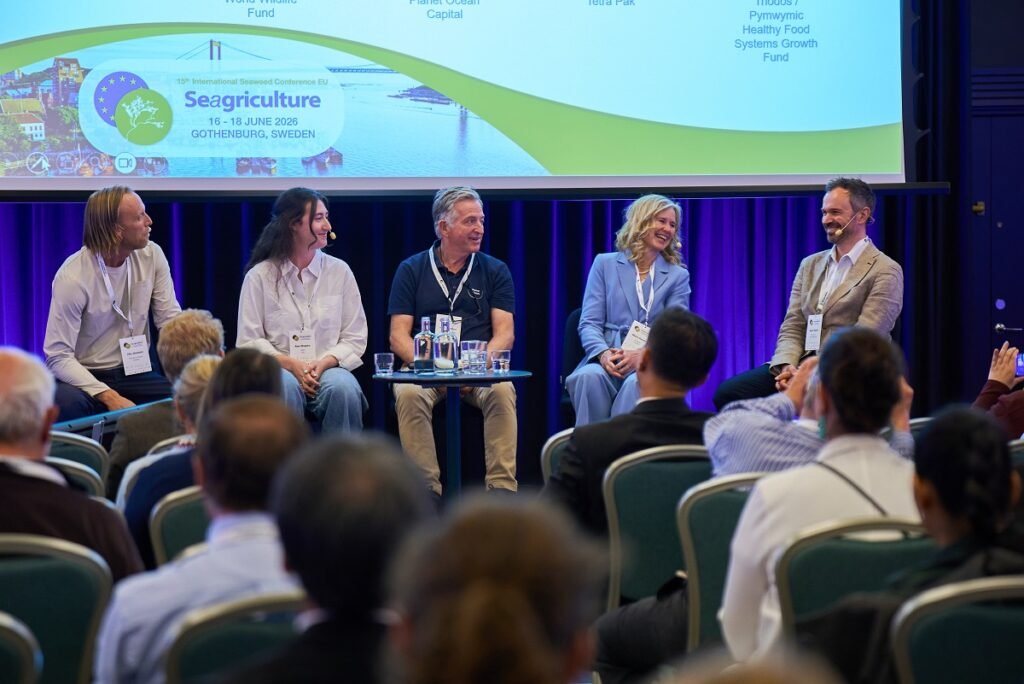
GOTHENBURG, Sweden — Seagriculture EU 2026, one of Europe’s leading conferences for the seaweed industry, successfully welcomed 229 participants from 28 countries to Gothenburg, Sweden, from 16–18 June 2026. Under the core theme “The European seaweed industry in transition: survival, scale and real impact,” the high-profile event brought together seaweed producers, researchers, investors, policymakers, technology providers, and innovators from across the global blue economy.
Moving from Promise to Practice
The international conference explored how the European seaweed sector can effectively move from promise to practice in a rapidly evolving market landscape. This transition is currently shaped by critical climate challenges, changing regulations, and increasing commercial expectations. Through keynote presentations, panel discussions, plenary sessions, and strategic networking activities, delegates addressed the major opportunities and obstacles facing the industry as it seeks to scale sustainably while creating measurable environmental and economic impact.
The conference opened with official welcome addresses from Prof. Katharina Riehn, Vice President at DLG; Margareta Broang, Deputy Lord Mayor of the City of Gothenburg; Renée Bengtsson, President of Region Västra Götaland; and Christer Olausson, CEO of Nordic SeaFarm.
A major highlight of the event was the keynote presentation delivered by Robert Carleke, Innovation Ventures Manager at Inter IKEA Group. Carleke shared how IKEA is actively exploring seaweed-based materials and their potential applications “from ocean to home”. Other keynote presentations addressed essential topics such as financing the European seaweed industry, professionalizing the sector, and the growing role of seaweed in climate mitigation and blue carbon initiatives.
“This year’s conference showed that the European seaweed industry is continuing to grow and mature,” said Kuno Jacobs, Managing Director at DLG Markets Benelux, organiser of Seagriculture EU 2026. “It was great to see so many stakeholders openly sharing experiences, discussing challenges, and exploring opportunities for collaboration and growth.”
Strategic Insights, Innovation, and Industrial Scaling
Across seven specialized thematic sessions, expert speakers addressed critical topics including legislation, food systems, selective breeding, biostimulants, biomaterials, financing models, biodiversity, carbon capture, and industrial scaling. Discussions highlighted both the progress achieved in recent years and the practical realities of building resilient, commercially viable seaweed businesses.
A particularly engaging session, titled “Epic fails and honest tales: Mistakes that made us,” encouraged industry leaders to openly share lessons learned from setbacks and challenges encountered while developing seaweed ventures and research projects. Delegates highly praised the session for its transparency and practical insights into innovation and entrepreneurship within the sector.
The popular Seaweed Elevator Pitches returned once again, providing researchers, startups, and industry professionals with an exclusive opportunity to present innovative projects and ideas in five-minute presentations. Topics ranged from food safety and processing technologies to biodiversity solutions and blue biorefinery development.
Field Exploration and Global Networking
In addition to the core conference programme, participants joined a full-day site visit hosted by Nordic SeaFarm. The technical excursion included a boat visit to their seaweed cultivation site in the beautiful Grebbestad archipelago and an informative tour of the Tjärnö Marine Laboratory. This laboratory is where Nordic SeaFarm was originally founded and where experts from the University of Gothenburg’s Department of Marine Sciences shared deep insights into their current seaweed research.
The event also featured a dynamic trade show with a record-breaking 19 exhibitors showcasing the latest technologies, cultivation systems, processing solutions, and services for the seaweed industry. Furthermore, more than 50 poster presentations highlighted scientific research and industry projects, marking the largest poster contribution in the history of Seagriculture EU.
Mantente siempre informado
Stay Informed
Únete a nuestras comunidades para recibir al instante las noticias, informes y análisis más importantes del sector acuícola.
Join our communities to get instant access to the most important news, reports, and analysis from the aquaculture industry.
Strategic networking remained a vital part of the event, with participants connecting throughout the conference and during the official networking dinner at Gothenburg’s iconic Feskekörka, the historic “Fish Church”. The unique venue provided an ideal setting for informal discussions and international exchange within the seaweed community.
Ultimately, Seagriculture EU continues to serve as a key platform for connecting stakeholders across the entire seaweed value chain and advancing the development of a sustainable global seaweed economy. The next edition will be Seagriculture EU 2027, taking place in Ostend, Belgium, from 15 – 17 June 2027.

Editor at the digital magazine AquaHoy. He holds a degree in Aquaculture Biology from the National University of Santa (UNS) and a Master’s degree in Science and Innovation Management from the Polytechnic University of Valencia, with postgraduate diplomas in Business Innovation and Innovation Management. He possesses extensive experience in the aquaculture and fisheries sector, having led the Fisheries Innovation Unit of the National Program for Innovation in Fisheries and Aquaculture (PNIPA). He has served as a senior consultant in technology watch, an innovation project formulator and advisor, and a lecturer at UNS. He is a member of the Peruvian College of Biologists and was recognized by the World Aquaculture Society (WAS) in 2016 for his contribution to aquaculture.