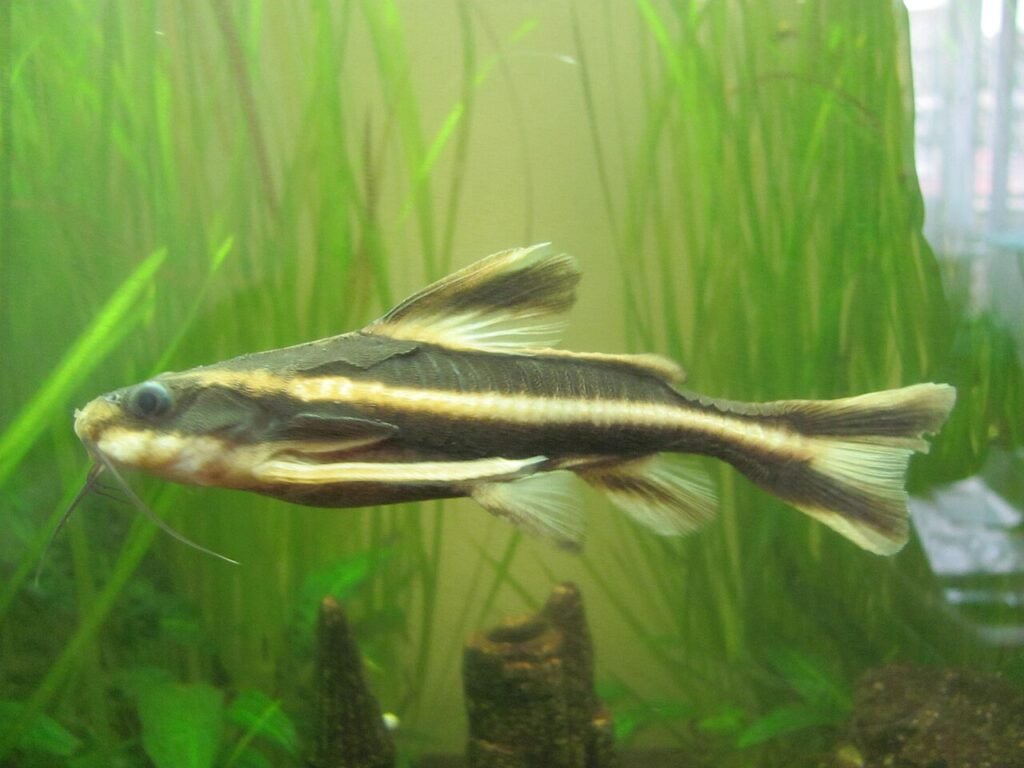
The Raphael Catfish (Platydoras armatulus) stands out among South American siluriforms due to its remarkable longevity—frequently exceeding 20 years—and its distinctive armor of bony plates. Although often mislabeled in the trade as P. costatus, taxonomic evidence confirms that the vast majority of specimens in the aquarium hobby actually belong to the species armatulus.
Far from a conventional pet, the Raphael is a prehistoric survivor. Technically dubbed the “talking catfish” due to its capacity for stridulation—producing sound by rubbing its spines—this specimen represents one of the longest-term commitments in modern fishkeeping. In this guide, we demystify the inaccuracies found at retail points and detail the keys to successfully maintaining this robust Amazonian inhabitant.
- 1 Key Takeaways: Essential Facts About the Raphael Catfish
- 2 The Taxonomic Reality: Platydoras costatus or P. armatulus?
- 3 Physical Characteristics, Longevity, and Morphology of the Raphael Catfish
- 4 Habitat Requirements: Technical Specifications and Water Parameters
- 5 Habitat Configuration: The Ideal Setup for the Raphael
- 6 The “Invisible Fish” Phenomenon: Behavior and True Ethology
- 7 Feeding and Diet: Beyond the “Bottom-Cleaner” Myth
- 8 Compatibility and Tankmates
- 9 The Acoustics of the “Talking Catfish”: Sound Mechanisms and Communication
- 10 Health and Extreme Longevity: The Aquarist’s Dilemma
- 11 Conclusion: Is the Raphael Catfish the Ideal Inhabitant for Your Aquarium?
-
12
Frequently Asked Questions (FAQ)
- 12.1 Why does my Raphael Catfish never leave its cave?
- 12.2 Do Raphael Catfish eat snails?
- 12.3 How can I tell if my Raphael Catfish is pregnant?
- 12.4 How much does a Raphael Catfish cost?
- 12.5 Can they live alone, or do they need to be in a group?
- 12.6 Why is my Raphael Catfish making noises?
- 12.7 Is it normal for my Raphael Catfish to have a very bloated belly?
- 12.8 Which fish should I NOT keep with a Raphael Catfish?
- 12.9 How long can a Raphael Catfish survive out of water?
- 13 References
- 14 Entradas relacionadas:
Key Takeaways: Essential Facts About the Raphael Catfish
- True Taxonomic Identity: Frequently marketed as P. costatus, 95% of hobbyist specimens are actually Platydoras armatulus, a species native to the Amazon and Orinoco basins.
- Long-Term Commitment: One of the longest-lived species in the hobby; with optimal care and controlled nitrate levels, they can easily surpass 25 or even 30 years of age.
- The “Talking Fish” and its Acoustics: Possesses the unique ability to emit audible sounds through two mechanisms: stridulation (friction of pectoral spines) and drumming (vibrating the swim bladder via an elastic spring mechanism).
- Ethology and the “Invisible Fish” Phenomenon: A strictly nocturnal and lucifugous (light-shunning) species. Its well-being depends on hides where it can experience thigmotaxis (physical contact with its surroundings), making it rarely visible during daylight hours.
- Opportunistic Predator: Despite its peaceful temperament, it is unsuitable for cohabitation with fish smaller than 4-5 cm (such as Neons or Guppies), as its mouth is large enough to swallow them while they sleep.
The Taxonomic Reality: Platydoras costatus or P. armatulus?
The vast majority of specimens marketed as “striped Raphael catfish” belong to the species Platydoras armatulus, native to the Amazon and Orinoco basins. The true Platydoras costatus is a rarity in the aquarium hobby, geographically restricted to the Guianas and Suriname. The primary morphological difference lies in their striping patterns, which are less extensive in the cephalic region of P. costatus.
According to Maximum Likelihood molecular analyses by Hernández (2012), it has been demonstrated that P. armatulus maintains a close phylogenetic relationship with P. costatus, explaining the historical confusion.
Systemic Errors in the Trade
For decades, the name P. costatus served as a taxonomic “catch-all.” However, contemporary studies indicate that 95% of specimens in home aquaria are, in fact, Platydoras armatulus.
| Species | Distinguishing Feature | Distribution |
| P. armatulus | White stripes extending clearly to the snout. | Amazon and Orinoco basins. |
| P. costatus | Stripes break before reaching the top of the head. | Guianas and Suriname (restricted). |
To obtain precise data on water parameters and habitat, aquarists are encouraged to use the scientific name P. armatulus. In this regard, Liu et al. (2016) successfully sequenced the complete mitochondrial genome of this species (family Doradidae), providing a fundamental molecular resource for genetic identification and differentiation from other South American siluriforms.
Taxonomic Profile and Nomenclature
The following details the scientific classification and common names of this fascinating specimen:
- Order: Siluriformes
- Superfamily: Doradoidea
- Family: Doradidae
- Subfamily: Platydoradinae (Clade grouping Platydoras with Centrochir).
- Genus: Platydoras
- Species: Platydoras armatulus
Regional Variations of the Name:
- Spanish: Sierra, bagre hueso, rafles, Dora de raya del Orinoco.
- English: Thorny catfishes or Talking catfishes.
- Portuguese: Cuiú-cuiús, bacus, botoados, armados, or rebecas.
Physical Characteristics, Longevity, and Morphology of the Raphael Catfish
Maximum Size and Development
One of the most frequent inquiries among aquarists is: How large does the Raphael Catfish actually grow? While specimens in their natural habitat have been recorded up to 24 cm, their average size in the controlled environment of a home aquarium typically ranges between 15 and 20 cm (6–8 inches). Considering this growth is fundamental when planning tank volume, as their physical robustness requires ample maneuvering space.
Stay Always Informed
Join our communities to instantly receive the most important news, reports, and analysis from the aquaculture industry.
A Lifespan of Decades: Life Expectancy
If you are seeking a short-lived catfish, the Raphael is not the appropriate choice. Its longevity is staggering: while standard fact sheets often cite an average of 10 to 12 years, documented experience in specialized communities and hobbyist records demonstrates that, with optimal care, they can easily exceed 20 or even 25 years. It is, without a doubt, a long-term commitment.
The “Talking Fish” and Its Biological Armor
As a member of the family Doradidae (armored catfishes), this specimen possesses a series of lateral bony scutes equipped with spines. Its most fascinating feature is its stridulation mechanism: by rubbing its pectoral spines against the shoulder socket, it emits an audible “grunt” or “bark” even out of the water, generally as a defensive signal or in response to stress.
Morphological Analysis
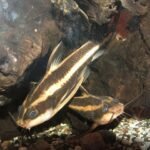
From a technical perspective, Birindelli (2014) highlights that Platydoras armatulus displays a distinctive coloration pattern of a black background with highly conspicuous pale stripes.
Key Fact: A diagnostic feature of the species is the depth of its midlateral scutes. In P. armatulus (as in P. brachylecis and P. hancockii), these scutes are notably deep, with a height exceeding half the body depth at the level of the anal fin.
Habitat Requirements: Technical Specifications and Water Parameters
To ensure the well-being and longevity of Platydoras armatulus, it is imperative to replicate the physicochemical conditions of the Amazon and Orinoco basins. Below are the optimal ranges for its maintenance in captivity:
Physicochemical Parameters Table.
| Parameter | Optimal Range | Technical Notes and Recommendations |
| Temperature | 24°C – 30°C (75°F – 86°F) | Thermophilic species; while they tolerate brief fluctuations, stability is key to their immune system. |
| pH Level | 6.5 – 7.5 | They prefer slightly acidic to neutral environments, emulating waters with controlled organic loads. |
| Hardness (GH) | 5 – 15 dGH | They adapt well to conditions ranging from soft to moderately hard water. |
| Dimensions | 20 – 24 cm | In home environments, growth typically stabilizes at 20 cm depending on tank volume. |
| Longevity | 15 – 25+ years | With a balanced diet and low nitrate levels, there are documented records exceeding 30 years. |
Habitat Configuration: The Ideal Setup for the Raphael
Maintaining Platydoras armatulus in optimal conditions requires careful environmental planning. Due to its size and robustness, the minimum recommended volume for an adult specimen is 200 liters (55 gallons). An undersized tank will not only stunt its growth but also make maintaining water quality significantly more difficult.
Essential Setup Elements:
- Shelter and Security (Thigmotaxis): This species experiences a biological need called thigmotaxis, meaning it feels secure when its body is in physical contact with the walls of its hiding place. It is vital to provide PVC pipes, hollow driftwood, or narrow rock formations where it can wedge itself firmly.
- Fine-Grained Substrate: As a bottom-feeder, it is imperative to use sand or rounded gravel. Sharp-edged substrates act like blades that can erode its sensory barbels, leading to bacterial infections that are difficult to treat.
- Robust Filtration Systems: Given its longevity and the bio-load generated by a fish of this volume, powerful filtration is required. The use of external filters (canister type) is highly recommended to ensure efficient water circulation and high biological media capacity.
The “Invisible Fish” Phenomenon: Behavior and True Ethology
Platydoras armatulus is characterized as a strictly nocturnal and lucifugous species (one that avoids intense light). In its natural environment, its ethology dictates that it must remain hidden in crevices, hollows, or caves during daylight hours, initiating its substrate foraging activity only after sunset or once the aquarium lighting is deactivated.
The Gap Between the Trade and the Home Aquarium
It is common for pet stores to display juvenile specimens in bare tanks where they are easily visible. However, in a properly hardscape aquarium, the Raphael can “disappear” from the owner’s sight for months at a time.
Curious Fact: It is not unusual for many aquarists to assume their specimen has died, only to discover it in perfect health years later during a move or a deep rescape of the tank.
Strategies for Observing an “Invisible Fish”
If you wish to enjoy the presence of this enigmatic siluriform without causing it stress, we recommend the following techniques:
- Actinic Lighting (Moonlight): Install a blue LED system or a dim nocturnal light phase. This will allow you to observe its swimming and exploration patterns under simulated twilight.
- Nocturnal Feeding Protocol: Provide food approximately 15 minutes after turning off the main lights. Its acute sense of smell (chemoreception) will guide it out of its hiding place almost immediately.
Feeding and Diet: Beyond the “Bottom-Cleaner” Myth
The Raphael Catfish is, in essence, an opportunistic omnivore with a marked carnivorous tendency. According to a study by Prata et al. (2025), its diet in the wild is highly adaptive: during high-water periods, it primarily consumes fish fragments and vegetable matter, whereas during low-water periods, its nutrition specializes in scales and bivalve mollusks.
Captive Nutrition and Scientific Supplementation
To replicate this biological vigor, its diet should be based on high-protein sinking pellets, earthworms, frozen food (bloodworms), and occasional vegetable intake. Furthermore, they are exceptional biological controllers for snail infestations.
Recent research has yielded key data for their biological optimization:
- The Vitamin E Factor: Adycha (2025) reported that commercial feed supplemented with vitamin E (1000 mg/kg) significantly optimizes female productivity and improves larval survival rates.
- Accelerated Maturity: For its part, Ihsan (2025) determined that the use of red worms or Chironomus larvae reduces gonadal maturation time from 40 days to just 33 days—a critical advancement for captive breeding programs.
The Danger of Tiny Tankmates
Although classified as a “peaceful” species, its mouth morphology is deceptive. During the night, an adult Raphael can easily suction neon tetras, guppies, or fry that are resting near the substrate.
Golden Rule: Avoid tankmates smaller than 4 cm in size.
Recommendation: Provide protein-rich bottom wafers shortly before turning off the lights to inhibit their instinct to seek out “live snacks.”
Compatibility and Tankmates
It is essential to demystify popular belief: the Raphael Catfish is not suitable for standard, small-scale community aquaria. Its size, nocturnal habits, and longevity demand companions that share similar habitat requirements and cannot be perceived as potential prey.
Ideal Tankmates
Due to its bony armor and peaceful yet robust temperament, the best companions are medium-to-large-sized species:
- Medium-Sized Cichlids: Species such as the Oscar (Astronotus ocellatus), Convict Cichlids, or Severums make excellent tankmates, as they respect Raphael’s space.
- Large Characins: Schools of Buenos Aires Tetras or Congo Tetras are recommended; their size and speed prevent them from being viewed as food.
- Other Siluriforms: It can cohabitate with Plecos (provided the tank volume allows for multiple territories) and larger Corydoras species, although one must ensure that Raphael’s intense nocturnal activity does not stress the latter.
Non-Recommended Species
- Discus Fish: This combination is strictly discouraged. The Raphael may attempt to feed on the dermal mucus of the Discus during the night, leading to severe lesions and stress.
- Micro-fish: Neon Tetras, Guppies, Zebra Danios, and any species measuring less than 4–5 cm should be avoided. As previously mentioned, if it fits in its mouth, it will eventually be consumed during the nocturnal foraging period.
The Acoustics of the “Talking Catfish”: Sound Mechanisms and Communication
The nickname “Talking Catfish” is not a poetic license; it is a scientific description of its ability to emit audible vibrations. According to research by Papes and Ladich (2011), Platydoras armatulus utilizes two sophisticated methods for intraspecific communication or as a stress response:
Stridulation: The Friction Sound
This mechanism generates high-frequency, broadband sounds.
- Mechanics: The fish rubs the ridges of the dorsal process of its pectoral spines against a specialized groove in the pectoral girdle.
- Dynamics: Sound is produced during both the abduction (forward) and adduction (backward) movement of the fins.
- Acoustics: It generates pulses with primary energy levels situated between 0.3 and 1.3 kHz.
Drumming: The “Elastic Spring”
Unlike stridulation, this method produces low-frequency harmonic sounds through the vibration of the swim bladder.
- Mechanics: It utilizes an “elastic spring mechanism,” a thin bony plate that acts as a striker against the bladder.
- Muscular Action: Sonic muscles rapidly contract this spring, causing a resonant vibration.
- Acoustics: It produces sounds with a fundamental frequency between 100 and 150 Hz.
Environmental Impact: The study by Papes and Ladich (2011) highlights that increased water temperature accelerates muscular execution, resulting in higher-pitched and shorter sounds. Interestingly, Zebedin and Ladich (2013) suggest that, in these catfish, a smaller and simpler swim bladder is slightly more efficient for hearing than larger structures.
⚠️ Safety Warning: Handling and Risks
Never attempt to catch a Raphael with your bare hands or with fine-mesh nets. Its lateral and pectoral spines possess serrated edges that become irreversibly anchored to net fibers or skin.
If the fish feels threatened, it will vibrate violently and emit its characteristic “croak.” This defensive behavior often startles the aquarist, which can lead to the accidental dropping of the specimen, causing serious injury to both the keeper and the fish. The use of rigid containers for transport is strongly recommended.
Health and Extreme Longevity: The Aquarist’s Dilemma
The Raphael Catfish is a virtually indestructible specimen under stable water conditions and controlled nitrate levels. Nevertheless, its extraordinary longevity poses a fundamental ethical dilemma: acquiring a Raphael is not an impulsive purchase, but a lifelong commitment that can span over two decades.
Common Pathologies and Prevention
Although it is a robust fish, its health can be compromised by handling errors or overfeeding:
- Handling Infections: The most serious mistake is the use of nets. Attempting to untangle its serrated spines causes micro-tears in its tissues, which often lead to fungal (mycosis) or bacterial infections. Professional recommendation dictates the exclusive use of rigid plastic containers for transport.
- Obesity and Digestive Disorders: Due to its nature as an opportunistic omnivore, it lacks an efficient satiety mechanism. A specimen with an excessively distended belly is prone to chronic digestive complications.
- Parasitic Risks: In the field of advanced research, Virgilio et al. (2022) documented the first report of Trypanosoma parasitizing Platydoras armatulus in the Ipixuna and Juruá rivers (Brazilian Amazon). Morphological variations of the parasite (types A and B) were identified, underscoring the importance of strict quarantine protocols, especially for wild-caught specimens.
Conclusion: Is the Raphael Catfish the Ideal Inhabitant for Your Aquarium?
Platydoras armatulus stands as the perfect companion for aquarists who value resilience, longevity, and simplified maintenance in community tanks with medium-to-large-sized fish. Its efficiency in biological snail control and its role as a scavenger of organic debris on the substrate make it a valuable ally, provided the keeper accepts its ethological nature: it will be an “invisible pet” whose splendor is reserved for the shadows.
If you are prepared to undertake an ethical commitment that can exceed 20 years and have a spacious, well-structured environment, the Raphael Catfish is, unquestionably, one of the most fascinating, robust, and archetypal additions that Amazonian fishkeeping has to offer.
Frequently Asked Questions (FAQ)
Why does my Raphael Catfish never leave its cave?
This behavior is driven by its natural nocturnal instinct. As a lucifugous species, it is biologically programmed to remain hidden during daylight hours to avoid predators and intense light. If a Raphael Catfish is seen wandering out in the open during the day, it could actually be a red flag indicating high stress levels, poor water quality, or a lack of adequate, secure hiding spots where it can experience proper thigmotaxis.
Do Raphael Catfish eat snails?
Yes, they are excellent biological controllers for snail infestations, such as Physa or Planorbis species. Due to their opportunistic carnivorous nature and specialized mouthparts, they can efficiently manage pest populations in the aquarium by foraging for them along the substrate during the night.
How can I tell if my Raphael Catfish is pregnant?
Identifying a “pregnant” (gravid) female is challenging because sexual dimorphism is almost non-existent in this species. Generally, mature females appear noticeably more robust or “plumper” than males when viewed from above. It is important to note that captive breeding is extremely rare and typically requires hormonal induction; therefore, a distended abdomen is more often a sign of a recent hearty meal or a digestive issue rather than impending spawning.
How much does a Raphael Catfish cost?
The price typically ranges between €8 and €25 ($10–$30 USD), depending on the specimen’s size and your geographical region. While they are relatively affordable to purchase, it is vital to remember that the true investment lies in providing a high-volume aquarium and quality filtration capable of supporting them for over two decades.
Can they live alone, or do they need to be in a group?
These catfish are gregarious during their youth, but they tend to become more solitary or territorial regarding their caves as they mature. They can live perfectly well as solitary specimens. However, in a sufficiently large tank (300+ liters), you will observe more natural behaviors if you keep a group of 3 or 4 individuals together, as they often engage in social “clustering” within hides.
Why is my Raphael Catfish making noises?
It is a defense mechanism. If you hear it “barking” or “croaking” inside the aquarium, it likely means another fish is disturbing it in its cave or that you have approached its territory too closely during tank maintenance. This audible sound is produced through stridulation and the vibration of its swim bladder, serving as a clear warning to potential intruders to back away.
Is it normal for my Raphael Catfish to have a very bloated belly?
If the fish has just finished eating, a temporary swelling is normal. However, if it remains constantly bloated, you must reduce its food intake. They are highly prone to obesity and chronic digestive issues if overfed. Because they lack a strong satiety signal, they will often consume far more than they can safely process, leading to long-term health complications.
Which fish should I NOT keep with a Raphael Catfish?
Any fish smaller than 4–5 cm (approx. 2 inches). Neon Tetras, Cardinal Tetras, and the fry of any species will likely be preyed upon. While the Raphael is not an aggressive hunter, it is an opportunistic nocturnal predator; if a smaller fish is resting near the substrate during the night and fits in the Raphael’s mouth, it will eventually be consumed.
How long can a Raphael Catfish survive out of water?
Although they are remarkably hardy and capable of breathing atmospheric air during emergencies, they should not be kept out of the water for more than a few seconds for controlled transfers. While their ability to survive brief exposure is a specialized evolutionary trait, prolonged air exposure causes unnecessary stress and can damage their sensitive gill filaments.
References
Adycha, P. A. (2025). Produktivitas induk ikan platidoras Platydoras armatulus betina dengan pemberian jenis pakan yang berbeda [Laporan Proyek Akhir, Institut Pertanian Bogor].
Birindelli, J. L. (2014). Phylogenetic relationships of the South American Doradoidea (Ostariophysi: Siluriformes). Neotropical Ichthyology, 12(03), 451-564. https://doi.org/10.1590/1982-0224-20120027
HERNÁNDEZ, Maria Angeles Arce. Análise filogenética de Doradidae (Pisces, Siluriformes). 2012. 212 f. Tese (Doutorado em Zoologia) – Pontifícia Universidade Católica do Rio Grande do Sul, Porto Alegre, 2012.
Ihsan, M. F. M. (2025). Percepatan kematangan gonad ikan platidoras Platydoras armatulus jantan dengan pemberian pakan alami yang berbeda [Laporan Proyek Akhir, Institut Pertanian Bogor].
Liu, S., Yao, J., Zhang, J., & Liu, Z. (2016). Next generation sequencing yields the complete mitochondrial genome of the striped raphael catfish, Platydoras armatulus (Siluriformes: Doradidae). Mitochondrial DNA Part A, 27(3), 1963–1964. https://doi.org/10.3109/19401736.2014.971308
Papes S, Ladich F (2011) Effects of Temperature on Sound Production and Auditory Abilities in the Striped Raphael Catfish Platydoras armatulus (Family Doradidae). PLoS ONE 6(10): e26479. https://doi.org/10.1371/journal.pone.0026479
Prata, E. G., Montag, L. F. A., & Freitas, T. M. S. (2025). Dieta e análise isotópica de Platydoras armatulus (Doradidae) no rio Xingu, Amazônia Oriental, Brasil [Resumo]. XXV Encontro Brasileiro de Ictiologia, Palmas, TO.
Virgilio, L.R., Teixeira, G.O., Almeida, L.S. et al. Infection with Trypanosoma spp. in Platydoras armatulus (Siluriformes, Doradidae), in southwestern Amazon, Brazil. J Parasit Dis 46, 607–612 (2022). https://doi.org/10.1007/s12639-022-01485-3
Zebedin A, Ladich F (2013) Does the Hearing Sensitivity in Thorny Catfishes Depend on Swim Bladder Morphology? PLoS ONE 8(6): e67049. https://doi.org/10.1371/journal.pone.0067049

Editor at the digital magazine AquaHoy. He holds a degree in Aquaculture Biology from the National University of Santa (UNS) and a Master’s degree in Science and Innovation Management from the Polytechnic University of Valencia, with postgraduate diplomas in Business Innovation and Innovation Management. He possesses extensive experience in the aquaculture and fisheries sector, having led the Fisheries Innovation Unit of the National Program for Innovation in Fisheries and Aquaculture (PNIPA). He has served as a senior consultant in technology watch, an innovation project formulator and advisor, and a lecturer at UNS. He is a member of the Peruvian College of Biologists and was recognized by the World Aquaculture Society (WAS) in 2016 for his contribution to aquaculture.