The gap between scientific evidence and public opinion is one of the greatest challenges for industries seeking to innovate sustainably. It is often assumed that opposition or misinformation within local communities stems from a mere lack of data. However, a recent international study led by Chile’s Center for Applied Research, CIA-INCAR, in collaboration with the University of Economics Ho Chi Minh City (Vietnam), Beijing Normal University (China), and the Southwestern University of Finance and Economics (China), demonstrates that the issue is deeper and psychological.
The research reveals how various cognitive biases in information processing act as invisible barriers, fueling myths and misconceptions about the aquaculture industry, specifically in mussel farming. Understanding these psychological mechanisms is fundamental for any strategy involving social innovation and science communication.
Takeways
- Heuristics and Mental Shortcuts: Misinformation regarding mussel farming does not stem from a lack of intelligence, but rather from cognitive biases such as availability, confirmation, and anchoring.
- Country-Specific Divergences: Chilean respondents generally demonstrate more accurate beliefs, except when evaluating the ecological benefits of the sector.
- The Tourism Effect: In Vietnam, communities that rely heavily on tourism consistently exhibit a higher prevalence of aquaculture misconceptions.
- The ‘Salmon Effect’ in Chile: Myths surrounding antibiotic use in Chilean mussels are strongly influenced by the public reputation of salmon farming.
- Communication Strategies: Mitigating these misconceptions requires differentiated messaging, verifiable channels, and direct community engagement.
Three Mental Shortcuts That Distort Reality
The empirical analysis, developed by CIA-INCAR researchers Dr. César Salazar, Dr. Marcela Jaime, and Dr. Jorge Dresdner, was based on primary data collected from residents living near key aquaculture zones: the Los Lagos Region in Chile and Quinyang Province in Vietnam. Through questions designed based on expert knowledge, distortions associated with ecological, environmental, nutritional, and health impacts were measured.
The study clearly identified that misconceptions do not stem from a lack of human capability, but rather from three mechanisms of human psychology known as mental shortcuts:
- Availability Bias: This occurs when people assess risk based on how easily they can recall a negative news story or an unusual event, ignoring statistics and historical data demonstrating long-term stability.
- Confirmation Bias: This functions as a cerebral filter that only accepts information supporting the individual’s preexisting beliefs, automatically blocking any new scientific evidence that contradicts them.
- Anchoring Effect: This causes the first piece of information received about the industry to act as a static reference point, which remains immovable even when solid evidence of actual changes in the activity is presented.
The Landscape of Mussel Farming Myths in Chile and Vietnam
Although the data revealed substantial misconceptions in both territories, the behavior of these psychological biases varies markedly based on geographic and socioeconomic contexts.

On average, respondents from the Los Lagos Region in Chile presented more accurate beliefs aligned with technical reality than those in Vietnam, with one notable exception: the perception of the sector’s ecological benefits. In Chile, availability bias is significantly associated with errors in ecological and environmental dimensions, while confirmation bias strongly influences misconceptions about health and nutrition, surpassing the anchoring effect.
Conversely, in Vietnam, confirmation bias stood out as the primary factor behind ecological and environmental misconceptions, as well as the study’s overall index. A highly striking finding in Vietnam was the role of tourism: communities with high economic dependence on this sector consistently showed greater levels of misunderstanding across all analyzed dimensions, suggesting that the coexistence of tourism and aquaculture can exacerbate tensions and widen the gap between facts and public perception.
The ‘Salmon Effect’ and the Misconception Surrounding Antibiotics
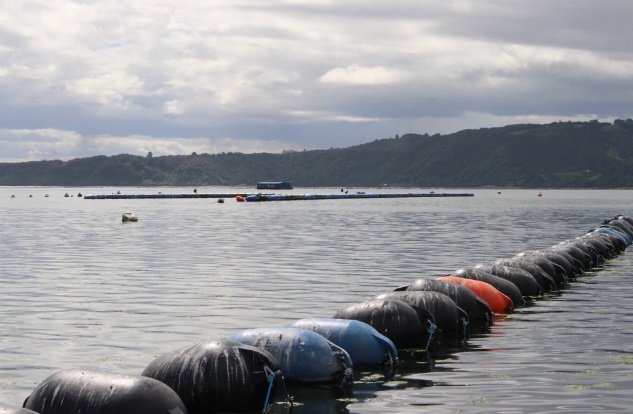
One of the most critical points detected in Chile is the existence of a deeply rooted preexisting belief that the farming of mussels (known locally as choritos) involves the use of antibiotics. The researchers postulate that this could stem from spillover reputational effects or a ‘contagion effect’ originating from salmon farming, another major aquaculture industry that shares marine production areas in the southern part of the country.
This type of confusion demonstrates that the public perception of a sector is not constructed in isolation, but is heavily influenced by the experiences and narratives of neighboring industries.
Mantente siempre informado
Stay Informed
Únete a nuestras comunidades para recibir al instante las noticias, informes y análisis más importantes del sector acuícola.
Join our communities to get instant access to the most important news, reports, and analysis from the aquaculture industry.
Communication Strategies for High-Impact Innovation
To break the cycle of misinformation and mitigate the influence of cognitive biases, the research team emphasizes that merely publishing more generic scientific data is insufficient. It is essential to design differentiated communication strategies tailored to local contexts. In the Chilean scenario, targeted messaging must make an explicit effort to distinguish mussel farming from other activities, emphasizing that mussels are cultivated naturally through biological filtration, without the use of artificial feed or antibiotics. To penetrate the barriers of cognitive biases, the researchers recommend:
- Utilizing high-trust, verifiable channels, such as certification systems, clear labeling, and the transparent disclosure of residue monitoring data.
- Fostering direct community participation through deliberative meetings and Q&A sessions that connect local producers directly with scientists.
- Designing accessible ‘myth-versus-reality’ materials alongside regularly updated local indicators.
By implementing these dynamic tools, sector companies and public institutions can reduce community reliance on negative narratives or isolated events, building solid bridges based on mutual trust and scientific rigor.
Reference (open access)
Salazar, C., Jaime, M., Ho, T., Nie, Z., Jiang, Y., & Dresdner, J. (2026). Do information processing biases drive local community misconceptions of aquaculture? Evidence from harmonized surveys in Chile and Vietnam. Journal of Environmental Management, 405, 129697. https://doi.org/10.1016/j.jenvman.2026.129697

Editor at the digital magazine AquaHoy. He holds a degree in Aquaculture Biology from the National University of Santa (UNS) and a Master’s degree in Science and Innovation Management from the Polytechnic University of Valencia, with postgraduate diplomas in Business Innovation and Innovation Management. He possesses extensive experience in the aquaculture and fisheries sector, having led the Fisheries Innovation Unit of the National Program for Innovation in Fisheries and Aquaculture (PNIPA). He has served as a senior consultant in technology watch, an innovation project formulator and advisor, and a lecturer at UNS. He is a member of the Peruvian College of Biologists and was recognized by the World Aquaculture Society (WAS) in 2016 for his contribution to aquaculture.