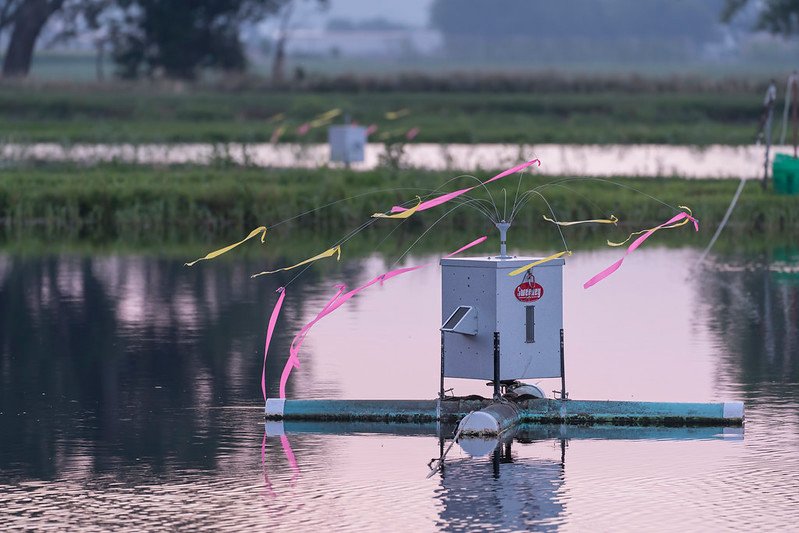
Feeding represents up to 60% of operational costs in intensive shrimp production. Therefore, optimizing nutrient delivery is not only a biological matter but an economic necessity for the industry’s sustainability. A recent study published in Aquaculture Reports explored how the implementation of smart feeding systems allows a shift from traditional methods to high-frequency strategies, transforming the health and performance of the black tiger shrimp (Penaeus monodon).
Key Takeaways
- Accelerated Growth: High-frequency feeding (72 times/day) resulted in significantly higher body weight and growth rates.
- Improved Feed Efficiency: A notable reduction in the Feed Conversion Ratio (FCR) was achieved, indicating better feed utilization.
- More Robust Microbiota: The high-frequency system increased intestinal bacterial diversity, promoting beneficial families such as Rhodobacteraceae.
- Optimized Metabolism: Upregulation was observed in key metabolic pathways related to energy and amino acids, such as the Krebs cycle.
The Challenge of Feeding in Shrimp Farming
The shrimp’s digestive system is small and has limited storage capacity, requiring constant intake of small portions. Traditionally, manual feeding limits frequency to a few times a day, which often leads to feed waste and fluctuations in water quality. To address this, researchers compared two regimes using intelligent automated systems: a low frequency (LF) of 4 times per day and a high frequency (HF) of 72 times per day (every 20 minutes) over 35 days.
Smart System Precision
The research, led by the Marine Science Research Institute of Shandong Province, was conducted in controlled greenhouse facilities. Intelligent automated feeders were used to compare two regimes:
- HF Group (High Frequency): 72 meals per day (one ration every 20 minutes).
- LF Group (Low Frequency): 4 meals per day (traditional schedules).
The study not only measured physical growth but delved into the animal’s biology through 16S rDNA sequencing (for the microbiome) and untargeted metabolomics (for serum analysis).
Impact on Growth and Productive Performance
The results were conclusive. Starting from day 14, shrimp in the high-frequency group showed a significant weight advantage. By the end of the experiment, the HF group reached an average weight of 22.08 g, compared to 13.87 g in the low-frequency group. This improvement is attributed to the fact that small, frequent meals mimic the shrimp’s natural grazing behavior, enhancing nutrient absorption and reducing uneaten feed sediment at the bottom of the pond.
Intestinal Microbiota: A Biological Shield
The gut microbiota is a sensitive indicator of host health. The study revealed that high-frequency feeding increases both the quantity and diversity of bacteria.
- Beneficial Bacteria: The high-frequency group showed an enrichment of Rhodobacteraceae, Lachnospiraceae, and Bacillaceae, which assist in lipid and carbohydrate digestion and maintain the intestinal barrier.
- Pathogen Reduction: In contrast, the low-frequency group was dominated by Vibrionaceae, a family that includes common opportunistic pathogens in shrimp aquaculture.
Metabolism and Energy Production
Through metabolomic analysis, it was identified that the 72-feedings-per-day strategy activates essential metabolic pathways. A significant increase was observed in metabolites such as L-alanine and citric acid. These substances are vital for the tricarboxylic acid (TCA) cycle, or Krebs cycle, which is the cell’s energy engine. Higher activity in these pathways mechanically explains why shrimp grow faster under this regime: they have more energy available for protein synthesis and body development.
Why Constant “Grazing” Works
The shrimp’s digestive tract is short, and its storage capacity is limited. In nature, Penaeus monodon exhibits slow and continuous grazing patterns. The small and frequent ration method emulates this natural behavior, avoiding the feed waste that occurs when large quantities are distributed a few times a day, which often ends up fermenting and promoting harmful bacteria on the pond floor.
General Conclusion
The implementation of smart feeders that allow frequencies of up to 72 daily rations represents a disruptive advancement for Penaeus monodon aquaculture. This strategy not only improves growth rates and reduces costs due to feed waste but also strengthens the animal’s immune health by promoting a more diverse and protective microbiota. Adopting smart feeding technologies to implement high-frequency strategies is a significant step toward precision aquaculture. By aligning feed delivery with shrimp physiology and behavior, a more balanced intestinal ecosystem and a more efficient metabolism are achieved, resulting in higher profitability for the producer.
Mantente siempre informado
Stay Informed
Únete a nuestras comunidades para recibir al instante las noticias, informes y análisis más importantes del sector acuícola.
Join our communities to get instant access to the most important news, reports, and analysis from the aquaculture industry.
Contact
Xiaolu Wang
Marine Science Research Institute of Shandong Province
Qingdao 266104, China
Email: 13335033571@163.com
Reference (open access)
Wang, Y., Fan, Y., Gai, C., Li, L., Li, Y., Wang, S., Xu, L., Fu, R., Diao, J., & Wang, X. (2026). Impacts of intelligent high-frequency feeding on growth, microbiota, and metabolism of Penaeus monodon. Aquaculture Reports, 48, 103509. https://doi.org/10.1016/j.aqrep.2026.103509

Editor at the digital magazine AquaHoy. He holds a degree in Aquaculture Biology from the National University of Santa (UNS) and a Master’s degree in Science and Innovation Management from the Polytechnic University of Valencia, with postgraduate diplomas in Business Innovation and Innovation Management. He possesses extensive experience in the aquaculture and fisheries sector, having led the Fisheries Innovation Unit of the National Program for Innovation in Fisheries and Aquaculture (PNIPA). He has served as a senior consultant in technology watch, an innovation project formulator and advisor, and a lecturer at UNS. He is a member of the Peruvian College of Biologists and was recognized by the World Aquaculture Society (WAS) in 2016 for his contribution to aquaculture.