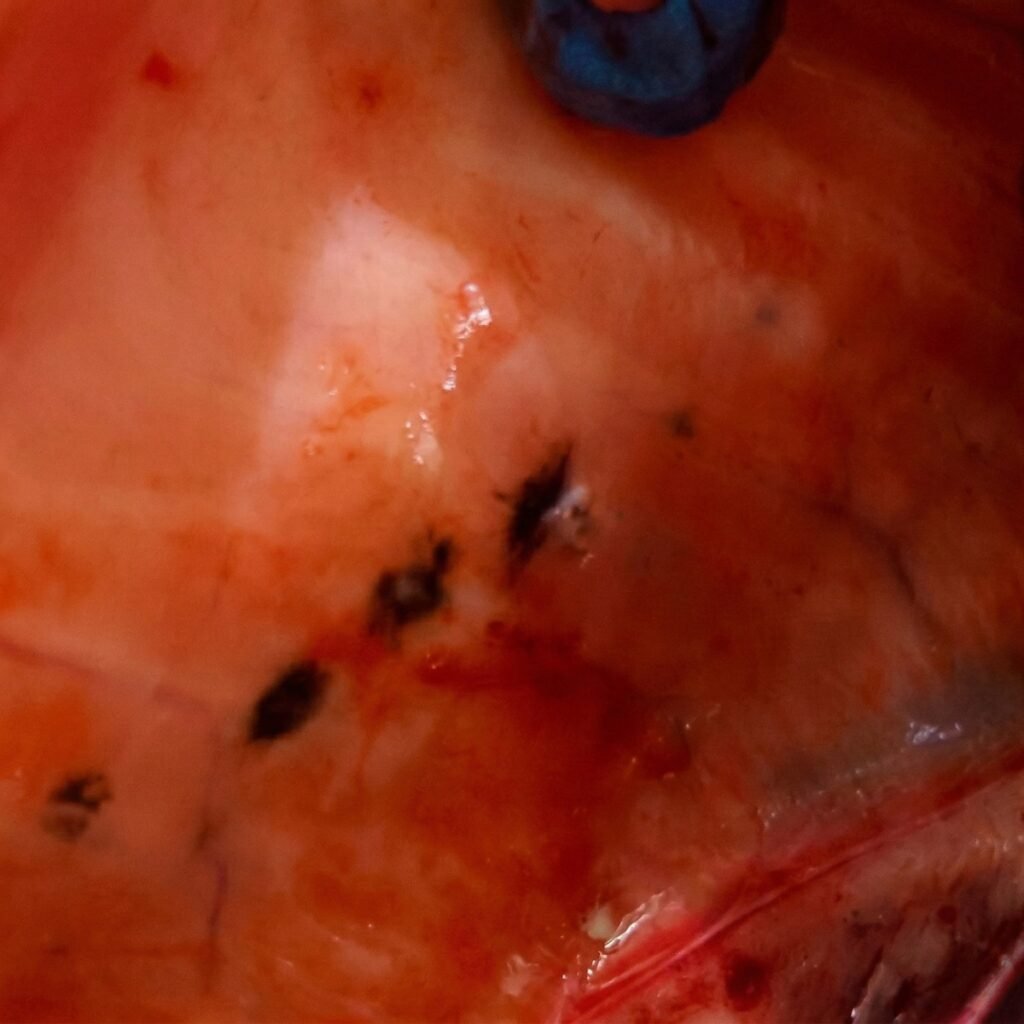
Dark spots in Atlantic salmon muscle, technically known as focal melanosis, have transitioned from an aesthetic mystery to a well-understood biological challenge. A recent study led by scientists from various Chilean institutions has successfully identified the molecular mechanisms underlying these lesions, which significantly compromise the product’s commercial quality.
This phenomenon is more than a visual defect; it is a symptom of complex biological processes within the fish’s tissue. In Chile, the prevalence of these spots affects between 19% and 22% of salmon fillets, directly impacting industry profitability by necessitating tissue trimming or sales at reduced prices.
Key Research Insights
- Focal melanosis is directly linked to oxidative stress, chronic inflammation, and apoptosis (programmed cell death).
- The study identified the activation of molecules such as TNF-α, which trigger the production of reactive oxygen species in muscle cells.
- Increased accumulation of pigments (melanin) was observed as a response to persistent tissue damage.
- The research proposes that intervention during early developmental stages could be pivotal in preventing the occurrence of these lesions.
- The use of molecular tools would allow for the identification of fish with a higher predisposition to developing melanosis.
The Biology Behind Melanosis: More Than Just Color
The research, led by prestigious institutions such as the Pontificia Universidad Católica de Chile, the University of Chile, San Sebastián University, Andrés Bello University, and the INCAR Center, has identified that the affected muscle undergoes a “perfect storm” at the cellular level.
Oxidative Stress and Inflammation: The Drivers of Damage
The study determined that melanosis is not an isolated event but rather the culmination of chronic inflammation. When the fish’s immune system is persistently activated, elevated levels of reactive oxygen species (ROS) are produced. While these molecules fulfill biological functions at normal concentrations, in excess, they act as chemical projectiles that damage muscle cell membranes.
The Role of TNF-α and Cell Death
One of the study’s most disruptive findings is the role of the cytokine TNF-α (Tumor Necrosis Factor-alpha). Through in vitro assays, researchers demonstrated that this molecule activates a signaling cascade leading to apoptosis, or programmed cell death. As muscle cells die, inefficient repair mechanisms are triggered, resulting in the accumulation of melanin—the dark pigment eventually seen by the consumer in the fillet.
A Molecular Perspective

To reach these conclusions, the team employed a cutting-edge integrative biology approach. They utilized RNA-seq (RNA sequencing) techniques to analyze the transcriptome of the affected muscle, comparing it with healthy tissue.
Genomic Findings
- Up-regulated transcripts: 2,084 genes were identified with higher activity in melanosis zones, primarily those linked to cytokine-receptor interaction and innate immune system signaling (such as NOD-like receptors).
- Down-regulated transcripts: Conversely, 337 genes showed a decrease in activity, affecting vital processes such as autophagy (cellular cleaning), insulin signaling, and the mTOR pathway, which is essential for muscle growth.
This “molecular signature” confirms that the spotted areas are metabolically compromised tissue zones, where the fish has lost the ability to maintain muscular homeostasis due to chronic stress.
Toward More Sustainable Production
The discovery of these biological causes opens a window of opportunity to enhance aquaculture sustainability. By understanding that factors such as proper management and optimal nutrition can mitigate oxidative stress, producers can implement more effective preventive strategies. Dr. Juan Antonio Valdés, lead researcher at INCAR and academic at UNAB, emphasizes that this breakthrough enables a transition toward more ethical and efficient production. “By decreasing the incidence of melanosis, product waste is reduced, and the efficiency of the production system is improved,” the expert notes. Reducing biomass waste not only benefits the producer’s bottom line but also lowers the industry’s environmental footprint by optimizing resource use.
Smart Prevention: Future Strategies
How can the industry utilize this information to improve? The study proposes several immediate lines of action:
Mantente siempre informado
Stay Informed
Únete a nuestras comunidades para recibir al instante las noticias, informes y análisis más importantes del sector acuícola.
Join our communities to get instant access to the most important news, reports, and analysis from the aquaculture industry.
- Stress Management: Since oxidative stress is the precursor to damage, improving management practices during cultivation is essential to avoid cortisol spikes and inflammatory responses.
- Nutritional Optimization: The use of diets rich in antioxidants and anti-inflammatory components could act as a preventive shield for muscle cells.
- Early-Stage Monitoring: Evidence suggests that the events triggering melanosis occur long before spots become visible. Developing molecular tools to detect at-risk fish will allow for early interventions.
- Strict Sanitary Control: Minimizing sanitary challenges that cause systemic inflammation is vital to prevent muscle tissue from becoming a site for pigment accumulation.
Conclusion: A Milestone for Global Aquaculture
The research led by Chilean scientists marks a turning point in salmon quality management. By defining melanosis as a symptom of a profound biological imbalance—rather than a mere color defect—a new era of precision aquaculture begins. This knowledge not only protects Chile’s competitiveness in international markets but also ensures that consumers receive a product from animals with higher health and welfare standards.
Contact
Sebastián Escobar-Aguirre
Pontificia Universidad Católica de Chile, Facultad de Agronomía y Sistemas Naturales, Laboratorio Biología Molecular Marina
Santiago 7820436, Chile
Email: sebastian.escobar@uc.cl
Juan Antonio Valdés
Universidad Andrés Bello, Facultad Ciencias de la Vida, Laboratorio de Biotecnología Molecular
Santiago, Chile.
Email: jvaldes@unab.cl
Reference
Cortés, R., Zuloaga, R., Godoy-Diaz, C., Urdaneta, L., Galaz, J. L., Bassini, L., Escobar-Aguirre, S., & Valdés, J. A. (2026). Molecular characterization of melanised focal changes in Atlantic salmon (Salmo salar) skeletal muscle reveals involvement of oxidative stress, inflammation, and apoptosis. Aquaculture, 617, 743775. https://doi.org/10.1016/j.aquaculture.2026.743775

Editor at the digital magazine AquaHoy. He holds a degree in Aquaculture Biology from the National University of Santa (UNS) and a Master’s degree in Science and Innovation Management from the Polytechnic University of Valencia, with postgraduate diplomas in Business Innovation and Innovation Management. He possesses extensive experience in the aquaculture and fisheries sector, having led the Fisheries Innovation Unit of the National Program for Innovation in Fisheries and Aquaculture (PNIPA). He has served as a senior consultant in technology watch, an innovation project formulator and advisor, and a lecturer at UNS. He is a member of the Peruvian College of Biologists and was recognized by the World Aquaculture Society (WAS) in 2016 for his contribution to aquaculture.