South Korea, historically recognised as one of the world’s leading per capita consumers of seafood, is facing an unprecedented structural transformation. A recent report by the Foreign Agricultural Service (FAS) of the U.S. Department of Agriculture (USDA), authored by specialist Sunyoung Yoo of the Agricultural Trade Office (ATO) in Seoul, reveals that seafood imports suffered a contraction of nearly 7% in 2024.
This decline is not an isolated event but rather a symptom of a profound market reconfiguration: from the adverse effects of climate change in adjacent waters to a generational shift in diet, where meat has surpassed fish for the first time in history. For global aquaculture producers and exporters, understanding these new dynamics is vital to navigating the Korean market heading into 2025.
- 1 Key highlights from the report
- 2 Production analysis: The dominance of seaweed
- 3 The “K-Food” phenomenon and macroalgae
- 4 Consumption trends: Convenience is priority
- 5 International trade: Import challenges
- 6 The climate factor: A biological and sovereignty challenge
- 7 Conclusion
- 8 Entradas relacionadas:
Key highlights from the report
- Import Contraction: The total value of seafood imports decreased by 6.9% in 2024, settling at $5.52 billion USD.
- Aquaculture Dominance: This sector accounted for over 62% of total seafood production in 2024, with seaweeds vastly outpacing fish in volume.
- Dietary Transition: Since 2022, per capita meat consumption has exceeded that of seafood, a trend driven by the preferences of younger consumers.
- Climate Impact: Ocean warming is displacing traditional fishing zones northward, depleting catches in adjacent waters.
- The Rise of Convenience: Demand for processed products and Home Meal Replacements (HMR) is growing at the expense of purchasing raw fish for home cooking.
Production analysis: The dominance of seaweed
According to data from the Korea Seafood Market Update 2025, domestic seafood production in the Republic of Korea stood at 3.61 million metric tons (MT) in 2024, representing a year-over-year decline of 2%.
However, the crucial data point for the sector lies in the consolidation of shallow-water aquaculture. While capture fishing in adjacent waters plummeted by 12% (falling to 841,000 MT), aquaculture maintains its strength, contributing 62% of the total national production.
The “K-Food” phenomenon and macroalgae
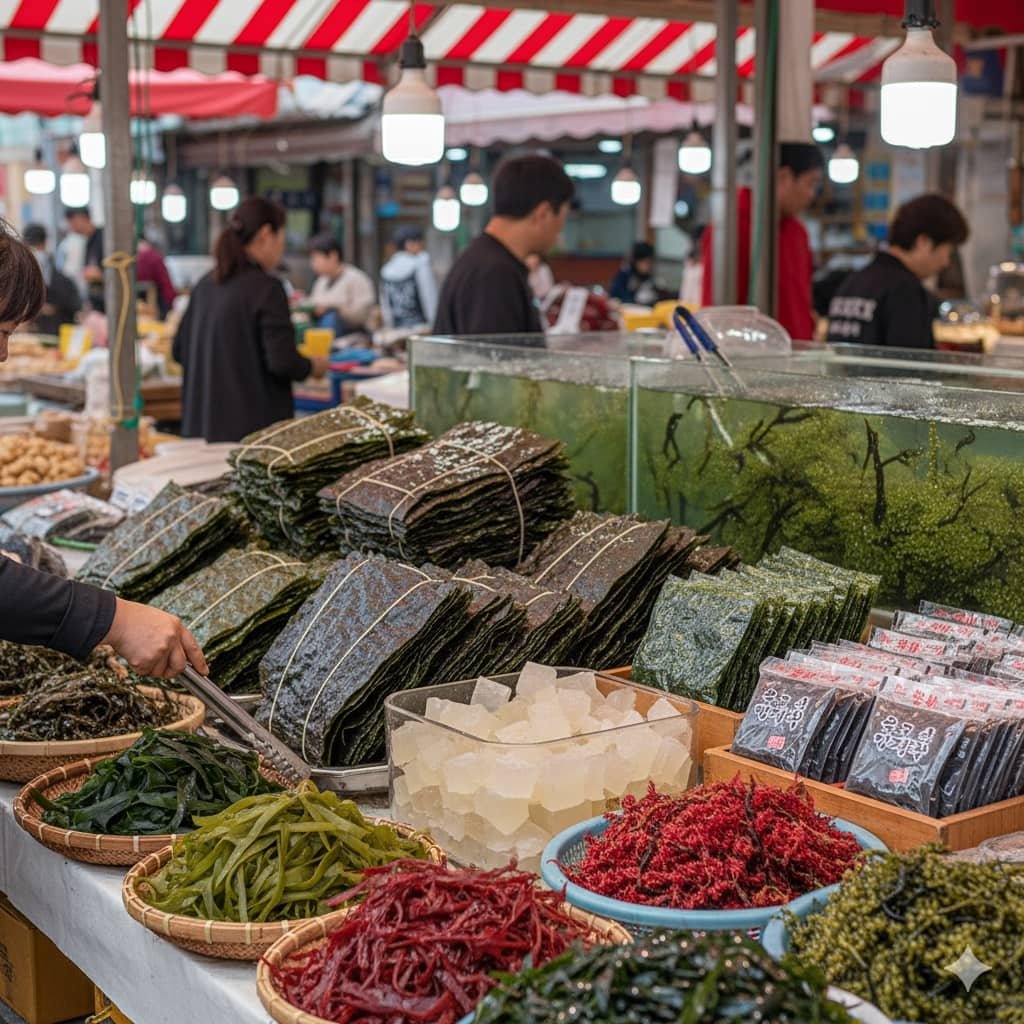
Within the aquaculture matrix, seaweeds are the undisputed protagonists. Their production volume surpassed that of fish for the first time in 2016, maintaining an upward trend. The figures for 2024 are compelling:
- Sea Mustard: 572,000 MT.
- Laver (Nori/Gim): 552,000 MT.
This surge responds to both domestic demand and the export of dried seaweed (gim), driven by the global expansion of Korean culture (K-Wave) and iconic dishes like “Kimbap.” In contrast, fish aquaculture (such as flounder) and shellfish (oysters and abalone) occupy a significantly smaller volume.
Consumption trends: Convenience is priority
The report underscores a historic milestone in the South Korean diet. Although seafood consumption remains high compared to the global average, it has begun to decline since its peak in 2019. In parallel, meat consumption has grown steadily, surpassing seafood in annual per capita volume since 2022.
From traditional markets to HMR
The profile of the Korean consumer is evolving. Younger generations consume less seafood, and when they do, they prioritise convenience over culinary tradition:
- Less Home Cooking: The purchase of raw seafood for domestic preparation is in decline.
- More Processed Goods: There is a growing demand for products that are “tasty, healthy, and easy to consume.” This has skyrocketed the market for HMR (Home Meal Replacement) featuring marine ingredients.
For exporters, the message is clear: value-added processing is now a critical success factor. While premium channels (five-star hotels, department stores) continue to demand high quality in lobster, cod, and scallops, massive volume is migrating toward convenient formats.
Stay Always Informed
Join our communities to instantly receive the most important news, reports, and analysis from the aquaculture industry.
International trade: Import challenges
South Korea remains a net importer of seafood. In 2024, the sector’s trade deficit was $3.7 billion. However, the economic slowdown and inflation have moderated the appetite for imports.
The supplier landscape in 2024 was configured as follows:
- China: Consolidates its position as the largest supplier, with a 5.5% increase in value.
- Russia: Experienced a drastic 18% drop, partly because many Russian species are now processed in China before being re-exported to Korea.
- Vietnam: Maintains its position with moderate growth.
- United States: Ranks as the sixth supplier, with a market share of 3.3% ($182 million).
The USDA notes that although Korean consumers associate U.S. products with “high quality,” the strength of the dollar and elevated prices limit market penetration against cheaper regional competitors. Alaska Pollack remains the flagship U.S. product, especially in the form of surimi, though it faces fierce competition from Vietnam and China.
The climate factor: A biological and sovereignty challenge
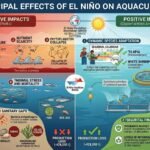
The report highlights a critical environmental challenge threatening Korea’s food security: global warming. Rising ocean temperatures and altered currents are modifying the physiology and distribution of marine biomass. Traditional fishing zones are shifting northward, moving away from the peninsula.
The consequences are visible:
- Constant decline of traditional fishery resources in adjacent waters.
- Migration or disappearance of popular species.
- Systematic reduction of the fishing fleet over the last 20 years.
In response, the government is enforcing strict Total Allowable Catch (TAC) limits and promoting aquaculture as a viable alternative to sustain protein supply.
Conclusion
The USDA’s 2025 market report for South Korea depicts a scenario of transition. The country remains a powerhouse in seafood consumption, but the model is veering from wild capture and traditional cooking toward aquaculture (led by seaweed) and convenience foods.
For the global industry, opportunities in Korea no longer lie solely in shipping bulk raw materials, but in the capacity to adapt to a consumer seeking ease of preparation and in filling the gaps that climate change is leaving in local production.
Reference (open access)
Yoo, S. (2025). Korea Seafood Market Update 2025. USDA Foreign Agricultural Service. Report Number: KS2025-0046. 24 p.

Editor at the digital magazine AquaHoy. He holds a degree in Aquaculture Biology from the National University of Santa (UNS) and a Master’s degree in Science and Innovation Management from the Polytechnic University of Valencia, with postgraduate diplomas in Business Innovation and Innovation Management. He possesses extensive experience in the aquaculture and fisheries sector, having led the Fisheries Innovation Unit of the National Program for Innovation in Fisheries and Aquaculture (PNIPA). He has served as a senior consultant in technology watch, an innovation project formulator and advisor, and a lecturer at UNS. He is a member of the Peruvian College of Biologists and was recognized by the World Aquaculture Society (WAS) in 2016 for his contribution to aquaculture.