Marine algae are not only the “lungs” of the ocean; they represent an inexhaustible resource for the pharmaceutical, cosmetic, and food industries. However, attempting to sequence their RNA (the process known as RNA-Seq) has historically been a logistical nightmare for scientists. Unlike common terrestrial plants, algae are laden with complex compounds: polyphenols and polysaccharides. These substances act as a “chemical glue” that contaminates samples, degrades genetic material, and ruins costly sequencing experiments.
Recently, a team from the University of Amsterdam, led by Rob J. Dekker and Timo M. Breit, published the most exhaustive study to date in the journal PLOS One to standardize these processes across 11 commercially significant species of edible algae.
Key Points
- Color-Specific Protocols: Brown algae require methods based on CTAB, whereas red and green species benefit from spin columns.
- Genetic Cleansing Efficiency: The RiboFree and riboPOOL kits successfully reduce ribosomal RNA (rRNA) noise to a mere 6% and 9%, respectively.
- Overcoming Chemical Barriers: The study resolves the problem of polysaccharides and polyphenols that typically “block” genetic reads in macroalgae.
- Impact on Food Safety: These tools allow for the detection of viruses and pathogens in seaweed crops, ensuring aquaculture productivity.
Which is the best method?
To decipher the transcriptome (the set of genes being expressed at any given moment), one must first extract RNA with extreme purity. The team evaluated seven distinct protocols: three based on CTAB (a detergent that helps separate nucleic acids from sugars) and four based on silica columns (faster but sometimes less effective in complex samples).
The Winner for Brown Algae
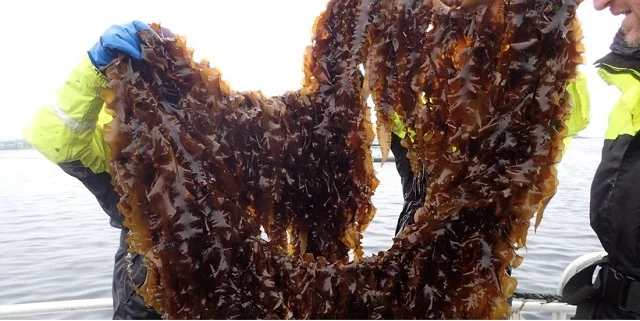
Brown algae (Phaeophyceae), such as Saccharina latissima or “Japanese sargassum” (S. muticum), are rich in alginates and furans. For this group, the CTAB1 and CTAB2 methods proved to be the undisputed champions.
- Technical Reason: The use of high salts and cationic detergents allows polysaccharides to remain in the liquid phase while the RNA is selectively recovered.
- Result: The highest RNA yields were obtained, which are essential for deep gene expression studies.
The Solution for Red and Green Algae
In species such as Gracilaria (red) or Ulva (green), the polyphenol load is lower, but their cell walls contain agar and carrageenans that can gel the samples. Here, the LogSpin and RNeasy-P methods (spin columns) offered a superior balance between speed and the quality of the genetic material.
The Ribosomal “Noise” Problem
Even if pure RNA is obtained, an invisible obstacle remains: ribosomal RNA (rRNA). In an algal cell, rRNA can account for up to 90% of all present RNA. If a scientist sequences the sample as is, 90% of the budget will be spent “reading” repetitive information that is already known, leaving only 10% to discover new genes or viruses. This is where rRNA depletion—a genetic filtering process—comes into play. The study compared three market-leading commercial technologies, applying them on a massive scale to algae for the first time:
| Method | Depletion Efficiency (Average) | Technology Used |
| RiboFree | 94% (Only 6% residual rRNA) | Selective nuclease degradation |
| riboPOOL | 91% (9% residual rRNA) | DNA probe hybridization |
| Ribo-Zero Plant | 81% (19% residual rRNA) | Oligonucleotide probe hybridization |
“RiboFree and riboPOOL significantly outperformed the industry standard (Ribo-Zero), allowing for a much clearer view of the active algal genome,” the study reports.
Methodology: Science within the Matrix
The study was not limited to a few tests; a matrix-type experiment was designed where each of the 11 species underwent multiple rounds of extraction and sequencing.
- Local Collection: Fresh samples were sourced from the North Sea and Dutch estuaries to ensure that freshness did not compromise RNA quality.
- Cryogenic Grinding: Tissues were pulverized with liquid nitrogen at -196 °C to instantly halt all biological activity.
- Rigorous Quality Control: Beyond automated systems, researchers analyzed the ratio between the 28S and 18S cytosolic RNA subunits, a much more reliable marker for marine organisms than common laboratory standards.
- Advanced Bioinformatics: De novo assemblies were generated to compare how much useful information (contigs) could be recovered after applying each cleaning kit.
Why is this vital for aquaculture?
The significance of this work extends beyond the laboratory. Seaweed aquaculture is a booming industry, yet it faces invisible threats: viral pathogens. Until now, detecting a new virus in a seaweed farm was like searching for a needle in a haystack due to the lack of efficient sequencing protocols. With the methods validated by the University of Amsterdam, researchers can now:
Stay Always Informed
Join our communities to instantly receive the most important news, reports, and analysis from the aquaculture industry.
- Identify emerging viruses before they destroy an entire harvest.
- Study responses to environmental stress caused by climate change.
- Optimize the production of bioplastics and medicinal compounds through metabolic engineering.
Limitations and Future Frontiers
Despite its success, the authors caution that algal diversity is so vast that these results are a “starting point” rather than a universal law. The study included six brown species, four red, and only one green, suggesting that work remains to generalize these findings across all green algae species worldwide. Furthermore, factors such as seasonality or local pollution may alter the chemical composition of the algae, affecting extraction efficiency.
Contact
Timo M. Breit
RNA Biology research group, Swammerdam Institute for Life Sciences, Faculty of Science, University of Amsterdam
Amsterdam, the Netherlands
Email: T.M.Breit@uva.nl
Reference (open access)
Dekker RJ, Ensink WA, van Olst MF, van Leeuwen SM, de Leeuw WC, Jonker MJ, et al. (2026) Evaluation of RNA extraction and rRNA depletion protocols for RNA-Seq in eleven edible seaweed species from brown, red, and green algae. PLoS One 21(1): e0339896. https://doi.org/10.1371/journal.pone.0339896

Editor at the digital magazine AquaHoy. He holds a degree in Aquaculture Biology from the National University of Santa (UNS) and a Master’s degree in Science and Innovation Management from the Polytechnic University of Valencia, with postgraduate diplomas in Business Innovation and Innovation Management. He possesses extensive experience in the aquaculture and fisheries sector, having led the Fisheries Innovation Unit of the National Program for Innovation in Fisheries and Aquaculture (PNIPA). He has served as a senior consultant in technology watch, an innovation project formulator and advisor, and a lecturer at UNS. He is a member of the Peruvian College of Biologists and was recognized by the World Aquaculture Society (WAS) in 2016 for his contribution to aquaculture.