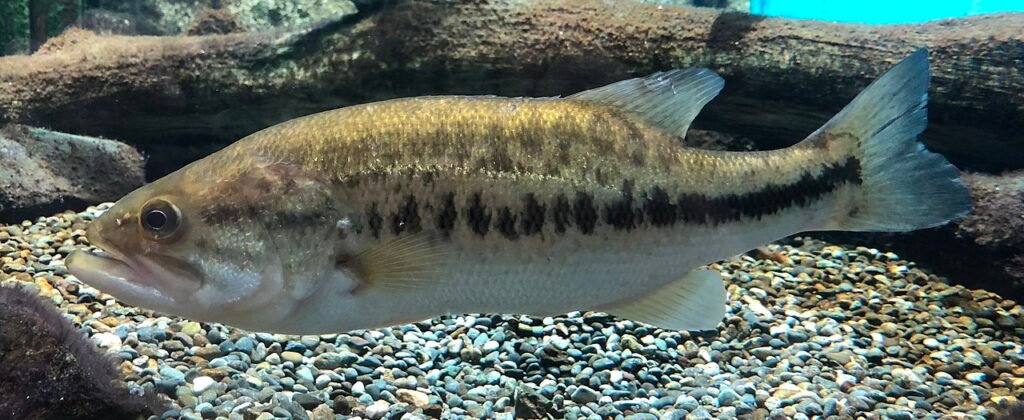
The Micropterus salmoides, commonly known as “largemouth bass,” is a predatory fish belonging to the Centrarchidae family and is native to North America. This species is morphologically distinguished by a jaw that extends beyond the posterior margin of the eye and by a strictly carnivorous diet. Currently, it is considered the flagship species of global recreational fishing and a specimen of remarkable biological versatility.
The Micropterus salmoides aquaculture industry has undergone a significant transition: from breeding focused on restocking to large-scale meat production. This market is led by China, with an annual output exceeding 800,000 tons. The success of its scalability rests on three strategic pillars: conditioning for dry balanced feed intake, maintaining optimal thermal ranges (25 to 28°C), and the rigorous mitigation of cannibalism during juvenile stages.
- 1 Key Points
- 2 Global Production Analysis of Largemouth Bass Aquaculture (2014–2023)
- 3 Taxonomy and Anatomy of Micropterus salmoides
- 4 Ecology and Habitat: Requirements for Biological Success
- 5 Life Cycle and Reproduction (Micropterus salmoides)
- 6 Nutritional Strategies and Feeding Habits
- 7 Production Models: Ponds vs. RAS Systems
- 8 Critical Parameters and Environmental Management in Intensive Systems
- 9 The Ecological Challenge: Largemouth Bass as an Invasive Species
- 10 Aquaculture Health: Viral and Bacterial Challenges
- 11 Scientific Knowledge Trends: Micropterus salmoides
- 12 Technological Trends in Largemouth Bass
- 13 Conclusion
-
14
FAQ (Frequently Asked Questions)
- 14.1 What is the main difference between the Northern and Florida largemouth bass for aquaculture?
- 14.2 Is it possible to farm largemouth bass in saline waters?
- 14.3 Why is my production experiencing high rates of cannibalism?
- 14.4 Are there commercial vaccines available for Rhabdovirus (MSRV)?
- 14.5 What are the ideal water quality parameters for RAS systems?
- 15 References
- 16 Entradas relacionadas:
Key Points
- Leadership in Precision Aquaculture: The sector has evolved from traditional breeding to precision biotechnology led by China. The use of genomic tools (RNA-Seq) and Recirculating Aquaculture Systems (RAS) currently enables massive production exceeding 800,000 tons per year with absolute environmental control.
- Diet as Medicine (Immunonutrition): The greatest production challenge is the low tolerance to carbohydrates. The trend toward 2026 is the design of “smart diets” utilizing probiotics and phytogenic additives to prevent fatty liver disease and enhance intestinal health, progressively replacing fishmeal.
- Sanitary Shielding and Vaccinology: Given the absence of drugs for lethal viruses such as the Rhabdovirus (MSRV), the scientific frontier focuses on subcellular immunology. Next-generation vaccines and genetically resilient strains are being developed to ensure juvenile survival.
- Sustainability in Adverse Environments: The species’ remarkable plasticity allows for cultivation in saline-alkali lands (with salinities up to 5‰). This capability, combined with the optimization of muscle quality through alkalinity control, positions the largemouth bass as a strategic resource for global food security.
- Ethical Dilemma and Biosecurity: Despite its industrial success, Micropterus salmoides is one of the world’s most dangerous invasive species. The future of the sector depends on strict confinement and biosecurity protocols to prevent the collapse of native ecosystems due to its aggressive predatory capacity.
Global Production Analysis of Largemouth Bass Aquaculture (2014–2023)
Global production of largemouth bass has recorded exponential growth over the last decade. In 2014, global volume stood at 320,357 tons, a figure that rose drastically to reach 891,434 tons by 2023. This 178% increase consolidates this species as an emerging pillar in contemporary industrial aquaculture.
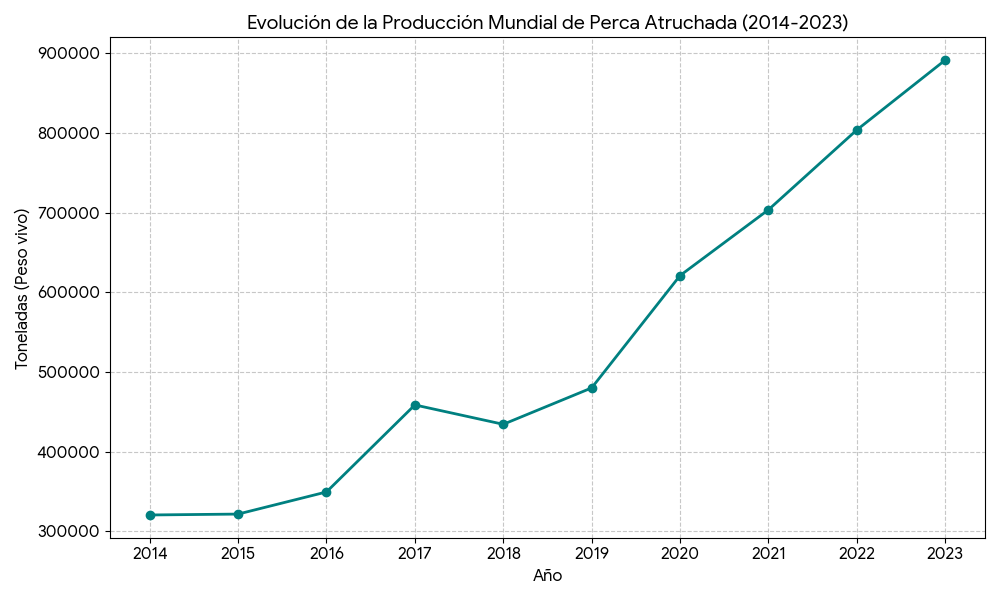
Currently, the global market is almost entirely dominated by China, a nation that accounts for more than 99% of the world’s production reported at the close of 2023 (Table 1).
Table 1. Production Trends of Largemouth Bass (Micropterus salmoides) by Country (Tons, Live Weight).
| Country / Territory | 2019 | 2020 | 2021 | 2022 | 2023 |
| China | 477,808 | 619,519 | 702,093 | 802,486 | 888,030 |
| Taiwan (Prov. of China) | 1,697 | 1,098 | 1,276 | 1,119 | 1,328 |
| United States | 0.00 | 0.00 | 0.00 | 0.00 | 1,752 |
| Mexico | 242.3 | 152.0 | 8.5 | 93.1 | 164.8 |
| France | 44.2 | 37.3 | 53.9 | 42.5 | 118.8 |
| Italy | 85.0 | 87.0 | 66.8 | 0.0 | 38.6 |
Regional Trends Diagnosis
- Asia: Exhibits absolute hegemony led by China, whose steady growth rose from 319,110 tons in 2014 to over 888,000 in the latest fiscal year.
- Americas: Mexico and the United States maintain strategic participation, although their volumes remain modest compared to the Asian bloc.
- Europe: France and Italy lead regional production with annual volumes under 150 tons, characterized by marked market fluctuations.
- Other Regions: Nations such as Spain, Algeria, and Tunisia report minimal or intermittent production activities.
Taxonomy and Anatomy of Micropterus salmoides
Micropterus salmoides represents the pinnacle of a specialized ambush predator. Taxonomically classified within the order Perciformes, it shares lineage with centrarchids (sunfishes), although it exhibits significantly superior predatory specialization.
Physical Characteristics and Diagnosis
For precise taxonomic identification, observing the oral commissure is imperative. Unlike Micropterus dolomieu (smallmouth bass), the jaw of the largemouth bass extends beyond the posterior orbital margin of the eye.
- Coloration: It exhibits a dark lateral line, frequently fragmented, against an olive-green or grayish background.
- Fin Morphology: It possesses a dorsal fin with a deep notch that nearly separates the spiny and soft-rayed sections.
- Dimensions: Under optimal conditions, its length ranges between 30 and 50 cm, although wild specimens exceeding 70 cm have been recorded.
Genetic Variants: The Florida Bass
According to Yu et al. (2024), two main lineages are distinguished with direct implications for aquaculture and recreational fishing:
Stay Always Informed
Join our communities to instantly receive the most important news, reports, and analysis from the aquaculture industry.
- Northern Subspecies (M. s. salmoides): Native to the East-Central US, Northeastern Mexico, and Southeastern Canada. It possesses between 59 and 65 lateral scales and 15 pairs of ribs.
- Florida Subspecies (M. s. floridanus): Native to southern regions, it is highly valued for its accelerated growth potential, reaching weights exceeding 9 kg in warm climates. It is distinguished by having 69 to 73 lateral scales and 14 pairs of ribs (Yu et al., 2024).
Ecology and Habitat: Requirements for Biological Success
The habitat versatility of Micropterus salmoides explains its success as an introduced species in Europe and Asia. They thrive in lentic (slow-moving or stagnant) water bodies with dense submerged vegetation.
Table 2. Critical Habitat Parameters for Largemouth Bass (M. salmoides).
| Parameter | Optimal Range | Technical Notes |
| Temperature | 24°C – 30°C | Tolerates up to 36°C, but with metabolic slowdown. |
| Oxygen (DO) | > 5 mg/L | High resilience to temporary hypoxic conditions. |
| Substrate | Mud, sand, or gravel | Requires soft bottoms for foraging and gravel for spawning. |
| Clarity | Intermediate | Excessive turbidity limits its efficiency as a visual hunter. |
In the management of private reservoirs, structural complexity (presence of hydrophytic vegetation or wooden structures) is a determining factor—more so than total water volume—to ensure the viability of juvenile populations.
Life Cycle and Reproduction (Micropterus salmoides)
The longevity of the largemouth bass can reach up to 16 years in the wild. Its reproductive cycle represents one of the most documented phenomena in freshwater biology due to its critical influence on aquatic population dynamics.
Phases of the Reproductive Process
- Courtship: Initiated when water temperature stabilizes at 15.5°C.
- Nest Construction: The male delimits and clears a circular area in the substrate, preparing it for spawning.
- Parental Care: Unlike other species, the male fiercely guards both the eggs and the fry during the first few weeks, significantly minimizing predation rates.
Genetic Selection and Broodstock Domestication
The primary operational challenge in Micropterus salmoides aquaculture lies in broodstock selection, as not all wild specimens exhibit optimal adaptation to confinement.
Management Strategies
- Genetic Lines: As previously explained, the M. s. floridanus variety is preferred for its accelerated growth potential. Conversely, the northern subspecies offers superior resistance to pathogens in temperate climates.
- Acclimatization and Density: To mitigate stress before induced spawning, broodstock should be maintained at low densities, with recommended ranges of 1 to 2 kg/m³.
- Synchronization: In Recirculating Aquaculture Systems (RAS), the use of hormones such as LHRHa or hCG constitutes the technical standard for ensuring spawning synchronization.
Technical Recommendation: Stress management during the acclimatization phase is the determining factor in ensuring spawning viability and fry quality in intensive systems.
Nutritional Strategies and Feeding Habits
The largemouth bass is an opportunistic predator with exceptional trophic plasticity. Its diet evolves drastically during its ontogeny:
- Fry: Primarily consume zooplankton and aquatic micro-insects.
- Juveniles: Transition toward macroinvertebrates and small crustaceans.
- Adults: Apex predators whose diet includes fish (exhibiting frequent cannibalism), amphibians, decapods, and even small terrestrial vertebrates.
In aquaculture, the greatest challenge is the transition to extruded feed, given that Micropterus salmoides is a visual hunter that reacts instinctively to movement.
Trophic Transition Protocol (Weaning)
Based on the co-feeding approach proposed by Aguilar et al. (2025) for Recirculating Aquaculture Systems (RAS):
- Phase 1: Exclusive Live Feed (0-5 DPH): Start with rotifers (Brachionus plicatilis) and Artemia nauplii. The inclusion of rotifers is critical for initial physical development.
- Phase 2: Co-feeding and Weaning (5-12 DPH): Gradual introduction of commercial microdiets. Rotifers are reduced while the Artemia dosage is increased until the complete cessation of live feed by day 12.
- Phase 3: Dry Diet Consolidation (9-25 DPH): Progressive transition of particle size (from microdiets to starter feed). By day 25, stable biomass and the end of the experimental phase are achieved.
Nutritional Requirements and Diet Formulation
According to the guidelines by Yu et al. (2024) and complementary 2025 studies, the optimal nutritional profile must meet:
- Proteins (46% – 49%): The most critical component. At least 50% must come from high-quality fishmeal; however, efforts are underway to reduce the use of this input in the feeding of this fish.
- Lipids (11.5% – 14%): It is vital to include 1% essential fatty acids for proper development.
- Carbohydrates (Max. 20%): The species has low glycolytic capacity. Exceeding this limit causes hepatic lipid accumulation and reduces protein digestibility.
- Crude Fiber: Should not exceed 3.5% due to the limited digestive capacity for cellulose.
Supplementation and Functional Additives
Recent research suggests specific optimizations to improve immunity and growth:
- Vitamins: The optimal level of Vitamin B6 is between 11.98 and 12.73 mg/kg to maximize body weight (Zhang et al., 2025b). Likewise, high doses of Vitamin C strengthen the immune response.
- Probiotics: The combination of Lactobacillus plantarum and Bacillus subtilis (1:1) in the water improves non-specific immunity (Jin et al., 2024).
- Taurine and Starch: Supplementation with 0.288% taurine in larvae (Zhou et al., 2025) and the use of resistant starch (1.5% – 3.0%) help mitigate the effects of high-fat diets (Zhang et al., 2025a).
Production Models: Ponds vs. RAS Systems
The selection of the culture system not only defines the nutritional strategy but also determines financial viability and the quality of the final product. Currently, the industry is divided between two primary approaches:
Earthen Ponds (Traditional System)
This is the most widespread method due to its low initial operating costs. However, it presents significant challenges:
- Density: Limited to 5,000 – 10,000 specimens per hectare.
- Risks: High vulnerability to natural predators and unpredictable climatic fluctuations.
- Quality: Although associated with a valued muscle texture, environmental control is minimal.
Recirculating Aquaculture Systems (RAS)
Recirculating Aquaculture Systems (RAS) represent the technological vanguard, allowing for absolute control over critical parameters such as temperature and oxygen saturation.
- Density: Exceeds 60 kg/m³, maximizing space utilization.
- Investment: Requires high capital for biological filtration and energy support systems.
- Competitive Advantage: According to Wang et al. (2024), the Aquaponic Recirculating Aquaculture System (ARAS) is key to enhancing nutritional quality and developing distinctive flavor attributes, positioning recirculation as the “new productive force” for obtaining premium-quality specimens.
Critical Parameters and Environmental Management in Intensive Systems
Unlike recreational environments, the commercial production of Micropterus salmoides demands rigorous control of physicochemical variables. According to reference data and recent studies, feed conversion ratio (FCR) and immunological health strictly depend on the following ranges:
Table 3. Optimal Parameter Matrix for Largemouth Bass (M. salmoides) Farming in RAS.
| Variable | Recommended Range | Technical Impact |
| Dissolved Oxygen | > 5.5 mg/L | Prevents susceptibility to Rhabdovirus. |
| Ammonia (TAN) | < 0.5 mg/L | Vital in alkaline pH to avoid acute toxicity. |
| Temperature | 27°C | Optimizes growth in early stages (Aguilar et al., 2023). |
| Salinity | < 5‰ | Enables cultivation in saline-alkali lands (Wang et al., 2024). |
| Alkalinity | 15 – 20 mmol/L | Significantly improves muscle quality (Hua et al., 2025). |
Strategic Management Factors
Photoperiod Optimization
Although 12L:12D cycles are traditionally used, research by Malinovskyi et al. (2022) demonstrates that a regime of 8 hours of light and 16 hours of darkness (8L:16D) significantly favors growth, the organosomatic index, and antioxidant capacity in juveniles raised in RAS systems. This adjustment reduces territorial aggression and stabilizes basal metabolism.
Adaptability and Sustainability
The finding by Wang et al. (2024) regarding salinity tolerance () positions the largemouth bass as a strategic alternative for the productive recovery of areas affected by salinization, allowing for the utilization of water resources in saline-alkali lands.
Final Product Quality
Alkalinity management is not merely a matter of survival; according to Hua et al. (2025), maintaining levels between 15 and 20 mmol/L is a determining factor in obtaining superior muscle texture and quality, thereby increasing the specimen’s commercial value in the consumer market.
Furthermore, Liu et al. (2024) demonstrated that implementing exercise regimes at different intensities significantly improves both the growth rate and the firmness and quality of the largemouth bass’s muscle tissue. This finding suggests that controlled water flow in RAS systems can be utilized as a bioengineering tool to optimize performance.
The Ecological Challenge: Largemouth Bass as an Invasive Species
Despite its undeniable economic and recreational value, Micropterus salmoides is listed by the IUCN as one of the 100 most harmful invasive alien species globally (Pereira et al., 2019; Costantini et al., 2023). Its deliberate or accidental introduction into non-native ecosystems often triggers the collapse of endemic fish populations and the irreversible alteration of aquatic habitats.
Impacts on Biodiversity and the Trophic System
The capacity of this species to transform ecosystems is profound and multifactorial:
- Threat to Native Fauna: Research by Brown et al. (2009) identifies the largemouth bass as a critical threat to freshwater biodiversity in regions such as Canada, due to its aggressive capacity to displace and replace local fish communities.
- Cascading Effects: Once established, the species interacts directly and indirectly with autochthonous fauna across multiple trophic levels. Costantini et al. (2023) point out that these interactions generate predominantly negative cascading effects, including direct predation and fierce competition for resources.
- Socioeconomic Consequences: Ecosystem degradation not only leads to the extinction of local species but also results in significant economic losses for artisanal commercial fisheries by depleting populations of traditionally important species.
The expansion of largemouth bass (Micropterus salmoides) aquaculture must be accompanied by strict containment and biosecurity protocols to prevent escapes into natural water bodies, ensuring that economic benefits do not translate into an ecological disaster.
Sanitary control is the cornerstone of profitability in Micropterus salmoides farming. Recent research by Yu et al. (2024) and Tu et al. (2025) highlights the complexity of the pathogenic microbiome and the necessity for comprehensive prevention strategies.
Currently, there are no commercial vaccines or drugs for these conditions, which elevates the importance of biosecurity.
- Largemouth Bass Ranavirus: Identified by Yu et al. (2024), it primarily acts between May and August. It is usually recessive and asymptomatic, manifesting during stressful situations. Its control depends exclusively on scientific nutrition and rigorous disinfection.
- Rhabdovirus (MSRV): According to Wu et al. (2023), this virus is responsible for mortality rates exceeding 80% in juvenile stages. Unlike Ranavirus, it presents clear clinical signs.
Bacterial Pathologies and Antimicrobial Resistance
A comprehensive study by Tu et al. (2025) identified 21 bacterial pathogens, highlighting the prevalence of the Aeromonas genus (67.14%), led by species such as A. veronii and A. hydrophila.
- Other Critical Pathogens: Edwardsiella piscicida (causing ascites), Vibrio spp., and Streptococcus agalactiae.
- Emerging Pathogen (2026): Wang et al. (2026) identified the bacterium Pseudomonas anguilliseptica (strain ST8) as a new threat in China. It causes exophthalmos (pop-eye), skin ulcers, and multi-organ necrosis, with mortality rates exceeding 35%.
Control Strategies and Therapeutic Efficacy
In the event of bacterial outbreaks, antibiotic sensitivity is key. According to tests by Tu et al. (2025), treatment protocols should consider:
| Drug / Combination | Efficacy | Technical Observations |
| Florfenicol (FLO) | Extremely Excellent | High inhibition in Vibrio, Aeromonas, and Streptococcus. |
| Enrofloxacin (ENR) | High | Considered a first-choice option due to its consistency. |
| VcMP-CiH Mixture | High | Effective synergy between Vitamin C and Ciprofloxacin. |
| Sulfonamides | Poor | Null or insufficient performance against most pathogens. |
Virulence Note: Most isolated pathogens exhibit β-hemolysis, indicating a high capacity for red blood cell destruction and severe tissue damage, requiring immediate intervention upon detection of the first symptoms.
Scientific Knowledge Trends: Micropterus salmoides
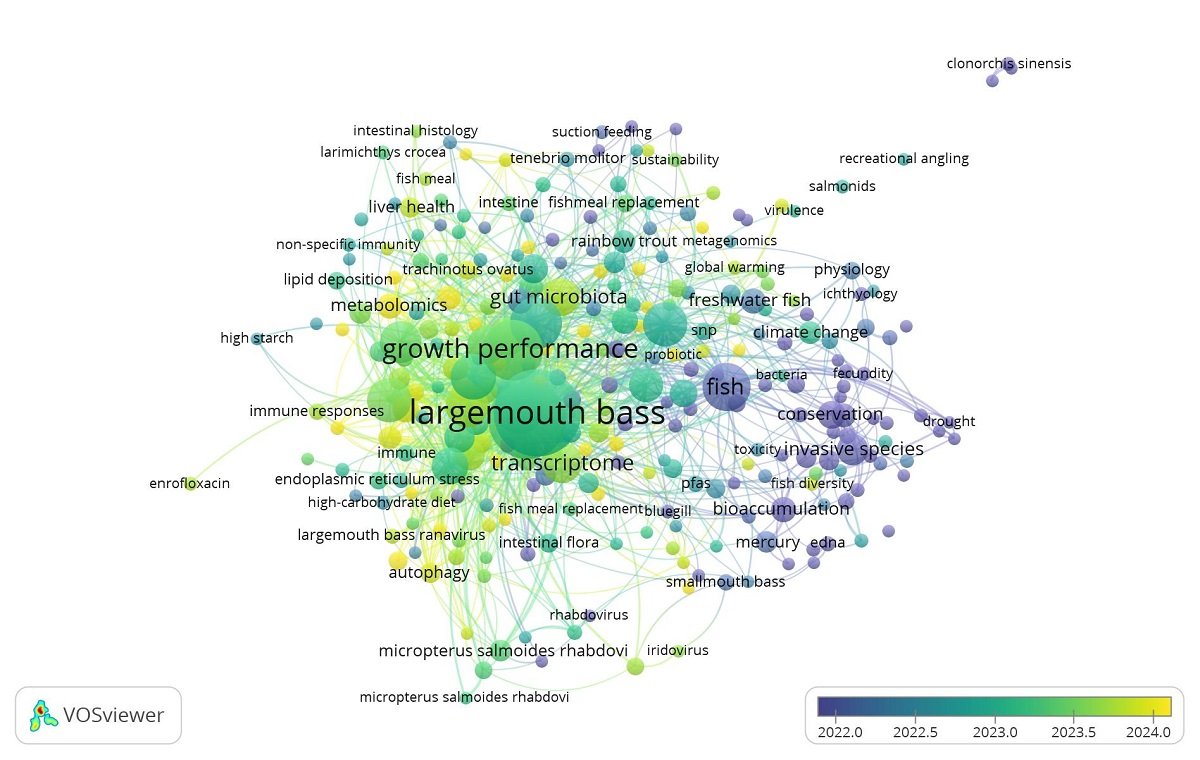
An analysis of global scientific output reveals an unprecedented technical specialization, where research has evolved from field ecology toward precision biotechnology. Currently, the domain of knowledge is divided into three strategic poles:
Geography and National Thematic Focuses
- China (Leader in Intensive Aquaculture): The epicenter of industrial optimization. Its research focuses on transcriptomics to enhance growth and the substitution of fishmeal with plant proteins (cottonseed, fava beans).
- United States (Leader in Ecology and Conservation): Its focus prevails in wild population management, analyzing invasion dynamics, the impact of climate change on recruitment, and environmental toxicology regarding heavy metals.
- Europe (Focus on Monitoring and Biodiversity): With a strong presence in Belgium, France, and Portugal, research lines are strategic and regulatory, centered on managing the species as a non-native organism in river basins.
Collaboration Networks and Research Clusters
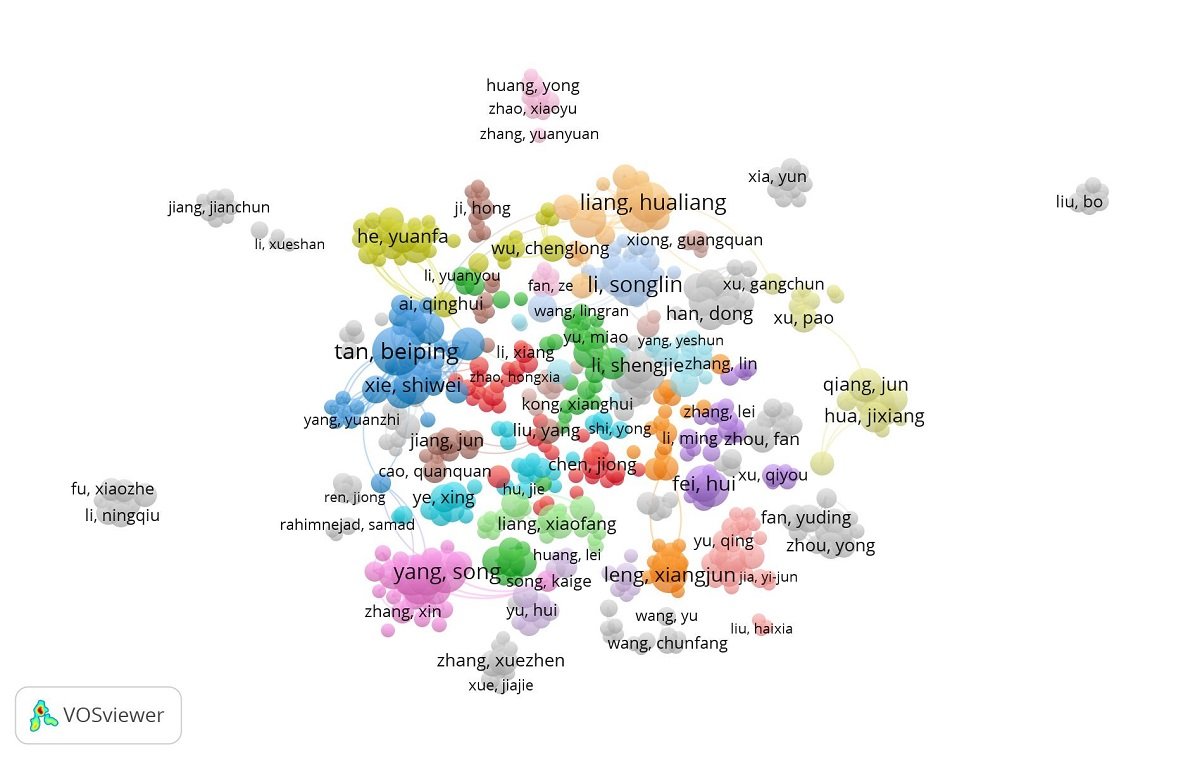
The scientific network surrounding the largemouth bass exhibits a high-density structure within the Asian bloc, where institutions such as Huazhong Agricultural University and the Chinese Academy of Fishery Sciences set the technical standard.
Global Influence Clusters
- Nutrition and Production Efficiency (Leaders: Liang, H. and Tan, B.): This is the densest group in the network. Liang specializes in essential amino acid requirements (valine) and phytobiotics for hepatic health. Meanwhile, Tan leads research into lipid metabolism and the use of Cottonseed Protein Concentrates (CPC) without compromising growth.
- Physiology and Metabolic Stress (Leader: Yang, S.): This group analyzes responses to adverse conditions, highlighting the study of endoplasmic reticulum stress caused by high-carbohydrate diets and vascular remodeling under intermittent hypoxia.
- Core Immunology and “Bridge” Nodes (Leader: Chen, J.): Acts as the network connector, integrating studies on microbiota and systemic health. He collaborates with Ai, Q. and He, Y. on probiotic supplementation to combat pathogens such as Aeromonas hydrophila.
- Vanguard Health (Fu, X. and Li, N.): Situated at the frontier of knowledge, this group develops live-attenuated vaccines against Rhabdovirus (MSRV), reporting 100% survival rates in controlled challenge trials.
The architecture of current research demonstrates that the industry has fortified its profitability through two pathways: while the nutrition groups (Tan, Liang) ensure economic viability, the virology groups (Fu, Li) act as an indispensable sanitary shield for large-scale intensification of crops.
Thematic Knowledge Map (2020–2026)
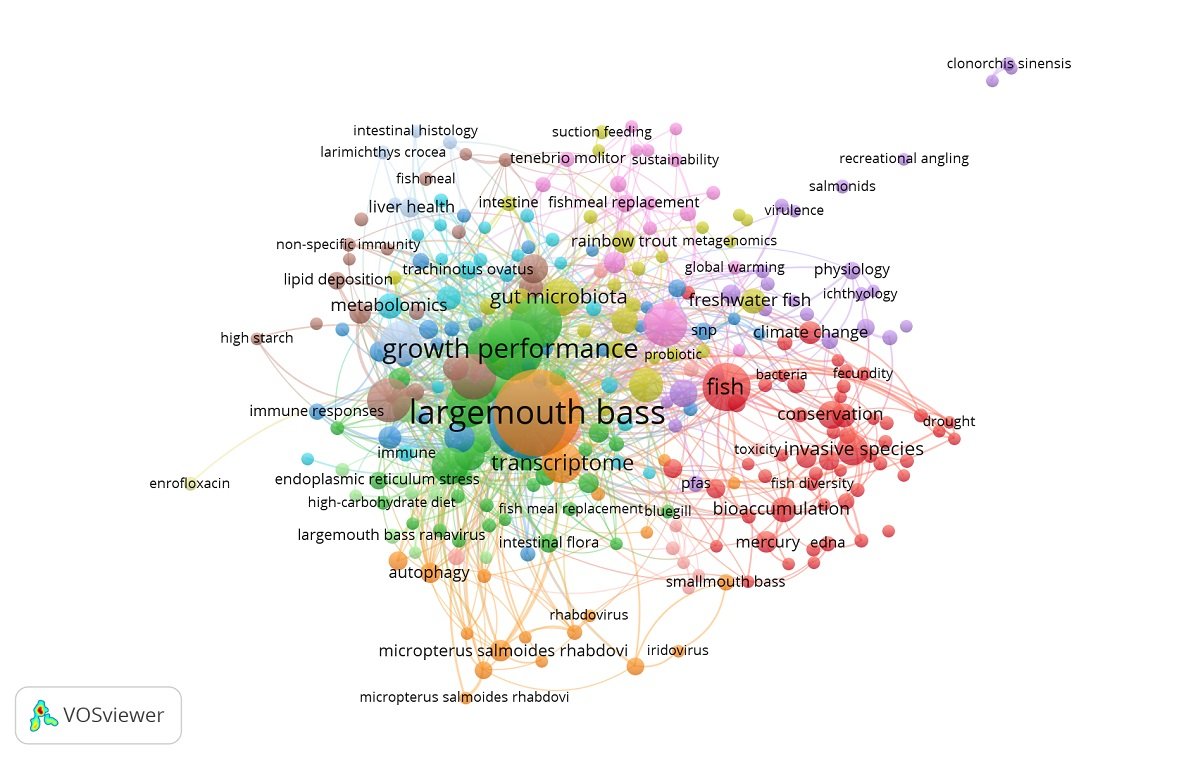
Scientific research on Micropterus salmoides during the 2020–2026 period has consolidated into four strategic domains, each addressing a critical challenge for both the industry and the environment:
The Genomic-Production Front (Innovation Core)
This cluster represents the industry’s biotechnological engine. The surge in utilizing tools such as transcriptomics and RNA-Seq indicates a transition toward gene-assisted selection.
Insight: Science is no longer limited to observing phenotypic growth; it now seeks the “genetic switches” that activate efficient metabolism and stress resistance to develop high-performance strains.
Metabolism and Critical Nutrition: Overcoming Physiological Barriers
This domain focuses on resolving the adverse effects of production intensification:
- The Carbohydrate Challenge: As strict carnivores, high-starch diets trigger endoplasmic reticulum stress and metabolic diabetes. Current research aims to mitigate this hepatic inflammation.
- Hepatic Health: Through metabolomics studies, solutions for fatty liver syndrome (lipid deposition)—a recurring issue in high-density farming—are being analyzed.
Sustainability Axis: Microbiota and Alternative Proteins
This represents the transition toward green and circular aquaculture:
- Meal Substitution: The objective is the total replacement of fishmeal with insect or plant-based proteins.
- Microbiota Modulation: Intestinal health (gut microbiota) has become the primary metric for success. Probiotics are utilized to restore bacterial balance and ensure optimal nutrient absorption in experimental diets.
Biosecurity, Ecology, and Public Health
This cluster analyzes external risks and the consequences of the species’ expansion:
- Precision Virology: Cellular autophagy is studied to understand how viruses like MSRV “hijack” the fish’s machinery, paving the way for next-generation vaccines.
- Environmental and Toxicological Dilemma: The role of the bass as an apex predator is analyzed. Its capacity for the bioaccumulation of heavy metals (mercury) and its impact as an invasive species have direct implications for food safety and biodiversity conservation.
Emerging Trends: The Frontiers of Precision Aquaculture
Temporal analysis reveals a critical shift in the scientific paradigm of Micropterus salmoides: a transition from population ecology (2022) toward precision aquaculture medicine (2024–2026). This shift defines three stages of knowledge:
Consolidated Areas (The Established Context)
Topics such as mercury bioaccumulation, conservation, and invasive species management have moved to a relative background. In this sense, the scientific community has integrated these risks as established premises, shifting investment toward areas with direct economic returns and industrial scalability.
Transition Topics (The Current Standard)
Fishmeal replacement and the use of transcriptomics are now routine methodologies. RNA sequencing is no longer considered an isolated innovation; instead, it is the standard protocol for validating the efficacy of new diets or the response to pathogens.
“Hot Topics”: The Research Vanguard
The immediate future of the sector is built upon three disruptive pillars:
- Subcellular Immunology: Efforts seek to manipulate cellular machinery (autophagy and endoplasmic reticulum stress) to block viruses such as Rhabdovirus (MSRV). The ultimate goal is the development of genetically resilient strains starting from the cellular level.
- The Gut–Liver–Brain Axis: The most robust trend is immunonutrition. “Smart diets” are being designed to function as preventive medicine, mitigating fatty liver syndrome derived from carbohydrate excess.
- Metabolic Precision: Through metabolomics, the sector is moving toward feed personalization based on genetic strain and life stage, optimizing growth without compromising systemic integrity.
Technological Trends in Largemouth Bass
The technological landscape is currently in a phase of robust growth. A significant leap has been observed starting in 2020, culminating in publication peaks in 2024 and 2025. This suggests that largemouth bass aquaculture is receiving massive R&D investment, likely driven by the need to improve food sustainability and disease control in intensive farming systems.
Leading Applicants (Institutions)
Chinese institutions almost entirely dominate the patent landscape (Table 04), featuring research centers and universities specializing in fisheries and agriculture.
Table 04. Top Patent Applicant Institutions Linked to “Largemouth Bass.”
| Applicant Institution | Number of Patents |
| Pearl River Fisheries Research Institute (CAFS) | 18 |
| Freshwater Fisheries Research Center (CAFS) | 16 |
| South China Agricultural University | 12 |
| Zhejiang Institute of Freshwater Fisheries | 10 |
| Suzhou Jinchengfu Fishery Tech Co Ltd | 10 |
| Gejiu Hengyang Fishery Co Ltd | 9 |
| Huazhong Agricultural University | 8 |
| Jimei University | 5 |
| Fujian Prosperity Feed Co Ltd | 5 |
| Shenzhen Wankesen Biological Tech Co Ltd | 5 |
Core Focus of the Top 3 Institutions:
- Pearl River Fisheries Research Institute (CAFS): Specializes in molecular markers (SNP/InDel) for rapid growth, subspecies identification, virus resistance, and vaccine development.
- Freshwater Fisheries Research Center (CAFS): Focused on farming systems, genetic markers for sex determination, and improving the feed conversion ratio (FCR).
- South China Agricultural University: Primarily innovates in nutritional compositions, genetic modification methods, and subunit vaccines against iridoviruses.
Leading Inventors
The top inventors (Table 5) align with the affiliations of the leading institutions, reflecting well-established research teams.
Table 05. Top Inventors Holding Patents Linked to “Largemouth Bass.”
| Inventor | Number of Patents |
| Qiang Jun | 12 |
| Li Shengjie | 11 |
| Xu Pao | 11 |
| Hua Jixiang | 11 |
| Luo Xia | 9 |
| Fu Xiaozhe | 9 |
| Liang Hongru | 9 |
| Lee Young-Koo | 9 |
| Niu Yinjie | 9 |
| Xu Aiguo | 8 |
Specializations of the Top 3 Inventors:
- Qiang Jun (Freshwater Fisheries Research Center): Specialist in genetic improvement, parentage identification, and efficient farming systems.
- Li Shengjie (Pearl River Fisheries Research Institute): Focused on the use of SNP markers for selecting rapid growth traits and salinity tolerance.
- Xu Pao (Freshwater Fisheries Research Center): Frequent co-inventor in patents regarding applied genetics and aquaculture monitoring systems.
Technological Focus (IPCR Analysis)
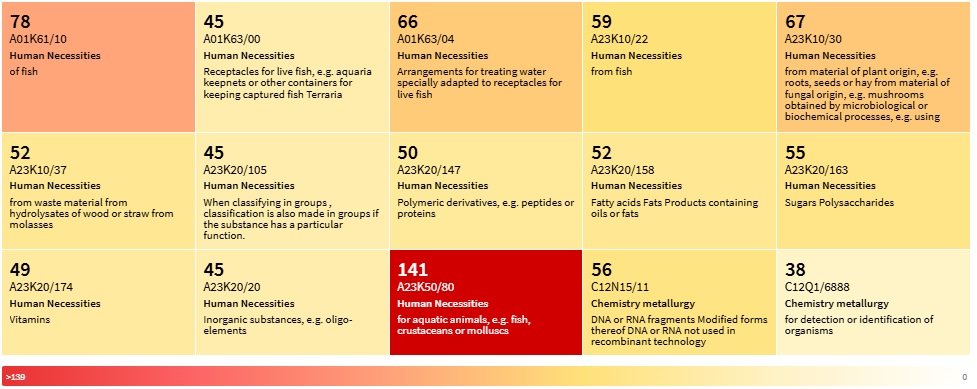
The technological activity map reveals three major axes of innovation for the largemouth bass, with nutrition serving as the central pillar, followed by cultivation engineering and advanced biotechnology.
Absolute Dominance of Nutrition and Feeding (Code A23K)
The most compelling finding is the volume of activity under code A23K, which refers to processes and products for animal feed.
- Specific Feeds (A23K 50/80): This category shows the highest intensity, totaling 141 patents. This focus centers on:
- Balanced Formulas: Specific compositions designed to improve growth and feed conversion.
- Use of Plant and Fungal Ingredients: More than 67 patents explore the replacement of fishmeal with plant-based materials or yeast extracts.
- Specialized Supplementation: Patents focus on vitamins, fatty acids/oils (52 patents), and protein derivatives or peptides (50 patents) to optimize lipid metabolism and reduce fatty liver disease.
Aquaculture and Management Systems (Code A01K)
The second-largest block of activity corresponds to engineering applied to fish farming.
- Breeding Methods (A01K 61/10): With 78 patents, this category groups innovations in general fish culture, artificial spawning techniques, and fry management.
- Water Treatment and Improvement (A01K 63/04): With 66 patents, there is a strong focus on Recirculating Aquaculture Systems (RAS), waste filtration, and environmental quality control in tanks to enhance survival rates.
Biotechnology and Genetics (C12 Codes)
Although it has a lower cumulative volume than nutrition, this area represents the sector’s “scientific frontier.”
- Genetic Tools (C12N 15/11): With 56 patents, the development of DNA/RNA fragments and gene-editing techniques (CRISPR) for selecting rapid growth or thermal resistance traits stands out.
- Detection and Diagnosis (C12Q 1/6888): With 38 patents, the focus is on rapid detection kits for pathogens (LMBV and Rhabdovirus) via PCR and the use of molecular markers (SNPs) for subspecies identification and sex determination.
Summary: Innovation is shifting from traditional physical management toward precision aquaculture based on functional nutrition and molecular control. The predominance of patents in feed formulas (A23K) suggests that the industry views diet as the primary tool to mitigate biological issues such as metabolic diseases and environmental stress.
Technological Interpretation
Based on the prevalence of themes within the dataset, the innovation focus is divided into three pillars:
- Precision Nutrition and Gut Health: A vast majority of recent patents aim to optimize carbohydrate and lipid metabolism through the use of mulberry polysaccharides, probiotics (Bacillus subtilis), and herbal extracts to reduce fatty liver disease and improve feed efficiency.
- Viral Disease Control: Largemouth Bass Virus (LMBV) and Rhabdovirus remain the primary threats. Innovation is centered on subunit vaccines, rapid PCR kits, and the use of nucleic acid aptamers for early pathogen identification.
- Molecular Genetics for Productivity: There is an extensive use of SNP markers to accelerate selective breeding. The goal is to identify individuals with rapid growth, high-temperature tolerance, salinity tolerance, and optimized feed conversion.
Summary: Largemouth bass is undergoing a radical technological transformation led by Chinese institutions, moving from traditional breeding methods toward molecular and circular aquaculture, where sanitary control and nutritional efficiency are the strategic priorities.
Conclusion
The global largemouth bass industry has transcended traditional fish farming to consolidate itself as a precision aquaculture discipline. The convergence of advanced genomics (RNA-Seq) and systems engineering (RAS) has pushed production boundaries, transforming this species into a model of industrial efficiency. China’s undisputed leadership in patent registration and scientific publications sets the sector’s roadmap, oriented toward maximizing profitability through the creation of genetically resilient strains and highly automated cultivation systems.
The core of current innovation lies in functional nutrition and metabolic health, addressing the species’ historical “bottlenecks.” The transition toward low-fishmeal diets and the mitigation of hepatic stress—caused by low carbohydrate tolerance—are today’s most dynamic research frontiers. The development of postbiotics, immunonutrients, and gene-editing strategies (CRISPR) seeks not only to optimize growth but to act as a preventive shield against emerging viral pathogens like Rhabdovirus, for which molecular biosecurity is the only effective defense.
Finally, the commercial success of Micropterus salmoides poses an inescapable ethical and environmental challenge that demands a balance between productivity and sustainability. While technology now allows for the cultivation of this species in saline-alkali lands under strict circular economy models, its status as one of the world’s most aggressive invasive species mandates absolute biosecurity management. The future of the field will depend not only on productive efficiency but on the industry’s ability to ensure that largemouth bass remains confined within controlled systems, protecting global biodiversity from its cascading effects.
FAQ (Frequently Asked Questions)
What is the main difference between the Northern and Florida largemouth bass for aquaculture?
Although they belong to the same species, the Florida subspecies (M. s. floridanus) is preferred for commercial purposes due to its accelerated growth potential, reaching weights exceeding 9 kg in warm climates. On the other hand, the Northern subspecies (M. s. salmoides) is notable for its superior disease resistance in temperate climates and a lower lateral scale count.
Is it possible to farm largemouth bass in saline waters?
Yes. Recent research confirms that this species can survive and thrive in salinity levels below 5‰. This opens a strategic opportunity to utilize saline-alkali lands, previously considered unsuitable, for aquaculture production.
Why is my production experiencing high rates of cannibalism?
The largemouth bass is an extremely aggressive visual predator. Cannibalism is typically triggered by two factors: size disparity within the same pond and a lack of cover. It is recommended to perform frequent grading and to increase habitat complexity (through vegetation or structures) to protect juvenile specimens.
Are there commercial vaccines available for Rhabdovirus (MSRV)?
There are currently no commercial vaccines available, but research is in a critical advancement phase. Recent studies have developed live-attenuated vaccine candidates that have achieved 100% survival rates in controlled challenge trials. In the meantime, prevention through biosecurity and scientific nutrition remains the only defense.
What are the ideal water quality parameters for RAS systems?
To maximize the Feed Conversion Ratio (FCR), the following levels should be maintained:
Dissolved Oxygen: > 5.5 mg/L.
Temperature: 27°C (optimal for early-stage growth).
Ammonia (TAN): < 0.5 mg/L.
Alkalinity: 15 – 20 mmol/L (to enhance muscle quality).
References
Aguilar, G. L., Sakmar, J., Nicholls, A., Litvak, M. K., Hess, H. N., Bruce, T. J., Montague, H. R., Kelly, A. M., Roy, L. A., Bernal, M. A., Politis, S. N., & Butts, I. A. (2023). Effects of temperature and subspecies during critical early life history stages of largemouth bass (Micropterus salmoides). Aquaculture, 570, 739350. https://doi.org/10.1016/j.aquaculture.2023.739350
Aguilar, G. L., Sakmar, J. C., Nicholls, A. G., Swanepoel, A., Lawson, L. L., Bruce, T. J., Vuglar, B. M., Kelly, A. M., Roy, L. A., Politis, S. N., Litvak, M. K., & E. Butts, I. A. (2025). Rotifers Improve First-Feeding for Indoor Culture of Florida Bass, Micropterus salmoides. Aquaculture Research, 2025(1), 1244623. https://doi.org/10.1155/are/1244623
Brown, T.G., Runciman, B., Pollard, S., and Grant, A.D.A. 2009. Biological synopsis of largemouth bass (Micropterus salmoides). Can. Manuscr. Rep. Fish. Aquat. Sci. 2884: v + 27 p.
Costantini, M. L., Kabala, J. P., Sporta Caputi, S., Ventura, M., Calizza, E., Careddu, G., & Rossi, L. (2023). Biological Invasions in Fresh Waters: Micropterus salmoides, an American Fish Conquering the World. Water, 15(21), 3796. https://doi.org/10.3390/w15213796
Hua, J., Tao, Y., Jiao, X., Fan, D., Lu, S., Dong, Y., Wang, W., Xi, B., & Qiang, J. (2025). Muscle quality enhancement of largemouth bass (Micropterus salmoides) by alkaline water cultured environment: A comprehensive evaluation of physical features, nutrient composition, and flavor characteristics. Food Chemistry, 490, 145086. https://doi.org/10.1016/j.foodchem.2025.145086
Jin, W., Jiang, L., Hu, S., & Zhu, A. (2024). Effects of Lactobacillus plantarum and Bacillus subtilis on growth, immunity and intestinal flora of largemouth bass(Micropterus salmoides). Aquaculture, 583, 740581. https://doi.org/10.1016/j.aquaculture.2024.740581
Liu, C., Wang, L., Xu, J., Feng, D., Zheng, J., Jin, Z., Ma, F., Zhang, M., Yu, M., Jiang, H., Qiao, Z., & Wang, L. (2024). Effects of varied exercise intensities on growth, muscle quality and volatile compounds in largemouth bass (Micropterus salmoides) cultured in recirculating aquaculture system. Aquaculture, 592, 741172. https://doi.org/10.1016/j.aquaculture.2024.741172
Malinovskyi, O., Rahimnejad, S., Stejskal, V., Boňko, D., Stará, A., Velíšek, J., & Policar, T. (2022). Effects of different photoperiods on growth performance and health status of largemouth bass (Micropterus salmoides) juveniles. Aquaculture, 548, 737631. https://doi.org/10.1016/j.aquaculture.2021.737631
Pereira, F.W., Vitule, J.R.S. The largemouth bass Micropterus salmoides (Lacepède, 1802): impacts of a powerful freshwater fish predator outside of its native range. Rev Fish Biol Fisheries 29, 639–652 (2019). https://doi.org/10.1007/s11160-019-09570-2
Sun, S., Gong, C., Deng, C., Yu, H., Zheng, D., Wang, L., Sun, J., Song, F., & Luo, J. (2023). Effects of salinity stress on the growth performance, health status, and intestinal microbiota of juvenile Micropterus salmoides. Aquaculture, 576, 739888. https://doi.org/10.1016/j.aquaculture.2023.739888
Tu, Y.-Y., Lu, Q., Zhang, N., Leng, J., Yang, Q., Yu, J., Zhu, C.-K., He, T., Hu, J.-Y., Lv, M.-J., & Zhu, S. (2025). A Comprehensive Investigation of Potential Bacterial Pathogens in Largemouth Bass (Micropterus salmoides). Microorganisms, 13(6), 1413. https://doi.org/10.3390/microorganisms13061413
Wang, Z., Zheng, J., Pu, D., Li, P., Wei, X., Li, D., Gao, L., Zhai, X., Zhao, C., & Du, Y. (2024). Comparative evaluation of nutritional quality and flavor characteristics for Micropterus salmoides muscle in different aquaculture systems. Food Chemistry: X, 24, 101787. https://doi.org/10.1016/j.fochx.2024.101787
Wang, Y., Peng, K., Zhou, K., Ai, M., Jiang, Q., Wang, J., Ouyang, P., Chen, D., Huang, X., & Geng, Y. (2026). Pseudomonas anguilliseptica, an emerging pathogen for cultured largemouth bass (Micropterus salmoides) in China. Aquaculture Reports, 47, 103406. https://doi.org/10.1016/j.aqrep.2026.103406
Wu, Y. J., Yi, S. F., Cheng, Y., Yang, S., & Fei, H. (2023). A concise review on advancement of Micropterus salmoides rhabdovirus (MSRV): Current status and challenges. Aquaculture Reports, 30, 101551. https://doi.org/10.1016/j.aqrep.2023.101551
Yu, P., Chen, H., Liu, M., Zhong, H., Wang, X., Wu, Y., Sun, Y., Wu, C., Wang, S., Zhao, C., Luo, C., Zhang, C., Hu, F., & Liu, S. (2024). Current status and application of largemouth bass (Micropterus salmoides) germplasm resources. Reproduction and Breeding, 4(2), 73-82. https://doi.org/10.1016/j.repbre.2024.01.004
Zhang, X., Jiang, A., An, S., Guo, C., You, F., Huang, Z., Feng, S., Zhang, Y., Chang, X., Yang, G., & Meng, X. (2025a). Dietary resistant starch supplementation improves the fish growth, lipid metabolism and intestinal barrier in largemouth bass (Micropterus salmoides) fed high-fat diets. International Journal of Biological Macromolecules, 306, 141356. https://doi.org/10.1016/j.ijbiomac.2025.141356
Zhang, L., Huang, D., Gu, J., Liang, H., & Ren, M. (2025b). Evaluation of dietary vitamin B6 requirement of juvenile largemouth bass (Micropterus salmoides) on the basis of growth performance, transaminase activity, and nutrient metabolism. Aquaculture Reports, 42, 102743. https://doi.org/10.1016/j.aqrep.2025.102743
Zhou, Q., Hu, S., Yu, J., Li, C., Liu, X., Zhou, C., Zhao, C., Luo, K., Gao, W., & Wu, C. (2025). Dietary taurine supplementation can improve the growth, protein metabolism, immunity and muscle development of larval largemouth bass (Micropterus salmoides). Aquaculture Reports, 42, 102817. https://doi.org/10.1016/j.aqrep.2025.102817

Editor at the digital magazine AquaHoy. He holds a degree in Aquaculture Biology from the National University of Santa (UNS) and a Master’s degree in Science and Innovation Management from the Polytechnic University of Valencia, with postgraduate diplomas in Business Innovation and Innovation Management. He possesses extensive experience in the aquaculture and fisheries sector, having led the Fisheries Innovation Unit of the National Program for Innovation in Fisheries and Aquaculture (PNIPA). He has served as a senior consultant in technology watch, an innovation project formulator and advisor, and a lecturer at UNS. He is a member of the Peruvian College of Biologists and was recognized by the World Aquaculture Society (WAS) in 2016 for his contribution to aquaculture.