The aquaculture industry has reached a global historic milestone: for the first time, farmed production has surpassed capture fisheries as the primary source of aquatic animal protein for human consumption. Within this transformative landscape, Germany presents a strategic paradox. Despite being one of Europe’s largest seafood consumers and possessing cutting-edge engineering, its domestic production capacity has yet to reach its full potential.
However, this gap does not represent stagnation but rather an unprecedented market opportunity. Germany is redefining its leadership, positioning itself as a high-level ‘global solutions provider.’ The convergence of precision engineering, digital transformation, and a robust research infrastructure makes Germany the laboratory where the blue economy of the future is being designed.
These are the key findings of the recent report ‘Engineering the Blue Future: Germany’s Role in European Aquaculture Tech,’ prepared by Hatch Blue and commissioned by Landwirtschaftliche Rentenbank.
‘At Hatch Blue, we recognize that the German blue economy is brimming with innovation. We are confident that this report will propel Germany to solidify its position as a cornerstone of a resilient food system and as a leading exporter of the technologies that will define the future of aquaculture,’ says Georg Baunach, Managing Partner and Co-founder of Hatch Blue.
- 1 Key Study Highlights
- 2 X-Ray of an Industry in Transition: Towards a Circular Blue Economy
- 3 The RAS Technology Paradigm: The Heart of German Innovation
- 4 Artificial Intelligence and Biotechnology: The System’s Operational Brain
- 5 Structural Challenges and Regulatory Bottlenecks
- 6 Toward a Circular and Decentralized Aquaculture
- 7 Entradas relacionadas:
Key Study Highlights
- Engineering Leadership: Germany ranks as the world’s fourth-largest provider of RAS technology, exporting high-precision solutions for land-based fish farming.
- Food Sovereignty: Facing a 90% reliance on seafood imports, the country is boosting local production of high-value species like prawns and yellowtail kingfish through smart, modular farms.
- Aquaculture 4.0: The integration of AI and computer vision enables real-time monitoring of fish welfare and feeding optimization, drastically reducing waste and animal stress.
- Energy Synergy: The sector’s future lies in the circular economy, leveraging residual heat from biogas and solar power to ensure the profitability of high-tech systems in high-cost environments.
X-Ray of an Industry in Transition: Towards a Circular Blue Economy
“Food security is gaining strategic importance in Germany and Europe. In this context, aquaculture can make a vital contribution, opening new economic prospects for rural areas. However, the sector’s expansion faces challenges such as high energy costs and complex regulatory frameworks. This places critical importance on innovative approaches, such as integrating aquaculture into existing agricultural systems. For instance, utilizing residual heat from biogas plants can reduce operating costs and bolster the circular economy,” states Nikola Steinbock, Chairwoman of the Board of Managing Directors at Rentenbank. “Furthermore, access to capital is decisive. Therefore, Rentenbank supports aquaculture in Germany—from R&D to the commercial launch of facilities—through our financing programs,” Steinbock concludes.
This analysis stems from the comprehensive report developed by Hatch Blue and Landwirtschaftliche Rentenbank, consolidating data from DESTATIS, FAO, and the Thünen Institute with projections through 2026. The study integrates expert consultations, field audits, and financial feasibility assessments for next-generation recirculating aquaculture systems (RAS), analyzing everything from biotech startups to the scaling of industrial plants across all 16 federal states.
The RAS Technology Paradigm: The Heart of German Innovation
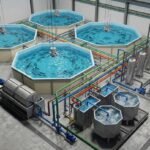
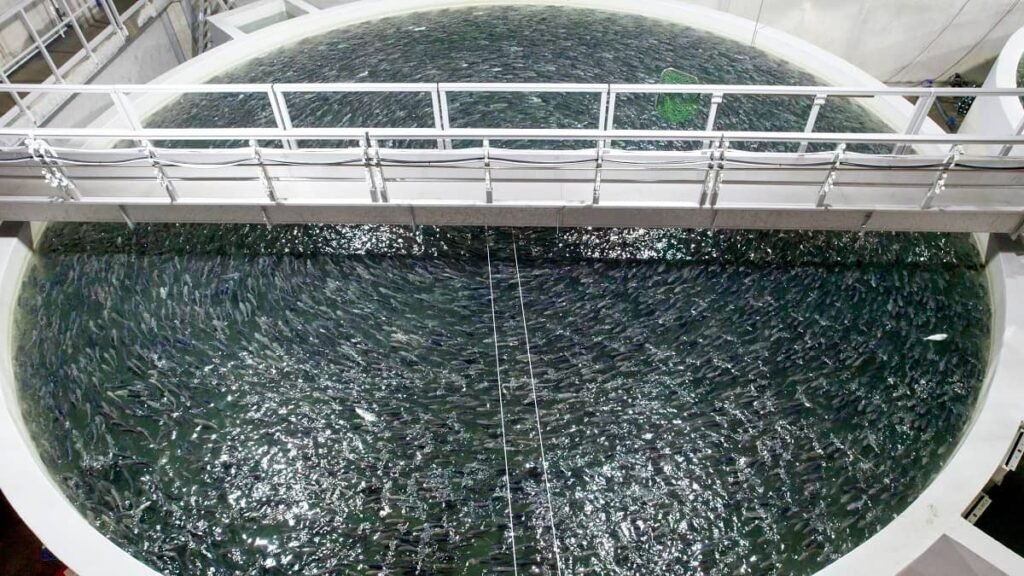
Faced with growing climatic and biological challenges, the global aquaculture sector is transitioning from environment-dependent systems—such as earthen ponds or open-sea cages—toward high-precision models. Germany leads this transition through Recirculating Aquaculture Systems (RAS), a closed-loop technology capable of treating and reusing up to 99% of water resources.

This tech-first approach ensures absolute control over the culture environment, eliminating vulnerability to external climate variables. According to the report, German leadership is sustained by three strategic pillars: engineering excellence, world-class R&D infrastructure, and a highly demanding “proof of concept” ecosystem. Technologies that successfully navigate strict local regulations gain a de facto competitive advantage for succeeding in global markets.
Smart Systems and “Plug-and-Play” Modules
- SEAWATER Cubes: A disruptive model of modular farms integrated into shipping containers. Their design allows for installation in urban or rural settings, facilitating access to fresh aquatic products without coastal dependency.
- HanseGarnelen: Located in Glückstadt, this facility exemplifies energy efficiency by utilizing residual heat from an adjacent paper mill for white shrimp farming. The project demonstrates that profitability and the circular economy can coexist within a high-performance controlled environment.
Artificial Intelligence and Biotechnology: The System’s Operational Brain
Contemporary aquaculture in Germany has transcended conventional farming to become the advanced management of complex biological data. The integration of computer vision systems now allows for millimeter-precision biomass estimation and early stress detection. These tools mitigate human errors, which typically account for up to 20% of losses in traditional operations.
A success story is the ShrimpWiz project, led by the Alfred Wegener Institute (AWI) and the startup Oceanloop. Through high-resolution cameras and AI algorithms, producers can count shrimp and monitor their welfare in real-time, identifying visual stress indicators before they impact profitability.
Disruptive Advancements in Nutrition and Animal Health
Germany has solidified its position as a central hub for upstream industries. Research from the Max Planck Institute has driven the rise of companies like b.fab, which synthesizes single-cell proteins from and hydrogen, offering a sustainable alternative to fishmeal. Similarly, firms like PhytoX develop oral vaccines encapsulated in microalgae, facilitating immunization without the stress associated with manual handling.
Mantente siempre informado
Stay Informed
Únete a nuestras comunidades para recibir al instante las noticias, informes y análisis más importantes del sector acuícola.
Join our communities to get instant access to the most important news, reports, and analysis from the aquaculture industry.
Within the circular economy, startups such as FarmInsect and Illucens transform regional organic waste into black soldier fly larvae (Hermetia illucens), creating a perfect cycle for the nutritious feeding of trout and salmonids.
Structural Challenges and Regulatory Bottlenecks
Despite the disruptive potential, the report identifies critical obstacles. The German regulatory system is described as complex and fragmented; licensing processes can extend up to two years due to a technical knowledge gap among local authorities. Furthermore, high operating costs—driven by electricity prices exceeding 20 cents/kWh—force producers to adopt “premiumization” strategies and certified sustainability to position their high-value-added products in the market. In this scenario, robust growth is projected for niche species such as Yellowtail Kingfish, whose growth rate and competitive pricing (nearly double that of salmon) make it ideal for land-based RAS.
Roadmap for Global Leadership
To realize this potential, the report proposes concrete actions across three fundamental pillars:
- Enhancing Engineering Excellence: Germany must capitalize on its leadership in automation and digitalization to reduce operating costs and export state-of-the-art production systems globally.
- Transitioning from Lab to Market: It is imperative to transform cutting-edge research into commercially viable startups by integrating an entrepreneurial mindset into universities and research institutes.
- Implementing Financial Mechanisms: Reaching commercial scale requires a comprehensive financing approach, including early-stage grants, preferential-rate loans, and state guarantees to mitigate regulatory risk.
- Streamlining the Regulatory Framework: Policymakers must reduce administrative complexity through standardized regulations and unified permitting processes to facilitate long-term planning.
Toward a Circular and Decentralized Aquaculture
The future of German aquaculture is decisively trending toward operational decentralization. Modular systems, such as those by SEAWATER Cubes, utilize repurposed shipping containers for sea bass cultivation in urban and rural settings, enabling fresh food production in proximity to the end consumer. This model drastically reduces the carbon footprint associated with logistics and transportation. Furthermore, synergy with traditional agriculture is emerging as a promising path; integration allows farmers to diversify their business units by leveraging residual heat from biogas plants, thereby optimizing aquaculture energy costs and reinforcing the sector’s sustainability.
Conclusion
Germany possesses a unique capacity to redefine the global aquaculture paradigm through its leadership in engineering and biotechnology. While domestic production is currently modest, its role as a provider of cutting-edge technology and its ability to set efficiency standards are unparalleled. Long-term success will depend on regulatory harmonization across federal states and a steady flow of private capital to scale innovations from the laboratory to the industrial market.
Reference (open access):
Hatch Blue. (2026). Engineering the Blue Future: Germany’s Role in European Aquaculture Tech. Landwirtschaftliche Rentenbank.

Editor at the digital magazine AquaHoy. He holds a degree in Aquaculture Biology from the National University of Santa (UNS) and a Master’s degree in Science and Innovation Management from the Polytechnic University of Valencia, with postgraduate diplomas in Business Innovation and Innovation Management. He possesses extensive experience in the aquaculture and fisheries sector, having led the Fisheries Innovation Unit of the National Program for Innovation in Fisheries and Aquaculture (PNIPA). He has served as a senior consultant in technology watch, an innovation project formulator and advisor, and a lecturer at UNS. He is a member of the Peruvian College of Biologists and was recognized by the World Aquaculture Society (WAS) in 2016 for his contribution to aquaculture.