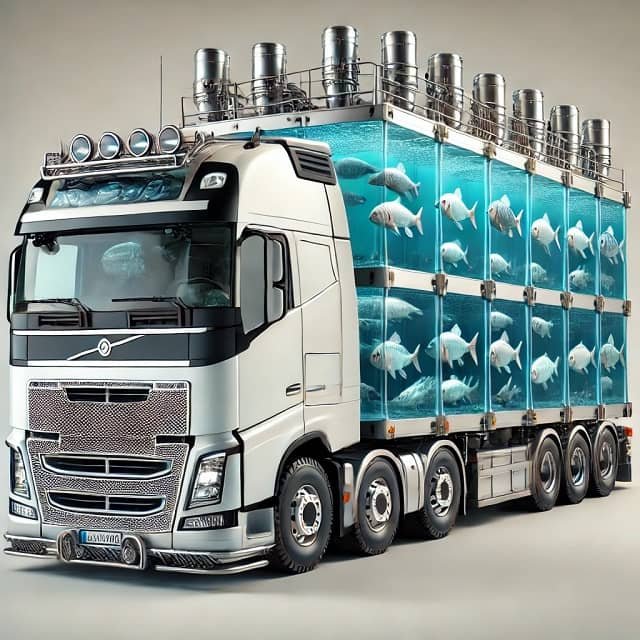
The ornamental fish trade is a global industry reliant on complex supply chains with multiple transportation phases. During these journeys, fish encounter stressors such as vibrations, temperature fluctuations, and inappropriate stocking densities. This stress is not merely an ethical dilemma; immune system compromise can lead to diseases and critical financial losses for retailers.
To date, various natural additives have been tested. However, a collaborative study led by the University of the West of Scotland and the Waltham Petcare Science Institute has highlighted cannabidiol (CBD) as a disruptive solution for enhancing the welfare of ornamental fish during transit.
Key Findings
- Reduced Aggression: CBD usage drastically decreases stress-related behaviors, such as nipping and chasing, following transport.
- Precision Dosing: A concentration of 7.8 mg/L was identified as the optimal threshold to mitigate anxiety in both group and individual interactions.
- Scientifically Validated Welfare: Treated fish demonstrated greater boldness and composure in novel environments, spending more time in central exploration zones.
- Industry Impact: Researchers suggest that this “minor adjustment” to commercial water conditioners could safeguard the health of millions of specimens within the global trade.
The Experiment: CBD in Transport Water
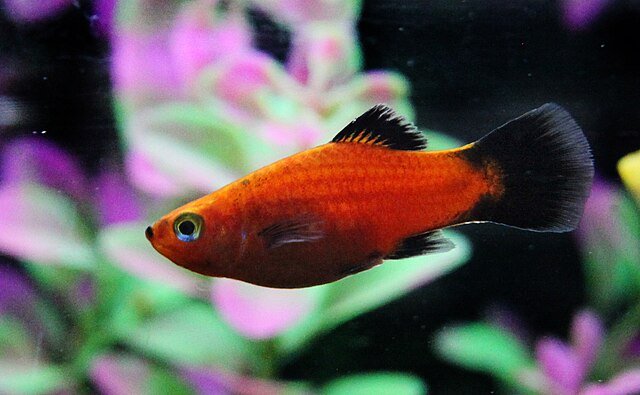
To evaluate the efficacy of this compound, researchers utilized specimens of the Variatus platy (Xiphophorus variatus), a highly popular species among ornamental fish hobbyists.
Simulation Methodology
- Simulated Transport: Fish were placed in standard polyethylene bags and transported for 30 minutes to mimic real-world logistical movement.
- Treatments: Three CBD concentrations (3.9, 7.8, and 15.6 mg/L) were tested alongside control groups.
- Blind Analysis: Post-transport video recordings were analyzed using specialized software to eliminate observational bias.
- Technical Note: Unlike THC, CBD is non-psychotropic, acting on the CB1 and CB2 receptors of the fish’s central nervous system to regulate fear and anxiety without psychoactive effects.
Reduced Conflict and Increased Composure
The findings, published in Applied Animal Behaviour Science, reveal a remarkable transformation in post-transport behavior.
Aquarium Peace (Group Behavior)
In control groups, travel stress triggered natural aggressive behaviors that typically escalate after transport. However, fish exposed to medium doses of CBD exhibited:
- Fewer Nips: A significant reduction in physical contact aggression.
- Cessation of Chasing: Treated fish engaged in far less chasing of their counterparts compared to the control group.
- Reduction in Erratic Movements: There was a decrease in rapid, disoriented swimming—classic indicators of aversion and stress.
Greater Exploration (Individual Behavior)

In “open field” tests, fish receiving CBD spent significantly more time in the central zone of the tank. This suggests reduced anxiety and increased exploratory boldness. Furthermore, they showed a lower mean speed, indicating a state of “calm” and the attenuation of stress-induced hyper-locomotion.
Professor Katherine Sloman, the lead researcher, emphasizes the simplicity and scope of the solution:
“Our research demonstrates that a relatively small change in how ornamental fish are transported, such as adding CBD to commercial water conditioners, could transform the industry and help safeguard the welfare of countless fish.”
Is CBD Viable as a Commercial Conditioner?
A key point of the study was the compound’s stability. HPLC-UV analysis detected a degradation of approximately 55-60% of the CBD in the water. This loss is expected due to air exposure within the transport bags. Despite this degradation, the biological effects were evident. The study confirmed that:
- CBD was neither rapidly metabolized by the fish nor significantly absorbed by the plastic bags.
- No adverse effects were detected on the skin mucosa or water cortisol levels, indicating the treatment is physically innocuous under the tested conditions.
Dr. Donna Snellgrove, Fish Research Manager at the Waltham Petcare Science Institute, highlights the scientific commitment behind the discovery:
Mantente siempre informado
Stay Informed
Únete a nuestras comunidades para recibir al instante las noticias, informes y análisis más importantes del sector acuícola.
Join our communities to get instant access to the most important news, reports, and analysis from the aquaculture industry.
“Improving fish welfare during transport by minimizing stress is fundamental to ensuring their health within the trade. We are proud to establish science-backed solutions that will make a difference for such a vast number of fish.”
Limitations and Future Outlook
While the results are positive, the authors caution that the simulated stress was “mild” compared to actual international transport. Additional research is required to understand the long-term effects of CBD metabolites and their stability under more extreme transport conditions.
Contact
K.A. Sloman
School of Health & Life Sciences, University of the West of Scotland
Lanarkshire G72 0LH, UK
Email: katherine.sloman@uws.ac.uk
Reference (open access)
Jones, M., Alexander, M., Vanderzwalmen, M., Snellgrove, D., Talbot, M., Smith, P., Henriquez, F., McLellan, I., & Sloman, K. (2026). The effects of cannabidiol (CBD) in transport water on the behaviour of ornamental fishes. Applied Animal Behaviour Science, 296, 106897. https://doi.org/10.1016/j.applanim.2025.106897

Editor at the digital magazine AquaHoy. He holds a degree in Aquaculture Biology from the National University of Santa (UNS) and a Master’s degree in Science and Innovation Management from the Polytechnic University of Valencia, with postgraduate diplomas in Business Innovation and Innovation Management. He possesses extensive experience in the aquaculture and fisheries sector, having led the Fisheries Innovation Unit of the National Program for Innovation in Fisheries and Aquaculture (PNIPA). He has served as a senior consultant in technology watch, an innovation project formulator and advisor, and a lecturer at UNS. He is a member of the Peruvian College of Biologists and was recognized by the World Aquaculture Society (WAS) in 2016 for his contribution to aquaculture.