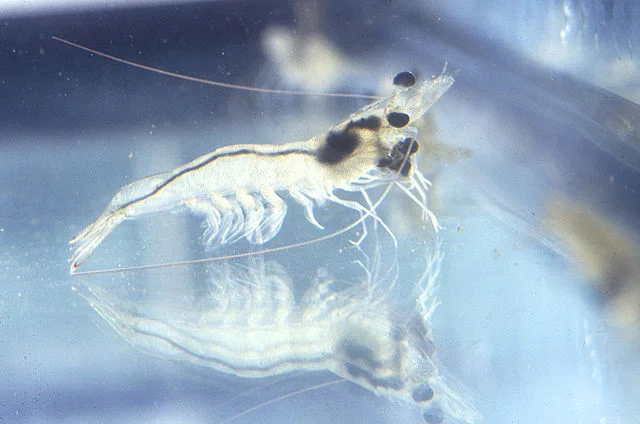
The Pacific White Shrimp (Penaeus vannamei) is not merely a preferred blue food; it is a cornerstone of global food security. Between 2019 and 2023, this industry accounted for 62% of global crustacean production, with a market value nearing $275 billion. The Penaeidae family, led by the white shrimp (Penaeus vannamei), dominates the sector with over 31 million tonnes produced.
However, climate change is altering critical parameters such as pH, salinity, and temperature. These environmental shifts not only compromise the crustacean’s health but also act as catalysts for lethal infections. For instance, low salinity drastically increases susceptibility to Vibrio parahaemolyticus, the causative agent of Acute Hepatopancreatic Necrosis Disease (AHPND), which can decimate 100% of a population within just 30 days.
In response to these challenges, a team of scientists—led by Noorul Darlina Edlin Abd Rahim and Nor Afiqah-Aleng from the Higher Institution Centre of Excellence (HICOE) and the Institute of Climate Adaptation and Marine Biotechnology (ICAMB) at Universiti Malaysia Terengganu, alongside collaborators from the Institute of Systems Biology (INBIOSIS) at Universiti Kebangsaan Malaysia—has developed a disruptive analytical framework. The primary objective of this scientific review is to explore the potential of network analysis approaches applied to transcriptomic datasets to comprehensively understand stress response mechanisms in shrimp. Unlike traditional methods that analyze genes in isolation, this study seeks to provide a systems-level understanding by integrating protein-protein interaction (PPI) networks, co-expression networks, and regulatory networks.
Key Points
- Systems Perspective: While traditional research analyzes isolated genes, network biology allows for an overview of how they interact as a collective to resist environmental stress.
- Economic Impact: Diseases such as AHPND and WSSV cause global losses exceeding $10 billion annually.
- The Power of RNA: RNA sequencing (RNA-seq) is the premier tool for understanding shrimp responses to climate change and pathogens.
- Essential Proteins: Through topological analysis, critical proteins such as ZNF236 and ND3 have been identified as vital for immune defense.
Technological Evolution: From Catalog to Living Map
To confront these threats, science has progressed through several stages of technological maturation:
- 1990s (EST): The first gene catalogs were created, such as those for P. monodon in 1999.
- 2000s (Microarrays): These allowed for the observation of responses to specific pathogens, albeit with design limitations.
- Current Era (RNA-seq): The gold standard. It enables comprehensive, unbiased, and cost-effective genomic profiling.
- The Frontier (Single-cell and Spatial): Emerging technologies that analyze cell-by-cell or even gene expression within intact tissues.
The challenge is that identifying Differentially Expressed Genes (DEGs) is akin to having a list of engine parts without knowing how they fit together. This is where network biology comes into play.
The Three Pillars of Network Biology
The review article highlights three fundamental network types for understanding shrimp as an interconnected system:
- Protein-Protein Interaction Networks (PPI): These represent physical contacts between proteins, essential for processes like signal transduction and metabolic control. In organisms like shrimp, where experimental data is costly, computational methods are used to predict these bindings.
- Gene Co-expression Networks (GCN): Here, genes are linked if their expression levels “rise or fall” together under certain conditions. They are based on the “guilt by association” principle: if an unknown gene behaves like a defense gene, it likely participates in immunity. Tools like the WGCNA algorithm are vital for detecting these functional modules.
- Gene Regulatory Networks (GRN): These are the most complex, as they are directed networks showing how transcription factors activate or repress other genes. Although their application in shrimp is still limited, they hold the key to understanding the cell’s master “control panel.”
Case Study: Deciphering the AHPND Infection Code
To demonstrate the efficacy of this approach, researchers analyzed a dataset of P. vannamei infected with VpAHPND. While traditional analysis merely listed 134 altered genes, network integration identified “hub proteins” acting as critical system nodes:
- ZNF236 (Zinc finger protein 236): A transcription factor involved in controlling gene expression during bacterial infections.
- ND3 (NADH dehydrogenase subunit 3): Crucial for energy production (ATP) in the mitochondria and the oxidative stress response.
- Beclin-1: A key regulator of autophagy (cellular cleanup) activated during viral and bacterial infections.
Functional analysis revealed that during infection, electron transport processes and oxidoreductase activity are heavily impacted. This suggests that the shrimp attempts to modulate its energy metabolism to generate respiratory bursts to eliminate the pathogen, although this sometimes causes collateral damage to the animal’s own tissue.
Challenges and the Future: The Road to “Aquaculture 4.0”
Despite the potential, the authors perform a SWOT analysis, revealing significant barriers:
Stay Always Informed
Join our communities to instantly receive the most important news, reports, and analysis from the aquaculture industry.
- Weaknesses: Scarcity of shrimp-specific databases. Most interactions are inferred through homology with humans or fruit flies, which may overlook unique crustacean biological mechanisms.
- Opportunities: Multi-omics integration (combining RNA with metabolites and proteins) and the use of Artificial Intelligence to predict disease outbreaks before they occur.
- Threats: Pathogens are evolving faster than research can address.
Conclusion: A Map for Sustainability
The integration of transcriptomics with network biology is not merely an academic exercise; it is a necessity for the industry’s survival. By identifying these “master nodes,” scientists can develop biomarkers to select genetically resistant shrimp lines or design functional diets that bolster the weak points in the animal’s molecular system.
Contact
Nor Afiqah-Aleng
Higher Institution Centre of Excellence (HICoE), Institute of Climate Adaptation and Marine Biotechnology (ICAMB), Universiti Malaysia Terengganu
21030, Kuala Nerus, Terengganu, Malaysia
Email: afiqahaleng@umt.edu.my
Reference (open access)
Abd Rahim, N. D. E., Nor Muhammad, N. A., Waiho, K., Harun, S., Zainal-Abidin, R.-A., Tan, M. P., Sung, Y. Y., Mohamed-Hussein, Z.-A., & Nor Afiqah-Aleng. (2026). Network perspectives on transcriptomic datasets to understand shrimp response mechanisms to environmental and pathogenic stresses: a review. Aquaculture International, 34, 82. https://doi.org/10.1007/s10499-026-02476-4

Editor at the digital magazine AquaHoy. He holds a degree in Aquaculture Biology from the National University of Santa (UNS) and a Master’s degree in Science and Innovation Management from the Polytechnic University of Valencia, with postgraduate diplomas in Business Innovation and Innovation Management. He possesses extensive experience in the aquaculture and fisheries sector, having led the Fisheries Innovation Unit of the National Program for Innovation in Fisheries and Aquaculture (PNIPA). He has served as a senior consultant in technology watch, an innovation project formulator and advisor, and a lecturer at UNS. He is a member of the Peruvian College of Biologists and was recognized by the World Aquaculture Society (WAS) in 2016 for his contribution to aquaculture.