Accelerated industrialization and the growth of coastal populations have brought about a devastating side effect: eutrophication. Driven by an excess of nitrogen and phosphorus from agricultural fertilizers and industrial waste, this phenomenon acts as an “uncontrolled fertilizer” in the ocean. The results are alarming; in China alone, over 1,200 red tide events have been reported in the last two decades, affecting 160,000 .
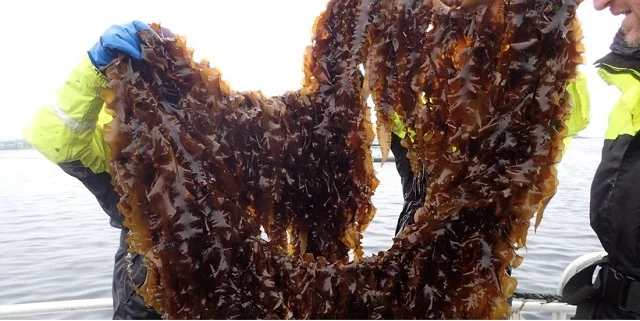
However, science has found an ancient ally. Marine macroalgae—organisms that transform these pollutants into useful biomass—stand out as the most viable and cost-effective solution for restoring ecological balance.
Key Points
- Pioneering Dataset: The first open-access database has been consolidated, featuring 2,011 records detailing how 113 macroalgae species remediate nutrients across 23 countries.
- Nature-Based Solution: Large-scale macroalgae cultivation is not only a commercial industry but also a critical strategy for combating red tides and dead zones.
- Success Factors: Remediation efficiency strictly depends on variables such as temperature, salinity, and light intensity, which have now been standardized to optimize crop yields.
- Scientific Predominance: Red algae (Rhodophyta) lead global research with 51% of the records, followed by green and brown algae.
A “Google Maps” for Marine Bioremediation
Until now, information regarding which algae species performs best and under what specific conditions was scattered across hundreds of technical papers. A team led by Peiling Xie and Xinqiang Liang from Zhejiang University has bridged this gap by publishing an unprecedented resource in the journal Scientific Data.
Methodology: The Rigor Behind the Data
The team conducted a systematic search across global databases such as Web of Science and Elsevier ScienceDirect, analyzing publications from 1995 to 2024. From an initial pool of 3,662 studies, they applied strict filters to ensure quality:
- Single-Species Focus: Mixed cultures were excluded to guarantee taxonomic precision.
- Georeferenced Data: Every record includes exact coordinates verified via Google Maps.
- Standardized Metrics: Removal rates and efficiencies were calculated using unified mathematical formulas (Eq. 1 and Eq. 2).
Profile of the “Cleaning Super-Algae”
The dataset reveals that not all algae are equal when facing pollution. Species such as Gracilaria lemaneiformis, Saccharina japonica, and Ulva lactuca have demonstrated exceptional capacities for absorbing ammonia and phosphates.
Factors Limiting or Enhancing Remediation
The study emphasizes that nutrient uptake is not a linear process; it is regulated by the environment:
- Temperature: Regulates enzymatic activity and alters transport proteins on the alga’s surface.
- Salinity: Controls osmotic pressure, affecting how nutrients enter the plant.
- Light: The energetic engine. Without adequate luminous intensity, the absorption process halts, making it the primary limiting factor.
Geographical Distribution and Biases
While the dataset is global, there is a massive concentration of data in the Northern Hemisphere—specifically in China, the United States, and South Korea. These nations serve as hubs for aquaculture and bioremediation. The study warns users to be cautious when applying these parameters to polar or tropical regions, where data remains scarce.
Impact on Industry and Conservation
This repository is not solely for academics; it has direct applications within the Blue Economy:
- Aquaculture Planning: Facilitates the selection of the ideal species based on site-specific temperatures and nutrients.
- Crisis Management: Following the massive Sargassum outbreak in the Atlantic in 2011, research into brown algae skyrocketed. This dataset allows for the prediction of the bioextraction potential of such biomasses.
- Ecological Restoration: Provides a scientific foundation for designing “green cleaning” strategies in areas where chemical methods are unfeasible or costly.
Limitations and Technical Recommendations
The authors provide a crucial technical caveat: removal efficiency (%) should not be compared in isolation, as it depends on exposure time and tends toward saturation. For robust comparisons across different regions or experiments, the use of the removal rate () is recommended, as it integrates both biomass and time.
Mantente siempre informado
Stay Informed
Únete a nuestras comunidades para recibir al instante las noticias, informes y análisis más importantes del sector acuícola.
Join our communities to get instant access to the most important news, reports, and analysis from the aquaculture industry.
Reference (open access)
Xie, P., Feng, W., He, J., Wang, Z., Wu, J., Lu, Y., Yang, X., Dong, J., & Liang, X. (2026). A Global Dataset on Nutrient Removal Capacity by Marine Macroalgae. Scientific Data. https://doi.org/10.1038/s41597-026-06874-4

Editor at the digital magazine AquaHoy. He holds a degree in Aquaculture Biology from the National University of Santa (UNS) and a Master’s degree in Science and Innovation Management from the Polytechnic University of Valencia, with postgraduate diplomas in Business Innovation and Innovation Management. He possesses extensive experience in the aquaculture and fisheries sector, having led the Fisheries Innovation Unit of the National Program for Innovation in Fisheries and Aquaculture (PNIPA). He has served as a senior consultant in technology watch, an innovation project formulator and advisor, and a lecturer at UNS. He is a member of the Peruvian College of Biologists and was recognized by the World Aquaculture Society (WAS) in 2016 for his contribution to aquaculture.